
EU Rule Takes Effect on Battery Warning Modules

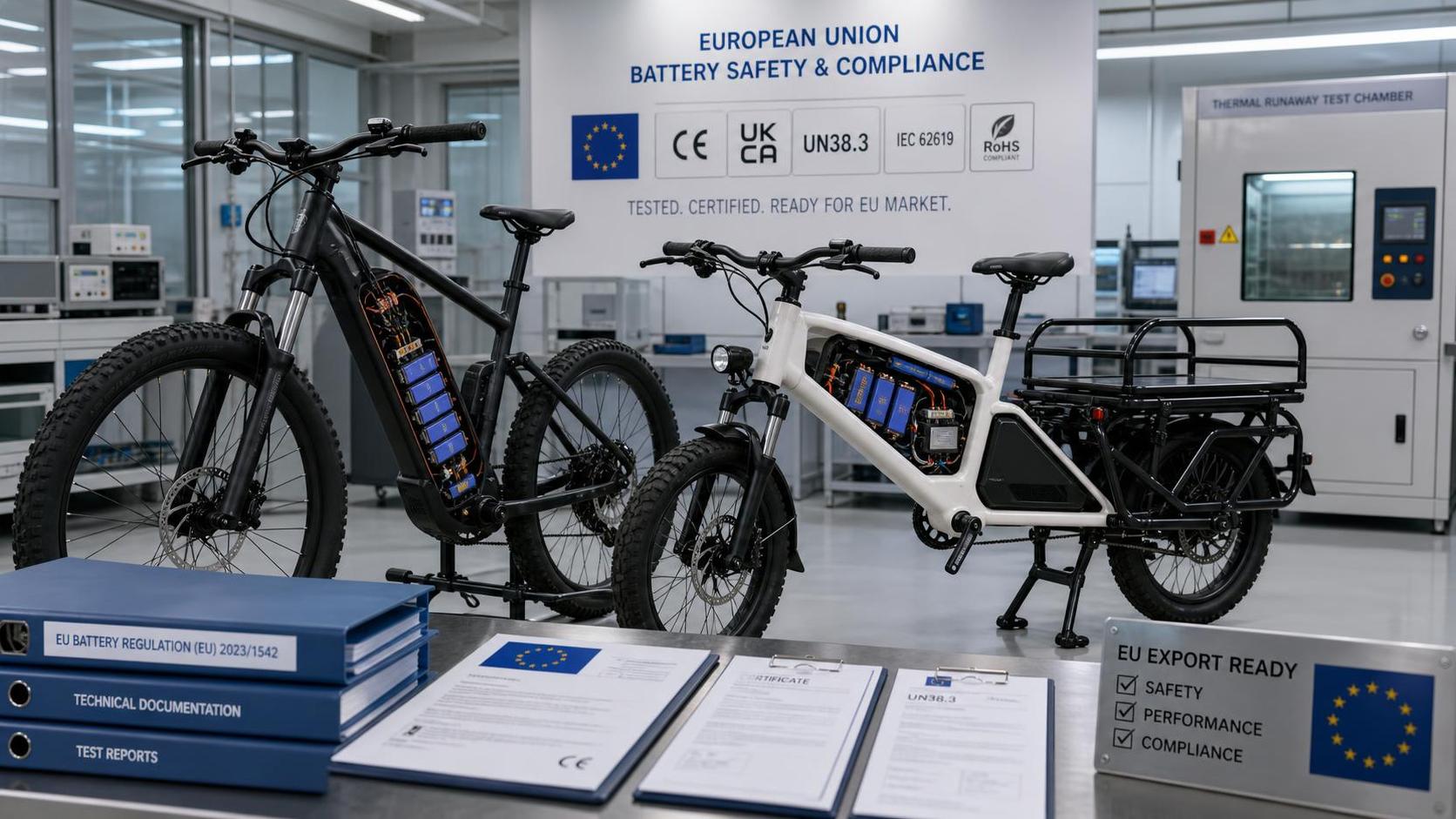
On July 23, 2026, the European Commission put into effect amending regulation (EU) 2026/1189, adding a new EC type-approval requirement for e-MTBs and cargo e-bikes. For newly submitted applications in these categories, battery systems must include a real-time thermal runaway warning module compliant with EN IEC 62619:2024 Annex D, together with a third-party verification report. This is a compliance development that deserves close attention from exporters, OEM manufacturers, battery-related suppliers, and market-facing teams because products without the required certified module will not be able to obtain CE marking or be sold in the EU market.
What the new approval requirement confirms
The confirmed change is specific and immediate. As of July 23, 2026, the European Commission has formally implemented amending regulation (EU) 2026/1189. Under this rule, all newly filed EC type-approval applications for e-MTBs and cargo e-bikes must integrate a battery thermal runaway real-time warning module that meets EN IEC 62619:2024 Annex D.
The requirement also includes documentation: a third-party verification report must be provided as part of the compliance path. Based on the information provided, products in the affected categories that are not pre-equipped with a certified module will be unable to obtain CE marking and therefore cannot enter the EU market for sale.
Where the impact is likely to appear first
Export-oriented OEM programs face a direct compliance gate
From an industry perspective, Chinese OEM export programs are among the most directly affected because the new rule changes the approval threshold for access to the EU market. The impact is likely to show up first in model configuration, certification planning, and export submission schedules. What deserves closer attention is whether products currently prepared for new EC type-approval filings already include the required warning module and supporting verification materials.
Battery and component coordination becomes a practical issue
For manufacturers and supply-chain participants involved in battery systems or related integration work, the requirement matters because compliance is no longer limited to general product assembly. The module itself, its conformity to EN IEC 62619:2024 Annex D, and the availability of third-party verification documentation become part of the product's market-entry conditions. The business effect is likely to fall on supplier selection, technical matching, and document readiness.
Sales, channel, and customer-facing teams may encounter delivery risks
Companies handling EU-bound orders, distribution, or customer communication may also feel the impact through delivery eligibility rather than through product design alone. If an affected model is not configured with the required module before certification filing, the issue can extend into sales planning and shipment readiness. Observably, this makes compliance status a commercial communication issue as much as a technical one.
What companies should review now
Check which product lines fall into new application scope
A first practical question is whether current or upcoming e-MTB and cargo e-bike models are entering the EU through new EC type-approval applications covered by the rule. The distinction matters because the requirement described in the provided information is tied to newly submitted applications, not to a general statement about all products already on the market.
Verify module integration and supporting reports together
What deserves closer attention is the relationship between physical product configuration and certification evidence. The rule does not stop at requiring the warning module itself; it also requires a third-party verification report. In practice, companies should review whether both the integrated module and the supporting documentation are aligned before filing or customer commitment stages.
Recheck supplier readiness and documentation flow
For OEMs and exporters, this requirement turns supplier qualification into a more visible compliance issue. The immediate concern is not only whether a supplier can provide a module, but whether the supplier-related documentation can support EC type-approval work without creating delays. Procurement and compliance teams should therefore pay attention to document completeness, version control, and submission timing.
Prepare clearer communication with EU customers and partners
Analysis shows that the regulation creates a need for more precise external communication. Customers, importers, and channel partners may need confirmation on whether affected models are already configured for the new requirement and whether supporting verification is in place. This is particularly relevant where production planning and delivery commitments depend on CE-mark eligibility.
Why this matters beyond a single technical addition
As an editorial observation, this development is more appropriate to understand as an immediate compliance change with broader strategic signaling. The immediate result is clear: for new EC type-approval filings involving e-MTBs and cargo e-bikes, the warning module and third-party verification have become part of market access to the EU. At the same time, the deeper signal is that battery-related safety evidence is becoming more central to product approval in these categories.
It is too early, based only on the provided information, to draw wider conclusions about every downstream commercial effect. Even so, the rule already establishes a concrete threshold that affected exporters and manufacturers cannot treat as a secondary technical detail.
How to read the current stage of this development
The most balanced reading is that this is not merely a policy signal that still needs to be translated into implementation. The implementation date has been stated, the affected product categories have been identified, and the compliance consequence for non-equipped products is explicit in the provided information. Analysis shows that the near-term focus should remain on certification readiness, supplier coordination, and export execution rather than on broad market speculation.
At the same time, this remains an area worth continued monitoring because practical interpretation, documentation expectations, and customer-side responses may continue to shape how the requirement is applied in day-to-day business workflows.
Basis of this article and points for continued verification
This article is based on the user-provided news title, event date, and event summary concerning the July 23, 2026 implementation of amending regulation (EU) 2026/1189 and the new EC type-approval requirement for e-MTBs and cargo e-bikes. No specific official source link was provided in the input, so the exact official publication link remains to be verified on an ongoing basis.
For this type of industry update, relevant source categories typically include official regulatory notices, company compliance disclosures, industry association updates, authoritative media reporting, and standard-setting organization documents. Further attention should remain on any subsequent official wording, supporting compliance interpretations, and document-level guidance related to EN IEC 62619:2024 Annex D and third-party verification expectations.