
How bicycle frame angles influence confidence on fast descents

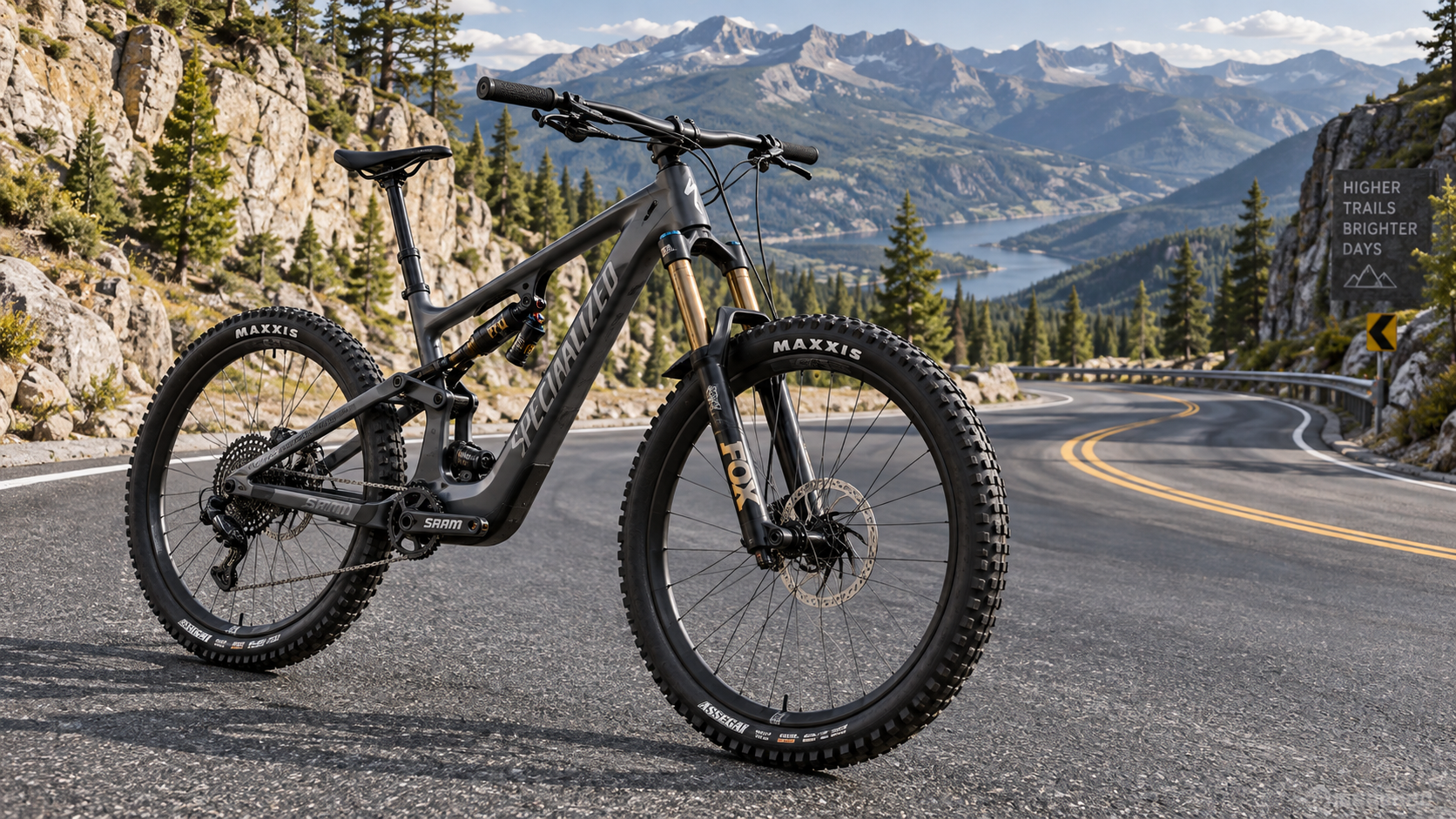
On a fast descent, confidence begins long before the brakes are released. It is built into the relationship between the front wheel, fork, frame, rider position, and the terrain moving beneath them. Bicycle frame angles influence whether a bike feels calm when speed rises, eager to turn into a corner, reluctant to change line, or unexpectedly nervous when the road surface breaks apart.
For riders, fleet operators, workshop teams, and anyone comparing performance bicycles or e-bikes, geometry charts can look deceptively simple. A head-tube angle is often reduced to “steep equals quick” and “slack equals stable.” There is truth in that shorthand, but it is not enough for choosing, setting up, or safely operating a bike intended for fast descending. The numbers only gain meaning when they are read together.
This guide explains how bicycle frame angles affect downhill stability, steering precision, body position, and real-world confidence—without treating one geometry number as a magic answer.
The feeling riders describe as “confidence”
When riders say a bicycle feels confident downhill, they usually mean several things at once. The front wheel holds its line rather than darting across rough pavement. Steering inputs feel deliberate, not delayed or twitchy. The bike remains composed while braking into a turn. And, perhaps most importantly, the rider does not feel forced into a defensive posture simply to keep the bike under control.
That feeling is partly mechanical and partly human. A bicycle can be inherently stable yet still feel uncomfortable if its cockpit is too long, its saddle position is poorly adjusted, or its tires and suspension are inappropriate for the surface. Conversely, a skilled rider may manage a nervous geometry at speed, but that does not make it the best platform for repeated fast descents.
The frame establishes the starting point. Its angles determine where the wheels sit relative to the rider, how the fork steers, and how body weight moves during braking and cornering. Components then refine that foundation.
Head-tube angle: the first number riders notice
The head-tube angle is the angle of the steering axis relative to the ground. A steeper head angle places that axis closer to vertical. A slacker angle leans it farther back. On comparable bikes with similar wheel sizes and forks, this has a major effect on steering behavior.
A steeper head angle generally produces a more immediate steering response. On smooth roads, tight switchbacks, urban routes, and lower-speed technical maneuvers, that responsiveness can feel lively and accurate. Road race bikes and agile commuter platforms often use relatively steeper steering geometry because riders need efficient directional changes, not only high-speed calmness.
As descent speed increases, however, a very steep steering angle can make small rider inputs, surface deflections, or crosswinds feel more noticeable at the handlebar. That is not automatically unsafe; it simply places a greater demand on steady hands, predictable braking, and well-matched tires.
A slacker head angle tends to move the front axle farther ahead of the steering axis. The bike becomes more resistant to abrupt steering changes and often feels planted when the descent becomes rough, steep, or fast. This is why trail, enduro, downhill, and many modern all-road bikes use slacker front-end geometry than a traditional race road bike.
Yet “slacker is better” is another oversimplification. If the front end becomes too slow for the intended terrain, the rider may struggle to place the wheel accurately through hairpins or avoid hazards at low speed. On a mixed-use e-bike, especially one ridden through dense city streets as well as descending roads, extreme downhill geometry can feel cumbersome in everyday operation.
Trail matters more than head angle alone
Head angle does not work in isolation. The more useful concept for steering stability is trail: the horizontal distance created by the steering axis and the front tire’s contact patch. Trail is influenced by head-tube angle, fork offset or rake, wheel radius, and tire size.
More trail usually creates stronger self-centering steering behavior. When the front wheel is disturbed by rough ground, it has a greater tendency to align itself with the direction of travel. That contributes to the settled, tracking sensation riders value on rapid descents.
Less trail usually makes steering feel lighter and quicker. It can be highly effective for close-quarters control, responsive road riding, and compact wheelbase designs. But at high speed, a low-trail setup may feel more sensitive to rider movement and road texture.
For this reason, comparing bicycle frame angles without checking fork offset can lead to the wrong conclusion. Two bicycles may share a similar head angle but feel very different because one uses a shorter-offset fork. Wheel and tire changes also matter. A larger-volume tire slightly changes rolling radius and can alter the effective steering behavior, while a suspension fork changes geometry dynamically as it compresses.
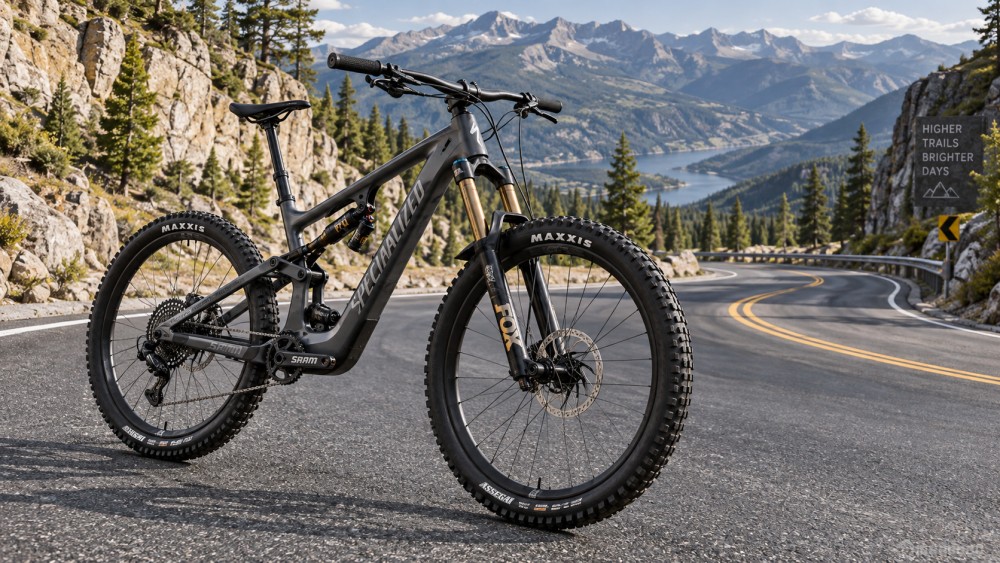
What happens when the fork compresses?
On a rigid road or gravel bike, geometry remains relatively close to its static chart values. On a suspension mountain bike or suspension-equipped e-bike, the values riders feel on the trail are constantly changing.
Under braking or on a steep slope, fork compression lowers the front of the bike. The head angle becomes steeper, the wheelbase shortens slightly, and the rider’s mass shifts toward the front wheel. In moderation, this can improve front-tire grip and help the rider load the tire through a corner. Too much dive, though, can make the bike feel as if it is pitching forward and becoming less composed exactly when the rider needs stability.
This is why suspension setup and frame geometry must be evaluated together. A slack static head angle cannot compensate for an incorrectly adjusted fork, and a stiff or poorly balanced suspension system can conceal the strengths of an otherwise well-designed frame. For e-mountain bikes, the additional system weight increases the importance of controlled damping and predictable front-end support under braking.
Seat-tube angle shapes the rider’s position, not just pedaling
The seat-tube angle is often discussed as a climbing metric, because it determines how far forward or rearward the rider sits relative to the bottom bracket. But it also affects descending confidence indirectly.
A steeper effective seat angle typically places the rider more centrally between the wheels during seated riding. It can improve climbing posture and reduce the sense of being stretched behind the bottom bracket. When the trail suddenly tips downward, a centered base position can make it easier to transition into a standing descent stance without feeling trapped behind the rear axle.
A slacker seat angle moves the saddle farther rearward, particularly for taller riders with high saddle positions. This may be comfortable for relaxed cruising, but it can create a larger shift between seated and standing positions. On steep terrain, riders may feel that they must make a more dramatic movement forward or back to find balance.
There is an important distinction between the actual seat-tube angle and the effective seat angle. Since the saddle sits above and often behind the top of the seat tube, saddle height and saddle setback change the rider’s practical position. A geometry chart may list a steep seat angle, but a long seatpost extension can produce a more rearward effective position. Operators fitting bikes across several frame sizes should pay close attention to this effect.
Wheelbase, front center, and the room to stay balanced
Bicycle frame angles influence wheelbase, but wheelbase is one of the clearest ways to understand their combined effect. A longer wheelbase generally provides more fore-aft stability. The bike is less easily unsettled by small shifts in rider weight, and it may feel calmer when the surface becomes uneven or the descent is sustained.
The front center—the distance from the bottom bracket area to the front axle—is especially important on steep terrain. A longer front center gives the rider more room to move behind the bars without placing excessive weight over the front wheel. This can reduce the sensation of pitching forward during hard braking.
That said, a long wheelbase does not remove the need for technique. A rider who locks the elbows, drags the rear brake, or looks only a few meters ahead can make even a stable bike feel unpredictable. Geometry gives the rider a wider operating window; it does not replace judgment.
Bottom bracket height and the stability trade-off
Although it is not an angle, bottom bracket height belongs in every discussion of bicycle frame angles and downhill handling. A lower bottom bracket lowers the rider’s center of mass relative to the wheels. In corners, this can give a bike a settled, “inside the bike” sensation rather than the feeling of perching above it.
The compromise is pedal clearance. On rocky trails or deeply banked surfaces, a low bottom bracket increases the chance of a pedal strike. Manufacturers therefore balance bottom bracket drop against wheel size, suspension travel, intended terrain, and crank length. Riders fitting shorter cranks for technical riding may gain clearance, but they should still avoid pedaling through turns where the inside pedal is near the ground.
Geometry changes with frame size—and that is a good thing
A common mistake is assuming every size in a bike range should have identical bicycle frame angles. In reality, designers often adjust head angle, seat angle, chainstay length, fork offset, and reach across the size range to preserve comparable handling for shorter and taller riders.
A rider on a small frame and a rider on an extra-large frame do not occupy the same position between the wheels. If a brand merely enlarged every tube without changing proportions, one size could feel agile while another became front-heavy or rear-biased. Thoughtful size-specific geometry is therefore more useful than a single attractive number on a product page.
When comparing models, look beyond stack and reach. Check the geometry chart for wheelbase, chainstay length, front center, fork offset, and the measurement basis used. A head angle listed with a 120 mm fork is not directly comparable with one listed around a 160 mm fork unless the intended setup is understood.
A practical way to read a geometry chart before a fast descent
For riders and operators who need a quick but meaningful evaluation, start with the intended use rather than the headline angle. Ask where the bike will actually be ridden, how much speed it will carry, and whether the route includes tight turns, broken pavement, loose gravel, or sustained gradients.
- For fast paved descents: seek a balanced front end with predictable trail, enough wheelbase for high-speed calm, and a cockpit that does not force excess pressure onto the hands.
- For gravel and mixed surfaces: tire volume, fork compliance, and stable trail may matter as much as the nominal head angle. Loose surfaces reward smooth self-centering behavior.
- For mountain descents: examine the complete system: head angle, front center, suspension travel, damping support, dropper-post use, tire casing, and brake capacity.
- For high-speed e-bikes: consider total mass and load distribution. A stable frame is valuable, but braking system condition, tire pressure, battery mounting security, and thermal management are equally relevant.
Do not judge geometry from a parking-lot ride alone. At very low speed, a stable downhill bike can feel slow to steer, while a quick road bike can feel wonderfully light. The meaningful test is whether the bicycle remains easy to place and emotionally reassuring when speed, gradient, and braking load increase.
Setup can either reveal or hide good geometry
Even carefully engineered geometry can be undermined by poor setup. An overly long stem may stretch the rider too far forward and make the front wheel feel loaded on steep descents. Bars that are too narrow can reduce leverage, while bars that are excessively wide for the rider may make tight steering awkward. Tire pressure that is too high often amplifies vibration and reduces grip; pressure that is too low can make the casing fold or increase rim-strike risk.
Saddle height also matters. A fixed high saddle limits the rider’s ability to lower their center of mass and move the bike underneath them. On technical off-road descents, a dropper post is not a luxury add-on; it materially changes how much of the frame’s intended stability a rider can access.
Brakes deserve the same attention. Geometry helps distribute weight and preserve steering control, but no frame angle can compensate for worn pads, contaminated rotors, poorly bled hydraulic lines, or braking technique that overwhelms available traction.
Do not confuse stability with immunity
A longer, slacker bicycle may encourage riders to carry more speed because it feels composed. That can be beneficial when it allows smoother, less panicked riding, but it can also mask risk. On wet pavement, loose marbles, blind corners, or unfamiliar mountain roads, available grip remains the limiting factor. The bike may track straight with great confidence right up to the point where the tires no longer have traction.
The safest interpretation of modern geometry is not that it makes fast descending harmless. It gives the rider clearer feedback, more room for body movement, and a less abrupt response to disturbances. Those qualities create confidence that is grounded in control rather than bravado.
Reading the numbers as a complete riding system
The most useful takeaway is that bicycle frame angles are part of a connected system. Head angle influences steering axis behavior; fork offset and wheel size shape trail; seat angle affects how naturally the rider finds a centered stance; wheelbase and front center determine the margin for balance; suspension, tires, cockpit dimensions, and braking performance decide how that geometry behaves outside the showroom.
For the advanced mobility sector, this systems view is increasingly important. Carbon frame construction allows engineers to tune stiffness and packaging around demanding geometry targets, while electronic shifting, high-output e-bike systems, and more capable braking hardware enable riders to carry speed in situations where chassis behavior becomes impossible to ignore. ACMD follows these interactions because the next gains in two-wheeled performance do not come from one isolated specification. They come from making every part of the ride work together.
Before the next descent, read the geometry chart, inspect the setup, and be honest about the terrain. The right bike will not eliminate the need for skill. It will make skill easier to apply when the road drops away and the margin for hesitation becomes very small.