
IoT Mobility Risks in Shared Scooter Fleets

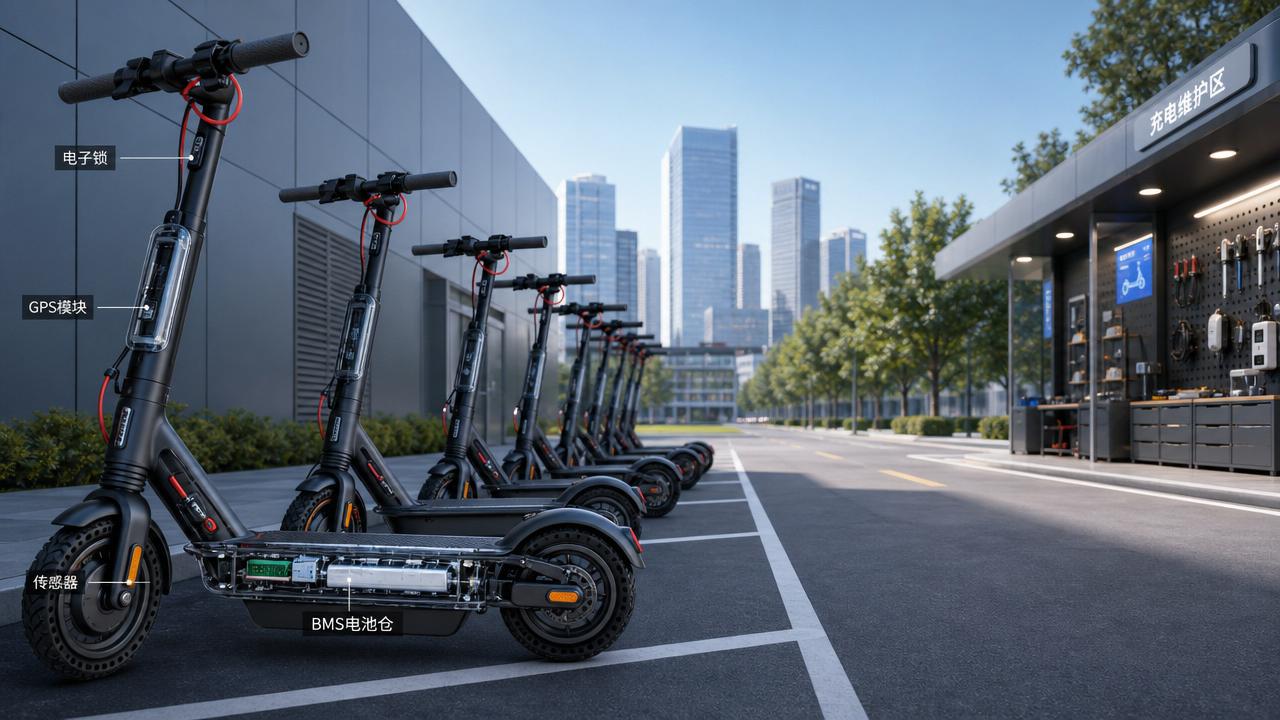
Shared scooter fleets depend on IoT mobility systems to track assets, control access, enforce geofencing, and monitor battery health in real time—but every connected endpoint can also become a safety, compliance, or operational risk. For quality control and safety managers, the challenge is no longer just mechanical durability; it is ensuring that sensors, firmware, data flows, and remote commands remain reliable under dense urban use. Understanding these risks is essential to protecting riders, fleets, and brand trust.
In shared micro-mobility, a scooter is no longer a simple frame, battery, motor, and brake package. It is a distributed data node moving through crowded streets, parking zones, charging rooms, and repair depots every day.
For fleet operators, OEM suppliers, and city-facing safety teams, IoT mobility risk management must cover hardware endurance, software integrity, wireless reliability, and operational governance. A failure in any one layer can affect thousands of trips within hours.
Why IoT Mobility Risk Is Different in Shared Scooter Operations
Private scooters may see a few rides per week. Shared scooters can face 6–12 ride cycles per day, irregular parking, curb impacts, heavy rain, temperature swings, and repeated remote lock commands.
This duty cycle changes the risk profile. Quality control is not only about fatigue cracks or brake wear; it also includes sensor drift, SIM instability, battery management alerts, and backend command latency.
The connected scooter as a safety-critical system
A shared scooter typically contains 8–15 connected or digitally supervised elements. These may include GPS, cellular modem, BLE module, controller firmware, BMS, IMU, wheel speed sensing, lock actuator, and dashboard logic.
When these components behave correctly, IoT mobility systems enable asset recovery, speed zoning, theft deterrence, maintenance scheduling, and rider authentication. When they degrade, the same systems can create hidden safety exposure.
Common operational risk paths
- A delayed lock command leaves a parked scooter available after a failed payment or safety hold.
- A weak GPS signal allows riding in restricted zones, sidewalks, or campus exclusion areas.
- A battery telemetry error hides abnormal cell temperature until a depot inspection.
- Firmware mismatch causes inconsistent braking assist, acceleration curves, or speed limits.
- A compromised account or API token triggers unauthorized unlocks or fleet data leakage.
The most expensive failures are often not single mechanical breakages. They are chain events where a small data error, delayed maintenance ticket, and weak field process combine across 50 or 500 vehicles.
Key Risk Categories for Quality and Safety Managers
A practical IoT mobility audit should divide risk into categories that match ownership. Mechanical engineers, firmware teams, data platform teams, and depot managers each need measurable controls.
The following table outlines typical risk points found in shared scooter fleets and translates them into checks that can be used during supplier qualification, pilot testing, or quarterly fleet review.
The table shows why IoT mobility governance cannot sit in one department. A safe fleet requires synchronized controls across electronics, cloud operations, maintenance policy, and city compliance.
Geofencing errors and right-of-way exposure
Geofencing is often presented as a compliance feature, but it is also a rider safety function. Inaccurate zone enforcement can lead to sidewalk riding, school-zone conflicts, or improper parking penalties.
Safety managers should define tolerances for different zone types. A parking corral may tolerate 3–5 meters of error, while a no-ride zone near transit entrances may require tighter validation.
Battery data that looks normal but is not
Battery health is one of the highest-risk areas in shared scooter fleets. A pack may appear serviceable at 40% state of charge while showing uneven cell balance, thermal history, or enclosure moisture.
IoT mobility dashboards should not rely on SOC alone. Better safety indicators include temperature variance, charge interruption count, voltage deviation, deep-discharge events, and abnormal self-discharge over 24–72 hours.
Designing Inspection Standards Around Connected Components
Traditional incoming quality control may check welds, fasteners, tire pressure, brake force, and waterproofing. Connected fleets need a second layer of digital acceptance before vehicles enter service.
For a new scooter batch, ACMD-style intelligence work recommends separating approval into 3 gates: physical inspection, electronic function verification, and live-network operating validation.
Digital acceptance before deployment
A connected scooter should not be released simply because it powers on. It should pass a controlled test sequence that confirms command response, sensor accuracy, charging behavior, and data reporting.
- Verify device identity, serial number, SIM status, and firmware version against the procurement record.
- Run lock, unlock, speed-limit, light, horn, and motor cut-off commands within a 10–30 second response window.
- Compare GPS position against a known test point and flag deviations above the defined site tolerance.
- Charge the battery through a monitored cycle and confirm BMS temperature and voltage readings are stable.
- Complete a 2–5 km test ride to validate braking feel, acceleration limits, and trip data upload.
These steps reduce early-life failures, especially when fleets receive mixed batches from multiple factories or integrate different controller, battery, and telematics suppliers.
What should be measured, not assumed
Quality teams should avoid relying on supplier claims without sample-based verification. A practical plan may test 100% of connectivity functions and 5–10% of units for deeper environmental stress.
For high-density cities, water ingress and vibration deserve extra attention. A scooter that passes a dry warehouse test may fail after 2 weeks of curb impacts and wet-road operation.
Cybersecurity and Data Integrity in Fleet Safety
Cybersecurity in IoT mobility is not only an IT issue. If remote commands affect locks, acceleration, speed limits, or battery charging, data integrity becomes part of functional safety.
Safety managers do not need to become penetration testers, but they should demand clear evidence of access control, encryption, firmware signing, vulnerability response, and incident escalation.
Security controls that belong in procurement specifications
Procurement teams often focus on unit cost, battery range, motor rating, and delivery schedule. For connected fleets, supplier selection should include at least 6 digital safety requirements.
- Signed firmware with rollback protection for controller and telematics modules.
- Encrypted communication between vehicle, mobile application, and cloud platform.
- Role-based access for operations, maintenance, customer support, and external contractors.
- Audit logs for remote unlock, immobilization, speed policy changes, and battery alerts.
- Defined patch deployment window, preferably 7–15 days for high-severity vulnerabilities.
- Secure decommissioning process for recycled scooters, retired batteries, and removed IoT modules.
These requirements are especially important when a fleet uses third-party repair depots, outsourced battery swapping, or multi-city operations with different local access privileges.
Data quality as an early-warning system
Poor data can hide defects as effectively as missing parts. If trip records are incomplete or battery alerts are delayed, maintenance teams may continue releasing unsafe units.
A reliable IoT mobility platform should flag silent vehicles, repeated error codes, impossible location jumps, abnormal ride durations, and inconsistencies between BMS data and charger logs.
Operational Controls for High-Utilization Scooter Fleets
The strongest fleet programs connect digital alerts with physical action. A warning in the dashboard has little value unless it creates a maintenance ticket, inspection priority, or automatic service hold.
The table below maps common IoT mobility signals to operational decisions that quality control and safety managers can standardize across city teams and depot partners.
The key conclusion is simple: connected data must trigger controlled action. Without response thresholds, dashboards become passive reporting tools rather than safety management systems.
Maintenance loops and depot discipline
Depot teams should work from priority rules, not only daily visual inspection. A scooter with abnormal battery history may be more urgent than one with cosmetic damage.
A robust maintenance loop includes intake scan, digital fault review, mechanical inspection, repair validation, test ride, and release approval. This 6-step cycle helps prevent repeat failures.
Practical service intervals
Inspection intervals should reflect usage intensity. High-turnover fleets may require brake and tire checks every 7–10 days, while lower-use suburban fleets may operate on 14–21 day cycles.
Connected alerts should shorten the cycle automatically. For example, a vehicle with repeated vibration alerts should be pulled earlier for fork, wheel, bearing, and frame checks.
Supplier Selection and Implementation Roadmap
Choosing an IoT mobility solution for shared scooters should not be treated as a software purchase alone. It is a safety architecture decision involving hardware, firmware, cloud services, and field execution.
Quality and safety managers should be involved before commercial agreement, especially when suppliers provide integrated vehicles, swappable batteries, remote diagnostics, or fleet management platforms.
Four evaluation dimensions
- Hardware resilience: waterproofing, connector quality, vibration endurance, battery enclosure protection, and serviceability.
- Software control: OTA stability, command validation, map configuration, safety-mode behavior, and rollback procedures.
- Data governance: alert accuracy, log retention, export capability, privacy controls, and integration with maintenance systems.
- Operational support: pilot assistance, spare part lead time, training materials, incident response, and continuous improvement cadence.
A pilot should run long enough to capture weather, traffic, charging, and vandalism patterns. For many fleets, 4–8 weeks is more useful than a short demonstration ride.
A phased deployment model
The safest implementation starts with a limited zone and clear pass criteria. A first phase may involve 50–100 scooters, 2 operating districts, and daily issue review.
After the pilot, teams should evaluate incident rate, offline time, geofence accuracy, maintenance labor per vehicle, and battery removal frequency before scaling to the next city or fleet segment.
Questions to ask before contract approval
- How are safety-related firmware updates tested before fleet-wide release?
- What happens when a scooter loses connectivity during an active ride?
- Can the platform separate rider misuse from hardware fault patterns?
- What battery conditions trigger automatic service lockout?
- How quickly can the supplier support a city-specific geofence change?
- Which logs remain available after 30, 90, or 180 days?
These questions turn procurement from price comparison into risk comparison. They also help define responsibilities before an incident, recall, or regulatory audit creates urgency.
Building a Safer Connected Fleet Strategy
Shared scooter fleets succeed when mechanical durability, digital reliability, and field operations are treated as one system. IoT mobility can reduce risk only when data is accurate and action is disciplined.
For quality control teams, that means testing sensors, firmware, batteries, and connectivity with the same seriousness applied to brakes, frames, tires, and fasteners.
For safety managers, it means defining thresholds, documenting responses, reviewing incidents, and ensuring that every remote command supports rider protection rather than simply asset control.
ACMD helps mobility teams interpret connected vehicle risks across smart e-scooters, e-bikes, drivetrain electronics, lightweight structures, and high-performance two-wheel platforms.
If your organization is evaluating IoT mobility architecture, supplier specifications, or fleet safety processes, contact us to explore tailored intelligence, risk review, and implementation guidance for your next deployment.
Related News