
China Tightens Drone Export Traceability Rules

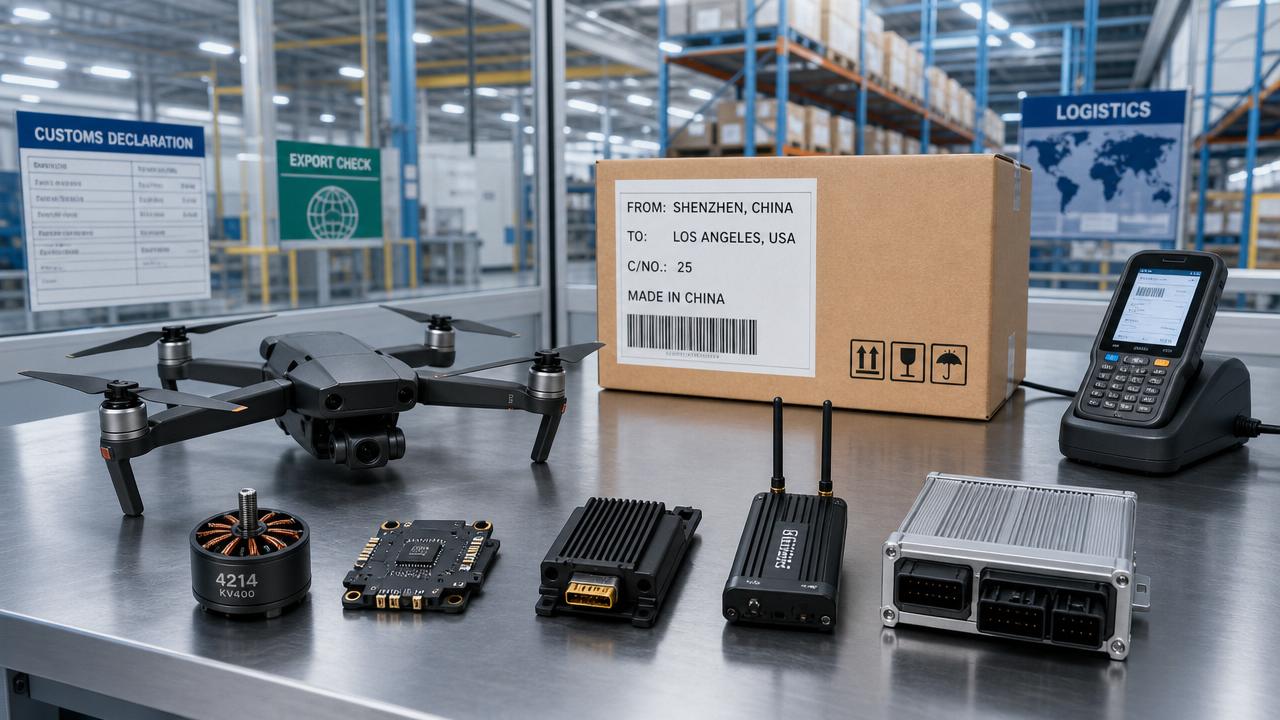
On June 30, 2026, a new customs compliance change took effect for cross-border e-commerce exports involving drones and related items. Based on Announcement No. 78 issued by the General Administration of Customs on June 9, the measure brings stricter declaration and traceability requirements to products such as motors, flight control systems, and image transmission modules, while also extending to precision transmission-related components including e-bike intelligent controllers and wireless electronic shifting modules. For exporters, manufacturers, and supply chain service providers, the key issue is not only filing accuracy but also whether product classification, manufacturer disclosure, and dual-use compliance can be aligned in day-to-day shipment operations.
What the new filing rules now require
According to the provided information, the General Administration of Customs issued Announcement No. 78 on June 9, 2026, and the requirements took effect on June 30, 2026.
The measure standardizes cross-border e-commerce export declarations for drones and related items. The covered scope includes drone-related products such as motors, flight control systems, and image transmission modules.
The filing requirements include mandatory submission of a 10-digit HS code, the real manufacturing entity, and the consignee's full name in both Chinese and English.
For dual-use items, the rule requires either a negative declaration or license-first management before export processing.
The same regulatory approach also applies to exports of e-bike intelligent controllers and high-precision transmission components such as wireless electronic shifting modules.
Where the pressure is likely to appear first
Export filing moves closer to product-level verification
From an industry perspective, direct trading companies may be affected first because the new requirements increase the precision needed in export declarations. The immediate pressure point is whether each shipment can be matched with the correct 10-digit HS code and complete consignee and manufacturer information, especially when cross-border e-commerce orders are fragmented across multiple SKUs or suppliers.
Manufacturing disclosure becomes more central in shipment preparation
Processing and manufacturing enterprises may also feel the impact more directly than before. Analysis shows that once the real production entity must be declared, manufacturers are no longer only background suppliers in documentation flow; their identity becomes part of the export compliance record. That may raise practical coordination demands between factories and export-facing sellers or service providers.
Component exporters face closer scrutiny beyond finished drones
What deserves closer attention is that the rule does not stop at complete drones. It also covers related items including motors, flight control systems, image transmission modules, and certain precision components used in other sectors. For suppliers of these products, the impact may appear in classification review, document preparation, and pre-shipment compliance checks rather than only at the final customs filing stage.
Supply chain service providers may need tighter document workflows
For logistics, customs declaration, and cross-border fulfillment service providers, the operational challenge may center on data completeness and consistency. Observably, the combination of item classification, manufacturer identification, consignee naming, and dual-use treatment means documentation gaps could become a more visible risk in execution.
What companies should review immediately
Check whether product mapping is granular enough
Companies handling drones, related modules, e-bike intelligent controllers, or wireless electronic shifting modules should first review whether their internal product lists can be mapped accurately to 10-digit HS codes. This is a practical issue, because filing precision now appears to be a front-end compliance requirement rather than a later-stage correction item.
Verify manufacturer and consignee data consistency
Businesses should also check whether shipping documents, supplier records, and order systems consistently reflect the real manufacturing entity and the consignee's full name in Chinese and English. Analysis shows that even where products remain unchanged, mismatched data across systems could become an execution bottleneck.
Separate routine declarations from dual-use review paths
For items that may involve dual-use treatment, what deserves closer attention is the difference between ordinary declaration work and pre-approval obligations. The rule described in the provided information indicates that these goods may require either a negative declaration or a license in advance, so companies need to distinguish which products can proceed under standard filing and which require an added compliance step.
Watch for operational interpretation in follow-up practice
Companies should continue to monitor how the rule is expressed and implemented in actual export workflows. It is important to distinguish between the confirmed text of the requirement and how it is applied in specific business scenarios such as mixed shipments, accessory bundles, or multi-supplier order fulfillment. The current signal is clear on filing obligations, but practical handling details still warrant close attention.
Why this matters beyond a single customs update
Analysis shows that this development is more than a narrow paperwork adjustment. The emphasis on 10-digit HS coding, real manufacturing entities, named consignees, and dual-use controls points to stronger traceability expectations around products that may have technical sensitivity or precision-use relevance.
It is more appropriate to understand this as both an immediate compliance change and a longer-term policy signal. Immediate, because the filing rules are already in force from June 30, 2026; longer-term, because the scope described in the provided information reaches not only drone assemblies but also related modules and certain high-precision components in adjacent sectors.
At the same time, this should still be treated as an industry dynamic that requires continued observation. The confirmed facts establish the filing framework, but the operational effect on lead times, transaction structures, and exporter workflows will depend on how businesses and service providers adapt in practice.
How the sector is likely to read this for now
At this stage, a neutral reading is that the rule raises the compliance threshold for cross-border e-commerce exports involving drones, related modules, and some precision control or transmission components. The most direct implication is not necessarily a change in demand, but a change in how accurately goods, manufacturers, and recipients must be identified before shipment.
From an industry perspective, the development is best understood as a concrete short-term compliance shift with broader long-term signaling value. It does not by itself confirm wider market outcomes, but it does indicate that traceability and product-specific declaration discipline are becoming more central to export execution in these categories.
Basis of this article and what still needs verification
This article is generated based on the user-provided news title, event date, and event summary. The confirmed basis includes the reported title, the June 30, 2026 effective date, and the summary stating that Announcement No. 78 was issued by the General Administration of Customs on June 9, 2026 and introduced declaration and traceability requirements for drone-related exports and certain other precision components.
For this type of industry update, relevant source categories typically include official government announcements, corporate disclosures, industry association notices, authoritative media reporting, and standard-setting documents. A specific official source link was not provided in the input, so the exact text and any later clarifications still need continued verification. Follow-up attention should focus on whether there are further official explanations regarding scope definition, filing practice, and implementation details for affected product categories.
Related News