
Composite Materials: Weight Savings vs Durability

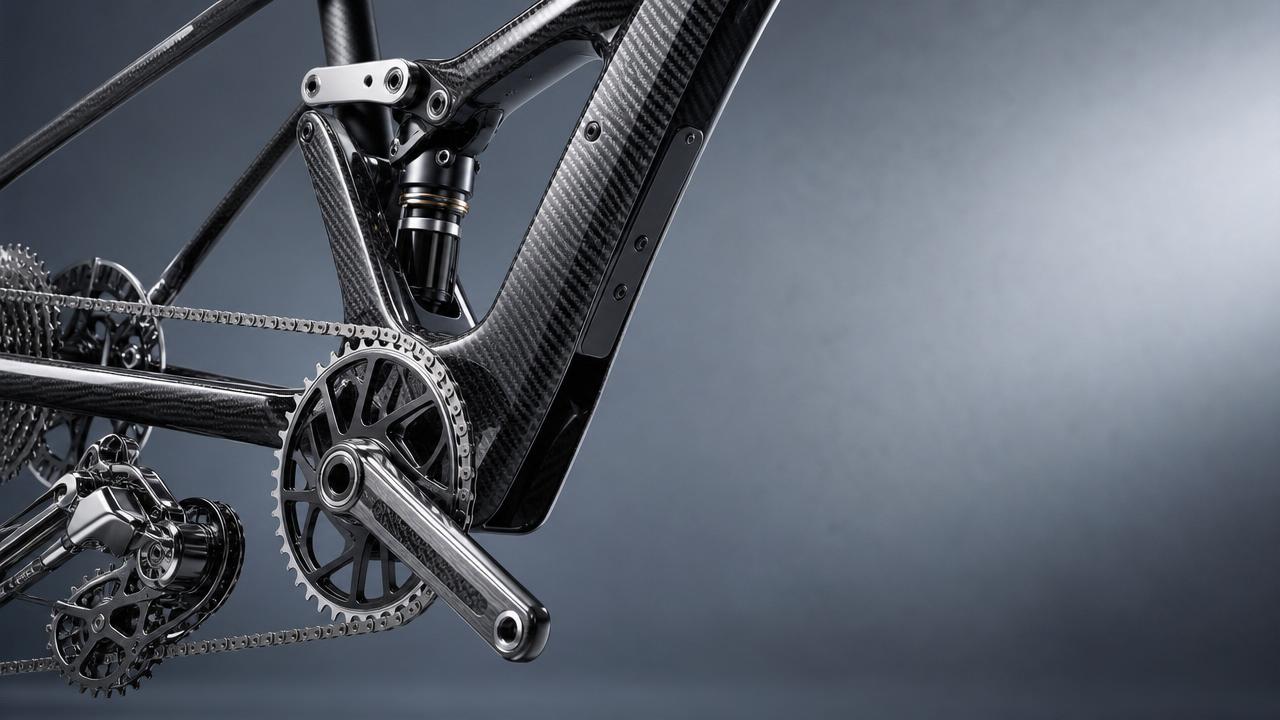
For technical evaluators in mobility and performance engineering, composite materials present a constant trade-off between aggressive weight savings and long-term durability. From carbon fiber frames to precision drivetrain components, the real challenge lies in balancing stiffness, fatigue resistance, impact tolerance, and lifecycle cost. This article examines how composite materials perform under demanding use cases and what decision-makers should prioritize when assessing material value.
In ACMD’s core sectors—e-bikes, smart e-scooters, high-speed e-motorcycles, derailleur systems, and carbon fiber frames—the material decision is rarely about mass reduction alone. A 15% weight cut can improve climbing efficiency, handling response, and battery range, yet a poorly matched laminate or resin system may increase warranty exposure within 12 to 24 months.
For technical evaluators, the practical question is not whether composite materials are advanced, but whether they are appropriate for a specific load case, production volume, service environment, and failure tolerance. That means comparing structural benefit against fatigue life, crash behavior, inspection difficulty, and total cost across the product lifecycle.
Why Composite Materials Matter in High-Performance Mobility
In two-wheeled mobility, every 100 to 500 grams removed from a critical structure can influence acceleration, maneuverability, vibration behavior, and rider perception. This is especially relevant in premium e-bikes, racing bicycles, and lightweight e-motorcycles where component integration, motor mass, and battery packaging already push designers toward tight performance envelopes.
Composite materials deliver value because they allow engineers to place stiffness and strength where needed instead of distributing mass uniformly. In a carbon fiber frame, for example, lateral stiffness around the bottom bracket may be increased while vertical compliance is tuned in the seat stays. Metals can be optimized too, but anisotropic layup gives composites a different design freedom.
Core Performance Advantages
- Lower structural mass for improved power-to-weight ratio and range efficiency.
- Directional stiffness tuning for pedaling response, steering precision, and vibration control.
- Part consolidation that can reduce weld points, joints, and local stress concentration.
- Corrosion resistance in wet, salty, and variable urban operating conditions.
Where the Trade-Off Begins
The same properties that make composite materials attractive also create evaluation complexity. A frame that survives 300,000 fatigue cycles in laboratory loading may still be vulnerable to a curb strike, clamp over-torque, or hidden delamination after transport damage. In drivetrain cages, guards, and covers, localized impact can dominate performance more than static stiffness.
Technical teams therefore need a wider assessment lens than headline weight. It is common for one composite design to be 20% lighter but only 5% more fatigue resistant, while another is 12% heavier and significantly easier to inspect, repair, or scale in production volumes above 5,000 units per year.
Typical Mobility Applications
Not all applications demand the same balance point. Carbon fiber monocoque frames, reinforced battery housings, fairings, handlebar systems, and derailleur components each operate under different combinations of compression, bending, torsion, vibration, thermal cycling, and accidental impact.
The table below outlines how composite materials are usually evaluated across ACMD-relevant mobility categories, with attention to the dominant loads and the durability questions most likely to affect procurement decisions.
The key conclusion is that composite materials create the strongest business case when the application combines performance sensitivity with controlled load paths. Where random impacts, low-cost servicing, or rough fleet use dominate, durability engineering and inspection strategy become just as important as raw stiffness-to-weight ratio.
Weight Savings vs Durability: The Technical Evaluation Framework
A useful evaluation framework starts with four variables: load type, failure mode, service environment, and acceptable maintenance burden. Without these, comparing composite materials to aluminum, steel, or hybrid structures can lead to misleading decisions driven by lab metrics rather than field performance.
1. Static Stiffness Is Not the Full Story
Many procurement reviews overvalue initial stiffness numbers. A structure can test 10% to 25% stiffer in torsion and still underperform over time if matrix cracking, bond-line fatigue, or local impact damage changes load distribution. For urban mobility fleets that see daily starts, curb events, and weather exposure, consistency over 18 to 36 months matters more than a single peak-value test.
2. Fatigue Resistance Must Match Real Duty Cycles
Composite materials often show strong fatigue behavior when the laminate is well designed and the loading direction is predictable. However, technical evaluators should request fatigue data at relevant amplitudes, not only pass/fail statements. A commuter e-bike frame and a downhill frame may both pass standard cycle tests, yet their damage tolerance requirements are fundamentally different.
Questions worth asking suppliers
- What load spectrum was used: constant amplitude or variable amplitude?
- How many cycles were completed: 100,000, 300,000, or more than 500,000?
- Was the failure criterion stiffness loss, visible cracking, or full fracture?
- Were bonded joints and inserts tested separately from the main structure?
3. Impact Tolerance Often Determines Real-World Durability
For carbon fiber frames and precision composite parts, accidental impact is often the deciding factor. A side fall at low speed, a dropped tool during service, or a shipping strike can cause internal damage that is not immediately visible. This risk is manageable, but only if the specification includes impact test criteria, inspection instructions, and protective design at vulnerable zones.
In ACMD-related products, common high-risk zones include bottom bracket shells, chainstay outer surfaces, battery mount interfaces, derailleur hanger regions, and steering clamp areas. Reinforcement plies, hybrid fiber stacking, or sacrificial guards may add 50 to 150 grams, yet prevent disproportionately expensive field failures.
4. Lifecycle Cost Must Include Inspection and Repair
A lighter part is not necessarily the lower-cost part once downtime, inspection skill, and replacement policy are included. For premium racing equipment, replacement after severe impact may be acceptable. For shared e-scooters or urban delivery fleets, the operator may prefer a structure that is 8% heavier but easier to assess visually and cheaper to replace in under 72 hours.
The matrix below provides a practical way to compare composite materials against durability expectations across product categories and business models.
This comparison shows why composite materials should not be approved on engineering merit alone. The correct decision depends on how the product is sold, serviced, ridden, and replaced. Technical evaluation must therefore connect design performance with operational reality.
Material Selection Criteria for Technical Evaluators
When reviewing composite materials for procurement or platform development, technical evaluators should move from generic “carbon vs metal” thinking toward application-specific criteria. A useful review can be completed through 6 checkpoints, each tied to measurable risk or value.
Checkpoint 1: Fiber and Resin System Fit
High-modulus fibers can improve stiffness but may reduce strain tolerance in impact-sensitive zones. Toughened resin systems add resilience, though they can affect process cost and cure parameters. In frames and housings exposed to repeated shock, a slightly lower modulus with better toughness may outperform a more brittle ultra-stiff design over 2 to 3 seasons of use.
Checkpoint 2: Layup Architecture and Load Path Alignment
Evaluators should ask whether the laminate stack reflects real load directions. A balanced layup for torsion, bending, and local bearing loads is more valuable than an aggressive unidirectional strategy tuned only for one laboratory test. Around inserts and fastening points, added reinforcement is often essential even when it increases part weight by 3% to 7%.
Checkpoint 3: Manufacturing Process Stability
Hand layup, bladder molding, compression molding, resin transfer molding, and prepreg-autoclave routes each create different consistency levels. For annual volumes below 1,000 units, a more manual process may be acceptable if quality control is strong. For 10,000-unit mobility programs, process repeatability and scrap control become major cost drivers.
Ask for process evidence in these areas
- Void control and consolidation consistency
- Insert bonding procedure and pull-out validation
- Cure window management and post-cure traceability
- Dimensional tolerance at interfaces, ideally within defined ranges such as ±0.3 mm to ±0.8 mm where relevant
Checkpoint 4: Environmental Resistance
Composite materials used in urban mobility must tolerate UV exposure, rain, road contaminants, wash cycles, and temperature swings. In many use cases, the practical range is from -10°C to 45°C, with occasional higher surface temperatures near motors, batteries, or enclosed fairings. Moisture resistance and long-term adhesive stability should be checked for bonded structures.
Checkpoint 5: Inspection and Serviceability
A technically impressive composite part may still be a poor business fit if field teams cannot assess damage reliably. Evaluators should define 3 service levels: rider-visible inspection, workshop inspection, and specialist assessment. This is particularly important for premium export products where distributors need clear accept/reject criteria.
Checkpoint 6: Lifecycle Cost and Replacement Logic
Lifecycle cost should include not only material and tooling but also warranty handling, spare inventory, technician training, and damage response time. In many B2B mobility programs, a part that costs 18% more upfront may still be preferable if it lowers field failure risk and reduces service events over a 24-month operating period.
Common Failure Modes and Risk Controls
Technical evaluators gain the most from composite materials when they understand how failure begins, not only how final breakage looks. Most field issues start at interfaces, edges, and concentrated load zones rather than across idealized laminate regions.
Frequent Failure Modes in Mobility Products
- Delamination after impact or repeated out-of-plane loading
- Matrix cracking caused by vibration, thermal cycling, or local overload
- Bearing failure around bolts, axles, and inserts
- Bond-line degradation from moisture, heat, or poor surface preparation
- Abrasion wear in exposed drivetrain-adjacent parts
Practical Risk Control Measures
Risk can be reduced through targeted design and process discipline. In many cases, the most effective changes are not expensive: local reinforcement, better edge finishing, torque-limit labeling, protective outer layers, or stricter incoming inspection for inserts and bonded subassemblies.
Five controls that usually improve durability
- Use hybrid layups in impact-prone areas instead of pure stiffness-driven stacks.
- Define torque windows for clamped interfaces and service manuals.
- Add sacrificial guards or replaceable shields in strike zones.
- Validate bonded joints under humidity and thermal cycling conditions.
- Train service partners to identify audible, visual, and dimensional warning signs.
For ACMD’s focus industries, this matters because the premium end of mobility increasingly combines lightweighting with electrification and electronic precision. Once batteries, wireless shifting, and integrated cabling enter the system, the cost of a structural service event extends beyond the composite part itself.
Procurement Guidance: When Composite Materials Are Worth the Premium
Composite materials are usually worth the premium when 4 conditions align: performance gains are measurable, load cases are understood, service protocols are defined, and the end market values lightweight efficiency enough to absorb added engineering cost. If one of these is missing, the commercial case weakens quickly.
Best-Fit Scenarios
The strongest fit includes high-end road and mountain bikes, competition-oriented drivetrain components, lightweight e-bike platforms, and certain high-speed e-motorcycle structures where acceleration, handling, and range sensitivity justify premium materials. In these cases, even a 5% to 10% system-level weight saving can influence buyer preference and product differentiation.
Caution Scenarios
The business case is weaker in abuse-heavy rental fleets, low-cost commuter platforms, and applications with frequent uncontrolled impacts or limited service training. Here, hybrid solutions or selective composite use may outperform full substitution. A mixed-material strategy often provides 70% to 80% of the performance benefit with lower durability risk.
A Short B2B Evaluation Checklist
- Define the target weight reduction in kilograms or percentage before supplier review.
- Map the top 3 field failure risks by application zone.
- Request fatigue, impact, and interface validation data in relevant load conditions.
- Confirm inspection steps, spare logic, and replacement lead times.
- Compare lifecycle cost over 12, 24, and 36 months, not only unit purchase price.
For technical evaluators, the most reliable decision is rarely the lightest one and rarely the cheapest one. It is the option that delivers repeatable performance under actual duty cycles while keeping warranty, service, and safety risks inside acceptable limits.
ACMD’s industry lens shows that composite materials create real strategic value when they are specified as part of a complete mobility system—one that includes structure, electronics, drivetrain response, thermal management, and after-sales practicality. If you are assessing lightweight platforms, carbon fiber frames, or precision components for next-generation mobility programs, now is the right time to align material selection with measurable field outcomes.
To review application-specific trade-offs, compare design pathways, or discuss a tailored evaluation framework for your product line, contact ACMD to get a customized solution, consult product details, and explore more mobility lightweighting strategies.
Related News