
Rear Derailleur Components That Most Affect Shift Accuracy

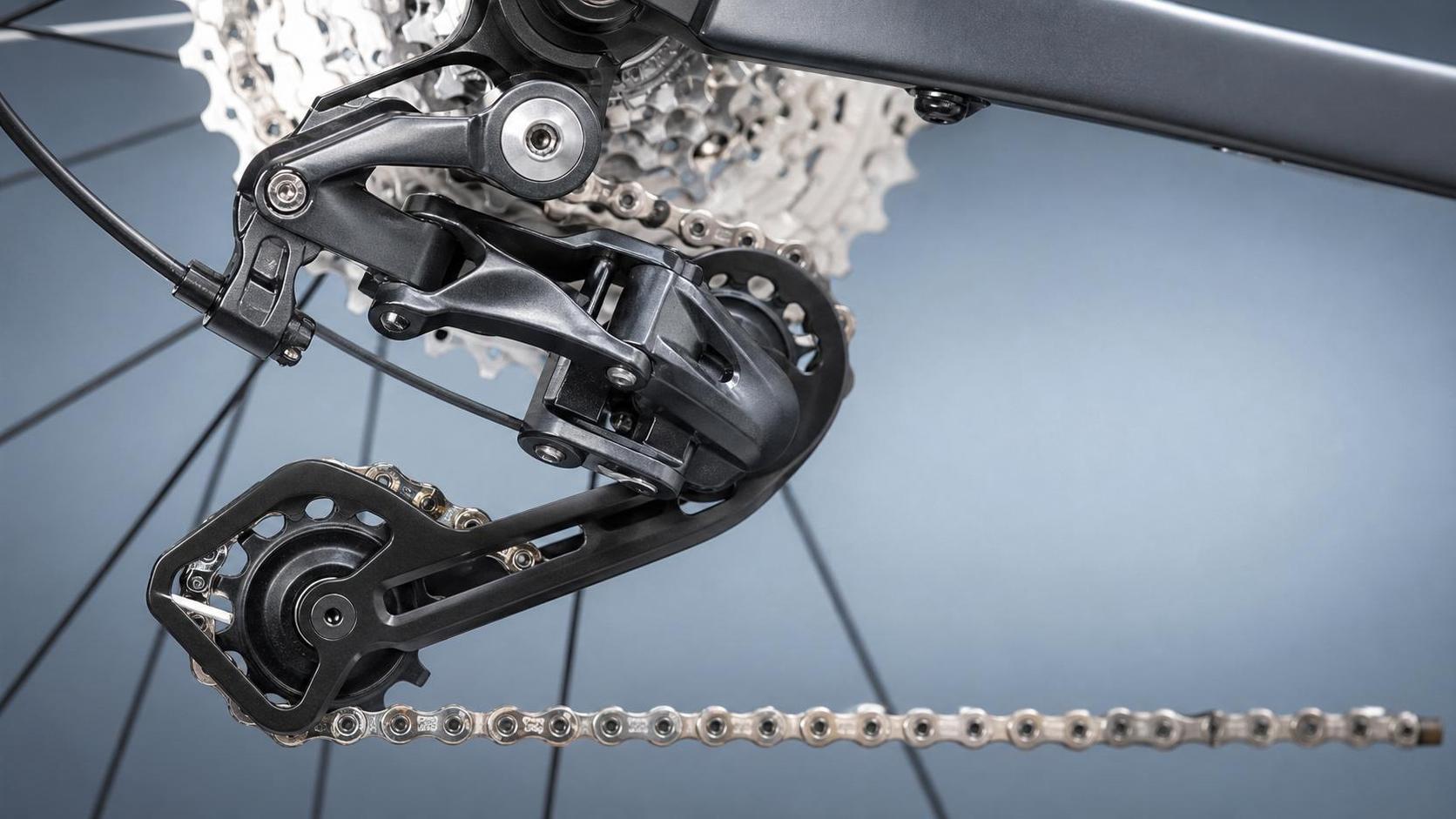
Shift accuracy is often judged as a system issue, yet service results usually depend on a smaller group of rear derailleur components. A drivetrain can look clean, indexed, and recently adjusted, then still hesitate under load because one pulley is worn, one spring has weakened, or one cage sits slightly out of plane.
That matters more now because modern bikes, e-bikes, and performance commuters are expected to deliver quiet, repeatable shifting across wider cassettes and tighter tolerances. In ACMD’s view of precision mobility, rear derailleur components sit at the point where materials, geometry, and control accuracy directly affect rider confidence and service quality.
Why small derailleur parts create large shifting problems
The rear derailleur guides chain movement laterally, manages chain tension, and tracks cassette spacing. Each of those jobs depends on several moving parts staying dimensionally stable.
When one element drifts out of tolerance, the symptom rarely stays isolated. A vague shift to one sprocket can become chain noise across the whole cassette, especially on 11, 12, and 13-speed systems.
This is why rear derailleur components deserve separate inspection rather than being treated as secondary to cables, chains, or shifters. In many workshops, the lost time comes from repeated adjustment attempts on hardware that is already compromised.
The components that most affect shift accuracy
Not every part influences indexing equally. Some rear derailleur components have a direct and immediate effect on chain placement.
Guide pulley and tension pulley
The guide pulley is usually the first place to look. It controls lateral chain tracking as the derailleur moves across the cassette.
Excess side play, hooked teeth, seized bushings, or rough bearings reduce positional precision. On narrow drivetrains, a small increase in pulley wander can feel like poor indexing.
The tension pulley matters less for exact indexing, but it still affects chain stability, noise, and return smoothness. If both pulleys are worn, diagnosis becomes harder because the symptoms overlap.
Cage plates and cage alignment
A cage does more than hold pulleys. Its parallelism influences chain path, pulley relationship, and how cleanly the derailleur manages tension under acceleration or rough terrain.
Bent cage plates are common after transport damage, drivetrain strikes, or chain jams. The derailleur may still move through the range, but the pulley line will no longer sit correctly beneath each sprocket.
Parallelogram pivots and link wear
The parallelogram is the derailleur’s indexing structure. Worn pivots create lateral slop, delayed response, and inconsistent movement between low and high gears.
This wear is especially visible on high-mileage commuter fleets and e-bikes. Added torque and heavier system weight increase drivetrain stress, so pivot play develops faster than many service schedules assume.
Return spring and clutch mechanism
Spring tension determines how decisively the derailleur returns after a shift command. If the spring weakens, upshifts may slow down and become sensitive to cable drag or contamination.
On clutch-equipped models, drag that is too high can mask other faults. Drag that is too low can let the cage move excessively, increasing noise and chain instability.
B-screw interface and limit hardware
The B-screw sets pulley-to-cassette gap, which has a strong effect on shift timing. Too close can produce chatter and poor clearance. Too far can make the shift feel delayed and vague.
Limit screws matter less during normal indexed travel, but they still define the derailleur’s safe working boundaries. Bent screws, damaged threads, or unstable stops can create false adjustment conclusions.
What the current market is changing
Rear derailleur components are under more pressure than they were a decade ago. Cassette ranges are wider, sprocket spacing is tighter, and customer tolerance for mechanical noise is much lower.
The growth of urban micro-mobility adds another layer. E-bikes used for daily transport often see high mileage, poor weather exposure, and irregular cleaning, all of which accelerate wear in pulleys, pivots, and springs.
ACMD tracks this as part of a broader shift toward precision mechanical transmission in low-carbon mobility. Whether the bike is an endurance road model or a utility e-bike, service quality increasingly depends on understanding wear patterns at component level.
How to assess rear derailleur components efficiently
A practical inspection sequence saves time and avoids replacing the wrong parts. The goal is to separate adjustment problems from hardware problems as early as possible.
- Check hanger alignment first, because good rear derailleur components cannot compensate for a misaligned mounting point.
- Spin both pulleys by hand and feel for roughness, drag, or looseness.
- Sight the cage from the rear and compare pulley alignment with cassette planes.
- Move the derailleur laterally by hand to detect play in the parallelogram pivots.
- Verify spring return force across the full gear range, not only in the stand’s middle gears.
- Measure B-gap under the cassette sizes actually fitted, especially on wide-range systems.
This order works because it mirrors real fault frequency. Many inaccurate diagnoses happen when indexing is adjusted before the derailleur body is mechanically verified.
Typical service symptoms and likely causes
Symptoms become easier to interpret when they are tied to specific rear derailleur components rather than to the entire drivetrain.
Mechanical and electronic systems share the same weak points
Electronic shifting changes actuation, but it does not remove the importance of rear derailleur components. A wireless derailleur with perfect motor control still depends on pulley condition, cage geometry, and pivot stiffness.
That is one reason ACMD treats electronic algorithms and mechanical hardware as one service ecosystem. Millisecond command accuracy means little if the derailleur body cannot hold a repeatable chain line under real load.
Where the business value appears in daily service
Accurate diagnosis reduces repeat visits. It also improves parts planning, because shops can identify whether the real need is pulley replacement, a derailleur rebuild, or full derailleur replacement.
For fleet service and premium retail maintenance, this matters even more. Downtime, callback labor, and customer dissatisfaction are often driven by marginal rear derailleur components that were judged acceptable at first glance.
There is also a materials dimension. Lightweight cages, composite frames, and compact dropout designs all tighten alignment expectations. As the broader mobility sector pushes efficiency and weight reduction, tolerance discipline becomes part of commercial reliability.
A practical way to decide the next step
When shift quality is below target, start by ranking rear derailleur components by influence: guide pulley, cage alignment, pivot wear, spring performance, then B-gap and limit hardware.
If more than one of those areas shows visible deviation, adjustment alone is unlikely to hold. In that case, replacing selected wear items or the derailleur assembly is usually more efficient than extended tuning.
A useful next move is to build a simple inspection standard around play limits, pulley wear, spring feel, and cage straightness. That creates more consistent decisions, especially as rear derailleur components continue to evolve with wider-range drivetrains and higher-performance mobility platforms.
Related News