
How to Evaluate a Bike Components Factory Before Ordering

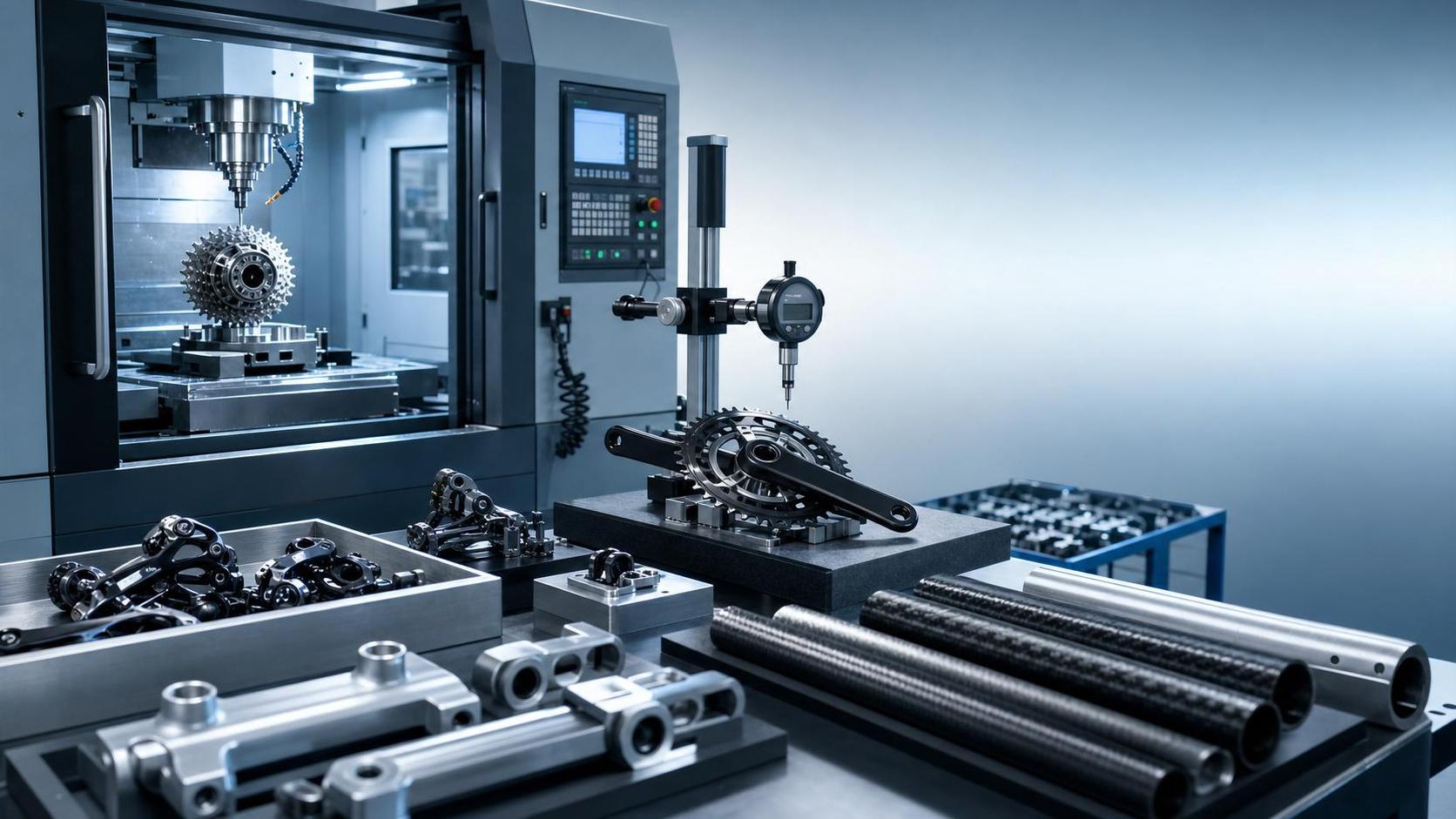
Choosing a bike components factory is rarely a simple sourcing exercise. The decision shapes product consistency, warranty exposure, launch timing, and even how a brand is perceived in competitive mobility markets. Before placing an order, the more useful question is not only who offers the best price, but who can repeatedly deliver the right level of precision, traceability, and responsiveness.
That matters even more now. Demand across e-bikes, performance drivetrains, lightweight frames, and urban micro-mobility has raised expectations for tighter tolerances, cleaner materials, and faster development cycles. In this environment, evaluating a bike components factory means reading both its production floor and its strategic fit.
Why factory evaluation now carries more weight
Bike components no longer sit in a narrow traditional category. They increasingly connect with electronics, advanced alloys, carbon systems, and compliance rules tied to global low-carbon transport.
ACMD tracks this shift across high-end two-wheeled vehicles, precision transmissions, and aerospace-grade lightweight materials. That broader lens is useful, because a modern bike components factory may also supply parts for e-bikes, smart mobility devices, or performance drivetrains.
As a result, factory evaluation should go beyond visual capability. It should test whether the supplier understands where the market is moving, including electronic shifting, stricter quality expectations, and demand for lighter, stronger assemblies.
Start with capability, not catalog size
A large catalog can create a false sense of competence. What matters first is whether the bike components factory can manufacture the exact category you need with stable process control.
A factory that performs well in stamped accessories may struggle with CNC drivetrain parts. One that handles basic aluminum components may not be ready for carbon interface parts or tight derailleur tolerances.
Look for evidence in three areas:
- Core production processes, such as forging, CNC machining, heat treatment, anodizing, molding, or composite layup.
- Relevant product history, including similar part families, materials, and performance targets.
- Engineering support during sampling, tolerance review, and manufacturability adjustment.
Usually, the strongest supplier is not the one claiming to make everything. It is the one with repeatable strength in a defined technical range.
Read the quality system behind the sample
A polished prototype proves very little on its own. The real test is whether the bike components factory can maintain the same quality across thousands of units and multiple production lots.
Ask how incoming materials are checked, how in-process inspections are documented, and how final approval is released. Traceability matters, especially for drivetrain, structural, and safety-related parts.
A useful review often includes the following checkpoints:
For higher-value categories, consistency is often more important than headline performance. A stable 98 percent pass rate beats impressive claims with poor process discipline.
Materials and sourcing deserve a closer look
Material quality is where many sourcing risks hide. Two parts can look identical yet behave very differently under load, vibration, corrosion, or long-term wear.
This is especially relevant in categories ACMD follows closely, such as derailleur systems, carbon-based structures, and lightweight performance parts. In those areas, resin quality, alloy grade, fiber specification, and heat treatment windows can change the whole result.
When checking a bike components factory, ask where raw materials come from, whether suppliers are approved formally, and how substitutions are controlled. Unapproved material changes are a common source of failure in scaled orders.
Good signs include mill certificates, resin or fiber traceability, coating specifications, and documented storage conditions for sensitive inputs. If the factory cannot explain its material chain clearly, the commercial risk is already visible.
Certification is useful, but context matters more
Certifications can filter out weak candidates, but they should not replace technical review. A bike components factory may hold ISO credentials and still lack the discipline needed for your actual part family.
Check whether the certifications connect to your business needs. That may involve quality management, environmental controls, product testing standards, or social compliance expectations from your target market.
It also helps to ask how certification requirements are embedded in daily routines. Are inspection intervals followed? Are calibration records current? Are audit findings closed with evidence? Paper compliance and operational compliance are not the same thing.
Capacity and lead time should be tested under pressure
Many sourcing decisions fail after the sample stage, when initial success cannot scale into delivery reliability. That is why capacity should be reviewed in practical terms, not marketing language.
Find out how the bike components factory handles peak orders, line balancing, maintenance downtime, and second-shift quality control. A factory may have enough machines but not enough trained operators or stable subcontractors.
Lead time should be broken into stages:
- Tooling or fixture preparation
- Sample build and validation
- Material procurement
- Mass production scheduling
- Finishing, inspection, and packing
This breakdown reveals where delays are most likely to appear. It also makes supplier comparison more objective.
Communication quality is a real operational metric
Communication is often treated as a soft issue, yet it directly affects cost, schedule, and defect rates. A strong bike components factory responds with technical clarity, not only fast replies.
During evaluation, note how the team handles drawing revisions, tolerance conflicts, packaging requirements, and test feedback. Clear questions are usually a good sign. Vague agreement can be a warning.
The same applies to problem escalation. When a dimension drifts or a coating result changes, you need a supplier that reports early, proposes containment, and documents corrective action without delay.
Visit the factory, or audit it like one
A site visit still provides the clearest view of operational reality. You can see line organization, housekeeping, work instructions, inventory flow, and whether quality checks exist beyond presentation folders.
If travel is not practical, a remote audit should still be structured. Request a live walkthrough of receiving, machining, finishing, inspection, packaging, and warehouse areas. Ask to see real production orders and current quality records.
Pay attention to whether the bike components factory shows normal activity or only staged areas. Small details, such as part segregation and labeling accuracy, often reveal more than sales presentations.
A practical shortlist for final comparison
When several suppliers appear qualified, final selection becomes easier with a weighted comparison. The goal is to reduce bias and make trade-offs visible.
- Technical fit for the target component category
- Quality system maturity and traceability depth
- Material transparency and sourcing stability
- Validated production capacity and lead time realism
- Communication accuracy during sampling and change control
- Commercial terms, including tooling ownership and claim handling
Price belongs on that list, but it should rarely stand at the top by itself. In most cases, the cheapest quote becomes expensive when defects, delays, and field failures begin to accumulate.
The most reliable next step is to define your component risk level, build a comparison sheet around the points above, and test each bike components factory against real requirements rather than general promises. That approach creates a stronger order decision and a more durable supply relationship.
Related News