
Lithium Electric Vehicle Batteries: Safety and Lifespan Basics

Lithium Electric Vehicle Batteries: Safety and Lifespan Basics
For quality control and safety management teams, lithium electric vehicle batteries are more than a power source. They directly shape product reliability, transport safety, warranty cost, and compliance risk.
That is why the basics still matter. A clear grasp of battery chemistry, failure triggers, and aging patterns supports better inspection standards and more practical risk controls.
In today’s mobility market, lithium electric vehicle batteries appear across e-bikes, e-scooters, and high-speed e-motorcycles. The safety profile changes with speed, load, charging behavior, and thermal environment.
This article explains the core safety and lifespan issues in plain technical language. It also highlights what to watch during supplier review, incoming inspection, use-phase monitoring, and failure response.
What lithium electric vehicle batteries are made of
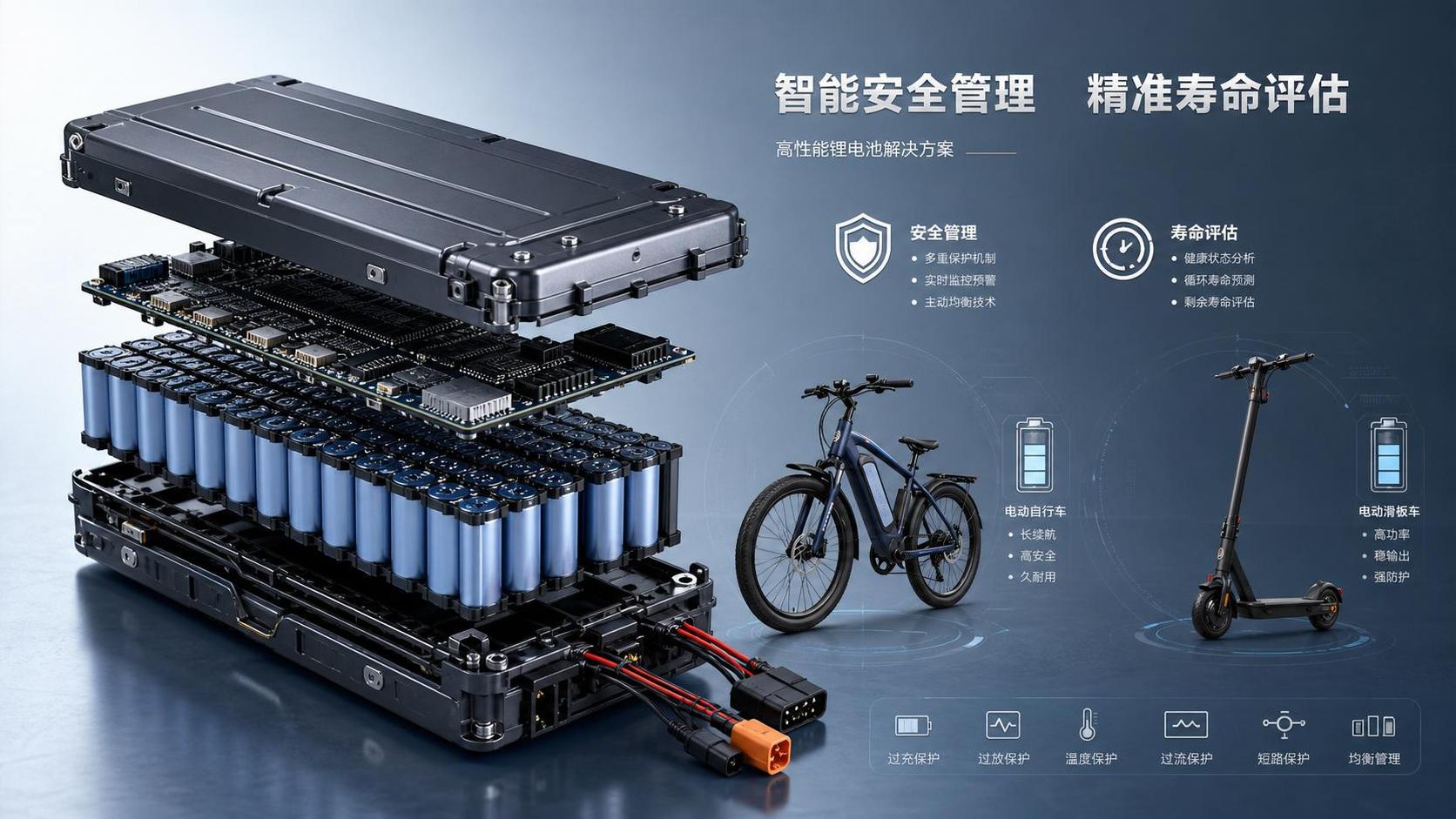
Most lithium electric vehicle batteries are built from cells, modules, wiring, housing, sensors, and a battery management system, or BMS. Each part affects both safety and service life.
The cell is the electrochemical core. Common formats include cylindrical, prismatic, and pouch cells. Each format offers different tradeoffs in heat flow, packaging density, and mechanical robustness.
Cell chemistry matters just as much. LFP, or lithium iron phosphate, usually offers stronger thermal stability. NMC, or nickel manganese cobalt, often delivers higher energy density.
That difference is not abstract. In actual mobility products, chemistry choice changes abuse tolerance, expected range, pack weight, cooling needs, and emergency response planning.
The BMS is another control point. It monitors voltage, current, temperature, state of charge, and sometimes state of health. Poor BMS calibration can turn a good cell into a system risk.
Why battery safety failures happen
When lithium electric vehicle batteries fail, the root cause is rarely a single dramatic event. More often, small defects or weak controls accumulate until the pack crosses a critical limit.
The best-known hazard is thermal runaway. This happens when heat generation inside a cell exceeds the system’s ability to remove or contain it.
Several triggers appear again and again:
- Internal short circuit from contamination, separator damage, or dendrite growth
- Overcharge caused by charger mismatch, BMS failure, or wiring faults
- External short circuit after crash damage, water ingress, or connector failure
- Mechanical crush, puncture, vibration fatigue, or poor pack fixation
- Thermal exposure during fast charging, direct sun, or enclosed storage
A practical point is that many incidents start outside the cell. Weak cable routing, poor welding, cheap chargers, and missing fuses often create the conditions for pack failure.
This also means inspections should not stop at nameplate data. Electrical integration, enclosure sealing, software logic, and service practices all belong in the same risk picture.
The main factors that shorten battery lifespan
Lifespan is not just about cycle count. For lithium electric vehicle batteries, aging comes from both cycling and calendar time, and those mechanisms often overlap.
High temperature is one of the fastest accelerators. It increases side reactions, raises gas generation risk, and speeds up electrolyte breakdown.
Depth of discharge also matters. Repeated full discharge and repeated charging to the upper voltage limit can stress the cell more than mid-range cycling.
Fast charging is another tradeoff. It improves usability, but it can increase heat and lithium plating risk, especially at low temperatures or with marginal cell design.
In fleet or shared mobility settings, usage variability adds another layer. Some packs see gentle urban duty. Others face hills, curb impacts, rapid turnaround charging, and long outdoor exposure.
Aging usually appears in three ways:
- Capacity fade, which reduces range and runtime
- Power fade, which weakens acceleration and climbing performance
- Rising internal resistance, which increases heat under load
From a quality standpoint, service life should be measured against the real duty cycle. Lab cycle numbers alone rarely tell the whole story.
How to evaluate battery safety in a practical way
A workable evaluation method starts with design review, then moves into testing, traceability, and field feedback. That sequence is more useful than relying on a single pass certificate.
For lithium electric vehicle batteries, focus on the controls that prevent escalation. The key question is not whether a cell can fail. It is whether the pack can manage failure safely.
Important review points include:
- Cell sourcing consistency and lot traceability
- BMS protection thresholds for voltage, current, and temperature
- Pack-level fuse strategy and short-circuit protection
- Vent design, flame resistance, and thermal propagation barriers
- Connector retention, insulation spacing, and ingress protection
- Mechanical fixation under vibration, drop, and crash loads
Incoming inspection should also be disciplined. Random open-circuit voltage checks are not enough. Teams should review dimensional consistency, weld quality, labeling, and charger compatibility.
Where possible, compare production data with field returns. Repeating patterns in resistance growth, swelling, or connector discoloration often reveal a process issue before incidents rise.
Standards and compliance points worth tracking
The compliance path for lithium electric vehicle batteries depends on product category and destination market. Even so, several standards show up repeatedly in technical review.
UN 38.3 remains essential for transport testing. It addresses vibration, shock, thermal conditions, altitude simulation, external short circuit, impact, overcharge, and forced discharge.
For light electric vehicles, UL 2271 is commonly referenced for battery systems. IEC and regional standards may also apply, depending on the vehicle architecture and market entry route.
Compliance review should look beyond the certificate itself. Confirm test scope, sample representativeness, version control, and whether the evaluated configuration matches shipped production.
This point is often missed. A certified pack design can still become risky after a charger change, software update, enclosure revision, or supplier substitution.
Daily controls that improve safety and service life
Good battery programs are usually operationally boring. That is a compliment. Stable routines are what keep lithium electric vehicle batteries predictable over time.
Several controls tend to deliver practical value fast:
- Use approved chargers only, with locked electrical specifications.
- Store packs at moderate temperature and partial state of charge.
- Flag swelling, odor, abnormal heat, and voltage imbalance early.
- Separate damaged packs and define a clear isolation workflow.
- Track cycle history, field failures, and warranty return patterns.
- Review software and hardware changes through formal risk assessment.
In actual operations, the strongest signal is often deviation from routine. A charger swap, a missing gasket, or a changed connector supplier can be enough to shift the risk level.
For that reason, battery safety management works best when it is tied to change control, not treated as a separate compliance file.
What a useful battery decision framework looks like
The right decision framework balances energy density, duty cycle, thermal margin, service environment, and traceability. There is no universal best battery for every electric vehicle platform.
For many programs, the smart move is to define acceptable degradation and acceptable failure modes at the start. That keeps technical review aligned with operational reality.
Lithium electric vehicle batteries perform well when the system around them is disciplined. Strong cell chemistry helps, but design control, validation depth, and field feedback matter just as much.
A practical next step is simple. Recheck pack architecture, charger control, abuse testing coverage, and post-market data together. That single review often reveals the biggest safety and lifespan gaps.
Related News