
Racing Cycling Helmets: What Safety Ratings Really Matter

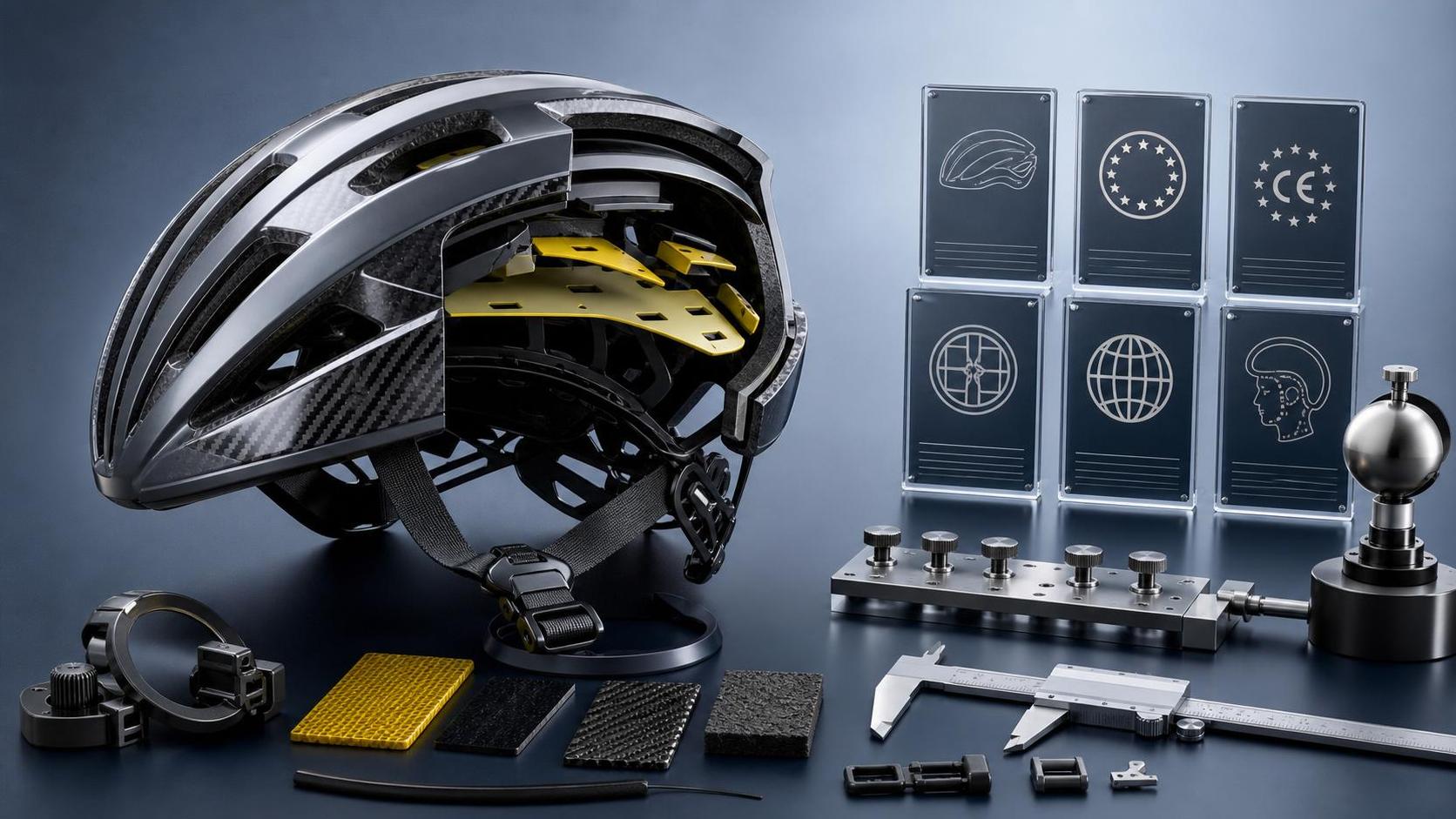
Choosing racing cycling helmets used to feel simple: pick the lightest model, check the vents, and trust the premium badge. That approach no longer fits the market. Modern crash science, faster urban riding, and the overlap between road racing, e-bikes, and high-performance mobility have made helmet safety labels far more important than marketing language.
For anyone comparing racing cycling helmets today, the real question is not whether a helmet has a certification sticker. Nearly every serious model does. The harder question is which safety ratings actually reflect likely impact scenarios, and which ones only confirm a minimum legal baseline.
That distinction matters across the wider two-wheel sector tracked by ACMD, where lightweight materials, aerodynamic shaping, and performance electronics continue to push speed and efficiency. As helmets become more technical, understanding safety ratings is part of making a sound equipment decision, not just a cautious one.
Why helmet ratings deserve closer attention
A helmet rating is a shorthand for tested impact performance under a defined protocol. It tells you that a product was examined against certain criteria. It does not mean every certified helmet protects equally, and it does not mean every crash type was fully represented.
That gap between compliance and real-world protection is where confusion starts. Many riders see a label and assume it answers everything. In practice, racing cycling helmets differ widely in shell coverage, rotational impact management, retention stability, and energy absorption strategy.
The issue has become more visible because premium cycling products increasingly borrow ideas from aerospace-grade composites and precision engineering. Lower weight and higher stiffness can improve performance, but they do not automatically improve head protection. Safety ratings help separate genuine protective design from attractive product storytelling.
The baseline standards most riders will see
Most racing cycling helmets sold through major channels carry at least one regional standard. The common names are CPSC in the United States, EN 1078 in Europe, and AS/NZS 2063 in Australia and New Zealand.
These standards are important because they set the legal or commercial entry point for sale. A helmet without them should raise immediate concern. Still, these labels mainly confirm that the helmet passed a minimum threshold under specific lab conditions.
In other words, passing CPSC or EN 1078 is necessary, but not especially informative when you are comparing one premium model against another. The standard tells you the helmet cleared the floor. It does not tell you whether it is near the ceiling.
What safety ratings really matter beyond compliance
If the goal is better decision-making, two areas deserve extra weight: independent comparative testing and rotational impact evaluation. These are often more useful than the basic pass-or-fail label printed on the box.
Independent ranking systems
Programs such as the Virginia Tech helmet ratings have changed the conversation around racing cycling helmets. They do not replace legal certification, but they do compare helmets using a scoring model tied to repeated impact scenarios and rotational acceleration risk.
That matters because many cycling crashes involve angled impacts, not perfect vertical hits onto a flat surface. A helmet that merely passes a standard may still perform modestly in comparative testing. A helmet with a stronger independent score often shows a more developed protection system.
Rotational impact technologies
Terms like MIPS, SPIN, WaveCel, KinetiCore, and other proprietary systems appear frequently in high-end product pages. These systems are designed to reduce rotational energy transfer during certain impacts, a factor linked to brain injury risk.
A useful way to read these claims is simple. The presence of a rotational management system is positive, but the brand name alone is not the rating. The better question is whether the complete helmet performs well in credible independent testing.
Why this matters in the current mobility landscape
The discussion around racing cycling helmets now sits inside a broader performance and mobility shift. Riders move between road racing, fast training rides, gravel events, urban commuting, and electric-assist platforms with fewer boundaries than before.
From ACMD’s perspective, that shift mirrors wider changes in two-wheeled technology. Carbon fiber frames, electronic shifting, and lightweight component systems increase speed efficiency and handling precision. At the same time, they can expose riders to higher average pace and denser traffic conditions.
So the value of helmet ratings is no longer limited to racing tradition. It now connects to micro-mobility risk management, premium sports gear selection, and the practical reality that faster vehicles require sharper equipment judgment.
How to compare racing cycling helmets in practical terms
When comparing models, it helps to read the helmet as a complete protective system rather than a set of separate selling points. Safety, fit, structure, and intended use should be considered together.
- Check for required regional certification first. No premium feature compensates for missing baseline compliance.
- Look for independent testing results. A strong comparative score adds context the legal label cannot provide.
- Evaluate fit security. A highly rated helmet that shifts during movement may underperform in actual use.
- Review coverage shape, especially around the temples and occipital area.
- Treat weight savings carefully. The lightest racing cycling helmets are not always the most protective options.
- Consider ventilation and aero design after safety and fit have been narrowed down.
Usually, the smartest shortlist includes only helmets that satisfy three conditions: certified for your market, rated well by a respected independent source, and comfortable enough to wear correctly on every ride.
Different riding scenarios change the answer
Not every buyer needs the same balance of protection, cooling, and aerodynamics. The phrase racing cycling helmets covers several use cases, and safety priorities shift with them.
This is why one of the most aerodynamic racing cycling helmets may be perfect for race day but less convincing for mixed-use riding. The right rating still depends on the real speeds, surfaces, and exposure patterns involved.
Common mistakes when reading helmet claims
A frequent mistake is assuming more expensive means safer. Premium construction often improves finish quality, weight, and airflow, but the protective gap between models can be smaller or larger than expected.
Another mistake is treating proprietary technology names as proof of superiority. A system may be well designed, yet implementation varies by helmet architecture, foam density, shell geometry, and fit interface.
It is also easy to ignore helmet age. Even strong racing cycling helmets lose value if they have taken an impact, been stored poorly, or no longer fit due to worn retention parts. Ratings apply to a tested condition, not to indefinite service life.
A smarter way to make the final decision
The best buying approach is to build a short decision framework. Start with certification for your region. Then review independent safety ratings. After that, compare fit, coverage, and real-use comfort before weighing aerodynamic or style preferences.
That order reflects what matters most. A helmet only protects well when it is relevant to the riding environment and stable on the head. Everything else, including weight and appearance, sits further down the list.
For anyone researching racing cycling helmets through a performance-focused mobility lens, the useful next step is clear: compare the labels you see, separate minimum compliance from meaningful comparative evidence, and judge every model in the context of how and where it will actually be ridden.
Related News