
Carbon Fiber Manufacturing Costs in Monocoque Bike Frames

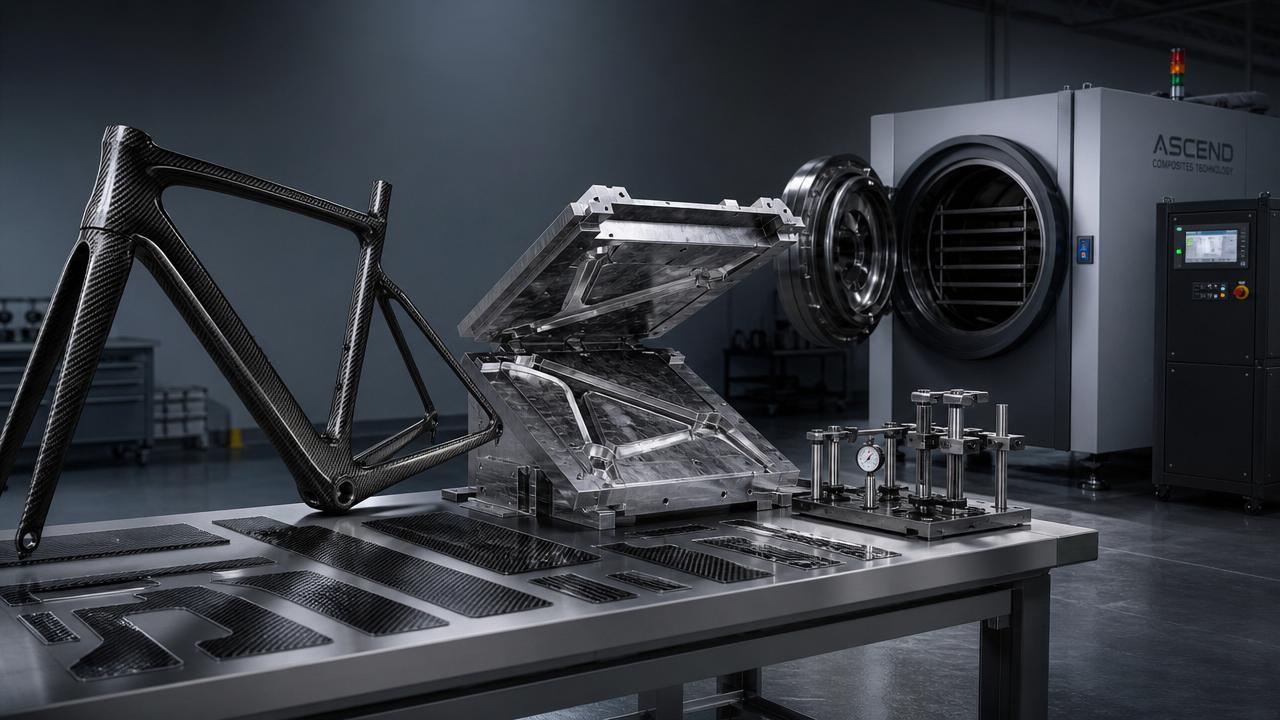
For financial decision-makers evaluating premium bike production, carbon fiber manufacturing is more than a materials topic—it is a margin, positioning, and risk-control issue. In monocoque bike frames, every cost driver, from tooling and layup labor to curing yield and quality assurance, directly shapes pricing power and long-term ROI. This article outlines where the real costs arise and how manufacturers balance performance, scalability, and profitability.
In the premium bicycle market, monocoque construction remains a strategic differentiator because it supports lower frame weight, cleaner aerodynamics, and tuned stiffness. Yet the financial profile of carbon fiber manufacturing is rarely linear. A frame that performs well in a lab or on a race course may still fail a commercial review if scrap rates, cycle times, or tooling amortization are misjudged.
For ACMD’s audience of finance leaders, sourcing teams, and program approvers, the practical question is not whether carbon monocoque frames are technically attractive. The real question is which cost elements are fixed, which are variable, and which can be improved through process discipline, supplier alignment, and volume planning.
Why Monocoque Frame Costs Behave Differently from Metal Frame Costs
Unlike aluminum or steel frames, where much of the economics depend on tube forming, welding hours, and finishing, carbon fiber manufacturing in monocoque bike frames concentrates cost into material architecture, mold investment, and process yield. This shifts the cost conversation from pure labor arithmetic to a mixed model of capital intensity and quality control.
A welded alloy frame may tolerate moderate rework with manageable cost penalties. A monocoque carbon frame often cannot. If internal wrinkles, resin-rich zones, or voids appear after curing, the unit can move from high-value inventory to scrap in 1 production cycle. That makes first-pass yield a board-level metric when annual volumes are below 10,000 units.
The basic cost structure
In most premium programs, cost is divided into 5 major buckets: raw carbon and resin systems, tooling and mold development, labor for layup and assembly, curing and finishing operations, and inspection or warranty-related quality overhead. The exact ratio changes by frame complexity, but the interaction between these buckets is what determines gross margin.
Key financial distinction
Material costs in carbon projects can represent 25%–40% of direct unit cost, while labor and process time often account for another 30%–45%. Tooling may appear small on a per-unit basis only after it is spread across sufficient output. If actual demand lands at 2,000 frames instead of a forecasted 6,000, the effective tooling burden can triple.
The table below shows how cost behavior typically differs between monocoque carbon frames and more conventional metal-frame programs from a finance perspective.
The main takeaway is straightforward: carbon fiber manufacturing can support premium pricing, but the margin model is more exposed to forecast errors, process drift, and underused tooling. That is why finance teams need visibility beyond the bill of materials.
The Real Cost Drivers Inside Carbon Fiber Manufacturing
When evaluating a monocoque frame program, the headline material cost is only the beginning. The deeper cost drivers sit inside ply design, labor intensity, cure process control, and inspection rigor. In practice, a 5% change in yield can have more profit impact than a 3% reduction in raw material pricing.
1. Carbon prepreg and resin system selection
Prepreg remains a common route for premium frames because it offers controlled fiber-to-resin ratios and better repeatability. However, different fiber grades and resin systems create major price gaps. High-modulus material may improve stiffness in targeted zones, but it also raises input cost and can tighten process windows for handling and curing.
Storage conditions also matter. Prepreg often requires cold-chain management and time-limited out-life control. If operators exceed handling windows or if stock rotation slips, the material loss becomes a direct hidden cost. For low- to mid-volume producers, inventory discipline can protect 2%–4% of annual material spend.
2. Tooling, molds, and development amortization
A monocoque frame is not built from one simple mold set. A complete program may require frame molds, fork molds, inserts, compaction tools, and trim fixtures. Development can also include several iteration loops for ride feel, stiffness tuning, and tire-clearance validation. If design revisions continue late into the program, amortization becomes heavier and commercialization slows.
For finance teams, the risk is not only the initial tooling check. The larger issue is whether the supplier can hold dimensional stability over 3,000 to 8,000 cycles before meaningful maintenance or refurbishment is needed.
3. Manual layup labor and skill variance
Manual layup remains one of the biggest cost centers in carbon fiber manufacturing. Depending on frame complexity, a premium monocoque structure can require 150 to 300 individual ply placements. Labor time may range from 3 to 8 hours per frame set before curing, especially when internal reinforcement and localized stiffness zones are used.
This is not interchangeable labor. Operator training affects overlap accuracy, fiber orientation, wrinkle prevention, and material waste. A plant with weak process discipline may show acceptable average labor rates yet still deliver poor economics because rework and scrap absorb the apparent savings.
4. Curing, trimming, finishing, and paint
Curing cost comes from equipment time, energy, and throughput constraints. Whether using autoclave or controlled oven curing, cycle duration can stretch from 90 minutes to more than 4 hours depending on resin chemistry and part architecture. Throughput bottlenecks in curing often create hidden queue costs that do not appear in basic BOM reviews.
Finishing also matters more than many budgets assume. Trimming, sanding, surface correction, and premium paint schemes can add meaningful labor and reject risk. Cosmetic expectations are especially strict in high-end road, gravel, and race-oriented models where exposed carbon or thin-paint finishes leave little room for visual inconsistency.
5. Quality assurance, testing, and warranty reserve
Inspection in monocoque frame production goes beyond visual checks. Manufacturers may use dimensional gauges, tap testing, ultrasound in selected cases, and batch destructive validation. Every additional control step raises cost, but inadequate control raises warranty exposure, replacement logistics, and brand risk.
For premium programs, a practical finance approach is to model not only direct manufacturing cost, but also a quality reserve based on expected reject rates, transit damage sensitivity, and after-sales replacement ratios over 12 to 24 months.
A Cost Map for Finance Teams Reviewing Monocoque Programs
Financial approval improves when cost drivers are translated into decision-ready categories. Rather than asking whether the frame is “expensive,” teams should test how each category affects total landed cost, gross margin, and pricing resilience under different volume assumptions.
The following table provides a practical review framework for carbon fiber manufacturing in premium bike frame programs.
This structure helps separate “premium but manageable” programs from “premium but fragile” programs. In many cases, the difference lies not in carbon price alone, but in process consistency and realistic volume planning.
Three volume scenarios finance teams should model
- Low volume launch: 1,000–2,500 frames annually, where tooling amortization and setup overhead are heavy.
- Growth volume: 3,000–6,000 frames annually, where labor productivity and curing bottlenecks become critical.
- Scaled production: 7,000+ frames annually, where supplier capacity, takt discipline, and warranty stability dominate.
Without these scenarios, approval decisions can rely too heavily on nominal ex-factory cost rather than fully absorbed program economics.
How Manufacturers Protect Margin in Carbon Fiber Manufacturing
The most competitive suppliers do not reduce cost by simply buying cheaper carbon. They protect margin by controlling complexity, stabilizing labor, improving yield, and aligning design ambition with production reality. For premium bike brands, that is where the best ROI is usually found.
Design for manufacturability
A highly optimized race frame may add marginal aerodynamic or stiffness gains while sharply increasing layup complexity. Finance reviewers should ask whether each structural feature improves commercial value enough to justify more plies, more inserts, or more difficult bladder placement. Even a reduction of 15 to 20 ply pieces per frame can improve labor efficiency meaningfully at scale.
Supplier process maturity
A mature supplier should document work instructions, layup sequencing, cure profiles, in-process checkpoints, and defect classification. The absence of this discipline usually shows up later as variable cycle times and unstable quality. For finance teams, supplier maturity is a risk filter, not an engineering detail.
Balanced premium strategy
- Use high-performance fiber selectively in high-stress zones instead of across the full structure.
- Standardize paint and finish options during launch quarters to reduce cosmetic reject rates.
- Align SKU count with realistic order volume to avoid fragmented tooling recovery.
- Lock inspection gates before mass production rather than after the first claim wave.
These actions often produce more reliable savings than aggressive material negotiation alone. In premium mobility segments, process discipline can preserve both margin and brand equity.
Procurement and Approval Checklist for Financial Decision-Makers
Before approving a monocoque frame program, finance stakeholders should request a structured review that connects engineering assumptions to commercial outcomes. This is especially relevant in markets where e-bike and performance bike demand can shift by region, subsidy policy, or consumer sentiment within 2 to 4 quarters.
Questions worth asking suppliers and internal teams
- What first-pass yield is assumed at pilot stage, and what yield is expected after 90 days of mass production?
- How many labor hours are budgeted per frame set, and what portion is sensitive to operator skill?
- What tooling maintenance interval is expected after repeated production cycles?
- Which defects are repairable, and which defects automatically convert to scrap?
- What warranty reserve is prudent for the first 12 months in a new geometry or layup platform?
- How quickly can the supplier ramp if demand rises by 30% within one season?
Common approval mistake
One recurring mistake is approving a frame based on target retail price and sample performance while underestimating production variability. Carbon fiber manufacturing rewards disciplined launches. Pilot builds, validation batches, and conservative yield assumptions usually produce better board outcomes than optimistic cost sheets built from ideal conditions.
For organizations operating across premium bicycles, e-bikes, and adjacent lightweight mobility categories, the same principle applies broadly: composite performance only creates enterprise value when process capability, risk reserve, and pricing strategy are aligned from day one.
Strategic Takeaway for Premium Bike Programs
Carbon fiber manufacturing in monocoque bike frames is a strategic investment decision, not a narrow materials purchase. The strongest programs treat tooling, labor, cure throughput, yield, and warranty exposure as one connected financial system. That perspective is essential for approving products that can sustain premium pricing without eroding margin through hidden production losses.
For financial approvers, the most reliable path is to evaluate total program economics across at least 3 scenarios: launch, stabilization, and scale. When brands and OEM partners can show disciplined process control, realistic amortization, and measurable quality gates, premium carbon programs become far easier to justify.
If you are assessing monocoque frame sourcing, supplier capability, or broader lightweight mobility strategy, ACMD can help you translate technical manufacturing variables into commercial decision metrics. Contact us to explore a tailored intelligence framework, review supplier cost logic, or learn more solutions for premium composite mobility programs.