
Urban Mobility Technology Trends Shaping Cities in 2026

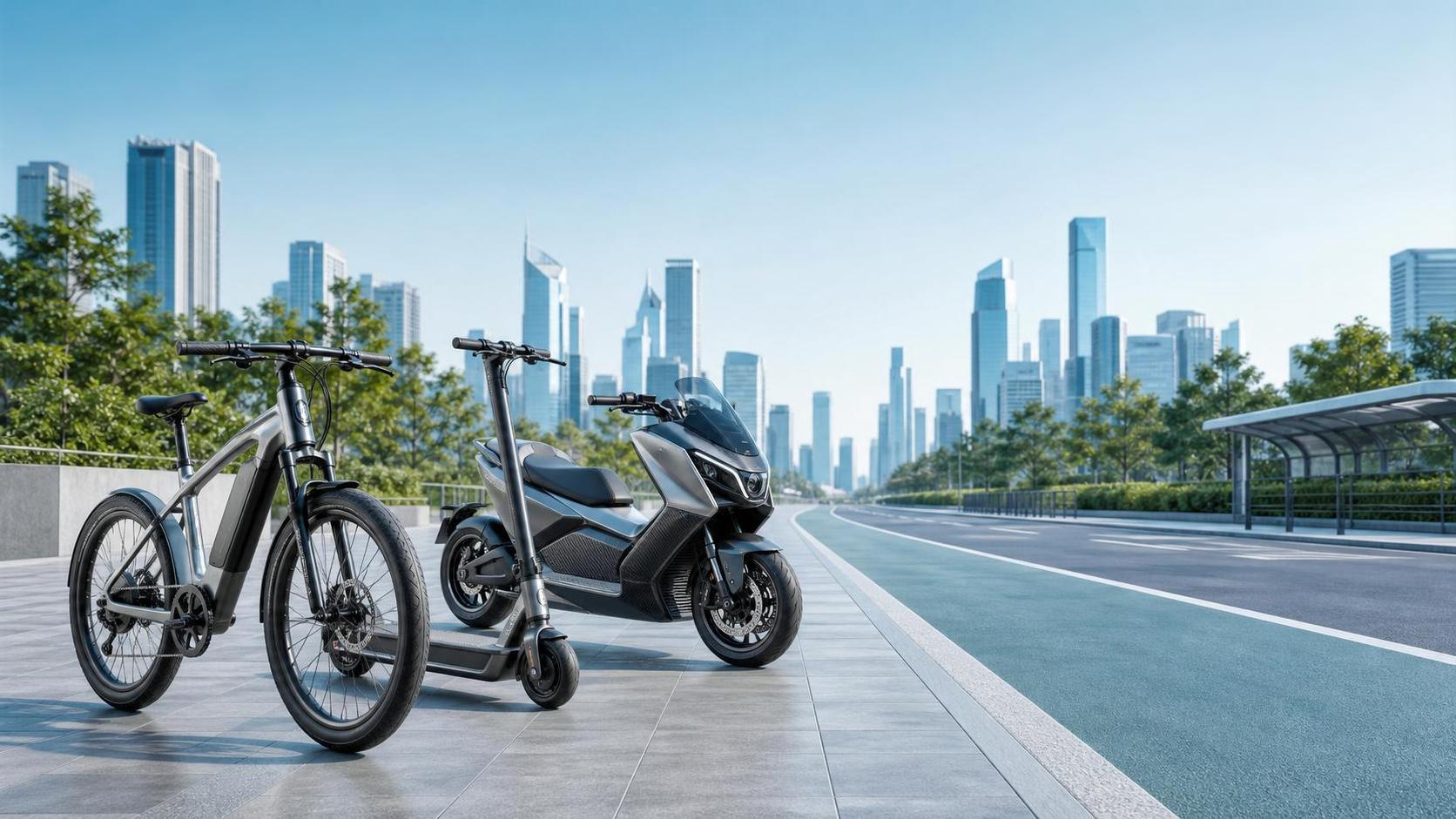
In 2026, urban mobility technology is shaping cities less through speed alone and more through coordination. The real shift is the integration of vehicles, materials, software, energy networks, and policy into one urban operating layer.
That makes the topic strategically important across the broader mobility industry. Decisions about e-bikes, smart e-scooters, lightweight structures, connected corridors, and battery systems now affect congestion, safety, emissions, and capital efficiency at the same time.
The most useful way to read current market signals is not by treating each product category separately. Cities are increasingly evaluating how micro-mobility assets behave inside a shared infrastructure and data environment.
Why urban mobility technology matters in 2026
Urban mobility technology now sits at the intersection of transport planning, industrial design, energy transition, and digital operations. It is no longer a niche conversation about devices.
Cities are under pressure to move more people with less space. They also need systems that remain functional during fuel volatility, climate stress, labor shortages, and changing commuter behavior.
This is where two-wheeled platforms become more relevant. They require less road space, lower parking demand, and can be deployed faster than large fixed transit expansions.
At the same time, the technical bar is rising. Reliability, thermal performance, drivetrain precision, geofencing control, and lifecycle economics now matter as much as unit sales growth.
The market is moving from vehicles to systems
One of the clearest 2026 trends is the shift from standalone vehicles to system-level design. A scooter or e-bike is only as effective as the digital and physical network around it.
That network includes charging access, fleet telemetry, curb management, right-of-way rules, routing logic, maintenance workflows, and multimodal payment integration.
This systems view explains why urban mobility technology is attracting attention beyond transport operators. Materials specialists, electronics suppliers, software teams, and city planners now share the same execution risks.
ACMD’s industry lens is useful here because it connects component-level engineering with wider adoption conditions. That includes electronic shifting logic, carbon frame aerodynamics, battery thermal control, and regulatory signals.
The technologies defining the next phase
E-bikes are becoming core urban transport assets
E-bikes continue to move from consumer convenience into transport infrastructure. They serve daily commuting, short logistics routes, campus circulation, and mixed-use residential districts.
What matters in 2026 is not just motor assistance. It is how power management, frame weight, braking stability, and drivetrain response combine under real urban load conditions.
Lightweight materials are central to this shift. Aerospace-grade carbon fiber and refined frame design improve range efficiency, handling, and rider confidence without relying solely on bigger batteries.
Smart e-scooters are entering a controlled maturity phase
Smart e-scooters remain important for high-density districts and short first-mile, last-mile trips. The difference now is that growth is being filtered through stricter operational control.
IoT tracking, geofencing, remote diagnostics, and usage-zone automation are becoming baseline requirements. Cities want predictability, not just device availability.
That means urban mobility technology must support compliance at the firmware and platform level. If control logic is weak, deployment speed quickly becomes irrelevant.
High-speed e-motorcycles are expanding the use case envelope
High-speed e-motorcycles are creating a bridge between micro-mobility and performance transport. They are especially relevant in peri-urban zones, fast corridor travel, and premium delivery networks.
Their success depends on torque delivery, battery-swapping access, and thermal management discipline. Instant acceleration is attractive, but sustained reliability determines long-term viability.
Precision drivetrain electronics are no longer niche
Electronic derailleur systems may seem specialized, yet they reflect a wider direction in urban mobility technology. Mobility platforms increasingly rely on precise, low-latency control in compact mechanical environments.
Millisecond-response shifting, anti-interference logic, and efficient power transfer matter in high-performance cycling. The same engineering mindset carries into connected urban vehicles and fleet optimization.
What cities and operators are actually trying to solve
The practical value of urban mobility technology becomes clearer when viewed through problem clusters rather than product labels.
- Short-trip substitution: replacing car use on trips under ten kilometers.
- Network extension: linking rail, bus, office parks, and residential zones.
- Low-carbon delivery: supporting quieter, lighter urban logistics fleets.
- Street efficiency: reducing curb conflict and parking pressure.
- Operational visibility: using data to improve uptime and safety response.
These goals explain why city adoption now depends on measurable performance. Decision quality is improving because mobility programs are being judged by energy use, asset turnover, failure rates, and rider compliance.
How to evaluate urban mobility technology in business terms
In real deployment planning, the most expensive mistake is focusing on purchase cost while ignoring system friction. Urban mobility technology succeeds when technical choices align with operating context.
This is also where intelligence platforms add value. A source like ACMD helps connect technical detail with subsidy trends, access rules, and commercial willingness to pay.
Signals worth tracking over the next planning cycle
Not every trend deserves immediate investment. Some are durable indicators of where urban mobility technology is becoming structurally stronger.
- Battery-swapping pilots moving from trials to repeatable service zones.
- Higher adoption of lightweight composite frames in premium and utility vehicles.
- Better software control of parking behavior and speed-limited districts.
- Growth in connected drivetrain components with stronger interference resistance.
- Regulations that favor low-emission, low-noise urban delivery fleets.
On the other hand, fragmented charging policy, weak maintenance capacity, and poor data interoperability still slow scale. Those issues should be treated as design constraints, not afterthoughts.
A practical way to move forward
The most effective next step is to assess urban mobility technology by corridor, user behavior, and asset duty cycle. That reveals whether a city or operator needs lightweight commuter fleets, tightly geofenced scooters, or higher-speed electric platforms.
It also helps separate promising innovation from costly novelty. Good decisions usually come from comparing materials, control logic, infrastructure readiness, and regulatory fit in the same framework.
In 2026, the winners will not be those deploying the most devices. They will be the ones building urban mobility technology around measurable performance, resilient engineering, and a clear understanding of how cities actually move.
Related News