Traction Battery Systems Manufacturer Trends Shaping Supply in 2026

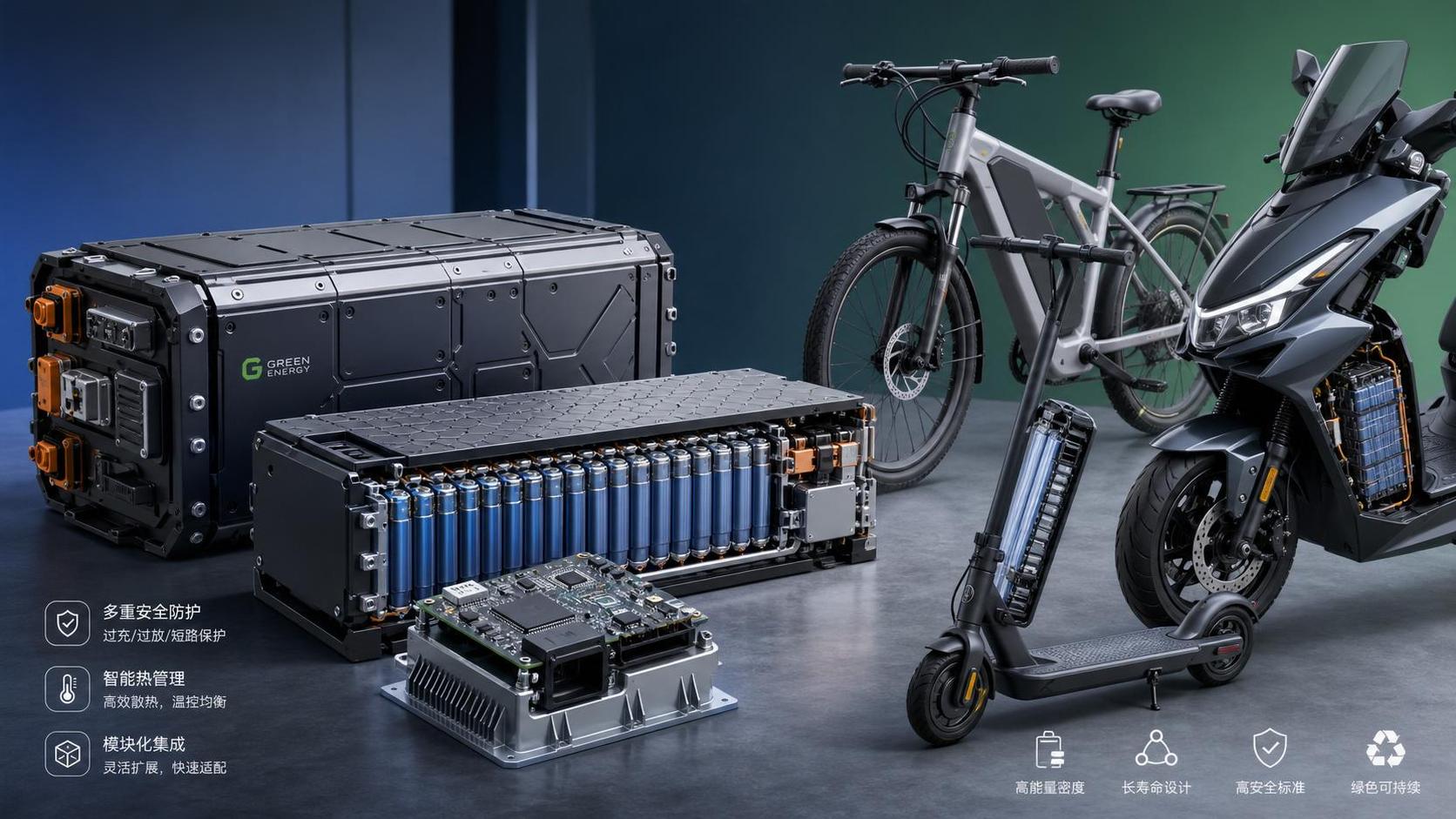
The supply picture for 2026 is becoming sharper, and more demanding, for every traction battery systems manufacturer serving electrified mobility.
What once looked like a battery sourcing question is now a broader decision about safety architecture, regional manufacturing depth, software integration, and lifecycle economics.
That matters across e-bikes, smart e-scooters, and high-speed e-motorcycles, where battery performance directly shapes range, weight, ride feel, charging behavior, and brand credibility.
For ACMD, which tracks micro-mobility, precision drivetrains, and lightweight materials, traction battery systems are no longer an isolated component category.
They sit at the intersection of low-carbon transport strategy, thermal engineering, vehicle packaging, and commercial resilience.
Why battery system supply has become a strategic issue
A traction battery systems manufacturer does far more than assemble cells into a box.
In practical terms, the supplier defines pack architecture, BMS logic, thermal pathways, structural protection, certification readiness, and in many cases serviceability after sale.
By 2026, these responsibilities will carry more weight because the market is moving in two directions at once.
Vehicles are becoming more performance-sensitive, while buyers and regulators are demanding lower cost and lower risk.
That tension is especially visible in premium urban mobility.
Lightweight carbon structures, compact drivetrains, wireless control systems, and connected vehicle platforms all depend on stable battery design choices.
A weak supplier can delay launches, complicate homologation, or create service problems that erase margin later.
What defines a traction battery systems manufacturer in 2026
The category is broadening.
Some companies still compete on enclosure assembly and cell sourcing.
Others now act as full system partners with electrical design, firmware tuning, thermal simulation, compliance support, and field data feedback.
The stronger players increasingly look like system integrators.
They combine chemistry selection, module design, battery management software, charge strategy, traceability, and second-life or recycling coordination.
This change is important because supply quality can no longer be judged by nameplate capacity alone.
A traction battery systems manufacturer may promise similar voltage and range figures, yet differ sharply in thermal stability, balancing accuracy, sealing performance, and warranty exposure.
The trends reshaping supply decisions
Localization is moving from preference to requirement
Regional assembly and near-market inventory are becoming competitive necessities.
Trade policy, shipping volatility, and local content expectations are pushing vehicle brands to reduce long, fragile supply lines.
For Europe and North America, this often means dual-region sourcing strategies rather than a single offshore dependency.
Thermal safety is now a commercial filter
Battery fire risk is no longer treated as a rare engineering event.
It affects insurance confidence, channel acceptance, public fleet eligibility, and urban regulatory access.
A traction battery systems manufacturer with validated thermal containment and strong BMS fault response enters evaluations with an advantage.
Cell flexibility is replacing single-chemistry dependence
Manufacturers are preparing for shifting availability across NMC, LFP, and emerging formats.
The strongest supply partners can redesign around changing cell inputs without disrupting vehicle performance targets.
That adaptability reduces exposure when cost curves or regulation change unexpectedly.
Software quality is becoming a differentiator
The battery management system increasingly shapes product reputation.
State-of-charge accuracy, balancing behavior, fault logging, remote diagnostics, and charging control all affect user trust and service cost.
For connected micro-mobility fleets, software maturity may matter as much as hardware construction.
How these shifts affect different mobility segments
Not every vehicle category needs the same battery strategy.
The evaluation framework should reflect the product’s use case, duty cycle, packaging limits, and service model.
From ACMD’s perspective, this is where battery systems connect with broader vehicle engineering.
A lightweight carbon frame can improve efficiency, but only if the battery pack supports balanced mass distribution and predictable thermal behavior.
Likewise, advanced drivetrain and control components deliver more value when battery output is stable under real riding conditions.
What deserves closer scrutiny during supplier evaluation
A traction battery systems manufacturer should be assessed as an operating partner, not only as a parts source.
The most useful review points usually include the following.
- Cell sourcing transparency, including approved alternatives and change-control discipline.
- BMS architecture, especially fault detection, balancing logic, firmware update method, and cybersecurity readiness.
- Thermal and mechanical validation data under shock, vibration, overcharge, puncture, and high ambient conditions.
- Certification pathway for target markets, including transport, storage, and end-product compliance support.
- Manufacturing traceability, from cell lot records to pack-level testing and warranty feedback loops.
- After-sales capabilities, including spare pack strategy, repair policy, and root-cause reporting discipline.
These points reveal whether a supplier can support scale without creating hidden downstream cost.
They also help separate presentation strength from operational strength.
Cost control is changing shape
Pack price still matters, but narrow unit-cost comparisons can mislead.
In 2026, the better question is total supply cost over the product lifecycle.
A lower initial quote may come with weaker yield, slower certification support, or limited replacement availability.
That can increase launch delay risk, service burden, and reputation damage.
A capable traction battery systems manufacturer often lowers cost indirectly through better pack consistency, fewer field failures, faster diagnosis, and smoother regional compliance.
Those benefits rarely appear in the first quotation sheet, yet they matter in boardroom decisions.
Where the market is likely headed next
The next wave will reward suppliers that combine industrial discipline with application-specific intelligence.
Battery pack platforms will become more modular, but validation requirements will become more exacting.
Regional assembly footprints will expand, especially where incentives and transport rules favor local value creation.
Data visibility will also deepen.
The traction battery systems manufacturer that can convert field data into design updates, warranty control, and predictive service insight will stand out.
That is particularly relevant in advanced two-wheel mobility, where user expectations for lightness, responsiveness, and dependable power continue to rise.
A practical way to move forward
The most useful next step is to build a comparison framework before shortlisting suppliers.
Map each traction battery systems manufacturer against vehicle segment needs, target regions, compliance demands, software expectations, and after-sales realities.
Then test the supplier story against measurable evidence, not presentation language.
For organizations following ACMD’s mobility lens, the stronger decision comes from linking battery supply with drivetrain precision, lightweight structures, and real operating conditions.
That approach makes 2026 trends more than market noise.
It turns them into a usable framework for judging resilience, technical fit, and long-term supply value.
Related News