
Electric Powertrains Explained: Efficiency, Torque, and Range Tradeoffs

Electric Powertrains Explained: Efficiency, Torque, and Range Tradeoffs
Electric powertrains are now central to modern mobility strategy. They shape how e-bikes, e-scooters, and high-speed e-motorcycles perform in daily use.
For technical evaluation, three variables matter most: efficiency, torque, and range. These metrics look simple on paper, but they constantly pull design decisions in different directions.
That tension is why electric powertrains deserve close attention. A system that feels fast may waste energy. One that extends range may soften response or limit top-end output.
In two-wheel mobility, those tradeoffs are especially visible. Weight, packaging, rider behavior, terrain, and thermal constraints all influence how electric powertrains behave in the real world.
From ACMD’s perspective, the value is not only technical. Understanding electric powertrains also helps explain product segmentation, regulatory fit, and the next wave of drivetrain innovation.
What an Electric Powertrain Actually Includes
At a basic level, electric powertrains convert stored battery energy into controlled wheel movement. The system is more than a motor bolted to a frame.
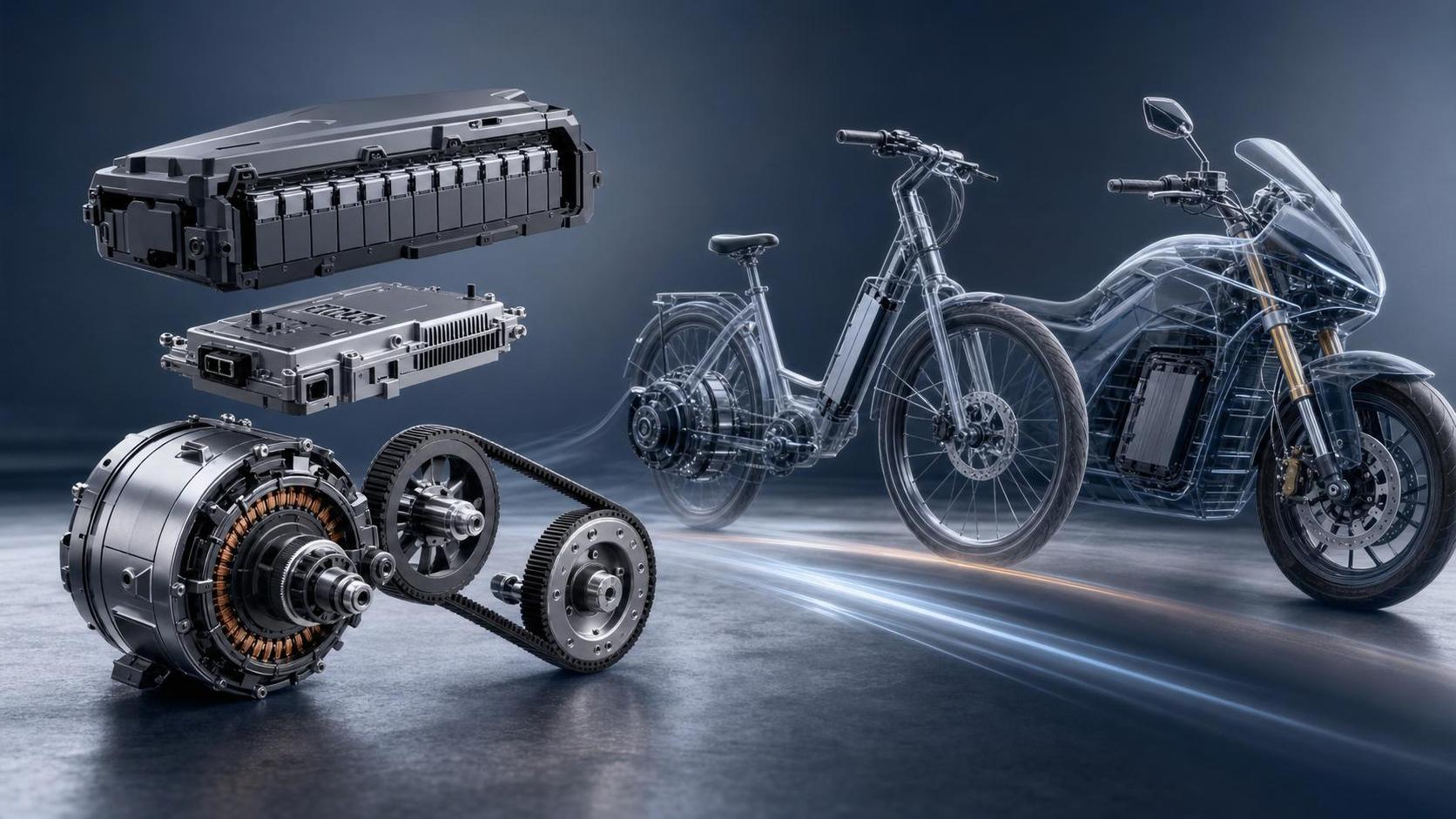
Most electric powertrains include five core elements:
- Battery pack and battery management system
- Motor, often hub-drive or mid-drive in light mobility
- Inverter or controller
- Reduction gear, chain, or belt transmission where required
- Software logic for torque delivery, safety, and thermal protection
The motor creates torque, but the controller decides how that torque arrives. The battery determines how long that performance can be sustained.
This is where many comparisons go wrong. Two vehicles can share similar motor ratings yet feel completely different because their electric powertrains are tuned for different missions.
An urban e-bike may prioritize smooth assist and low energy draw. A high-speed e-motorcycle may accept heavier cells and higher heat loads for stronger acceleration.
Why Efficiency Sits at the Center
Efficiency describes how much battery energy becomes usable motion rather than heat, noise, or control losses. In practice, it defines operating cost, thermal stability, and real-world usefulness.
High efficiency in electric powertrains comes from system matching. The battery, controller, motor winding, gear ratio, and vehicle weight must work in the same performance window.
Motor efficiency is never fixed across all speeds. It rises and falls with load, rpm, and temperature. That means electric powertrains are most efficient only in certain operating zones.
For city mobility, stop-and-go traffic punishes poor calibration. Frequent launches, low-speed climbing, and repeated braking can expose weaknesses in controller mapping and energy recovery strategy.
More advanced electric powertrains improve efficiency through several methods:
- High-efficiency motor architecture
- Lower-resistance power electronics
- Smarter torque mapping at partial loads
- Regenerative braking where vehicle class supports it
- Lighter chassis and lower rolling resistance
From a market angle, efficiency often matters more than headline power. It supports compliance, lowers battery size requirements, and reduces pressure on supply chains for premium cells.
Why Torque Feels So Transformative
Torque is the most visible advantage of electric powertrains. Electric motors can deliver strong rotational force almost instantly, which changes launch feel, climbing ability, and rider confidence.
In internal combustion vehicles, peak torque often arrives later in the rev range. Electric powertrains compress that delay, creating direct and immediate response from low speed.
That quick response is valuable in several scenarios:
- Urban starts through dense intersections
- Steep hill climbing on loaded cargo bikes
- Technical off-road sections for e-MTB platforms
- Fast overtaking in performance e-motorcycles
But high torque is not automatically better. If electric powertrains deliver too much torque too early, traction breaks down, tires wear faster, and energy consumption rises sharply.
This is why control software matters as much as motor output. Good electric powertrains shape torque in milliseconds, balancing acceleration with grip, stability, and rider intent.
In premium two-wheel systems, torque delivery is increasingly tuned by riding mode, cadence input, incline data, and thermal headroom. The result is smarter performance, not simply more force.
Range Is More Than Battery Size
Range remains one of the most misunderstood topics in electric powertrains. Many buyers focus on battery capacity alone, but usable range depends on a wider system equation.
Battery watt-hours matter, yet they are only the starting point. Vehicle mass, aerodynamics, speed profile, rider weight, ambient temperature, and route elevation all change the outcome.
For example, electric powertrains in lightweight commuter e-bikes may achieve strong range with moderate battery sizes. High-speed e-motorcycles often need much larger packs to overcome drag and peak power demand.
Range also depends on how often the system operates outside its efficient window. Repeated hard acceleration and sustained high speed can shorten distance far more than official estimates suggest.
This leads to a practical rule: range is a systems metric. Strong electric powertrains protect range through better thermal control, refined assist logic, and tighter energy management across the full drive cycle.
The Core Tradeoff: You Rarely Maximize All Three
The central design reality is simple. Electric powertrains rarely maximize efficiency, torque, and range at the same time within strict cost and weight limits.
If engineers chase stronger torque, they often increase current draw. That can create more heat, demand larger battery output, and reduce overall range under aggressive riding.
If they prioritize long range, they may lower peak output, cap speed, or choose conservative tuning. The vehicle becomes more efficient, but the ride may feel less dynamic.
If they pursue extreme efficiency, they may optimize around a narrow operating band. That works well in commuting cycles, but less well in mountainous or performance-heavy use.
This balancing act is why electric powertrains are increasingly segmented by application rather than marketed as universal solutions. Mission fit now matters more than raw specification sheets.
How This Plays Out Across Two-Wheel Categories
Recent market changes make the differences more visible. Electric powertrains in each category are being tuned around very specific user expectations and regulatory frameworks.
E-bikes
E-bike electric powertrains often favor efficiency and smooth assist. Mid-drive layouts usually perform better on climbs and integrate well with geared drivetrains.
Smart e-scooters
Here, packaging and portability dominate. Electric powertrains must stay compact, affordable, and predictable under short, frequent trips with heavy stop-and-go patterns.
High-speed e-motorcycles
These machines push torque and sustained power much harder. Their electric powertrains need advanced cooling, stronger cells, and tighter software control to protect performance over time.
Performance off-road platforms
Traction management becomes critical. Electric powertrains must deliver usable low-speed torque without wasting energy or destabilizing the chassis on changing surfaces.
What to Watch When Evaluating Electric Powertrains
A stronger evaluation framework starts with questions, not slogans. In actual research work, the following checkpoints usually reveal more than headline wattage alone.
- Check the intended duty cycle. Urban commuting, cargo hauling, and sport riding demand very different electric powertrains.
- Compare continuous output, not only peak claims. Sustained performance exposes thermal and battery limits.
- Look at system weight. Larger packs may improve range but reduce agility and efficiency.
- Assess controller behavior. Smooth torque calibration often matters more than raw launch force.
- Review charging and battery swap logic where relevant. Infrastructure can reshape the range tradeoff.
- Study real riding data. Bench efficiency alone does not tell the full market story.
A more obvious signal today is software maturity. Electric powertrains are becoming defined as much by algorithms, sensor fusion, and control refinement as by hardware selection.
Closing View
Electric powertrains are not a single performance answer. They are a design compromise shaped by mission, regulation, rider expectation, and the economics of lightweight mobility.
The most competitive systems are not simply the most powerful. They are the ones that align efficiency, torque response, and range with a clearly defined use case.
For anyone tracking micro-mobility and advanced two-wheel engineering, that is the practical lens that matters. Evaluate electric powertrains as integrated systems, and the market direction becomes much easier to read.
Related News