
Monocoque Frame Manufacturing: 2026 Cost and Quality Tradeoffs

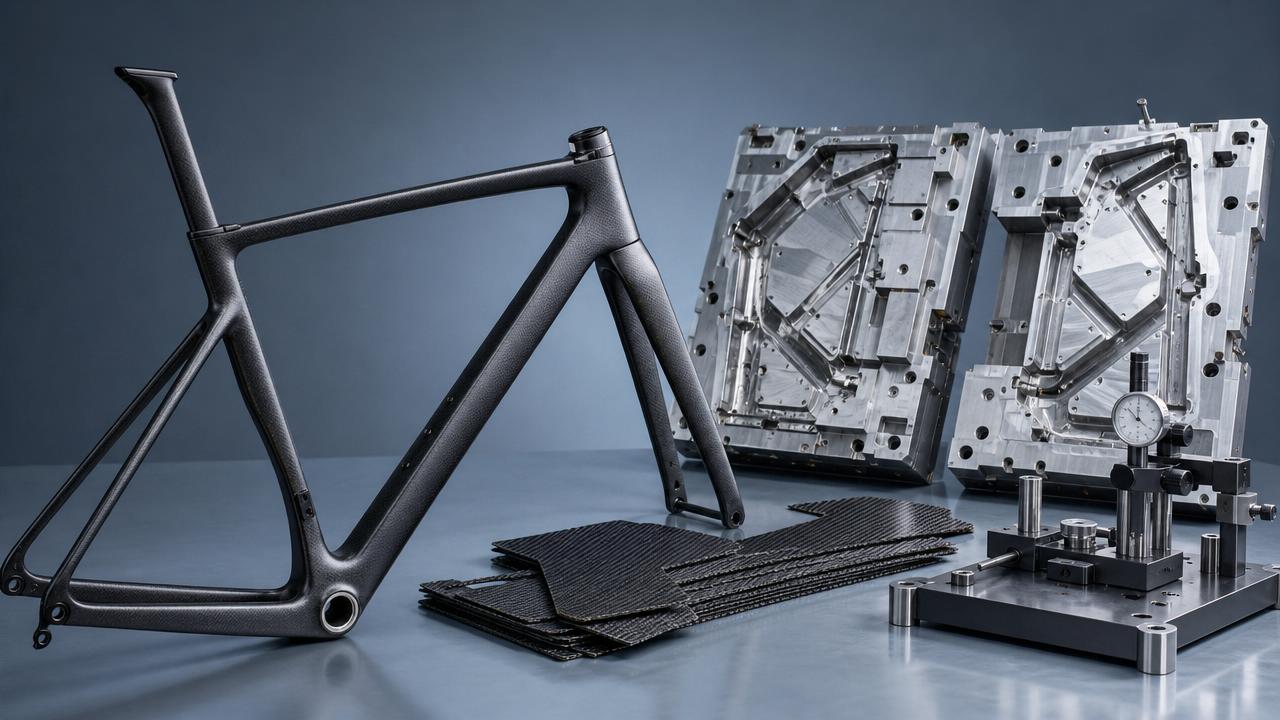
For procurement teams evaluating a monocoque frame supplier in 2026, the real challenge is balancing unit cost, structural consistency, and long-term brand risk. From carbon layup precision to curing efficiency and defect control, every manufacturing choice affects both pricing and performance. This article outlines the key cost and quality tradeoffs behind monocoque frame production to support smarter sourcing decisions.
In the carbon bicycle, e-bike, and performance mobility segments, the monocoque frame has become a core sourcing category because it directly affects stiffness-to-weight ratio, ride feel, aerodynamic integration, and warranty exposure. For procurement managers, choosing between a lower quoted price and a more controlled manufacturing process is rarely a simple cost-down exercise.
ACMD’s coverage of lightweight structures, precision drivetrain systems, and high-performance urban mobility shows a clear market pattern: by 2026, suppliers that control process variation within tighter ranges will command stronger OEM trust, even if unit pricing is 8% to 18% higher than less mature factories. The reason is simple—quality escapes in composite frames are expensive long after the PO is issued.
Why Monocoque Frame Manufacturing Creates a Procurement Tradeoff
A monocoque frame is built as an integrated shell structure rather than a simple assembly of many bonded tubes. In practical sourcing terms, this means material selection, mold quality, layup repeatability, bladder or mandrel control, curing cycles, and finishing standards all influence final performance.
Compared with simpler frame formats, a monocoque frame usually requires higher tooling investment, more skilled labor at the preform stage, and stricter inspection checkpoints. Procurement teams therefore need to evaluate not just piece price, but total supply risk across 3 dimensions: mechanical consistency, delivery reliability, and downstream claim cost.
The main cost drivers behind supplier quotations
In most factories, frame cost is shaped by 5 variables: carbon fiber grade, resin system, labor time per layup, mold amortization, and scrap rate. A supplier quoting 15% below market may be using lower modulus fiber in noncritical zones, reducing inspection frequency, or accepting a higher cosmetic repair ratio before shipment.
- Material package: standard, intermediate, or higher modulus fiber combinations
- Labor intensity: typically 4 to 9 labor-hours per frame set depending on complexity
- Curing capacity: autoclave-like control versus conventional oven process discipline
- Tooling life: mold wear can affect dimensional repeatability after several hundred cycles
- Yield loss: scrap and rework often range from 5% to 20% depending on process maturity
Where the cheapest quote usually hides risk
Low quotes are not always problematic, but procurement should ask what has been optimized. The most common risk points are wider fiber placement tolerance, less stable internal compaction, heavier resin-rich zones, and weaker final QA sampling. These may not appear in a quotation sheet, but they often surface in fatigue issues, paint cracking, or inconsistent bottom bracket alignment after mass production begins.
The table below summarizes how common manufacturing decisions affect both unit cost and quality exposure when sourcing a monocoque frame for road, gravel, MTB, or e-mobility applications.
The key conclusion is that lower frame cost is often achieved by reducing process control intensity. For procurement, the real benchmark should be cost per accepted frame delivered on time, not the headline FOB number alone.
Critical Quality Variables in Monocoque Frame Production
Quality in a monocoque frame does not depend on one dramatic technology claim. It is usually the result of disciplined control across dozens of small steps, from prepreg storage and kit cutting to demolding, machining, painting, and packing. Even a 2 mm misplacement in a reinforcement patch can affect stiffness behavior in high-load zones.
Layup precision and fiber orientation
Fiber orientation determines how the frame handles torsion, pedaling loads, impact, and vibration. Procurement teams should ask whether the supplier uses standardized ply books, lot traceability, and in-process signoff at critical nodes such as the head tube, bottom bracket, chainstay junction, and seat mast area.
A controlled supplier may define internal layup tolerance bands, for example within a few degrees for fiber angle placement and within narrow limits for overlap positioning. Even if the factory does not disclose full proprietary schedules, it should explain how it manages repeatability across production lots of 100, 500, or 1,000 units.
Void content, compaction, and wall consistency
One of the biggest hidden issues in composite manufacturing is inconsistency inside the structure. Procurement cannot rely on paint finish alone. A visually perfect monocoque frame may still have resin pooling, bridging, or trapped air in hard-to-see intersections. These issues can raise weight, reduce fatigue life, or create weak points around inserts and junctions.
Quality checks that matter more than cosmetics
- Dimensional inspection on alignment-critical points such as head tube, dropout, and BB shell
- Weight consistency by frame size and finish level, often monitored within a defined tolerance band
- Tap testing, borescope review, or equivalent internal defect screening at selected checkpoints
- Fatigue and impact validation during pre-production and change-control stages
The following matrix can help procurement teams compare what “quality control” really means across monocoque frame suppliers.
For a buyer, stronger supplier practice usually translates into lower field failure risk, more stable assembly yield, and fewer surprises during model year ramp-up. Those benefits often outweigh a modest price premium.
2026 Cost Outlook: What Buyers Should Expect
By 2026, procurement teams sourcing a monocoque frame should expect pricing to remain sensitive to carbon input volatility, labor availability, energy costs, and project complexity. Integrated cable routing, e-bike battery interfaces, larger tire clearance, and aerodynamic shaping all add manufacturing steps that may increase cycle time by 10% to 25% compared with a simpler geometry.
Where cost pressure is increasing
There are four areas where cost pressure is likely to remain visible. First, skilled layup labor remains difficult to scale quickly. Second, tighter environmental and traceability expectations are adding documentation work. Third, integrated designs require more complex molds and inserts. Fourth, lower defect tolerance from premium brands pushes factories to absorb more QA overhead.
- Tooling lead times commonly range from 4 to 10 weeks for new programs
- Pilot production validation may require 2 to 3 rounds before release
- Mass production ramps often need 6 to 12 weeks to stabilize defect rates
- MOQ expectations vary, but 100 to 300 frames per size-family is common for better pricing
Why total landed cost matters more than ex-factory price
A monocoque frame sourced at a lower ex-factory price can still become a more expensive program once rework, delayed launches, extra inspection, spare replacement stock, and warranty reserve are included. Procurement should build a landed-cost model that includes at least 6 items: frame cost, tooling allocation, QA visits, logistics, reject allowance, and after-sales exposure.
For ACMD’s target sectors—high-end bicycles, e-bikes, and adjacent lightweight mobility hardware—the sourcing decision is increasingly tied to brand perception. A frame issue affecting even 1% to 2% of shipments can have outsized impact when the product sits in a premium retail category.
How Procurement Teams Should Evaluate a Monocoque Frame Supplier
The best supplier evaluation process combines technical review and commercial discipline. Buyers should not treat the monocoque frame as a generic composite part. It is a safety-critical, brand-visible structure that deserves a multi-stage sourcing checklist.
A practical 5-step sourcing framework
- Review manufacturing capability: confirm molding method, layup workflow, curing control, and machining capacity
- Audit quality discipline: ask for checkpoint logic, defect handling rules, and lot traceability examples
- Validate engineering change control: ensure any material or tooling change triggers review and retesting
- Model commercial risk: compare scrap assumptions, lead-time buffers, and payment terms
- Run pilot acceptance: inspect sample consistency across multiple units, not just one showpiece frame
Questions buyers should ask during supplier review
Ask how the supplier controls frame-to-frame weight variation, how often molds are refurbished, what percentage of production is reworked, and which defects are considered non-repairable. Also ask how many pre-production samples are recommended before approving mass production. Strong suppliers usually answer with process logic, not marketing language.
If your business serves premium urban mobility, racing, or export e-bike segments, it is also wise to ask how the supplier manages integrated battery housings, motor mount loads, and routing interfaces. These features can change stress paths and add complexity beyond a standard pedal bike monocoque frame.
Common Procurement Mistakes and How to Avoid Them
One frequent mistake is awarding business based on a single benchmark sample. A polished sample can hide unstable batch capability. Another is treating cosmetic pass rate as the primary KPI. In composite structures, dimensional accuracy, internal integrity, and fatigue consistency matter more than an excellent clearcoat finish.
Three mistakes that increase long-term cost
- Approving a supplier without checking process control after tooling wear begins
- Accepting vague tolerances on alignment, weight, or repairability criteria
- Failing to align sourcing, engineering, and after-sales teams before volume launch
A better approach for 2026 sourcing cycles
A stronger approach is to define acceptance standards early, request process transparency proportional to project value, and set a review cadence during the first 90 days of mass production. Procurement should also reserve time for corrective-action review after the first commercial batches, especially when launching a new geometry or integrated e-mobility platform.
For brands and OEMs working in advanced cycle and mobility categories, monocoque frame sourcing is no longer just a cost comparison exercise. It is a structural risk decision that affects assembly efficiency, rider confidence, and brand credibility across the full product life cycle.
Final Takeaway for Buyers
The right monocoque frame supplier for 2026 is not necessarily the one with the lowest quote. It is the one that can demonstrate stable layup discipline, repeatable curing control, defined inspection criteria, realistic lead times, and transparent handling of defects and engineering changes.
For procurement teams in bicycles, e-bikes, performance mobility, and lightweight composite programs, the smartest decision is to compare total cost against structural consistency and warranty risk over the full sourcing cycle. If you want a more confident supplier shortlisting process, a specification review, or deeper market intelligence on monocoque frame manufacturing, contact ACMD to get a tailored sourcing perspective and explore more solutions.