
Last Mile Mobility Technology: Cost, Range, and Deployment Tradeoffs

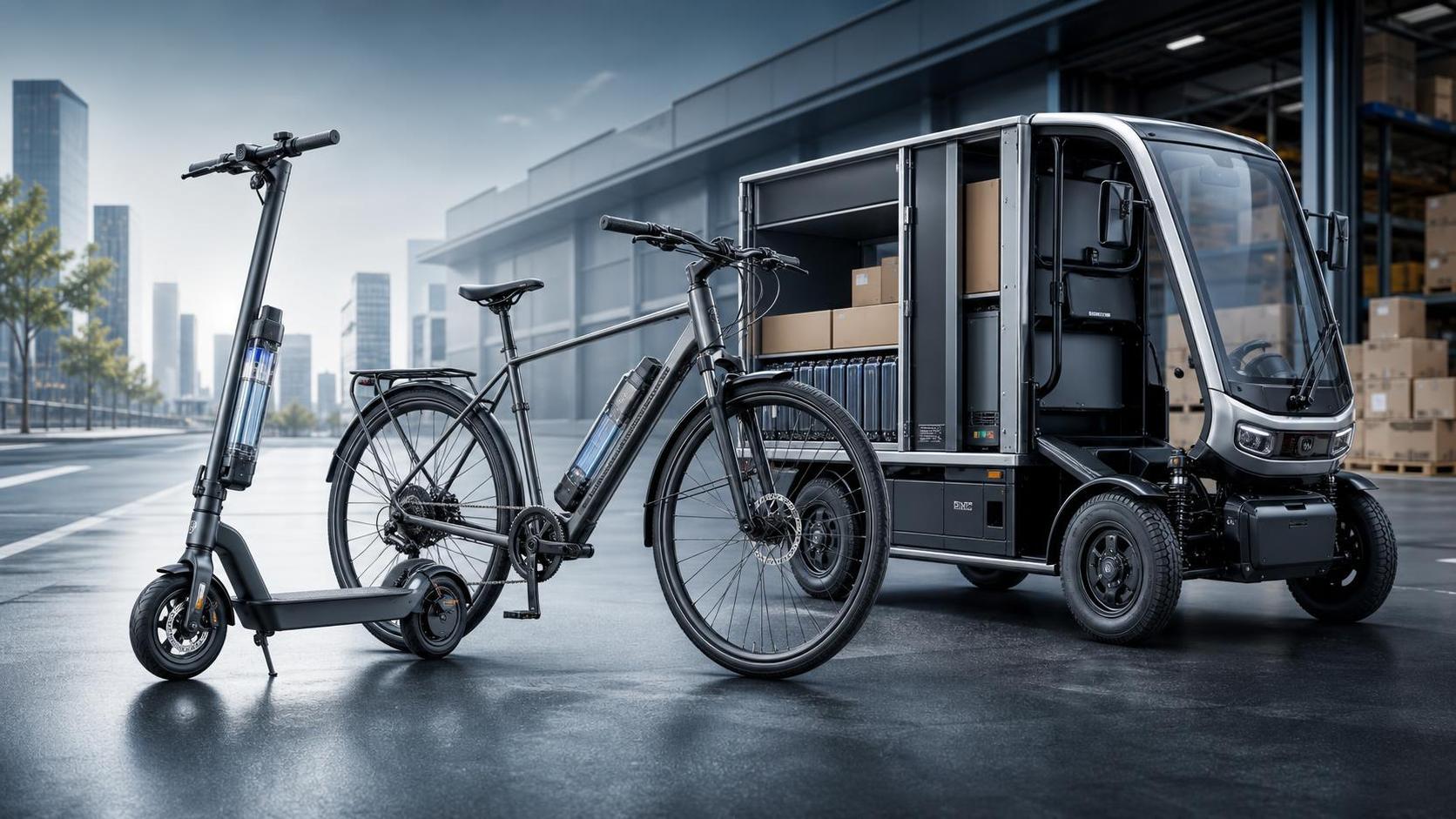
Last mile mobility technology sits at the intersection of urban transport, energy systems, lightweight engineering, and digital operations. Its promise is simple: move people or goods efficiently over short distances. The difficulty is less simple. Every decision on vehicle type, battery size, charging model, materials, and software changes the balance between cost, range, deployment speed, reliability, and long-term utilization.
That is why the topic matters now. Cities want lower emissions and less congestion. Operators want better fleet economics. Manufacturers want platforms that scale across markets without constant redesign. In this environment, last mile mobility technology is no longer a narrow hardware discussion. It has become a strategic operating question.
What last mile mobility technology really includes
The phrase often brings to mind shared e-scooters. In practice, it covers a broader set of solutions. E-bikes, smart e-scooters, cargo bikes, compact electric mopeds, connected battery systems, fleet software, geofencing, maintenance tools, and lightweight frame materials all belong in the same decision space.
The most effective last mile mobility technology combines three layers. The first is the physical platform: motor, battery, frame, brakes, wheels, and transmission. The second is the digital layer: connectivity, remote diagnostics, route data, anti-theft logic, and usage controls. The third is the operating layer: charging, repair, redistribution, compliance, and asset lifecycle management.
This broader view is important because short-distance mobility fails or succeeds as a system, not as a single vehicle specification.
Why the tradeoff between cost, range, and deployment is so difficult
Cost, range, and deployment speed often move in different directions. A larger battery may extend range, but it raises vehicle cost, charging time, weight, and theft exposure. A lighter frame improves efficiency and user handling, but advanced composites or precision components can complicate sourcing and repair.
Fast deployment creates another tension. Launching quickly with low-cost hardware can expand coverage, yet weak durability often pushes operating expense higher within months. By contrast, a robust platform may reduce failure rates, but it usually demands longer qualification cycles and greater upfront capital.
This is where ACMD’s perspective becomes useful. In two-wheeled mobility, performance is shaped by material science, drivetrain precision, electronics, and urban policy at the same time. Last mile mobility technology cannot be judged only by unit price or advertised range.
A practical way to read the tradeoff
Where industry attention is shifting
The market has moved beyond early enthusiasm for simple fleet expansion. Attention is shifting toward unit economics, energy efficiency, serviceability, and regulatory fit. That change favors platforms that can prove stable performance under real urban conditions.
E-bikes remain attractive where trip distance is moderate and users value comfort. Smart e-scooters still matter in dense corridors, especially when geofencing and fleet controls are mature. High-speed electric two-wheelers are relevant in some delivery and suburban use cases, though they face stricter licensing, safety, and infrastructure constraints.
Another shift concerns materials and drivetrains. Lightweight design is no longer only about premium performance. It directly affects battery efficiency, handling, and total energy draw. Precision transmissions and smarter control systems can also improve real-world range by reducing wasted power during stop-start use.
This aligns with ACMD’s core lens. Advances in carbon fiber structures, compact motors, wireless controls, and thermal management increasingly shape the business case for last mile mobility technology, not just the technical specification sheet.
How different deployment scenarios change the right answer
There is no universal platform. The right choice depends on trip profile, street design, labor cost, charging access, weather, and local rules.
Shared urban fleets
In shared environments, uptime and vandal resistance often matter more than peak range. Vehicles face harsh usage patterns. Fleet software, tamper detection, standardized parts, and quick field service can outweigh premium mechanical features.
Commuter and campus mobility
Here, comfort, intuitive controls, and predictable charging matter more. E-bikes often perform well because they cover moderate distances with lower rider fatigue. Last mile mobility technology in these settings should prioritize safety, secure parking integration, and low training requirements.
Delivery and service logistics
Commercial delivery creates heavier loads and tighter time windows. Range under payload becomes more important than nominal range. Thermal stability, battery swapping, brake durability, and modular cargo design become central selection factors.
The metrics that matter more than advertised range
Published range figures are useful, but they rarely reflect dense city operations. A stronger assessment uses operational metrics that connect engineering performance to return.
- Energy use per kilometer under real traffic and load conditions
- Battery degradation after repeated fast charging or swap cycles
- Mean time between service events
- Repair time and spare parts availability
- Software reliability, including lock, ride, and payment continuity
- Compliance exposure tied to speed limits, parking rules, and geofenced zones
In other words, last mile mobility technology should be measured as an operating asset. The gap between laboratory performance and street performance can be wide, especially in heat, cold, gradients, and high-frequency stop conditions.
How to approach platform selection with fewer blind spots
A useful starting point is to separate must-have capabilities from aspirational features. That sounds obvious, yet many mobility programs become expensive because the platform was designed for edge cases rather than core demand.
It also helps to test last mile mobility technology at three levels. First, check vehicle architecture: weight, frame durability, battery safety, motor efficiency, and braking performance. Second, check system integration: telematics, firmware updates, diagnostics, and fleet dashboards. Third, check operational fit: charging labor, warehousing, maintenance workflows, and local policy alignment.
For premium or technically ambitious platforms, lightweight materials deserve close review. Aerospace-grade composites and advanced manufacturing can improve range and ride quality, but only when repairability, cost recovery, and supplier quality are well understood.
Questions worth asking before expansion
- Does the range target reflect actual trip distribution or only marketing expectations?
- Will a lower-cost vehicle create higher field service expense within one operating season?
- Is charging infrastructure scalable across future fleet density?
- Can the platform adapt to changing rules on right-of-way, speed, and parking?
- Does the supplier roadmap support software, batteries, and component continuity?
A more grounded next step
The strongest decisions on last mile mobility technology usually begin with scenario clarity, not product enthusiasm. Map the dominant trip length, payload, service window, and regulatory constraints first. Then compare platforms through total operating cost, uptime, and lifecycle resilience.
From there, the next move is to build a short evaluation framework: one set of metrics for engineering performance, one for operational economics, and one for city fit. That approach makes tradeoffs visible early. It also creates a better basis for choosing between e-bikes, smart e-scooters, higher-speed electric platforms, or hybrid deployment models.
As urban mobility matures, the winners are unlikely to be the systems with the longest brochure range or the fastest launch. They will be the ones where cost, range, durability, software control, and lightweight design are aligned with the real shape of demand.
Related News