
Is buying a groupset cheaper than buying bicycle components separately?

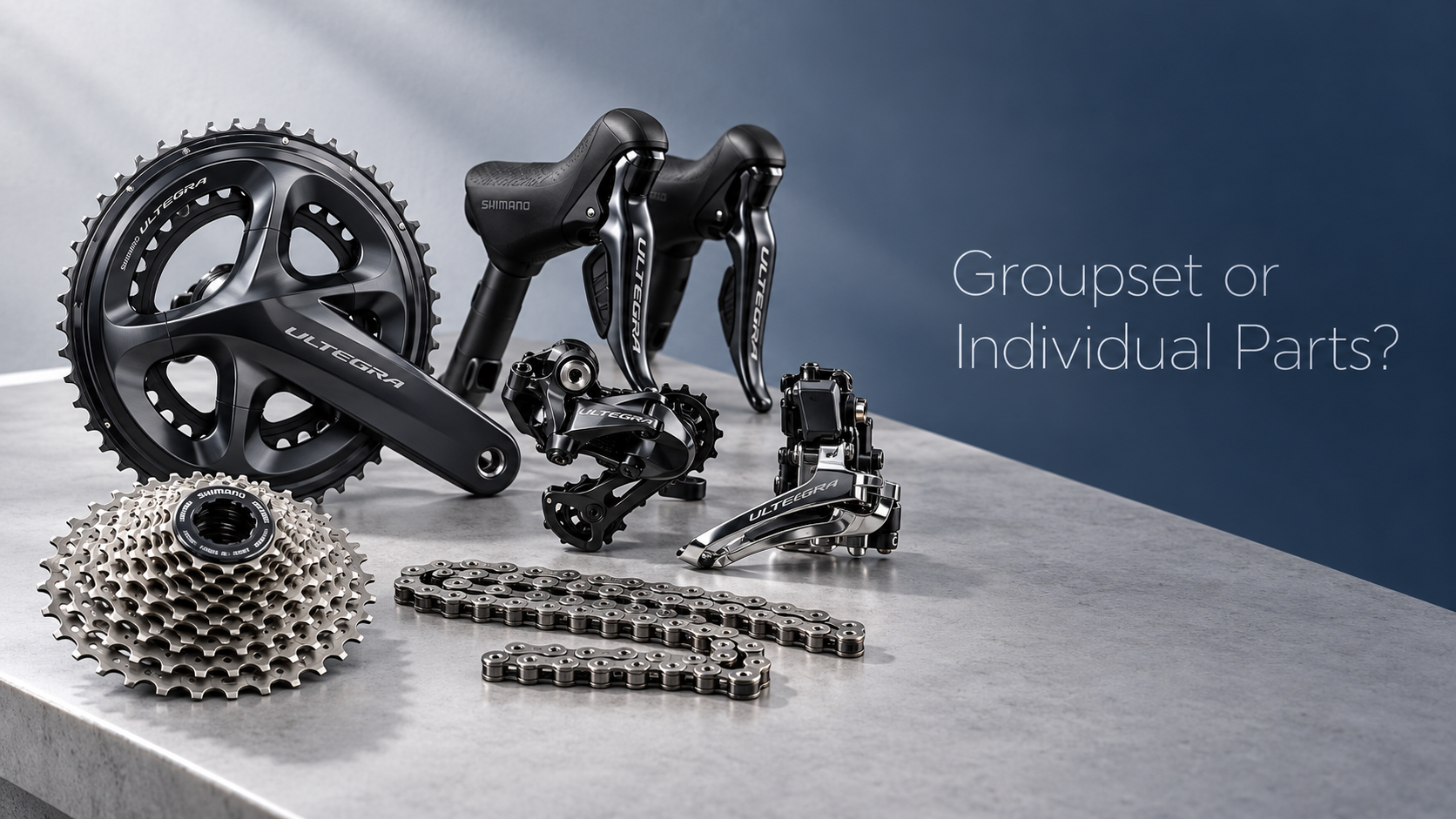
Buying a complete groupset can be cheaper than buying the same bicycle components separately, especially when you need to replace nearly the entire drivetrain and braking system. But a discounted bundle does not automatically produce the lowest upgrade cost. If your existing crankset, brakes, or other parts remain suitable, buying only the components you need can leave you spending considerably less.
The useful comparison is the total cost of getting your bike working as intended. That includes the correct parts, anything missing from the package, installation, and any changes needed to make everything compatible. A groupset that looks cheaper on a retailer’s page can lose its advantage once those costs enter the calculation.
Start by comparing the parts you actually need.
“Groupset” is not a guarantee of a fixed contents list. A road-bike package might include shift and brake controls, derailleurs, a crankset, cassette, chain, and brakes. Another listing may exclude the bottom bracket or brake rotors. A mountain-bike drivetrain bundle may contain no braking components at all. Electronic packages can differ in their inclusion of batteries, chargers, wires, and connection hardware.
Read the itemized contents before comparing prices. Product photographs can show a complete assembly while the description lists a narrower package. Check model numbers as well as component names: two bundles carrying the same product-family name may use different cranksets, cassette ranges, or brake configurations.
There are two comparisons worth making. First, price the exact contents of the bundle as individual purchases. This establishes whether the package carries a genuine discount. Second, price the smallest compatible set of parts that meets your needs. This establishes whether buying the bundle is worthwhile for your particular bike.
Those answers can differ. A complete groupset may offer excellent value against the individual prices of every included component, yet still cost more than replacing worn shifting components while keeping a serviceable crankset and brakes. The unused parts represent money spent, even when their individual retail prices make the package look attractive.
A practical bicycle components price comparison can use this calculation:
Total installed cost = parts purchased + missing hardware and accessories + delivery and applicable taxes or duties + installation and tools + compatibility changes − realistic proceeds from selling unused parts.
Use that calculation for both options. Treat resale proceeds cautiously: an advertised asking price does not establish what a component will actually sell for, and selling fees, shipping, and the time involved can reduce its value.
When a complete groupset makes financial sense
A groupset is a strong candidate when you are building a bike from a bare frame or replacing most of an existing system. You have fewer reusable components to offset the purchase, so the bundle discount applies to a larger share of the work. Buying the main components together can also simplify checking compatibility and arranging installation.
The case becomes stronger when several expensive components need replacement at once. If the controls, derailleurs, crankset, and brakes all need changing, assembling the same specification from separate listings may offer limited savings. A complete package can also reduce delivery charges and the effort of tracking several orders, although neither advantage should be assumed without checking the actual checkout totals.
A move between substantially different systems can produce a similar result. Switching from mechanical shifting and cable-operated brakes to electronic shifting and hydraulic discs, for example, may involve far more than replacing a derailleur. However, the frame and fork must support the intended equipment. A groupset cannot make an unsuitable frame compatible with hydraulic disc brakes or provide internal routing that the frame does not accommodate.
Even with a complete package, check whether the offered configuration suits your riding. A discounted crankset with unsuitable gearing or crank length may need replacing immediately. The same applies to a cassette whose range does not meet your climbing needs. Paying for the right specification once can be cheaper than buying a discounted package and correcting it afterward.
When separate components are the cheaper choice
Buying individually is especially useful for maintenance and focused upgrades. If your goal is to replace a worn chain and cassette, a full groupset adds little financial value unless other major components also need attention. If you want easier climbing gears, the necessary purchase might involve a cassette, chain, and possibly a compatible derailleur, rather than an entire new system.
Existing parts deserve a proper assessment before they are assigned a replacement cost. A crankset with usable chainrings, suitable gearing, and confirmed compatibility may be worth retaining. Brakes that meet your needs may also stay if they work with the intended controls. Compatibility should be established through the relevant technical documentation, rather than inferred from matching branding or appearance.
Separate purchases also give you more control over where to spend. You may value the feel of particular shift controls while seeing little benefit in a lighter crankset. Within a documented compatible system, selecting different component tiers can direct the budget toward the parts that affect your riding most. The financial benefit depends on the actual selling prices, since discounted premium components can sometimes undercut lower-tier alternatives.
Clearance listings create another opportunity, particularly when you can buy gradually. A suitable crankset from one seller and a discounted cassette from another may beat a bundle. That approach works best when the specification is settled before shopping begins. Buying an attractive bargain first and trying to build a compatible system around it can turn a saving into an expensive constraint.
Used parts require a separate calculation. Wear, damage, battery condition, missing fittings, and uncertain service history can change the cost substantially. A used groupset and a new groupset are different purchasing propositions; comparing only their headline totals hides those differences. For wear components such as chains and cassettes, remaining usable life matters more than the original retail price.
Compatibility costs can outweigh the bundle discount
The most expensive mistake is buying a package that needs additional changes elsewhere on the bike. Compatibility involves more than the number of sprockets or the name printed on the derailleur. Before committing to either purchasing route, check the following connections:
- Shifting: Controls and derailleurs must use compatible actuation or electronic communication. Matching speed counts alone does not establish compatibility.
- Cassette and wheel: The cassette must fit the wheel’s freehub interface. A different cassette standard may require a replacement freehub body, if the hub supports one, or a different wheel.
- Crankset and frame: Crank spindle dimensions, bottom-bracket fit, chainline, and frame clearance must work together. The supplied crankset may not fit your existing bottom bracket.
- Gearing: Derailleur sprocket limits and chain capacity must suit the selected chainrings and cassette. A wider-range cassette may require more than a longer chain.
- Braking: Controls, calipers, hoses or cables, mounts, and rotors must form a supported combination. Hydraulic fittings and fluids should follow the manufacturer’s specifications.
- Electronic equipment: Check required batteries, charging equipment, wiring, and supported component combinations. Wireless shifting does not necessarily mean every component is free of wiring.
Cross-brand or cross-generation combinations need particular care. Some are explicitly supported; others may require adapters or have functional limitations. If a proposed combination depends on an unofficial workaround, include the additional parts and fitting effort in the price comparison. A small purchase saving may not justify uncertain shifting or braking performance.
Retaining components can also involve compromises that deserve a price. Keeping an existing wheel may narrow your cassette choices. Keeping a crankset may limit available chainring combinations. These are not necessarily reasons to replace the parts, but they should be understood before you decide that the separate-parts route meets the same requirements as a complete package.
Get installation priced before ordering
A mechanic’s quote can change which option is cheaper. Replacing a complete system may involve removing old equipment, fitting and adjusting the drivetrain, routing hoses or wires, bleeding brakes, and replacing handlebar tape. Internal routing can add work, particularly where access requires other components to be removed. The package price does not capture any of this.
Ask for a quote based on the exact parts list and the bike receiving them. Establish which consumables and fittings are included, and ask whether the workshop accepts customer-supplied components and how it prices that work. A shop-supplied package may have a higher parts price but a competitive installed total. Separate online purchases may still win, provided all required work is included in the comparison.
Home installation changes the calculation only if you can complete the work correctly. Tools for cassette removal, bottom-bracket installation, chain sizing, hydraulic bleeding, or electronic setup can absorb a modest discount. Some tools will remain useful for future maintenance, but their initial cost still matters if this is a one-time upgrade.
Also consider who will resolve a problem. With several sellers involved, you may need to identify which part is faulty or incompatible before arranging a return. Buying a bundle does not guarantee better support, but clear return terms and a seller who can verify the supplied configuration have practical value. Check those terms before opening or installing components.
Make the final comparison with two complete shopping lists.
For the bundle option, record the exact package contents and add every missing item required for installation. For the individual option, list only the components you need to buy, alongside the existing parts you intend to retain. Both lists should deliver the same intended result: suitable gearing, dependable shifting, appropriate braking, and confirmed compatibility.
Then compare the final payable amounts, including delivery, applicable taxes, labor, and tools. Record any important differences separately, such as a more suitable crank length or a longer wait for one component. This prevents a lower price from disguising a specification you would otherwise reject.
If most of your existing system needs replacement and a correctly specified bundle has the lower installed cost, buying the groupset is a sound choice. If a few targeted purchases will achieve the same riding improvement, those purchases deserve priority. Let the condition of your bike and the work required determine the shopping list before a discount determines the upgrade.
Related News