
What drives the total cost of light electric vehicles?

What drives the total cost of light electric vehicles?
When finance teams review a light electric vehicle program, the first number they see is usually the unit price. That number matters, but it rarely explains the real economics. In practice, the total cost of light electric vehicles cost is shaped by a chain of decisions that starts with vehicle architecture and ends with uptime, serviceability, and replacement timing.
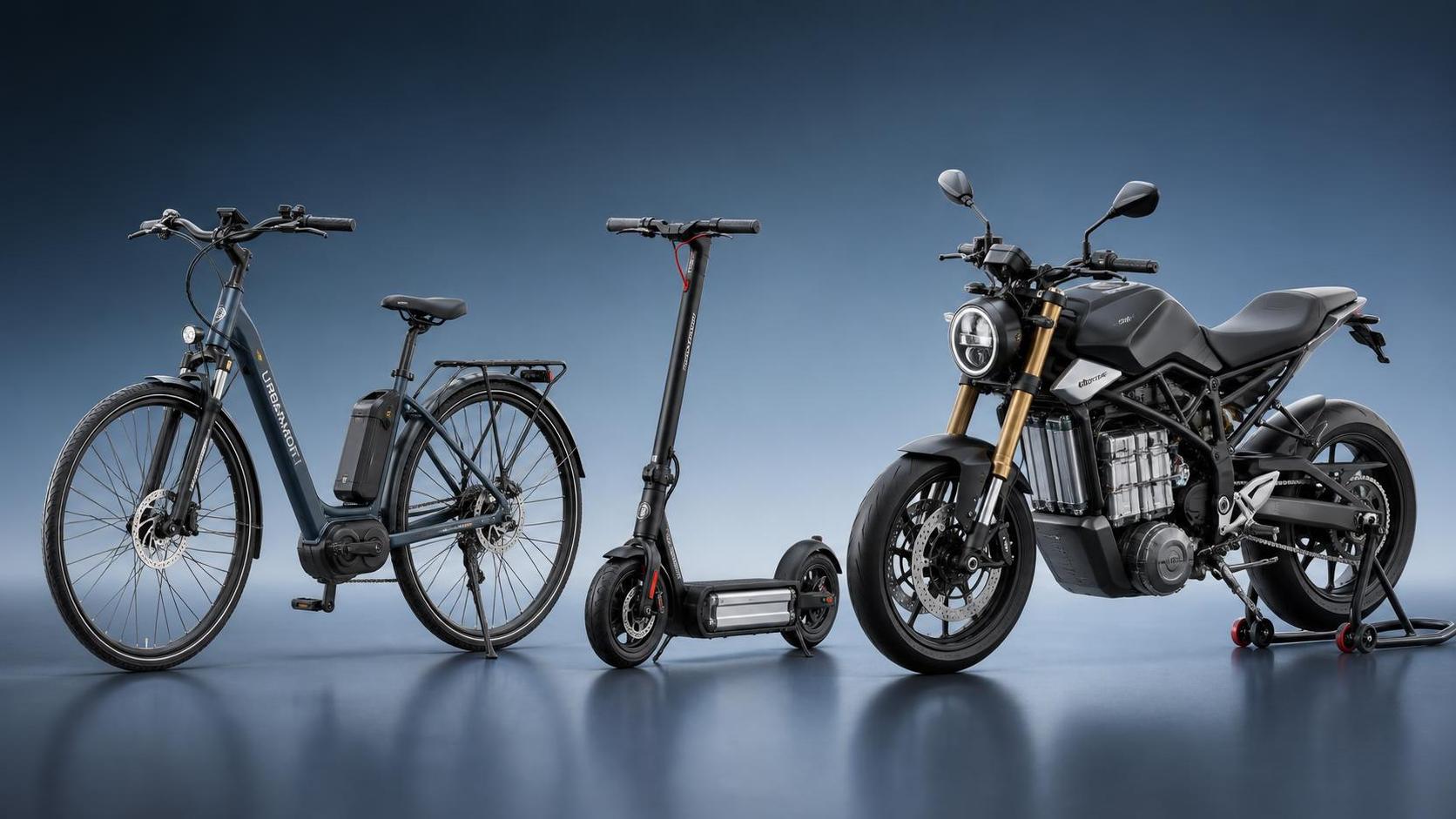
This is especially true in micro-mobility. An urban e-bike built for daily commuter fleets, a shared e-scooter exposed to rough curb impacts, and a high-speed electric motorcycle designed for performance all carry very different cost structures even when they appear to belong to the same category. Buyers that treat them as interchangeable often discover the problem later—in battery replacements, warranty claims, compliance delays, or parts shortages.
A useful way to think about procurement is simple: purchase price is what gets approved, but lifecycle cost is what eventually gets explained. If the goal is disciplined budgeting and credible ROI, then the cost model needs to include more than hardware.
Battery decisions set the cost curve early
In most light electric vehicles, the battery is either the largest single cost item or one of the top two. That is not just because cells are expensive. The battery affects enclosure design, thermal management, charging strategy, shipping classification, warranty exposure, and residual value.
Chemistry matters. So does pack design. A lower-cost battery on paper can become a higher-cost decision if cycle life is poor, performance drops sharply in local climate conditions, or replacement packs are locked to a single vendor. Financial approvers should ask a blunt question early: is the battery a consumable, a strategic asset, or a future service headache?
For e-bikes and e-scooters, the answer often depends on duty cycle. A vehicle used for occasional campus mobility has a different battery stress profile from one deployed in all-day rental circulation. High-speed e-motorcycles add another layer because thermal behavior, charging speed expectations, and power delivery consistency become more demanding. ACMD’s coverage of battery-adjacent systems in high-performance two-wheel platforms reflects a reality procurement teams know well: battery cost cannot be isolated from the vehicle’s operating envelope.
There is also a logistics angle that gets missed in early budgeting. Transport, storage, and replacement handling for lithium battery systems may require more planning than many non-technical buyers expect. Whether this materially changes cost depends on route, volume, pack rating, and local requirements, but it deserves review before approval rather than after the first replenishment order.
Drivetrain complexity changes both price and maintenance behavior
Not all electric drivetrains age the same way. Motor type, controller tuning, transmission design, and shifting system all influence how a vehicle performs after the showroom phase. This becomes more visible in premium or performance-oriented segments, where buyers may be tempted by impressive specifications without fully pricing in service complexity.
Take the difference between a simple urban commuter platform and a high-spec model with advanced electronic controls or precision drivetrain components. The second option may deliver better ride quality, efficiency, or rider appeal. But it can also introduce tighter calibration requirements, a narrower spare-parts ecosystem, and longer diagnostic time when faults occur. In high-end cycling and lightweight mobility, ACMD often follows this exact tension: the same technologies that improve response, stiffness, or shifting accuracy can raise downstream ownership costs if support infrastructure is thin.
This does not mean advanced systems are bad procurement choices. Often they are justified. It means the buying decision should include expected maintenance skill level, software dependency, parts availability, and whether the operator can service the system in-house or will rely on the vendor network.
Lightweight materials save mass, not always money
One of the most misunderstood drivers of light electric vehicles cost is lightweighting. Carbon fiber frames, aerospace-grade composites, and other advanced materials can dramatically improve stiffness-to-weight ratio, ride dynamics, and in some cases range efficiency. They can also increase tooling cost, inspection requirements, scrap sensitivity, and repair complexity.
For a premium performance e-bike, those tradeoffs may be completely rational. For a fleet vehicle expected to survive heavy public use and quick field servicing, the economics may point somewhere else. Material choice is not just an engineering preference; it is a financial strategy tied to the use case.
This is where specialist market intelligence becomes useful. In segments tracked by ACMD, especially carbon fiber frame development and precision two-wheel systems, cost is often driven less by raw material price alone and more by manufacturing consistency, yield, and the real-world repair path. A light frame that cannot be repaired economically after moderate damage may carry a very different total ownership profile from a heavier but easier-to-service alternative.
Compliance costs are rarely optional and rarely static
Regulation is one of the least glamorous parts of procurement, but it regularly changes the final budget. Vehicle classification, speed limits, battery transport rules, right-of-way restrictions, charging safety expectations, and local import requirements can all alter deployment cost.
The important point for financial reviewers is that compliance cost is not only about certifications attached to the vehicle. It may also include modifications for market entry, documentation cycles, test lead times, labeling changes, warehouse handling procedures, and insurance implications. These are not always visible in the OEM quote.
This issue is particularly relevant in cross-border procurement. A model that is commercially viable in one market may require enough adaptation in another market to erase its pricing advantage. Because regulation in micro-mobility continues to evolve by city and by country, this part of the budget usually needs project-specific verification rather than assumptions based on an earlier purchase.
After-sales support often decides whether a low bid stays low
A procurement team can negotiate a strong acquisition price and still end up with poor economics if after-sales structure is weak. Service network coverage, technician training, spare-part lead times, software access, warranty handling rules, and failure diagnosis tools all affect operating cost.
This matters more in light electric vehicles than many buyers initially expect because faults are often cross-disciplinary. A performance problem may involve battery management, motor control, sensor calibration, firmware, or mechanical wear at the same time. If the vendor cannot isolate the issue quickly, downtime rises and the operator absorbs the inefficiency.
One practical procurement test is to ask vendors not only for warranty duration, but for the path from incident to resolution. Who holds local stock? What is the expected turnaround for major components? Are consumables and electronic parts both available? Is remote diagnostics possible? These questions sound operational, but they belong in the financial model because they affect asset utilization.
Supply chain volatility shows up in places buyers don’t always model
Over the past several years, two-wheeled mobility buyers have learned that component supply can swing from abundance to shortage quickly. Cells, controllers, semiconductors, braking parts, tires, and specialty drivetrain components do not move in perfect sync. Even when the finished vehicle is available, replacement parts may not be.
This creates hidden cost in at least three ways: buffer inventory, delayed deployment, and forced substitutions. If a fleet operator has to overstock critical parts to maintain uptime, working capital rises. If launch timing slips because one subcomponent is delayed, revenue assumptions move. If an approved platform quietly changes component sourcing mid-cycle, service and compatibility risk can increase.
For financial approvers, this argues for evaluating supplier depth, not just finished-unit pricing. A vendor with a slightly higher quote but a more stable supply architecture can be cheaper over the life of the program.
Different vehicle categories produce different cost logic
It helps to separate light electric vehicles into operating realities rather than into broad marketing labels.
That distinction matters because a “good price” means different things in each category. A scooter designed for shared urban circulation may justify ruggedized construction and connected management features even if unit cost is higher. A premium commuter e-bike may justify lighter materials and refined drivetrain behavior if retention, rider satisfaction, or brand positioning are part of the commercial case. Procurement only gets cleaner when the cost model follows the operating model.
A better approval framework than purchase price alone
When reviewing vendors, it helps to score costs across five buckets instead of one:
- Acquisition cost: vehicle, battery, charger, software access, freight, and launch tooling if relevant.
- Compliance cost: market entry requirements, testing, documentation, and any local adaptation.
- Operating cost: energy, wear parts, labor, consumables, connectivity, and downtime.
- Risk cost: single-source components, long lead times, vendor support weakness, and uncertain replacement paths.
- Exit or residual cost: end-of-life handling, resale potential, and battery replacement versus full vehicle retirement.
Even a simple version of this framework tends to improve negotiations. Suppliers quickly see whether the buyer is only chasing headline price or actually measuring cost drivers that matter later.
The light electric vehicle market is getting more technical, not less. Between smarter control systems, lighter structures, stricter urban rules, and more segmented user expectations, cost analysis now sits much closer to engineering than it did a few years ago. That is why intelligence-led review matters. Platforms like ACMD are valuable not because they promise easy answers, but because they connect battery systems, drivetrains, lightweight materials, and regulatory movement into one procurement picture.
If an approval decision depends on long-term economics, the right question is not “What does this vehicle cost today?” It is “What will this design, this supplier, and this support model cost us once the vehicle is actually in service?” That is usually where the real number starts to appear.
Related News