

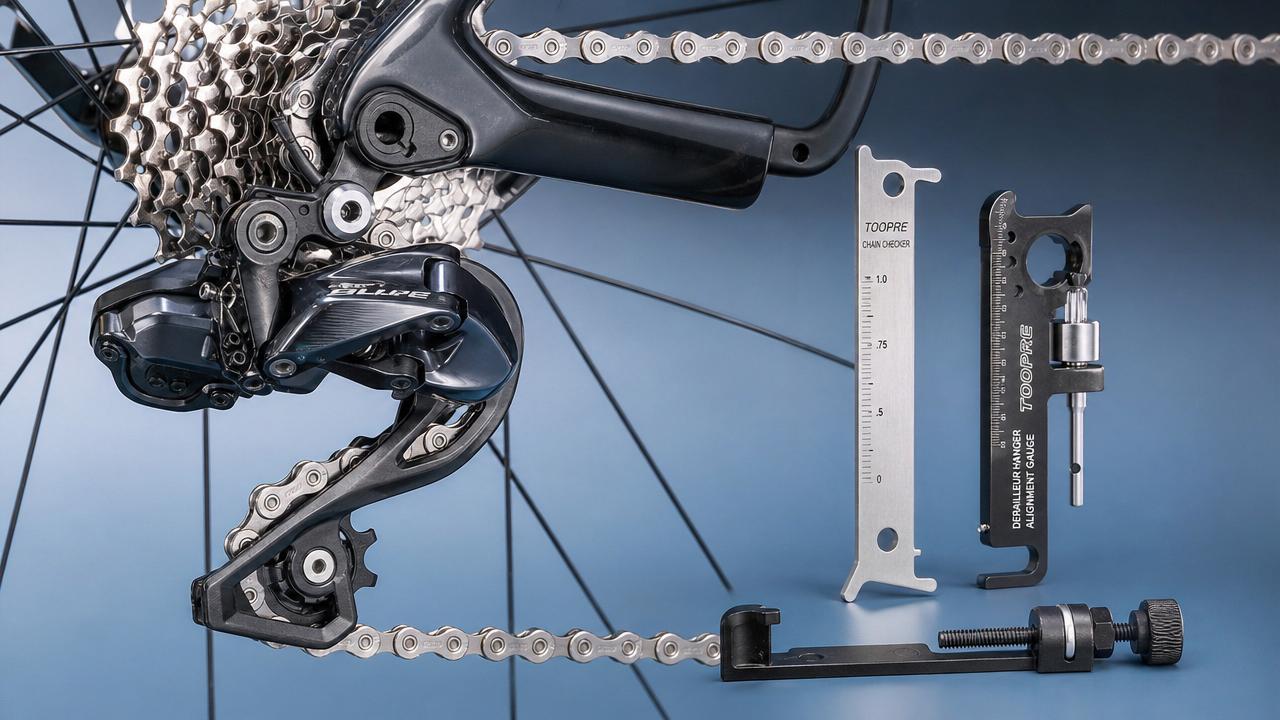
Bicycle Derailleur Issues That Signal Costly Wear
For after-sales maintenance teams, a bicycle derailleur is often the first component to reveal hidden drivetrain wear before a rider notices serious performance loss.
Hesitant shifting, chain skip, bent hanger alignment, pulley play, or unusual noise can point to issues that become costly if ignored.
Understanding these early signals helps technicians diagnose faster, protect customer trust, and prevent unnecessary replacement of chains, cassettes, and electronic shifting parts.
This guide highlights the derailleur symptoms that deserve immediate attention during inspection and service.
What the Customer Really Wants You to Confirm
Most riders describe derailleur problems vaguely, using phrases like “it slips,” “it clicks,” or “the gears feel wrong.”
For a technician, the real task is separating adjustment error from wear that will keep returning after every service.
A bicycle derailleur rarely fails in isolation. Its behavior reflects chain elongation, cassette tooth wear, hanger damage, cable friction, and pulley fatigue.
The highest-value inspection answers three questions: is the derailleur adjustable, is the drivetrain worn, and is replacement economically justified?
That distinction matters because repeated minor adjustments can damage workshop credibility when the underlying cause is an exhausted drivetrain.
Hesitant Shifting Under Load Is an Early Warning
Slow shifting under light stand testing may seem minor, but hesitation under rider torque usually indicates a deeper wear pattern.
When the chain delays climbing or dropping between sprockets, check cable drag, indexing accuracy, hanger alignment, and chain wear together.
If adjustment improves shifting only briefly, the cassette ramps may be worn enough to reject precise chain engagement.
After-sales teams should test shifting on the workstand and during a controlled loaded test whenever customer complaints are intermittent.
This approach prevents unnecessary derailleur replacement when the real cost driver is a stretched chain paired with a worn cassette.
Chain Skip Usually Means the Problem Has Moved Beyond Adjustment
Chain skip is one of the clearest signs that the bicycle derailleur is exposing expensive drivetrain wear, not causing it.
Skipping under acceleration often appears after a new chain is installed on an old cassette with hooked or polished teeth.
Technicians should avoid treating skip as a simple limit screw or barrel adjuster issue unless inspection confirms otherwise.
Use a chain checker, inspect cassette tooth profiles, and ask whether the chain was recently replaced without the cassette.
For customer communication, explain that the derailleur guides the chain, but worn sprockets fail to retain it under torque.
A Bent Hanger Can Mimic Multiple Expensive Failures
A misaligned hanger is a common after-sales trap because it creates symptoms that resemble cable stretch, derailleur damage, or cassette wear.
Even a small bend can cause accurate shifting on some sprockets and persistent noise or skipping on others.
Before replacing a bicycle derailleur, measure hanger alignment with a dedicated gauge and correct it within manufacturer tolerance.
Visual inspection alone is unreliable, especially on modern frames with tight cassette spacing and twelve-speed drivetrains.
On carbon frames, technicians should also inspect dropout areas carefully because impact damage may sit beneath the hanger problem.
Pulley Play and Tooth Wear Reveal Neglected Service
Derailleur pulleys are small parts, but their condition strongly affects chain tracking, noise, and perceived shifting quality.
Excessive lateral play, sharp pulley teeth, seized bearings, or packed contamination can all create inconsistent chain movement.
Upper guide pulley wear is especially important because it controls the chain path into the selected sprocket.
If pulley replacement restores crisp movement, it may prevent the customer from buying a complete derailleur unnecessarily.
However, pulley wear combined with chain elongation and cassette hooking usually indicates a broader drivetrain service is overdue.
Noise Patterns Help Separate Wear from Setup Error
Noise is not just a comfort complaint. It is often the first audible record of mechanical misalignment or contact wear.
A steady clicking in one gear often points toward indexing or hanger alignment, especially if adjacent gears run quietly.
Grinding across many gears suggests chain contamination, pulley wear, poor lubrication, or chainline problems rather than simple adjustment.
Rattling near the cage may reveal a weak clutch, loose pulley bolt, damaged cage plate, or excessive chain length.
Documenting the noise pattern before repair helps technicians prove the diagnosis and explain why additional parts may be necessary.
Cage Damage and Weak Spring Tension Raise Replacement Risk
A derailleur cage that appears slightly twisted can still shift, but it may accelerate chain and cassette wear.
Check whether both pulleys sit in the same plane and whether the cage returns smoothly after being pulled forward.
Weak spring tension reduces chain control, especially on rough surfaces, e-bikes, cargo bikes, and high-torque commuter setups.
For clutched derailleurs, test clutch resistance and confirm the mechanism is not seized, contaminated, or internally worn.
If cage geometry is compromised, adjustment becomes a temporary workaround rather than a reliable repair.
Electronic Shifting Problems Need a Different Diagnostic Order
Electronic derailleur systems remove cable friction, but they introduce battery, firmware, motor, sensor, and crash-protection variables.
Start with battery condition, connector cleanliness, system pairing, firmware status, and crash mode before assuming mechanical failure.
If the motor actuates correctly but shifting remains poor, return to hanger alignment, chain wear, cassette condition, and pulley inspection.
For wireless systems, intermittent faults may come from low battery voltage, signal interference, damaged buttons, or contaminated contacts.
Technicians should record software checks in service notes, because electronic derailleur replacement is expensive and customers expect evidence.
E-Bikes Make Derailleur Wear More Expensive
On e-bikes, derailleur symptoms deserve faster attention because motor assistance magnifies chain load during shifts and acceleration.
A small indexing issue can become rapid cassette wear when riders shift under full assist or climb in high torque modes.
Inspect chain elongation more frequently on e-bikes, especially commuter models used daily in rain, dust, or stop-start traffic.
Recommend shifting technique guidance where appropriate, because rider behavior can be as important as component quality.
For fleets and delivery bikes, proactive derailleur checks reduce downtime and prevent cascading drivetrain replacement costs.
A Practical Inspection Sequence for After-Sales Teams
A consistent workflow reduces missed causes and helps junior technicians avoid replacing parts based on symptoms alone.
Begin with customer interview details: when the issue happens, which gears are affected, and whether any crash occurred.
Next, inspect hanger alignment, wheel seating, axle security, cable routing, housing condition, and derailleur mounting torque.
Then measure chain wear, inspect cassette teeth, evaluate chainrings, test pulley rotation, and check cage alignment.
Only after those checks should fine adjustment, limit screws, B-gap setting, clutch evaluation, or electronic calibration be finalized.
When Adjustment Is Enough, and When Replacement Is Smarter
Adjustment is appropriate when the derailleur is straight, the hanger is aligned, the chain is healthy, and cables move freely.
Replacement becomes smarter when cage damage, worn pivots, weak springs, failed electronics, or seized mechanisms prevent stable indexing.
Do not ignore pivot play. A derailleur with loose pivots may tune correctly in the stand but drift under riding load.
If the cassette and chain are also worn, quote the repair as a drivetrain system rather than a single derailleur issue.
This protects margin, prevents comeback repairs, and gives customers a clearer explanation of the true mechanical cause.
How to Explain Costly Wear Without Losing Customer Trust
Customers often suspect upselling when a shifting complaint becomes a chain, cassette, hanger, or derailleur replacement recommendation.
Use visible proof: chain gauge readings, hooked sprocket comparison, hanger alignment measurements, and pulley play demonstrations.
Explain that modern drivetrains use narrow tolerances, so small wear changes can create large shifting consequences.
Offer options when possible, such as immediate safety repair, performance restoration, or full preventive drivetrain renewal.
Clear evidence and structured choices help after-sales teams maintain trust while protecting the bike from repeated failures.
Service Records Turn Derailleur Symptoms into Predictive Maintenance
Recording derailleur-related findings helps workshops identify patterns across brands, drivetrain levels, rider habits, and mileage intervals.
Useful records include chain wear percentage, cassette condition, hanger correction amount, pulley condition, and electronic system notes.
For high-end bikes, this history supports warranty decisions and protects against disputes after impact or improper maintenance.
For commercial fleets, repeated bicycle derailleur issues can guide replacement schedules and reduce unexpected downtime.
Data-driven service also strengthens the professional value of after-sales teams beyond basic adjustment work.
Conclusion: Treat the Derailleur as a Diagnostic Window
A bicycle derailleur should not be viewed only as a shifting device. It is a diagnostic window into drivetrain health.
Hesitation, skip, noise, pulley play, cage damage, and electronic faults often reveal wear before total performance failure.
For after-sales maintenance teams, the best outcome comes from disciplined inspection rather than quick adjustment or premature replacement.
By identifying costly wear early, technicians reduce repeat visits, protect customer confidence, and keep modern drivetrains performing reliably.