Cycling Accessories Wholesale: MOQ, Margins, and Best-Sellers

Cycling Accessories Wholesale: MOQ, Margins, and Best-Sellers
In cycling accessories wholesale, success depends on balancing MOQ, profit margins, and fast-moving best-sellers.
The market looks simple from the outside, but purchasing decisions are rarely straightforward.
Product turnover, shipping cost, packaging size, and return rates all affect real profitability.
That is why cycling accessories wholesale is no longer just about finding low unit prices.
Today, the smarter play is building a product mix that sells quickly, protects margin, and fits local riding demand.
Why MOQ Matters More Than Many Buyers Expect
MOQ shapes cash flow before any product reaches the shelf or warehouse.
In cycling accessories wholesale, a low MOQ can reduce entry risk, especially for new product testing.
A high MOQ may unlock better pricing, but it can also tie up working capital for months.
This becomes more visible in categories with seasonal demand, like winter lights or rain gear.
The practical question is not whether MOQ is high or low.
The real question is whether MOQ matches sales speed, reorder timing, and warehouse capacity.
How to Read MOQ the Right Way
- Check MOQ by SKU, color, and packaging format, not only by total order value.
- Ask whether mixed models are allowed within one production batch.
- Compare MOQ against your average monthly sell-through, not optimistic forecasts.
- Include inbound freight and storage cost before accepting lower unit prices.
In actual business, flexible MOQ often creates more value than the cheapest quote on paper.
What Healthy Margins Really Look Like
Margins in cycling accessories wholesale vary widely by category, channel, and brand positioning.
Small, high-frequency items often carry better margins than bulky products with higher freight exposure.
However, headline gross margin alone can be misleading.
A product with modest margin but fast repeat orders may outperform a premium item that moves slowly.
This is especially true in urban mobility and commuter cycling, where practicality drives repeat demand.
Key Margin Drivers in Cycling Accessories Wholesale
- Product size and shipping efficiency
- Warranty exposure and defect rate
- Brand strength and packaging quality
- Cross-selling potential with bikes, e-bikes, or repair parts
- Local compliance requirements for lights, helmets, or electronics
A stronger signal is contribution margin after logistics, markdowns, and after-sales service.
That number gives a more realistic view of which wholesale cycling accessories deserve reorder priority.
Best-Selling Categories That Keep Moving
Best-sellers in cycling accessories wholesale are usually built around utility, safety, and daily convenience.
Performance products can be profitable, but basic use cases typically deliver steadier volume.
From recent demand shifts, commuter and e-bike related accessories are gaining ground faster.
That also reflects broader changes in urban transport, low-carbon mobility, and short-distance travel habits.
Fast-Moving Wholesale Cycling Accessories
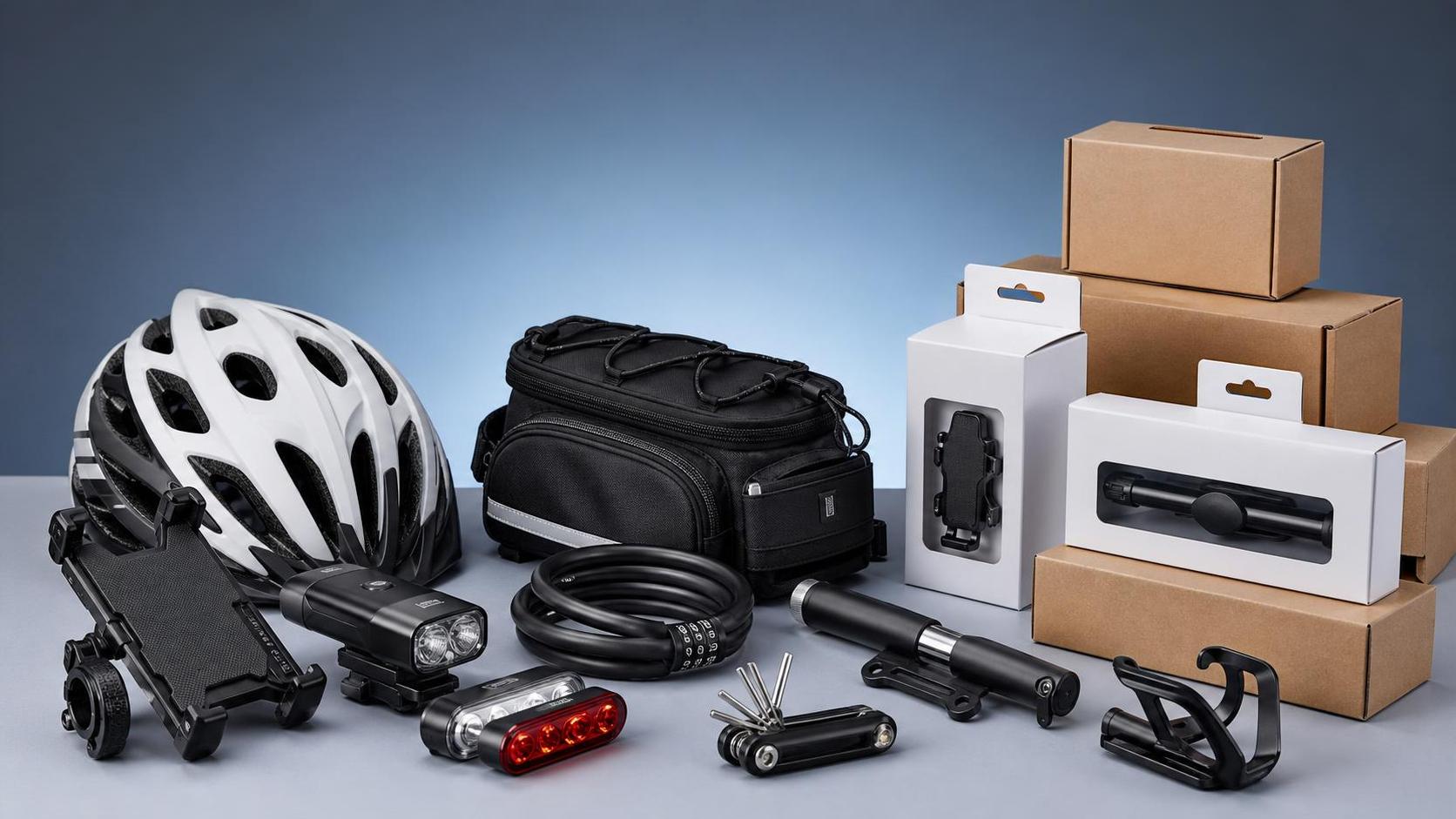
- Lights and visibility gear. Easy to bundle, safety-driven, and suitable for both traditional bikes and e-bikes.
- Phone mounts. Popular in commuter segments, delivery riders, and smart mobility users.
- Locks and anti-theft accessories. Urban demand keeps this category active throughout the year.
- Bags, racks, and storage add-ons. Higher relevance as cycling becomes more utility-focused.
- Pumps, repair kits, and mini tools. Small size and frequent replacement support stable repeat orders.
- Helmets and protective gear. Compliance and safety awareness continue to support demand.
- Bottle cages and hydration accessories. Lower ticket, but easy to attach to larger basket orders.
The strongest portfolios mix high-turn basics with a smaller layer of premium upgrade items.
How to Build a Smarter Product Mix
A balanced assortment matters more than chasing one hot product.
In cycling accessories wholesale, the safest structure usually includes three product layers.
1. Volume Drivers
These are affordable, everyday items with broad compatibility and repeat demand.
Examples include lights, bells, reflectors, pumps, and repair patches.
2. Margin Builders
These products support better pricing because design, materials, or branding add perceived value.
Think premium locks, smart lights, compact electric pumps, or waterproof frame bags.
3. Identity Products
These are not always the top sellers, but they shape positioning and customer trust.
Examples include carbon bottle cages, performance pedals, or high-end cockpit accessories.
This layered approach helps cycling accessories wholesale portfolios stay flexible across different buyer profiles.
Questions to Ask Suppliers Before You Commit
Supplier selection can protect margins just as much as product selection.
That is particularly relevant in cycling accessories wholesale, where quality consistency affects returns and reputation.
- What is the MOQ per SKU and per color?
- Can packaging be customized without pushing MOQ too high?
- What is the standard lead time during peak season?
- What compliance documents are available for target markets?
- What is the defect handling process and replacement policy?
- Which items are proven best-sellers across export markets?
The best supplier conversations move beyond price and into turnover risk, quality control, and reorder efficiency.
A Simple Framework for Better Purchasing Decisions
A useful buying framework for cycling accessories wholesale can be kept very practical.
- Estimate monthly sell-through by category, not by supplier promise.
- Match MOQ to 60 to 90 days of realistic stock coverage.
- Prioritize small, easy-to-ship items for first orders.
- Reserve larger commitments for proven best-sellers with stable reorder patterns.
- Track gross margin, return rate, and reorder frequency together.
- Review underperforming SKUs every quarter and clear slow stock early.
This method keeps purchasing grounded in data while staying responsive to local demand changes.
It also fits a market where e-bikes, smart mobility, and premium riding upgrades are moving quickly.
Final Take on Cycling Accessories Wholesale
Strong cycling accessories wholesale results rarely come from the cheapest offer alone.
They come from choosing the right MOQ, protecting usable margin, and backing proven best-sellers.
The market is becoming more technical, more urban, and more connected to everyday mobility needs.
That means wholesale decisions should be faster, more selective, and more disciplined.
When cycling accessories wholesale is managed with clear cost logic and category focus, growth becomes far more repeatable.
Related News