
How to Verify ISO-Certified Bicycle Components Before Ordering

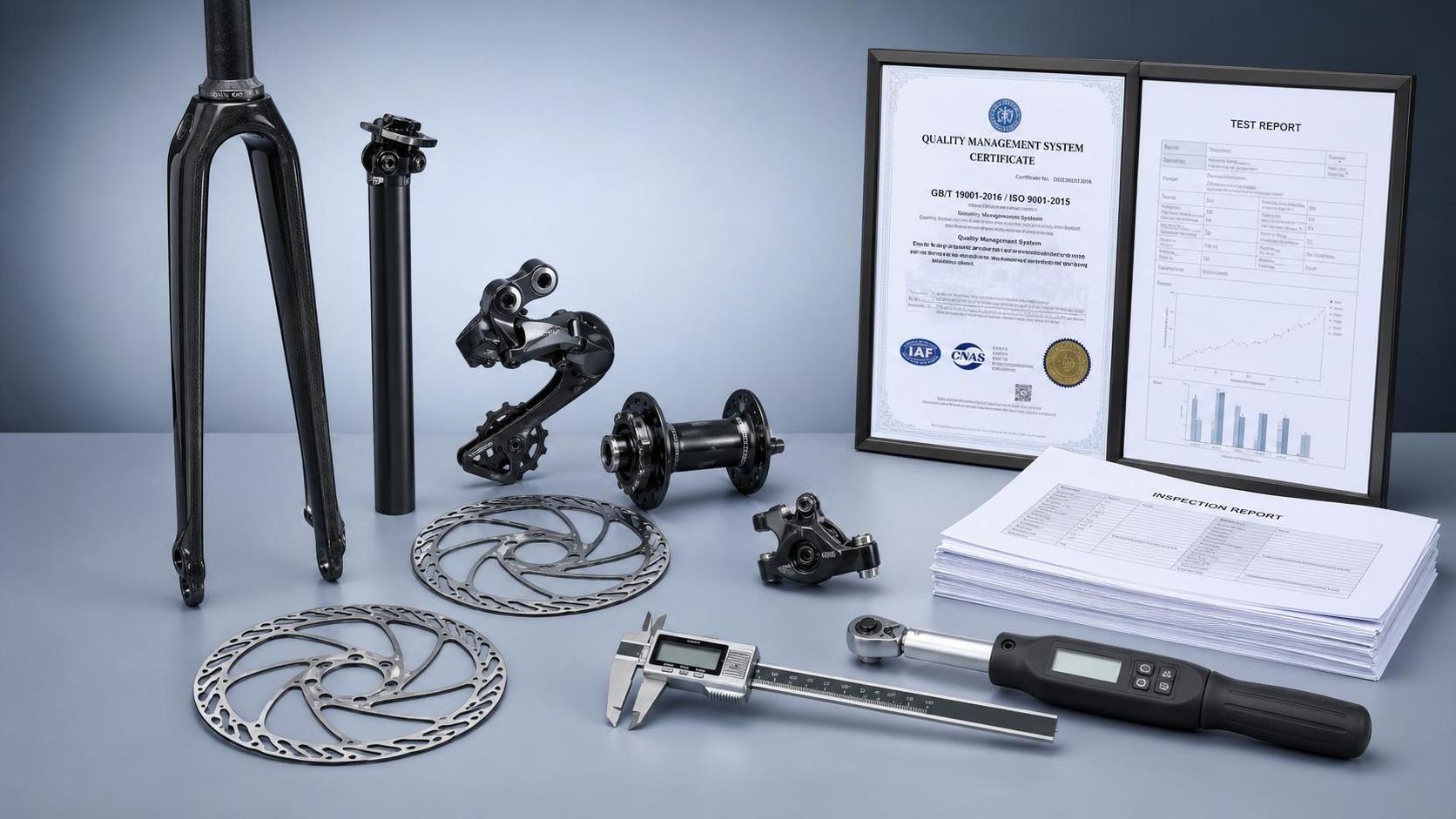
Before any volume order moves forward, the claim that bicycle components ISO certified status is valid needs to be tested against evidence, not assumptions. In today’s mobility market, where e-bikes, performance drivetrains, carbon structures, and export compliance intersect, a weak verification step can trigger rejected shipments, safety complaints, recalls, or a costly dispute over who approved what. For businesses tracking the fast-changing two-wheel sector, especially in the way ACMD follows precision transmissions and lightweight mobility systems, certificate verification is no longer a paperwork exercise. It is part of product risk control.
What “ISO-Certified” Really Means in Bicycle Sourcing
The first point to clarify is simple: a supplier can be ISO certified, a factory can be ISO certified, and a product can be tested against an ISO-related standard, but those are not the same thing.
This distinction matters because bicycle components ISO certified claims are often presented loosely in quotations, catalogs, and factory introductions.
A management system certificate, such as ISO 9001, shows that the organization follows a documented quality process. It does not automatically confirm that a crankset, fork, hub, derailleur, rim, or seatpost meets a product safety requirement.
Product-related conformity is different. It usually depends on the component category, the destination market, the testing method used, and whether the component falls under bicycle, e-bike, or other micro-mobility regulations.
That is why the phrase bicycle components ISO certified should always be unpacked into three questions: certified what, by whom, and for which exact product scope?
Why Verification Has Become More Important
The pressure on verification is rising because the bicycle supply chain is no longer limited to basic commuter parts.
High-performance drivetrains now combine mechanical precision with electronics. Carbon fiber parts push stiffness and weight targets closer to aerospace material practices. E-bike systems add batteries, motors, firmware, and higher duty cycles.
In that environment, an inaccurate certificate claim can hide a deeper weakness.
It may indicate poor document control, weak traceability, outsourced production without oversight, or a supplier that does not fully understand the destination market.
ACMD’s broader industry lens makes this especially relevant. As low-carbon mobility expands across Europe and other regulated markets, bike parts are evaluated not only for ride feel and performance, but also for durability, safety, and audit readiness.
Start With the Certificate Itself
A surprising number of sourcing errors can be prevented by reading the certificate line by line.
Key details to confirm
- Full legal name of the certified company
- Manufacturing address, not only a sales office
- Certificate number and issue date
- Expiry date or surveillance cycle
- Certification body name and accreditation mark
- Scope statement describing products or processes covered
The scope statement deserves extra attention. If a document only covers “metal hardware manufacturing,” it may not support a claim involving electronic derailleurs, carbon forks, or hydraulic brake assemblies.
In practical terms, bicycle components ISO certified documentation should connect clearly to the part family being ordered. A vague scope is a warning sign, even if the certificate looks authentic.
Check the Certification Body, Not Just the PDF
A certificate file is only the starting point. Verification becomes credible when the issuing body can be independently confirmed.
Most recognized certification bodies maintain an online directory. The certificate number, company name, and site address should match exactly.
If the database cannot be searched, ask for direct confirmation from the issuer. That request is routine and legitimate.
It is also worth checking whether the certification body is accredited by a recognized national or international accreditation system. A certificate issued by an unrecognized entity may offer little value during a dispute or regulatory review.
Match the Document to the Real Product
Even a valid certificate can be irrelevant if it does not match the actual component configuration.
This happens often with private-label sourcing, mixed production lines, and updated models that keep the same marketing description.
For example, a supplier may present bicycle components ISO certified material for an alloy seatpost, while the current order is for a carbon version with a different layup, clamp design, and fatigue profile.
The same issue appears in drivetrain parts. A certificate or test report for one derailleur generation may not cover a revised cage, motor unit, or wireless control module.
Useful matching checks
- Model number and revision code
- Material declaration and finish
- Drawing version or BOM reference
- Load rating or performance class
- Factory where the part is produced
Audit Signals That Support or Undermine Trust
Documents tell one part of the story. Factory behavior tells the rest.
A supplier with sound control over bicycle components ISO certified claims should retrieve records quickly, explain the scope clearly, and show consistency across sales, quality, and production teams.
When the answers vary by department, that usually points to weak internal control.
Positive audit indicators
- Controlled document versions on the shop floor
- Traceable incoming material records
- Calibration logs for test equipment
- Routine fatigue, torque, or corrosion testing
- Clear nonconformance and corrective action records
Red flags worth escalating
- Certificate dates that have lapsed
- Scanned documents with altered logos or inconsistent fonts
- A trading company presenting a factory certificate as its own
- No link between test reports and production batches
- Reluctance to disclose subcontracted processes
Different Component Types Need Different Questions
Not all parts carry the same risk, so the verification depth should reflect the component type.
A stem, brake rotor, carbon handlebar, e-bike fork, and electronic derailleur each fail in different ways. Their evidence package should not be treated as interchangeable.
This is where a broad mobility intelligence view becomes useful. Markets are converging, but risk profiles are not. The verification method should follow the engineering reality of the part.
Build a Repeatable Pre-Order Process
The strongest approach is not a one-time certificate review. It is a repeatable gate before purchase approval.
A workable process usually includes document collection, issuer verification, product matching, sample review, and factory validation.
For higher-risk components, add independent lab testing or a focused process audit before confirming the first bulk order.
A practical approval sequence
- Request current certificates and related test reports
- Verify the issuing body and accreditation status
- Check product scope against drawings and model codes
- Confirm factory location and subcontracted steps
- Review traceability, calibration, and corrective action evidence
- Approve only after records align with the actual order
In simple terms, bicycle components ISO certified should be treated as a claim that requires layered proof, not a label that ends the review.
Where to Focus Next
For teams refining supplier controls, the next step is to map verification depth to component risk, market destination, and production complexity.
That often means creating a short internal checklist for bicycle components ISO certified reviews, then expanding it for carbon parts, electronic shifting systems, and e-bike assemblies.
The goal is not to collect more paperwork. It is to know which documents actually reduce uncertainty before money, liability, and brand exposure increase.
In a market shaped by advanced materials, smarter drivetrains, and tighter mobility regulation, better verification supports better ordering decisions. That is a stronger starting point than discovering the gap after the shipment arrives.
Related News