
Last-Mile Transportation Systems Trends Shaping Urban Delivery

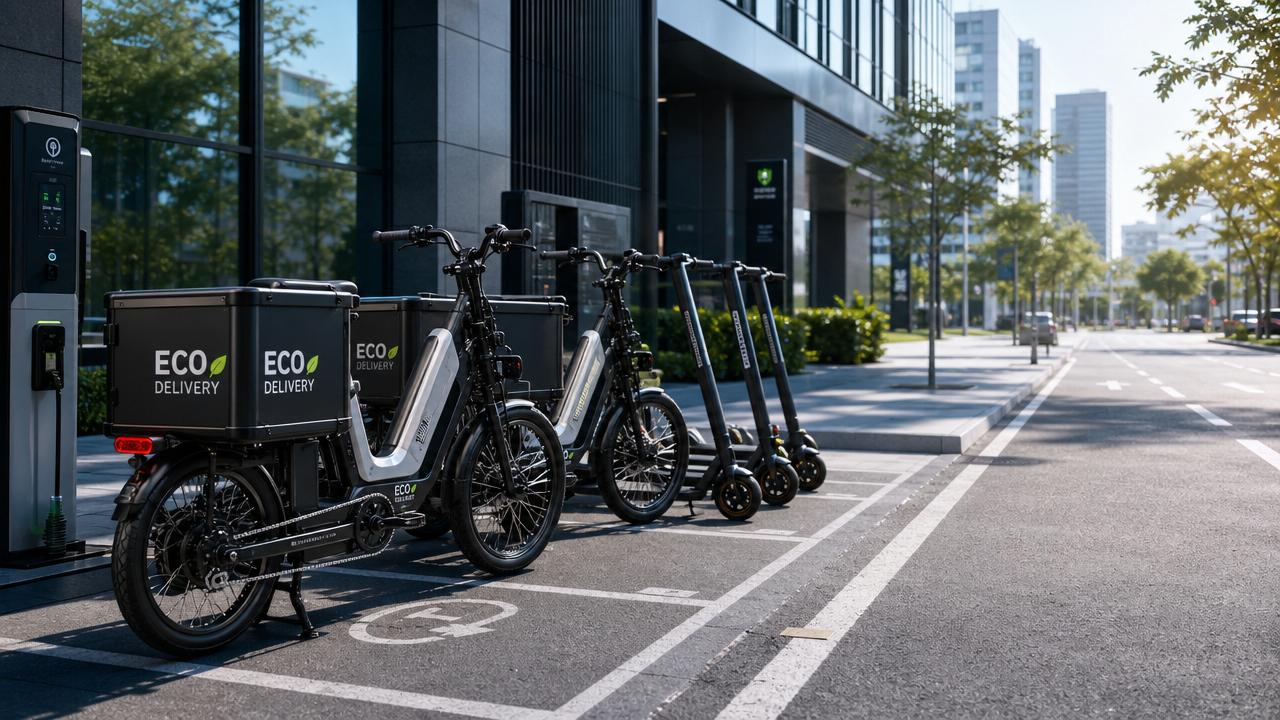
Urban delivery is being redefined at street level. As cities push to reduce congestion, emissions, and missed delivery windows, last-mile transportation systems have moved from a logistics detail to a strategic infrastructure decision.
The change is not only about moving parcels faster. It is about selecting the right mix of vehicles, digital controls, and operating rules for dense, mixed-use environments where roads, curbs, and customer expectations are all under pressure.
That is why the strongest signals now come from micro-mobility and lightweight engineering. In that context, ACMD’s focus on e-bikes, smart e-scooters, advanced drivetrain systems, and carbon fiber structures offers a useful lens for understanding where last-mile transportation systems are heading next.
Why last-mile transportation systems matter now
In many cities, the last mile is the most expensive and least predictable segment of delivery. A shipment may travel efficiently across regions, then lose time in the final few kilometers because of traffic, parking limits, building access, and fragmented routing.
Last-mile transportation systems address that final segment through an integrated combination of vehicles, charging or swapping support, routing software, curb access logic, and operational policies.
This is why the topic matters beyond transport alone. Retail, food delivery, healthcare distribution, facility management, public services, and urban planning all depend on reliable last-mile performance.
More importantly, city logistics is no longer judged only by speed. Reliability, carbon intensity, noise, rider safety, utilization rates, and fleet adaptability now shape procurement and network design.
What defines an effective urban last-mile model
At a basic level, effective last-mile transportation systems connect three layers. The first is the vehicle layer. The second is the digital control layer. The third is the urban operating environment.
The vehicle layer now favors compact electric formats. E-bikes and smart e-scooters are becoming practical tools, not experimental additions, because they fit narrow streets, short routes, and frequent stop patterns.
The digital layer adds route optimization, geofencing, battery monitoring, predictive maintenance, and delivery confirmation. Without this layer, even a strong vehicle fleet will underperform in daily operations.
The urban layer includes regulations, loading zones, road hierarchy, weather exposure, and local energy access. In practice, this layer often decides whether a deployment scales or stalls.
A useful way to view last-mile transportation systems is not as a single product category, but as a coordinated operating architecture for dense delivery conditions.
The trends reshaping urban delivery networks
Micro-mobility is becoming a core logistics asset
E-bikes are no longer limited to consumer commuting. They are increasingly used for parcel drops, food service, campus logistics, and time-sensitive neighborhood deliveries.
Smart e-scooters also have a role in highly compact service zones, especially where flexible dispatch and low storage footprints matter. Their value grows when geofencing and rider controls are tightly managed.
For heavier routes, high-speed e-motorcycles are entering the picture. They offer longer range and stronger load capacity while still aligning with decarbonization targets.
Lightweight engineering improves total network efficiency
Weight reduction is often discussed in performance sports, but it has direct logistics value. Lighter vehicles consume less energy, accelerate more smoothly, and place less stress on braking and handling systems.
That makes carbon fiber frames and aerospace-grade materials relevant to urban delivery, especially where fleets run high daily cycles. Lower weight can translate into longer effective range and better rider control.
ACMD’s coverage of composite materials and monocoque design is useful here because the material choice affects more than aesthetics. It influences maintenance intervals, fatigue behavior, and payload efficiency.
Precision drivetrain systems support uptime
Urban delivery fleets operate under frequent starts, sudden stops, curb turns, and uneven surfaces. In these conditions, drivetrain precision matters.
Advanced derailleur components and electronic shifting technologies improve power distribution and ride consistency. For delivery operations, that means better control, less rider fatigue, and more predictable performance over repeated route cycles.
This is not a niche detail. When scaled across a fleet, small gains in mechanical efficiency can affect route completion times and maintenance costs.
Where these systems create the most value
The best applications appear where urban density is high, trip distances are short to medium, and delivery frequency is steady. That includes both public and commercial networks.
In each case, the value comes from system fit. The wrong vehicle class or weak digital integration can erase the theoretical advantages of electrified delivery.
What to evaluate before scaling deployment
Urban delivery projects often fail when pilot logic is confused with operating logic. A short demonstration route may look efficient, yet hide issues that appear only under full utilization.
A stronger evaluation framework usually includes technical, regulatory, and economic checks at the same time.
- Match vehicle range to actual stop density, not brochure estimates.
- Assess payload, frame durability, and drivetrain wear under repeated daily cycles.
- Review battery charging or swapping plans against route turnover time.
- Confirm local rules on lane use, parking, geofencing, and curb access.
- Measure software visibility across dispatch, maintenance, and incident reporting.
- Check whether spare parts and service support are realistic at fleet scale.
This is where market intelligence becomes valuable. ACMD’s strategic perspective on regulations, subsidy signals, thermal management, anti-interference logic, and consumer premium behavior helps frame decisions beyond the vehicle spec sheet.
How connected infrastructure changes the equation
The next generation of last-mile transportation systems will depend less on vehicle ownership alone and more on infrastructure coordination.
Charging nodes, battery-swapping points, digital loading zones, and curbside data feeds will shape route economics. Vehicles that look efficient in isolation may struggle if the surrounding infrastructure is weak.
This is especially true for high-speed e-motorcycles and larger delivery fleets. Their performance depends on thermal stability, energy turnaround, and predictable service access.
At the same time, connected infrastructure creates better planning data. Operators can compare route durations, battery degradation, weather effects, and asset utilization with much more precision than before.
A practical way to read the market from here
Urban delivery is moving toward lighter, smarter, and more specialized fleets. That does not mean every city needs the same last-mile transportation systems.
The better approach is to compare route patterns, payload profiles, infrastructure readiness, and regulatory direction before selecting a mobility mix. In some zones, e-bikes will outperform vans. In others, e-motorcycles or hybrid models will make more sense.
It is also worth tracking the enabling technologies around the fleet. Composite material design, electronic shifting precision, and intelligent vehicle controls are becoming operational variables, not niche engineering topics.
For anyone shaping delivery networks, the next step is clear: define the urban use case first, build a measurable evaluation framework second, and then compare last-mile transportation systems as integrated platforms rather than standalone vehicles.
That is where better decisions begin, and where urban delivery becomes faster, cleaner, and more resilient over time.
Related News