
Aluminum Bike Hubs: Common Wear Issues and Fixes

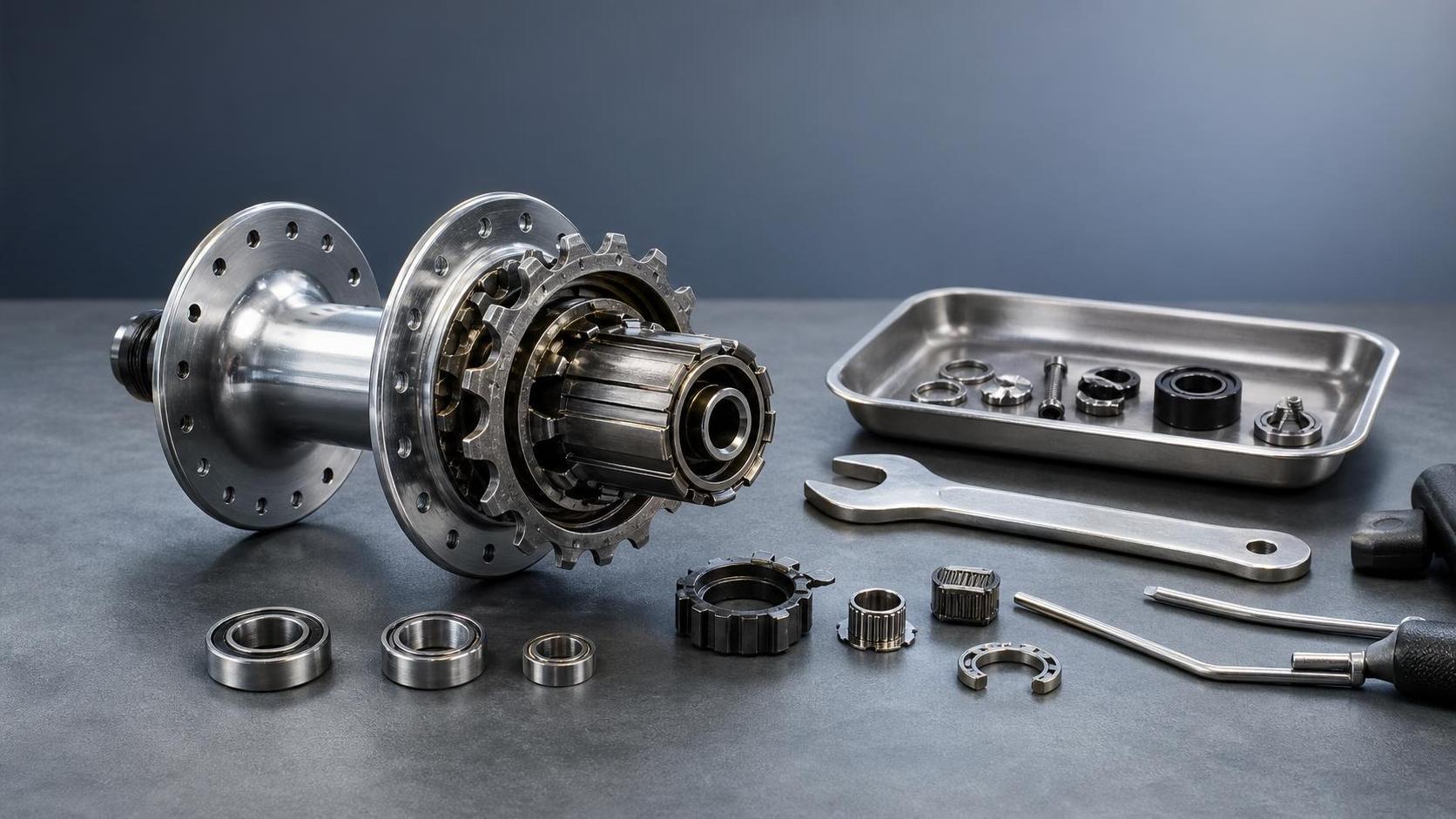
Aluminum Bike Hubs: Common Wear Issues and Fixes
Aluminum bike hubs are light, responsive, and widely used across road, gravel, MTB, and e-bike platforms.
They support fast acceleration and efficient power transfer, but they also face steady mechanical stress.
In service work, the most common failures are rarely dramatic at first.
More often, aluminum bike hubs start with subtle play, rough rotation, weak engagement, or stubborn corrosion.
That makes early diagnosis important, especially when bikes return with vague complaints about noise, drag, or inconsistent drive feel.
This guide breaks down common wear patterns, likely causes, and practical fixes that keep aluminum bike hubs reliable in daily use.
Why Aluminum Bike Hubs Wear the Way They Do
Aluminum bike hubs save weight, but aluminum is softer than hardened steel.
That difference matters at bearing seats, freehub splines, axle interfaces, and spoke flange areas.
Water, grit, over-torque, poor preload, and mixed-metal contact all speed up wear.
On e-bikes, added torque and weight make hub stress even more obvious.
In real workshop conditions, most hub failures are cumulative rather than sudden.
So the best repair outcome usually comes from catching wear before parts deform or seize.
Core Stress Factors
- High side loads from cornering, landing, and rough pavement
- Contamination from washdown, rain riding, and dusty trails
- Cassette bite into softer freehub bodies
- Incorrect bearing preload or end-cap installation
- Galvanic corrosion between aluminum and steel parts
Bearing Play and Rough Rotation
Bearing issues are among the most frequent problems in aluminum bike hubs.
The first sign may be side-to-side movement at the rim, not a completely failed bearing.
Riders may also report humming, grinding, or a wheel that slows too quickly.
Typical Causes
- Water intrusion past seals
- Fine grit contamination
- Incorrect preload setting
- Worn bearing seats inside the hub shell
- Press-fit damage during previous service
How to Check
- Secure the wheel and check lateral movement at the tire.
- Spin the axle by hand after removing the wheel.
- Feel for notchiness, drag, or uneven resistance.
- Inspect seals, spacers, and end caps for misalignment.
- Measure bearing seat fit if replacement bearings loosen too easily.
Practical Fixes
If bearings feel rough, replace them instead of flushing and hoping for recovery.
When pressing new bearings into aluminum bike hubs, support the shell correctly.
Force on the wrong race often creates invisible damage and shortens service life.
If the bearing seat is enlarged, the real problem is the hub shell, not the cartridge.
In that case, retaining compound may only be a temporary measure.
For long-term reliability, replace the shell or complete hub assembly when fit tolerance is lost.
Freehub Body Notching and Poor Engagement
Freehub wear is another classic issue with aluminum bike hubs.
Steel cassette cogs can dig into the softer aluminum spline faces.
At first, that creates cosmetic marks.
Later, it can make cassette removal difficult and affect load distribution.
A separate but related issue is weak pawl or ratchet engagement.
Common Symptoms
- Cassette stuck on the freehub body
- Skipping under load
- Delayed pickup when pedaling starts
- Metal dust or sticky old grease inside the driver
Fix Strategy
Light spline marks can be dressed carefully, but deep gouges usually mean replacement.
Check pawls, springs, ratchet teeth, and the driver seal at the same time.
Many engagement problems come from heavy grease where light lubricant was intended.
That point is easy to miss during rushed service.
Always follow the hub maker’s lubrication guidance, because pawl systems vary widely.
For high-torque use, aluminum bike hubs benefit from cassettes with larger carrier interfaces.
Those spread force better and reduce spline bite over time.
Axle Scoring, Bending, and Interface Damage
When aluminum bike hubs develop persistent play, the axle deserves close attention.
A scored or slightly bent axle can destroy fresh bearings quickly.
This is common after heavy impacts, incorrect clamping, or long use with worn bearings.
What to Inspect
- Grooves where inner bearing races sit
- Bending visible on a flat roll test
- Damaged threads or end-cap shoulders
- Fretting at contact points between axle and spacers
Repair Guidance
Minor staining can be cleaned, but scoring that catches a fingernail is usually unacceptable.
Replacing only the bearings will not solve geometry or fit issues caused by axle wear.
If the axle is bent, replace it rather than attempting correction.
Straightening can leave hidden stress that returns as premature failure.
This is especially important for e-bike wheels and aggressive trail setups.
Corrosion, Seizing, and Galvanic Damage
Corrosion often explains why aluminum bike hubs become difficult to service.
Moisture plus road salts can lock steel parts into aluminum interfaces.
That includes axles, freehub bodies, end caps, and rotor bolts.
From recent service trends, this issue is becoming more visible on year-round commuter fleets.
Warning Signs
- White oxidation around joints
- Frozen end caps
- Pitted surfaces near seals
- Creaking from the hub under torque
Best Fixes
Disassemble carefully and avoid aggressive force that distorts the hub shell.
Use penetrating fluid where appropriate, then clean all mating surfaces completely.
Replace any pitted steel hardware that will continue to corrode.
Apply the correct anti-seize or assembly compound during reassembly.
This simple step greatly improves future serviceability of aluminum bike hubs.
Flange Cracks and Spoke Hole Wear
Not every hub problem starts inside the bearing system.
Aluminum bike hubs can also fail at the flanges, especially with poor wheel tension history.
Repeated overload can ovalize spoke holes or create small radial cracks.
Likely Causes
- Uneven spoke tension
- Oversized spoke heads or washers used incorrectly
- Heavy riders or cargo loads
- Repeated impact use beyond hub design intent
Recommended Action
If cracks are visible, replacement is the safe answer.
Flange cracking is structural, and repair is not a dependable service solution.
If only spoke hole wear is present, confirm lacing pattern and tension balance before rebuilding.
Otherwise, the next hub may fail the same way.
A Fast Diagnostic Workflow for Aluminum Bike Hubs
A consistent inspection routine saves time and reduces repeat repairs.
That matters when aluminum bike hubs arrive with several overlapping symptoms.
Prevention Steps That Actually Reduce Repeat Failures
The best fix for aluminum bike hubs is often a better maintenance routine.
Simple habits reduce comeback rates and extend hub life significantly.
- Avoid pressure washing directly at hub seals
- Verify axle end play after each bearing service
- Use correct torque on cassettes, rotors, and axle hardware
- Match lubrication type to the freehub design
- Inspect for corrosion on bikes used in wet or coastal areas
- Track repeat failures by hub model and riding application
That last step becomes more valuable as product mixes shift toward heavier e-mobility platforms.
It also helps identify whether the root cause is service error, usage pattern, or design limitation.
Final Takeaway
Aluminum bike hubs deliver strong performance, but they reward careful inspection and precise service.
Most wear problems trace back to bearings, freehub interfaces, axle condition, or corrosion.
When those areas are checked in a disciplined order, diagnosis gets faster and repairs last longer.
For aluminum bike hubs, the practical goal is not just fixing today’s symptom.
It is preventing the same failure from returning after the next wet ride, hard sprint, or heavy commute.
Use that approach, and hub service becomes more predictable, more efficient, and far more durable.