
Bicycle Derailleur Components: Wear Signs to Check

Bicycle Derailleur Components: Wear Signs to Check
For after-sales maintenance teams, Bicycle Derailleur Components are small parts with a big impact on ride safety, shifting accuracy, and customer satisfaction.
Early wear signs can reveal deeper drivetrain stress before it becomes a costly failure or a repeated service complaint.
Chain skip, pulley play, bent hangers, cable drag, and delayed electronic response all deserve structured inspection during routine service.
This guide explains practical checkpoints for Bicycle Derailleur Components, helping preserve precision, reliability, and safe power transfer.
Basic Function of Bicycle Derailleur Components
Bicycle Derailleur Components guide the chain across sprockets, keeping cadence, torque delivery, and gear selection consistent under changing riding loads.
A complete derailleur system includes the rear derailleur, front derailleur when present, hanger, pulleys, cage, cables, housing, and limit screws.
Modern systems may also include batteries, motors, wireless receivers, firmware, junctions, and shift buttons.
Wear rarely affects one part alone. A stretched chain can damage cassette teeth, pulley bearings, and derailleur alignment.
That is why Bicycle Derailleur Components should be inspected as a connected mechanical and electronic transmission system.
Core inspection principle
Accurate diagnosis starts with load, alignment, friction, and control response. Each factor affects shift quality in a different way.
- Load shows whether the chain holds under rider torque.
- Alignment confirms the derailleur tracks cassette spacing correctly.
- Friction reveals cable, housing, pulley, or pivot resistance.
- Control response verifies mechanical indexing or electronic actuation.
Industry Context and Current Service Focus
The rise of e-bikes, gravel riding, high-speed commuting, and competitive cycling has increased stress on Bicycle Derailleur Components.
Higher torque motors, wider cassettes, and lightweight materials leave less tolerance for poor adjustment or delayed maintenance.
ACMD tracks this shift across micro-mobility and performance drivetrains, where precision parts now influence safety, efficiency, and brand confidence.
Key Wear Signs Across Bicycle Derailleur Components
A reliable inspection sequence prevents missed faults. Start at the chain, then move outward toward control parts.
Chain elongation and cassette wear
Chain elongation changes tooth engagement. It often appears as skipping during acceleration, climbing, or e-bike assist engagement.
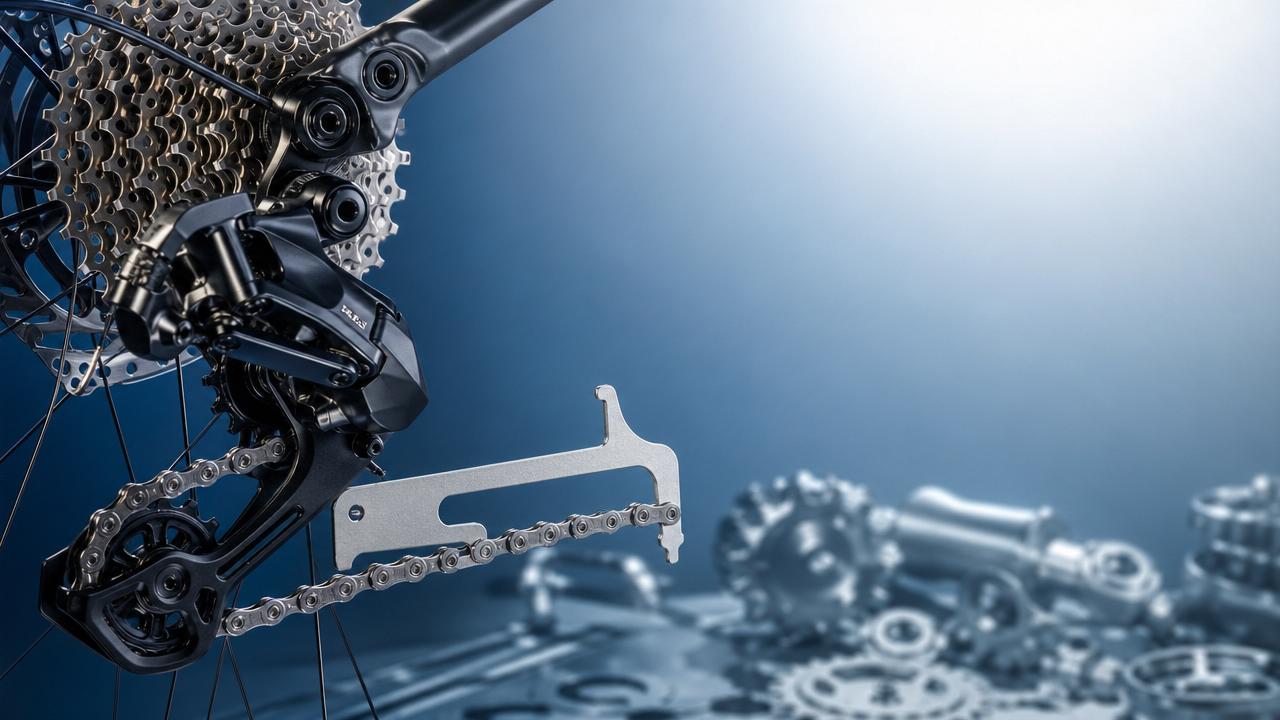
Check chain wear with a calibrated gauge. Then inspect cassette teeth for hooking, shark-fin shapes, or polished ramps.
Bicycle Derailleur Components cannot shift cleanly when the chain and cassette no longer share compatible pitch.
Pulley teeth, bearings, and cage movement
Pulley wheels wear faster in wet, dusty, or high-mileage use. Pointed teeth reduce chain control.
Side-to-side pulley play may indicate worn bushings or bearings. Rough rotation suggests contamination or dried lubricant.
Inspect the cage for twisting, impact marks, and weakened spring tension. A damaged cage compromises chain wrap.
Derailleur hanger alignment
A slightly bent hanger can mimic cable stretch, cassette wear, or poor indexing.
Use an alignment gauge rather than visual judgment. Small deviations matter on wide-range cassettes and narrow sprocket spacing.
For Bicycle Derailleur Components, hanger accuracy is one of the fastest ways to restore predictable shifting.
Cable, housing, and pivot friction
Mechanical shifting depends on smooth cable movement. Frayed cables, crushed housing, or corroded liners create delayed response.
Disconnect the cable and move the derailleur by hand. Stiff pivots reveal contamination or mechanical damage.
Fresh cables and clean housing often solve shifting complaints before larger Bicycle Derailleur Components need replacement.
Electronic shifting response
Electronic drivetrains add diagnostics beyond mechanical alignment. Check battery charge, button response, motor sound, and firmware status.
Delayed actuation may come from low voltage, weak wireless connection, outdated firmware, or crash-protection mode.
Electronic Bicycle Derailleur Components still require clean pulleys, straight hangers, and correct chain length.
Business Value of Structured Drivetrain Inspection
Systematic checks reduce repeated repairs because they identify root causes instead of adjusting symptoms.
A bike that shifts well after service builds confidence in the overall vehicle, from carbon frame to electric assist system.
For premium mobility products, Bicycle Derailleur Components support perceived quality as much as brakes, tires, and suspension.
- Fewer warranty returns through earlier wear identification.
- Improved road safety through stable chain retention.
- Lower lifecycle cost through timely replacement planning.
- Better customer trust through consistent shift performance.
- More accurate parts forecasting for seasonal maintenance cycles.
This value is especially important for e-bikes, where motor torque accelerates drivetrain wear during commuting and cargo use.
Typical Scenarios and Object Classification
Different riding scenarios create different failure patterns. Inspection should reflect use intensity, terrain, and drivetrain type.
This classification helps match Bicycle Derailleur Components inspection to realistic operating conditions rather than generic service routines.
Practical Inspection Sequence
A repeatable checklist improves diagnostic speed and reduces subjective judgment. The following sequence suits most modern drivetrains.
- Clean the drivetrain enough to expose wear, cracks, and corrosion.
- Measure chain elongation before adjusting cable tension.
- Inspect cassette and chainring teeth for hooking or uneven wear.
- Check pulley teeth, bearing smoothness, and lateral play.
- Verify hanger alignment with a proper gauge.
- Test derailleur pivots, spring return, and clutch resistance.
- Inspect cables, housing ends, ferrules, and routing bends.
- Set limit screws, B-gap, and indexing after mechanical faults are corrected.
- For electronic systems, confirm battery, pairing, firmware, and calibration.
- Road-test under load, not only on a work stand.
Bicycle Derailleur Components may appear correct on a stand yet fail when torque, vibration, and rider weight are applied.
Common Mistakes During Diagnosis
Many drivetrain problems persist because one visible symptom receives too much attention.
- Do not correct every issue with barrel adjuster changes.
- Do not ignore hanger alignment after a minor fall.
- Do not install a new chain on a severely worn cassette.
- Do not overlook pulley wear on high-mileage bikes.
- Do not update firmware before checking battery health.
A disciplined approach protects Bicycle Derailleur Components from unnecessary replacement and prevents avoidable post-service complaints.
Replacement and Maintenance Considerations
Replacement timing should consider wear measurement, riding conditions, and performance expectations.
Chains are usually replaced before cassettes. Pulleys, cables, and housing should be assessed during every major service.
For e-bikes, shorter inspection intervals are sensible because motor support can hide poor shifting habits.
Lubrication choice also matters. Wet lubes resist rain but attract grit. Dry lubes stay cleaner but need frequent renewal.
Bicycle Derailleur Components last longer when cleaning avoids high-pressure water near bearings, pivots, motors, and electronic connectors.
Documentation for Better Service Decisions
Inspection notes create useful history. Record chain wear, cassette condition, hanger correction, firmware version, and replaced parts.
Photos of worn pulleys, bent hangers, or hooked sprockets support transparent maintenance decisions.
Over time, these records show patterns across models, usage types, weather exposure, and component generations.
For ACMD’s intelligence view, such field signals connect mechanical craftsmanship with wider micro-mobility reliability trends.
Action Guide for Reliable Shifting
The next step is to turn inspection knowledge into a consistent routine.
Use a checklist, measure before adjusting, and confirm performance under real riding load.
Prioritize chain measurement, hanger alignment, pulley condition, cable friction, and electronic diagnostics in every complete drivetrain service.
When these checkpoints are followed, Bicycle Derailleur Components deliver cleaner shifts, safer rides, and longer drivetrain life.
For evolving two-wheeled mobility, precise derailleur maintenance remains a practical bridge between advanced engineering and everyday ride confidence.
Related News