Bike Transmission Options: Hub or Drivetrain?

Why does bike transmission choice matter so much?
Choosing a bike transmission is not a minor specification decision. It shapes riding feel, service intervals, price structure, and long-term ownership value.
For urban mobility, sport cycling, and premium electric platforms, the hub or drivetrain decision affects efficiency, cleanliness, and integration possibilities.
A well-matched bike transmission can reduce warranty pressure, simplify maintenance planning, and improve user satisfaction across very different riding conditions.
This matters even more in markets shaped by e-bikes, smart components, lightweight materials, and rising expectations for reliable low-carbon mobility.
The core question is simple: should a bicycle use an internal gear hub or a traditional drivetrain with derailleur, cassette, and chain?
The answer depends on terrain, maintenance tolerance, performance targets, and the intended product position in the mobility market.
What is the difference between a hub system and a drivetrain system?
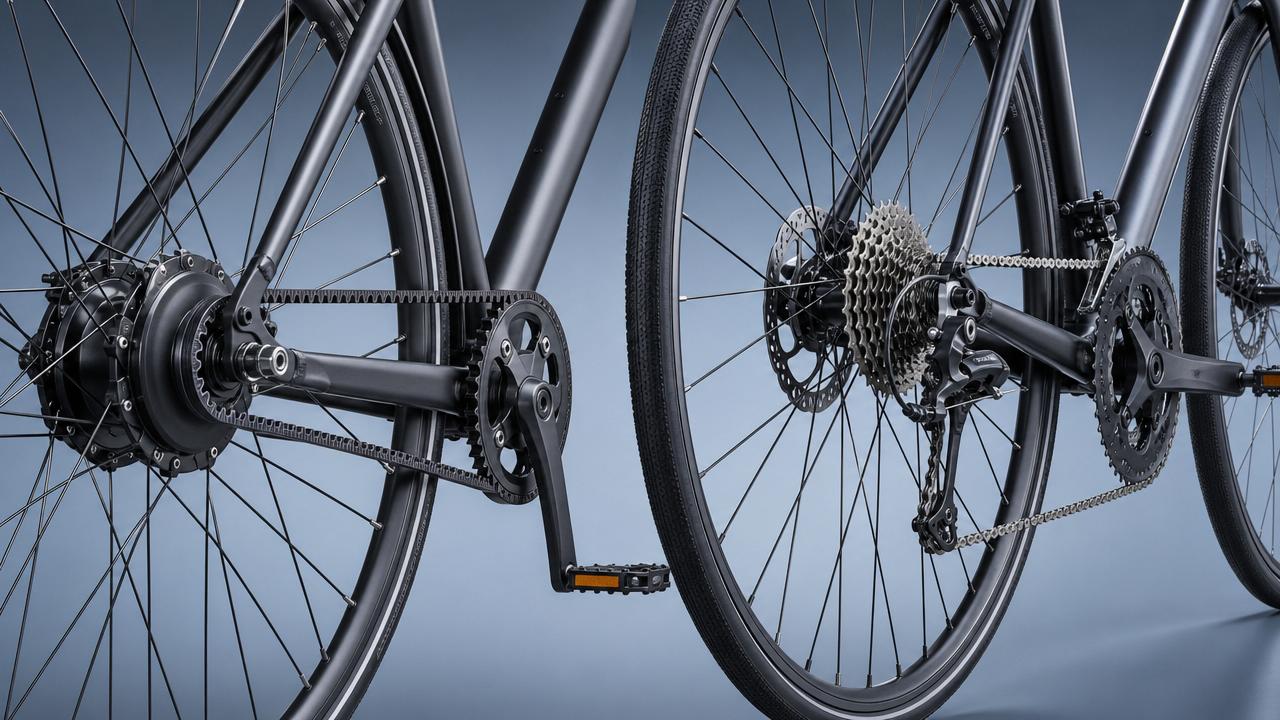
A hub-based bike transmission places the gearing mechanism inside the rear hub shell. The moving parts stay enclosed and protected from weather and contamination.
A drivetrain-based bike transmission uses external components. These usually include a derailleur, cassette, chainrings, chain, and shifters.
Hub gears are often associated with commuting, utility bicycles, cargo bikes, and many comfort-oriented e-bikes.
External drivetrains dominate road bikes, mountain bikes, gravel bikes, and performance-focused segments where gear range and efficiency are critical.
The design philosophy is very different. Hub systems prioritize sealing, low maintenance, and everyday convenience.
Traditional drivetrains prioritize flexibility, lighter wheel service, broad component compatibility, and sharper power transfer under competitive riding conditions.
In practical terms, the bike transmission decision is really a trade-off between protection and simplicity on one side, and performance tuning on the other.
Key structural difference
- Hub system: internal gears, cleaner appearance, fewer exposed moving parts.
- Drivetrain system: external gears, easier visual inspection, wider aftermarket options.
- Hub system: often paired with belt drives in premium urban platforms.
- Drivetrain system: commonly paired with chain drives and advanced electronic shifting.
Which bike transmission performs better in real riding?
Performance depends on how “better” is defined. There is no universal winner for every route, user, or vehicle category.
A derailleur-based bike transmission usually offers higher mechanical efficiency in ideal conditions. That matters for racing, climbing, and sustained high-speed riding.
It also provides wider gear range choices and closer ratio steps in many configurations, helping riders maintain preferred cadence more precisely.
A hub-based bike transmission delivers a different kind of performance. It excels in stop-and-go traffic, wet weather, and daily commuting.
Many internal gear hubs allow shifting while stationary. That is highly useful at intersections, traffic lights, and crowded urban streets.
For e-bikes, a hub gear can create a very smooth, user-friendly ride, especially when combined with mid-drive motors and smart shift calibration.
However, internal hubs are often heavier. That extra mass may reduce the agile feel valued in sport cycling and technical off-road riding.
When drivetrain systems usually win
- Competitive road cycling and mountain biking.
- Applications needing maximum efficiency under load.
- Products designed for high customization and upgrade paths.
When hub systems usually win
- Urban commuting with frequent starts and stops.
- Low-maintenance mobility fleets and utility cycles.
- Premium city e-bikes emphasizing cleanliness and ease.
How do maintenance, durability, and lifecycle costs compare?
This is where bike transmission comparisons become commercially important. Upfront cost alone rarely tells the full story.
Hub gears usually cost more at purchase. Yet they often reduce cleaning frequency, exposure-related wear, and routine adjustment requirements.
Because the gears are sealed, hub systems handle rain, road dust, and daily neglect better than exposed drivetrains.
A traditional bike transmission often has lower entry cost and simpler parts sourcing. Replacement chains, cassettes, and derailleurs are widely available.
But external systems demand regular cleaning, lubrication, indexing, and wear monitoring. In harsh environments, service cycles can become frequent.
Lifecycle cost also depends on the riding population. Casual city riders may ignore maintenance until shifting quality drops sharply.
In that scenario, a sealed hub bike transmission can preserve ride consistency better and lower total service disruption.
For trained cyclists or enthusiast users, external drivetrains are easier to tune, upgrade, and repair without specialized hub servicing.
Common cost factors to review
- Initial component price.
- Expected maintenance intervals.
- Replacement part accessibility.
- Labor complexity during service.
- Downtime impact across the product lifecycle.
What applications fit each bike transmission best?
Different bicycle categories demand different transmission logic. Matching the system to the use case is more important than chasing a universal answer.
City bikes benefit from hub gears because riders value convenience, tidy appearance, and dependable daily function.
Cargo bikes also favor hub systems in many cases. Their duty cycle rewards durability, simple shifting, and lower exposure to impact and dirt.
E-bikes occupy both sides of the bike transmission debate. Urban e-bikes often fit hubs, while sport e-bikes often fit external drivetrains.
Road bikes, gravel bikes, and mountain bikes generally benefit from derailleur systems because riders expect broader gearing, faster response, and lighter performance setups.
Premium design also matters. Sleek commuter products often use internal hubs with belt drives to support a cleaner, quieter mobility identity.
In contrast, enthusiast-focused platforms often showcase external bike transmission technology as a visible performance signal.
What mistakes are common when selecting a bike transmission?
One common mistake is focusing only on headline gear count. More gears do not automatically create a better bike transmission for every riding environment.
Another mistake is ignoring maintenance behavior. A highly efficient external drivetrain can underperform badly if service discipline is weak.
Weight can also be overvalued or undervalued. In competitive use, it matters greatly. In city transport, durability and convenience often matter more.
Some evaluations overlook integration with motors, sensors, and frame architecture. This is especially important in modern e-bike platforms.
Another risk is assuming all hubs behave the same. Internal gear hubs vary significantly in range, efficiency, service design, and pricing.
The same applies to external drivetrains. Entry, mid, and premium groupsets offer very different durability, accuracy, and user perception.
Quick warning signs
- Choosing by price only.
- Ignoring local weather and road conditions.
- Skipping service availability checks.
- Not matching transmission type to rider expectations.
How should the final bike transmission decision be made?
A practical decision starts with intended use, not with technology preference. The correct bike transmission supports the primary riding scenario first.
If the goal is clean urban mobility, lower maintenance pressure, and premium daily usability, hub systems often make stronger sense.
If the goal is maximum pedaling efficiency, modular upgrades, and sport-oriented responsiveness, a traditional drivetrain usually remains the better answer.
For advanced mobility brands and technical product teams, the best approach is to compare total system value, not just component labels.
That means reviewing rider profile, terrain, maintenance reality, e-drive integration, frame compatibility, and long-term service economics together.
In the hub or drivetrain debate, the strongest choice is the one that aligns technical performance with actual use conditions and lifecycle value.
Review the bike transmission through efficiency, durability, integration, and serviceability. Then test that choice against your target market and operating environment.
A clear comparison today helps avoid costly mismatches tomorrow and supports stronger product positioning in the evolving mobility landscape.
Related News