
Bicycle Saddles Wholesale: Cost, MOQ, and Quality Risks Compared

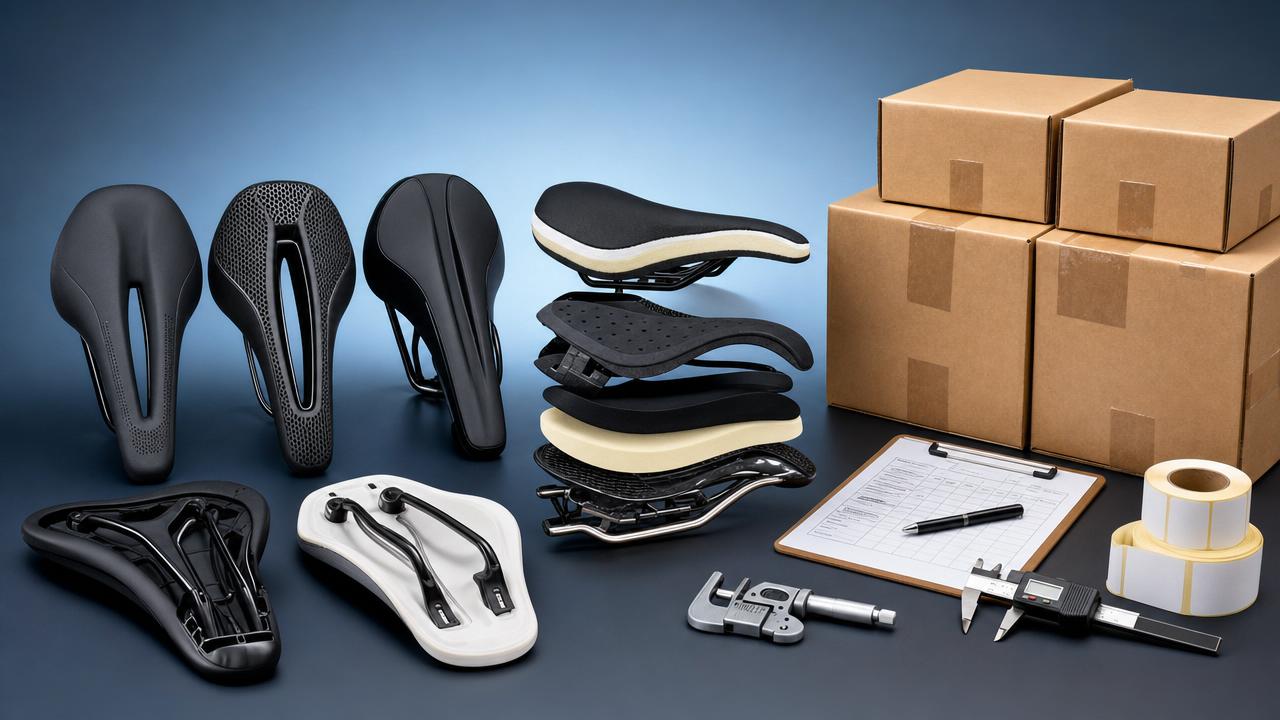
Bicycle Saddles Wholesale: Why does the cheapest quote often become the most expensive option?
In bicycle saddles wholesale, unit price is only the visible layer of cost.
A lower quote can hide tooling compromises, unstable foam density, weak rails, or inconsistent surface finishing.
Those issues rarely appear on the first sample.
They usually show up after repeat orders, peak-season compression, or real riding feedback.
That is why bicycle saddles wholesale decisions should be treated as a full landed-cost exercise.
The practical comparison includes MOQ, mold cost, defect rate, warranty exposure, packaging efficiency, and delivery stability.
For brands active in urban mobility, performance cycling, and lightweight product lines, saddle quality also influences customer retention.
ACMD often tracks this kind of crossover effect.
A small contact-point component can affect how riders judge an entire bike, e-bike, or premium micro-mobility product.
So the better question is not only, “What is the wholesale price?”
It is, “What will this saddle cost after freight, returns, inconsistency, and rider complaints are included?”
What really drives bicycle saddles wholesale pricing?
Price usually moves with material architecture, not just with factory margin.
A saddle with PU cover, standard foam, and steel rails sits in a different cost band than one using microfiber, vacuum finishing, and chromoly rails.
Shell design also matters.
Injection-molded plastic shells are common for volume programs, while nylon reinforced structures and carbon-blend bases raise cost but improve stiffness control.
In bicycle saddles wholesale, these cost drivers are usually the most important:
- Rail material: steel is cheaper, chromoly balances strength, carbon saves weight but raises inspection requirements.
- Foam formulation: low-cost foam can collapse early and create comfort complaints.
- Cover technology: stitched covers may cost less, but bonding quality determines long-term appearance.
- Base geometry: center cut-outs, pressure-relief channels, and flexible zones need better tooling control.
- Brand customization: logo embossing, color matching, private packaging, and custom molds add setup cost.
The more precise the intended rider use, the less useful a simple price-per-piece comparison becomes.
A city e-bike saddle and a lightweight gravel saddle should never be evaluated with the same cost logic.
MOQ looks simple on paper, so where do buyers misread it?
MOQ in bicycle saddles wholesale is often misunderstood because the quoted number rarely reflects the full production condition.
A supplier may say 500 pieces.
But that number may apply only to one color, one rail type, one cover, and one packaging format.
Once variants enter the program, the workable MOQ can rise quickly.
The same happens with private labeling.
Custom logos may be available at a low MOQ, but a unique mold, custom saddle shape, or branded retail box may require a much larger run.
A more useful way to review MOQ is to break it into four layers:
In practice, bicycle saddles wholesale works better when MOQ is negotiated around forecast visibility, not only around trial order size.
Factories are often more flexible when they can group materials across rolling orders.
How can saddle quality be checked before defects become market returns?
The main quality risk in bicycle saddles wholesale is inconsistency.
One approved sample can look excellent, while batch production performs differently under pressure, heat, or vibration.
That is especially relevant in sectors ACMD follows closely, where premium positioning depends on material credibility and repeatable ride feel.
A reliable quality review should check more than appearance.
- Rail alignment: poor symmetry can create mounting issues and rider discomfort.
- Foam rebound: compression recovery indicates whether comfort will last beyond initial use.
- Cover adhesion: weak bonding leads to wrinkles, peeling, or edge lifting.
- Shell strength: flex must match the intended riding category.
- Surface consistency: uneven texture often signals unstable process control.
- Weight tolerance: major deviations suggest material substitution or incomplete process discipline.
It is also useful to request batch-level evidence.
Ask for incoming material standards, in-line inspection points, and carton drop testing.
If the supplier cannot explain how it controls rail welding, foam density, or cover matching, the risk is already visible.
For bicycle saddles wholesale, stable process control is often more valuable than an impressive sample room.
Are OEM and existing models equally safe for cost control?
Not really.
Existing models usually reduce development lead time and simplify bicycle saddles wholesale negotiations.
They are easier to sample, easier to compare, and easier to reorder.
However, they can limit differentiation.
OEM development creates stronger product identity, especially in premium e-bike, urban mobility, and performance categories.
Yet that route brings extra mold cost, validation time, and batch risk.
A sensible comparison looks like this:
- Choose existing models when speed, predictable MOQ, and stable replenishment matter most.
- Choose OEM when the saddle supports a premium positioning or a signature riding experience.
- Use semi-custom programs when visual identity is needed without full tooling exposure.
In actual sourcing, the most efficient route is often a two-stage plan.
Start with an existing platform, then refine shape, cover, and branding after demand is proven.
Which quality risks in bicycle saddles wholesale are easiest to miss?
The obvious defects are usually not the most damaging.
More expensive problems tend to be slow-burn issues that emerge after shipping.
A few examples deserve close attention.
- Color drift between batches, which disrupts assembled bike consistency.
- Foam hardening in cold or hot climates, which changes rider comfort unexpectedly.
- Rail corrosion from poor coating control or weak salt-spray resistance.
- Cover cracking under UV exposure, especially on entry-level synthetic materials.
- Overstated load performance for heavier riders or cargo-oriented e-bikes.
These risks matter more now because many two-wheel categories are converging.
Urban micro-mobility products are expected to feel durable, light, and premium at the same time.
That pressure rewards suppliers with real material discipline, not only attractive quoting.
When reviewing bicycle saddles wholesale offers, it helps to ask one simple question.
What failure mode is most likely after 90 days of use, and what evidence proves it is controlled?
What is a practical way to compare suppliers without slowing the buying cycle?
A short scoring system usually works better than a long checklist.
It keeps bicycle saddles wholesale decisions grounded in measurable trade-offs.
This approach keeps the comparison commercially useful.
It also reflects a broader ACMD view of the mobility supply chain.
Advanced products are judged by integration quality, not isolated parts pricing.
A saddle may be small, but it carries brand perception, comfort credibility, and warranty risk.
So, how should the next bicycle saddles wholesale decision be framed?
The strongest bicycle saddles wholesale decision is rarely the one with the lowest opening quote.
It is the one that balances target price, real MOQ, comfort consistency, defect control, and reorder reliability.
That balance becomes more important when products sit inside fast-evolving mobility categories.
A poor saddle can weaken the value of a well-designed bike.
A stable saddle program can protect margins and support long-term brand trust.
Before moving forward, clarify the use case, target rider profile, annual volume, and acceptable quality tolerance.
Then compare suppliers on total cost, not just piece price.
If needed, begin with one proven platform, validate batch consistency, and expand only after the data supports it.
That is usually the safest way to reduce risk while keeping bicycle saddles wholesale commercially competitive.
Related News