
What Drives Hub Motors Price in 2026 Supply Contracts

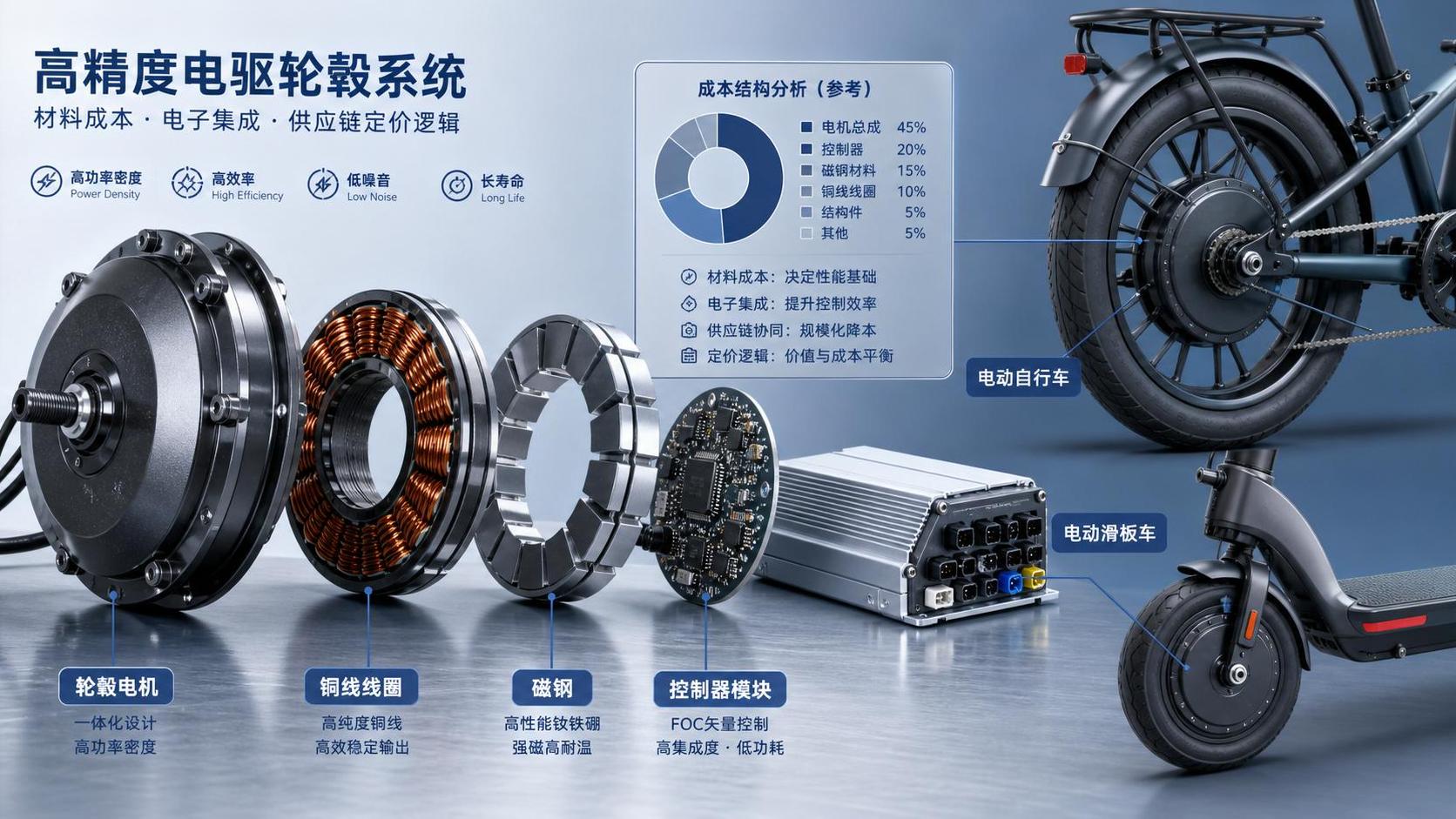
As 2026 supply contracts move from forecast to negotiation, hub motors price is no longer a simple line item. It sits at the intersection of materials, electronics, regulation, production geography, and product strategy across e-bikes, e-scooters, and high-speed electric two-wheel platforms.
That matters because a quoted unit cost can hide very different long-term outcomes. A lower starting number may carry weaker thermal performance, unstable lead times, or higher compliance exposure, while a higher price can sometimes protect margin through durability, integration, and reduced warranty risk.
For a market watched closely by ACMD, where lightweight design, drivetrain precision, and low-carbon mobility are tightly linked, understanding what shapes hub motors price helps turn procurement from a reactive task into a strategic decision.
Why hub motor pricing deserves closer attention in 2026
Hub motors have become central to urban micro-mobility architecture. They influence ride feel, system efficiency, packaging flexibility, and service requirements, especially in export-oriented categories where performance and certification are both under pressure.
In 2026, contracts are being shaped by more than demand recovery. Battery platform changes, regional assembly shifts, tariff adjustments, and stricter safety expectations are all feeding into hub motors price.
The result is a pricing environment where technical specification and commercial structure are increasingly inseparable. A motor is no longer priced only by wattage or volume. It is priced by the total risk it carries through the supply chain.
What buyers are really paying for
At a basic level, hub motors price reflects the cost of turning electrical input into controlled wheel torque. In practice, that simple function depends on a stack of design and sourcing choices.
Magnet grade, copper content, lamination quality, bearing specification, axle machining, sealing, controller matching, and firmware calibration all shape final cost. Each variable affects not only manufacturing expense, but also field reliability.
For premium mobility products, the motor also has to fit broader product logic. It must support noise targets, weight goals, acceleration maps, and sometimes connected diagnostics. That integration burden can push hub motors price upward even before shipping is considered.
Core cost layers behind a motor quote
- Raw materials, especially copper, rare earth magnets, aluminum, and steel.
- Mechanical precision, including rotor balance, axle tolerance, and bearing durability.
- Electronic integration with sensors, controllers, and communication protocols.
- Testing, certification, traceability, and documentation.
- Logistics, trade policy, and after-sales support obligations.
Materials remain the first pricing engine
The most visible driver of hub motors price is still material input. Copper windings and permanent magnets represent a large share of direct cost, and both remain exposed to commodity swings and geopolitical concentration.
Rare earth supply is especially sensitive. When magnet availability tightens, suppliers may redesign around lower grades, absorb margin pressure, or pass costs through in staged contract adjustments.
Aluminum housings and steel shafts also matter more than many quotations suggest. When lightweighting targets rise, better alloys and tighter machining standards can add cost, but they may support heat dissipation and longer service life.
This is why ACMD often frames component intelligence through material behavior, not only catalog specification. In two-wheeled mobility, small material decisions can reshape both performance and pricing power.
Electronics and software are quietly raising the floor
A growing share of hub motors price comes from what surrounds the motor core. Sensors, controller compatibility, anti-interference design, and firmware tuning now influence contract value more than in earlier product cycles.
For e-bikes and smart e-scooters, smooth power delivery is part of product quality. A motor that surges, overheats, or loses efficiency under urban stop-start use can damage user experience and increase return rates.
Higher-speed applications raise the bar further. Thermal management, regenerative logic, waterproofing, and fault detection all demand more validation. Even when the mechanical package looks similar, the integrated system can justify a very different hub motors price.
Where integration adds commercial value
Scale, geography, and contract structure shape the final number
The same technical motor can carry different pricing depending on where it is produced and how the agreement is written. Regional manufacturing diversification is one of the most important shifts affecting hub motors price in 2026.
Production outside traditional clusters may reduce tariff exposure or shorten delivery to Europe and North America. Yet newer sites can bring lower utilization, less mature supplier networks, or more expensive qualification cycles.
Contract terms matter just as much. Volume commitments, magnet-index clauses, payment timing, warranty allocation, and tooling amortization can move effective cost by more than a headline discount.
This is where a narrow reading of hub motors price becomes misleading. The relevant figure is not only ex-works cost. It is the landed, compliant, supportable, and scalable cost over the contract term.
Compliance costs are moving from secondary to central
Safety, traceability, and environmental requirements are expanding across mobility markets. Certification costs are no longer a side note, especially for brands selling into multiple regions with different testing expectations.
Documentation quality, audit readiness, and component traceability increasingly influence supplier selection. Motors linked to better records may show a higher initial hub motors price, but they often reduce customs delays and liability exposure.
This trend aligns with ACMD’s broader view of mobility intelligence. In advanced two-wheel markets, technical excellence only creates value when it can travel through regulation, warranty systems, and international distribution without friction.
Different vehicle segments create different price logic
Not all hub motor demand behaves the same way. Contract expectations differ sharply across product categories, which means hub motors price should always be read in context.
- E-bikes often prioritize efficiency, natural assist feel, low weight, and quiet operation.
- Shared or personal e-scooters tend to emphasize durability, waterproofing, and service simplicity.
- High-speed electric motorcycles require stronger thermal reserves, higher torque tolerance, and tougher validation.
A supplier optimized for commuter e-bikes may not deliver the right economics for fleet scooters. Likewise, a motor designed for higher-speed platforms may appear expensive until lifecycle performance is taken into account.
How to evaluate a quote beyond the quoted price
A useful evaluation model starts by separating nominal price from decision value. That means checking what the quote includes, what assumptions it hides, and what risks remain outside the proposal.
Several questions usually clarify the real position quickly.
- Is the hub motors price tied to fixed magnet and copper bands, or indexed to market movement?
- Does the quote include controller tuning, test reports, and certification support?
- What failure-rate assumptions sit behind the warranty terms?
- How exposed is the supplier to single-region sourcing or freight disruption?
- Can the supplier scale without changing materials or quality controls?
These checks are especially relevant in premium and technically differentiated mobility products, where one weak component can undermine the broader value of lightweight frames, advanced drivetrains, or smart control systems.
A practical reading of 2026 pricing signals
The most important takeaway is that hub motors price in 2026 reflects convergence. Materials, electronics, compliance, and regional strategy are colliding inside one component category that used to be priced more simply.
For that reason, the best next step is not chasing the lowest quote. It is building a comparison framework that weighs specification integrity, cost volatility, certification readiness, and supply resilience together.
A clearer framework makes contract discussions more productive. It also helps identify when a higher hub motors price is a warning sign, and when it is actually a rational premium backed by lower operational risk.
In a market where performance, decarbonization, and competitive differentiation are moving in parallel, stronger pricing judgment becomes part of stronger business judgment. That is the angle worth carrying into every 2026 supply review.
Related News