
How to Choose a Bike Lights Supplier With Stable Quality

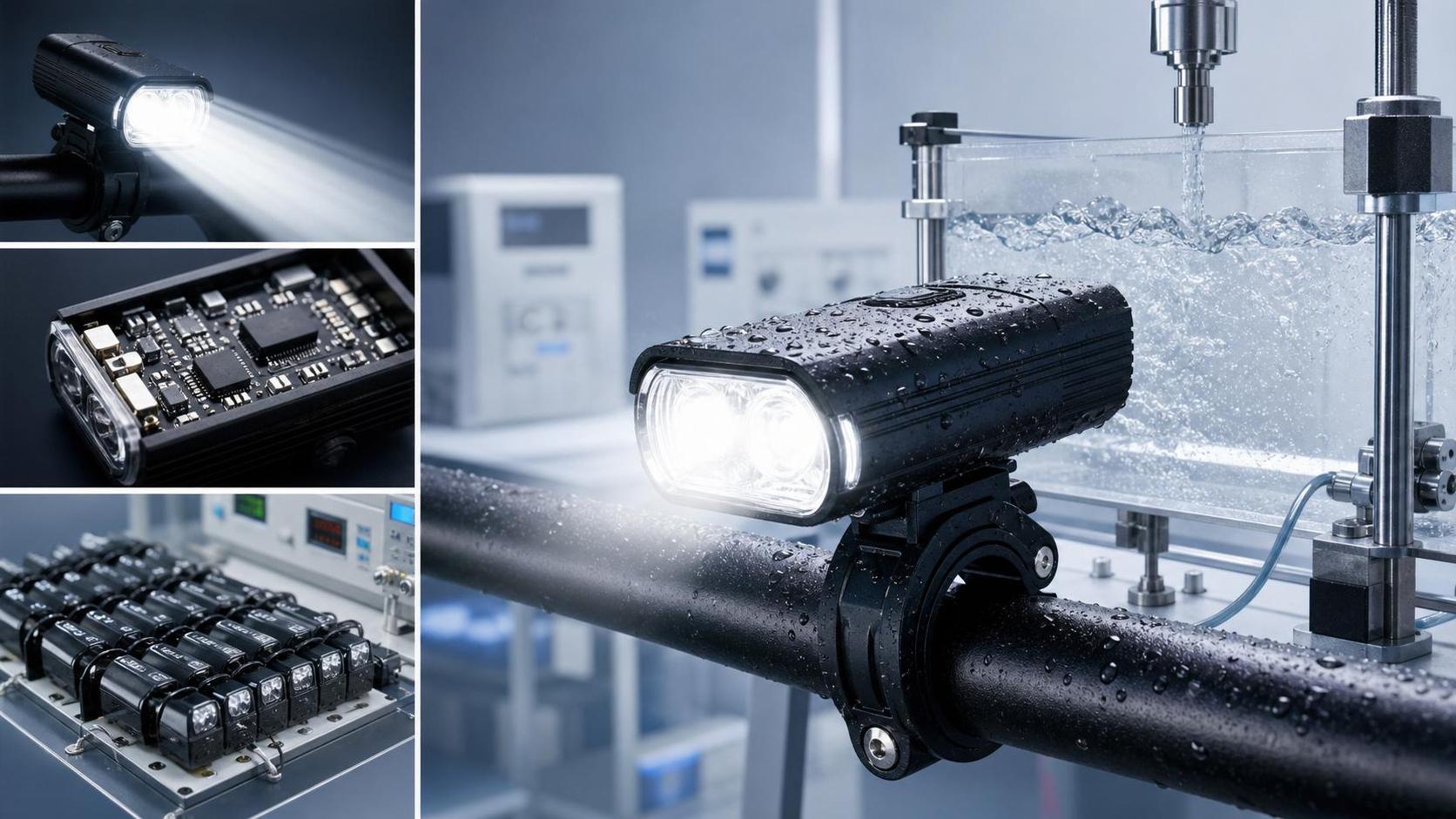
How to Choose a Bike Lights Supplier With Stable Quality
Choosing a bike lights supplier with stable quality is not just a purchasing exercise. It directly affects rider safety, legal compliance, warranty rates, and long-term brand trust.
In real sourcing work, many products look similar on paper. The real gap appears in batch consistency, testing discipline, and how the supplier handles change.
That is why a reliable bike lights supplier should be assessed as a risk partner, not only a price source.
This guide explains how to compare suppliers through a quality-first lens, with practical checkpoints that support better selection decisions.
Start With the Risks Behind Bike Light Quality
A weak bike lights supplier can create problems far beyond product defects. Poor light output or unstable circuitry can quickly turn into safety incidents.
More importantly, defects often stay hidden until products reach the field. A sample may pass review, while later lots drift in lumen output, sealing quality, or battery performance.
From a control perspective, the biggest supplier risks usually include:
- Brightness inconsistency between batches
- Weak waterproof performance in outdoor use
- Short battery life under low temperatures
- Poor soldering or unstable electronic components
- Unverified compliance claims
- Slow corrective action after complaints
A strong bike lights supplier understands these risks early and controls them before shipment, not after returns start coming in.
Define What Stable Quality Really Means
Stable quality is not the same as one good sample. It means the supplier can repeat the same performance level across materials, assemblies, and production cycles.
For bike lighting products, stable quality usually covers both functional and process control factors.
Key product indicators
- Consistent lumen output and beam pattern
- Reliable runtime under normal operating conditions
- Stable waterproof and dustproof protection
- Durable housing, bracket, and lens structure
- Safe charging and battery behavior
- Predictable switch and mode performance
Key process indicators
- Controlled incoming materials
- Documented assembly standards
- Traceable lot records
- Verified in-process inspection points
- Consistent final testing criteria
- Structured corrective action tracking
When a bike lights supplier can prove both sets of controls, the sourcing decision becomes much safer.
Check Whether the Supplier Understands Compliance
Compliance is often where unstable suppliers get exposed. Some provide generic reports that do not match the final product configuration.
A dependable bike lights supplier should clearly explain which standards apply, which models are certified, and what test boundaries exist.
Depending on the target market, review items may include CE, RoHS, EMC, battery transport rules, waterproof ratings, and local road-use lighting requirements.
Ask direct questions instead of accepting broad statements:
- Which exact model was tested?
- Was the report issued by a recognized lab?
- Does the bill of materials match the tested unit?
- What changes would trigger revalidation?
- How are compliance files updated after design revisions?
A qualified bike lights supplier should answer these without hesitation. If the answers are vague, the risk is usually real.
Audit the Manufacturing System, Not Just the Product
A factory visit, remote audit, or process review often reveals more than a product catalog. Stable quality comes from systems, not promises.
When evaluating a bike lights supplier, pay attention to how the operation actually runs day to day.
What to verify on site
- Incoming inspection for LEDs, batteries, lenses, seals, and PCB parts
- ESD control in electronic assembly areas
- Calibration status for photometric and electrical test equipment
- Work instructions at key assembly stations
- Waterproof testing discipline and sampling rules
- Final inspection records and rejection trends
Also look at housekeeping and material flow. A disorganized floor often signals weak process discipline.
The best bike lights supplier usually has clear traceability, visible control points, and managers who can explain failures with data rather than excuses.
Evaluate Test Capability and Failure Analysis
Testing is where many selection decisions become much clearer. A supplier with stable quality should test for real use conditions, not only basic pass or fail checks.
A capable bike lights supplier should be prepared to show test methods, acceptance limits, and failure records.
Important tests to review
- Brightness and beam consistency testing
- Battery cycle and runtime validation
- Vibration and drop resistance
- Rain, splash, or immersion resistance
- Temperature and humidity stress checks
- Charging safety and overcurrent protection
Just as important is how the supplier handles failures. Ask for a recent example involving a field complaint or internal defect.
Then review whether the bike lights supplier used root cause analysis, containment actions, verification, and preventive measures.
If a supplier cannot show structured learning from past failures, future stability is hard to trust.
Review Supply Chain Control and Change Management
Even a good factory can become unstable if its upstream supply chain is weak. This matters a lot for LEDs, batteries, chips, housings, and sealing materials.
A trustworthy bike lights supplier should know which components are critical and how substitutions are managed.
Questions worth asking
- Which components are sourced from approved vendors only?
- How are alternate parts qualified?
- Who approves engineering changes?
- How are customers notified before material changes?
- What is the revalidation process after a change?
This is one of the strongest signals of maturity. A stable bike lights supplier treats change management as a formal control process.
Without that discipline, a passing sample can quietly become a risky mass production item.
Compare Suppliers With a Practical Scorecard
When several candidates look acceptable, a simple scorecard helps turn subjective impressions into a clearer decision.
A scorecard for bike lights supplier selection can combine quality evidence, compliance readiness, responsiveness, and commercial fit.
This method makes bike lights supplier selection more disciplined, especially when internal teams need a documented decision basis.
Watch for Red Flags Before Approval
Some warning signs appear early if you know where to look. They should not always end the discussion, but they should slow the approval process.
- Test reports without clear model identification
- Large differences between samples from different dates
- Unclear battery source or labeling
- No documented inspection standards
- Resistance to process audit questions
- Frequent reliance on verbal promises
A credible bike lights supplier welcomes technical review because stable quality is part of its competitive value.
Make the Final Decision With a Pilot Order
Before full approval, use a pilot order to verify real execution. This step often reveals whether the supplier can maintain control outside the sample stage.
Set clear acceptance rules for the pilot. Include appearance, brightness, runtime, waterproof checks, packaging, labeling, and documentation accuracy.
If possible, compare pilot data against earlier samples. A stable bike lights supplier should show only minor variation within agreed limits.
Also evaluate communication during the pilot. Fast, precise responses often reflect deeper process maturity.
In practical sourcing, the best choice is rarely the cheapest quote. It is the bike lights supplier that lowers risk over the full product lifecycle.
A careful selection process saves much more than unit cost. It protects users, supports compliance, and gives your business a lighting partner you can trust batch after batch.