
How to Compare a Bicycle Saddles Manufacturer

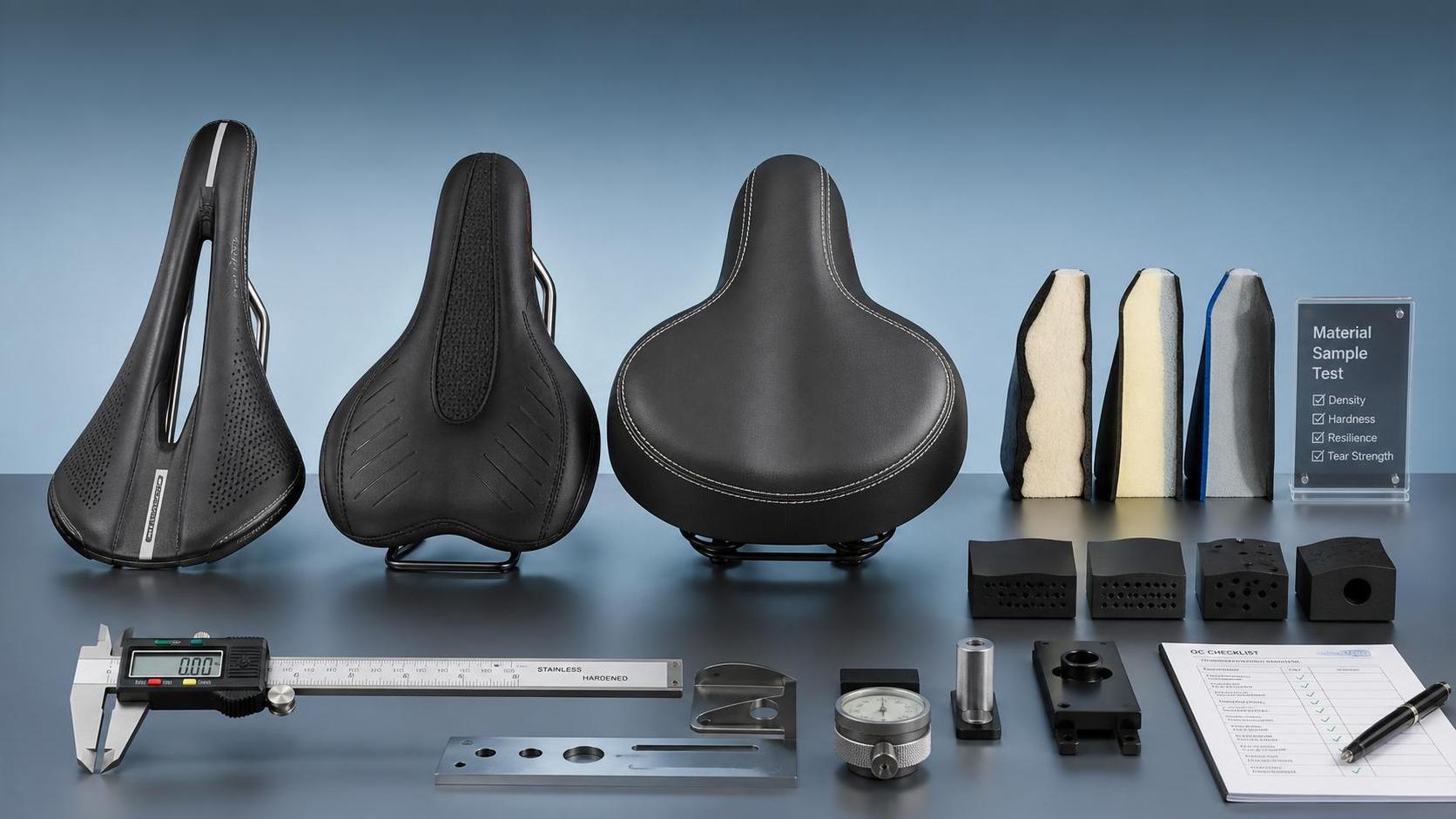
How to Compare a Bicycle Saddles Manufacturer
Choosing the right bicycle saddles manufacturer is more than comparing quotes.
It shapes rider comfort, return rates, product consistency, and brand trust.
In real sourcing work, a low unit price can hide expensive problems later.
Those problems often include unstable foam density, weak rails, delayed shipments, or inconsistent finishing.
That is why comparing a bicycle saddles manufacturer needs a broader decision framework.
A good review should cover material technology, ergonomic design, OEM flexibility, testing standards, and supply reliability.
It should also match the product to the target riding scene.
A city e-bike saddle and a performance road saddle require very different strengths.
This guide breaks down how to compare suppliers in a practical, cost-focused way.
Start with Product Fit, Not Just Factory Size
The first question is simple.
Does the bicycle saddles manufacturer already serve your product category well?
A large factory is not automatically the best choice.
Specialization usually matters more than headcount or workshop area.
Some suppliers are strongest in comfort saddles for urban bikes.
Others focus on lightweight racing models, e-bike platforms, or aftermarket accessories.
Ask for their main product mix from the last 12 months.
That reveals where their tooling, material sourcing, and engineering attention really go.
- Road and gravel saddles need low weight and stable shell flex.
- MTB saddles need durability, abrasion resistance, and strong rail bonding.
- E-bike saddles need comfort, vibration control, and long-use support.
- Commuter saddles need value, weather resistance, and stable mass production.
When a bicycle saddles manufacturer already understands your segment, development becomes faster and less risky.
Compare Core Materials and Construction Methods
Material choices directly affect comfort, durability, and final cost.
This is where supplier differences become very clear.
A reliable bicycle saddles manufacturer should explain its material stack without hesitation.
That includes cover material, foam type, shell material, rail material, and bonding process.
Key Material Points to Review
- Cover: PU, microfiber, PVC, or recycled options.
- Padding: standard foam, memory foam, gel, or multi-density structures.
- Shell: nylon, reinforced composite, or carbon composite.
- Rails: steel, chromoly, titanium, or carbon.
- Assembly: glue bonding, vacuum forming, stapling, or seamless wrapping.
Do not stop at the material names.
Ask about density range, thickness tolerance, UV resistance, and fatigue behavior.
These details affect warranty exposure more than catalog language does.
A strong bicycle saddles manufacturer can also suggest material substitutions when budget pressure rises.
That helps control cost without causing a sudden drop in riding comfort.
Evaluate Ergonomics and Real Riding Performance
A saddle can look good and still perform badly.
This is why design validation matters.
The better bicycle saddles manufacturer usually has a clearer method for ergonomic development.
That may include pressure mapping, rider testing, shell flex tuning, and cutout optimization.
From recent market changes, comfort has become a stronger buying driver.
That is even more visible in e-bikes and long-distance commuter models.
Ask suppliers how they validate comfort claims.
If the answer is vague, that is a warning sign.
- Request sample saddles across price tiers.
- Compare shell stiffness and foam rebound.
- Check rail alignment and clamp compatibility.
- Review shape consistency between samples.
- Collect rider feedback from actual test routes.
In practice, the best bicycle saddles manufacturer is often the one with fewer performance surprises after launch.
Assess OEM and Custom Development Capability
Many sourcing projects need more than standard catalog items.
You may need exclusive shapes, logo treatments, packaging, or private label programs.
That makes OEM capability a major comparison point.
A capable bicycle saddles manufacturer should clearly explain tooling cost, sample cycles, and design limits.
Questions Worth Asking
- What is the MOQ for standard versus custom saddles?
- How long does 3D drawing or prototype review take?
- Can the supplier support color, texture, and branding customization?
- Who owns the tooling and design files?
- Can the factory protect exclusive models for specific markets?
These points matter because delays in development often cost more than higher mold fees.
A responsive bicycle saddles manufacturer reduces that risk through clear process control.
Look Closely at Quality Control and Compliance
Quality control is where sourcing confidence is built.
It is also where many low-cost offers begin to fall apart.
A dependable bicycle saddles manufacturer should provide a documented inspection process.
That should cover incoming materials, in-line checks, final inspection, and shipment release.
If possible, ask for defect photos from recent production lots.
A serious bicycle saddles manufacturer will not treat that request as unusual.
Compare Total Cost, Not Quote Price Alone
Cost analysis should go beyond the visible unit price.
This is one of the most common sourcing mistakes.
A cheaper bicycle saddles manufacturer can become more expensive after claims, rework, and shipment instability.
- Tooling or development fees
- Packaging and labeling cost
- Sampling and approval rounds
- Defect replacement exposure
- Freight efficiency and carton utilization
- Payment terms and currency risk
This also means comparing how each supplier supports forecast planning.
Suppliers with better planning often reduce urgent air shipments and stock gaps.
That operational saving can outweigh a small unit price difference.
Check Lead Times and Supply Chain Stability
Recent supply disruptions have changed how buyers compare factories.
The stronger signal now is resilience, not just production speed.
A capable bicycle saddles manufacturer should explain where key materials come from.
That includes foam chemicals, cover materials, rails, shells, and packaging inputs.
Ask for normal lead time, peak-season lead time, and recovery plans for delays.
Also ask whether the supplier keeps safety stock for critical materials.
In actual business operations, transparency here is often more valuable than optimistic promises.
Use a Simple Scorecard Before Final Selection
A scorecard keeps the decision objective.
It also helps internal teams align faster.
When comparing any bicycle saddles manufacturer, use weighted criteria instead of general impressions.
- Product fit and segment experience.
- Material quality and technical depth.
- Comfort validation and sample performance.
- OEM flexibility and response speed.
- Quality control and compliance reliability.
- Total cost and payment terms.
- Lead time stability and communication quality.
This approach makes supplier comparison more strategic and easier to defend internally.
Final Takeaway
The right bicycle saddles manufacturer is rarely the one with the lowest initial quote.
It is the one that balances comfort performance, stable quality, customization support, and dependable delivery.
When you compare suppliers through product fit, materials, testing, OEM ability, and total landed cost, the decision becomes much clearer.
That also means fewer surprises after launch and a healthier sourcing structure over time.
If the next step is supplier screening, build a short scorecard, request samples, and test claims against real use conditions.
That is usually the fastest way to identify a bicycle saddles manufacturer worth a long-term partnership.
Related News