
Urban Mobility Solutions: Cost Gaps Between Shared and Owned Models

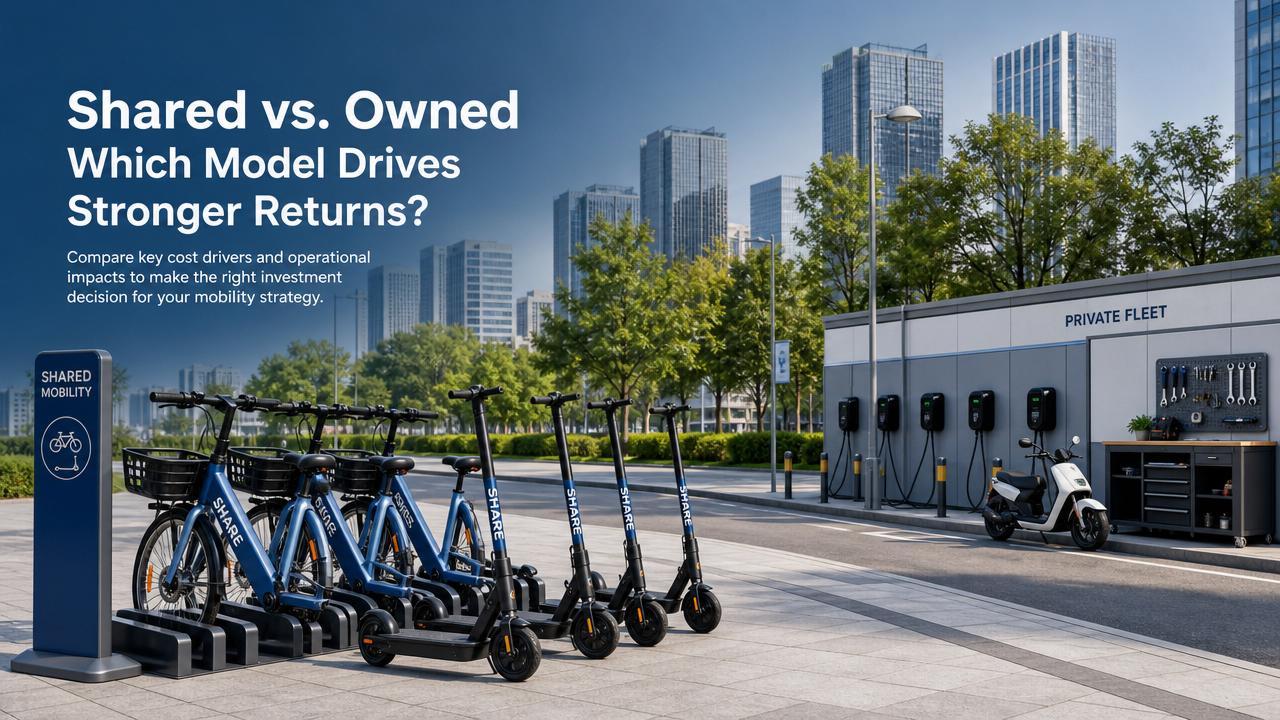
For finance approvers evaluating urban mobility solutions, the real question is not convenience alone but total cost efficiency. As shared fleets and privately owned vehicles compete for budget priority, the gap in acquisition, maintenance, utilization, and lifecycle value becomes critical. This article examines where shared and owned models diverge financially, helping decision-makers identify the most sustainable investment logic in a rapidly evolving mobility market.
In practice, the budget choice is rarely binary. A city program, campus operator, logistics buyer, or mobility platform may compare shared e-bikes, shared e-scooters, owned fleet vehicles, and employee-owned reimbursement models at the same time. For ACMD’s audience, the decision also touches component durability, battery replacement cycles, drivetrain precision, lightweight materials, and the operational implications of connected hardware.
The most effective approval process starts by moving beyond sticker price. Finance teams should evaluate urban mobility solutions through at least 4 lenses: capital intensity, asset utilization, maintenance volatility, and residual value. Once these are quantified over a 24–60 month horizon, the cost gap between shared and owned models becomes easier to defend internally.
Why the Cost Gap Exists in Urban Mobility Solutions
The cost gap appears because shared and owned models allocate risk differently. Shared urban mobility solutions concentrate utilization and maintenance into a platform model, while owned models place asset control and depreciation on the buyer. In dense urban corridors, a shared vehicle may serve 4–12 rides per day, whereas a privately assigned vehicle may sit idle for 60%–80% of its available time.
That utilization gap changes everything. A higher ride frequency spreads battery wear, insurance overhead, and IoT subscriptions across more trips. However, it also accelerates tire replacement, brake servicing, charging labor, and vandalism exposure. Owned assets, by contrast, usually show lower daily wear but poorer cost absorption per kilometer.
The Four Main Cost Drivers
- Acquisition structure: upfront purchase, leasing, or pay-per-use contracts
- Utilization rate: trips per day, kilometers per month, and idle time ratio
- Maintenance burden: preventive service every 30–90 days versus event-driven repair
- End-of-life economics: resale, refurbishment, parts harvesting, or disposal costs
For high-spec two-wheel mobility, component selection widens the financial spread. Carbon-reinforced structures can lower weight and energy consumption, but the initial bill of materials rises. Precision derailleur systems and high-efficiency motors can improve ride quality and reduce energy waste, yet they may demand better service capability and more selective spare-parts planning.
Shared Model Economics
Shared fleets usually reduce entry cost for the user and increase cost complexity for the operator. The operator pays for telematics, rebalancing, charging, field technicians, and software integrations. For finance approvers, the key question is whether utilization exceeds the break-even threshold, often measured at 3–5 rides per vehicle per day in moderate-density service zones.
Owned Model Economics
Owned urban mobility solutions create stronger control over service standards, branding, and asset availability. They are often more predictable when vehicles are mission-critical, such as campus patrol e-bikes, corporate shuttling scooters, premium commuting programs, or technical test fleets. Yet capital lock-in is higher, and underutilization can damage ROI faster than maintenance inflation.
The table below summarizes how finance teams can compare shared and owned models across the cost categories that most often change approval outcomes.
The practical conclusion is clear: shared urban mobility solutions generally win when ride density is high and service territory is compact, while owned models become more attractive when availability, branding, or technical performance matter more than maximum utilization.
Where Shared and Owned Models Diverge Financially
From a finance perspective, the largest divergence appears across 5 measurable categories: acquisition, maintenance, energy, labor, and lifecycle recovery. These categories should be modeled over at least 12 months for tactical pilots and 36 months for full program approval. Shorter comparisons usually underestimate maintenance and replacement events.
1. Acquisition and Deployment Cost
A shared fleet contract may avoid direct ownership but can include platform fees, vehicle minimums, docking or parking zones, insurance contributions, and integration charges. An owned fleet typically requires vehicle purchase, charging equipment, software setup, onboarding, and 5%–10% spare stock. For high-end e-bikes or smart e-scooters, deployment lead times commonly range from 2–8 weeks depending on battery regulations and local compliance.
2. Maintenance and Service Interval
Maintenance profiles are often underestimated during approval. Shared fleets may need inspections every 7–14 days in high-turn environments, especially for brakes, tires, lighting, stems, folding locks, and firmware stability. Owned fleets with trained users may stretch routine checks to 30–60 days, but battery health reviews and safety-critical components still require disciplined oversight.
For ACMD-relevant assets such as premium e-bikes, drivetrain accuracy and frame integrity also matter. Electronic shifting systems reduce rider error and improve consistency, but they add battery management and signal reliability checks. Lightweight carbon structures can improve efficiency, yet inspection standards must be tighter after collisions or curb impacts.
3. Energy and Charging Economics
Energy usually represents a smaller line item than labor, but it still affects total cost modeling. An efficient urban e-bike or e-scooter fleet can operate on relatively low electricity consumption per trip, especially when lightweight design reduces demand. However, shared models may add hidden charging labor through battery swaps, night collection, route balancing, or depot handling.
4. Labor and Oversight Cost
Shared urban mobility solutions require live operational oversight. This includes repositioning, customer support, incident management, charging coordination, and compliance reporting. Owned assets may need fewer daily interventions, but internal labor still appears in procurement, fleet administration, maintenance scheduling, and incident response.
The next table provides a decision-oriented view of how typical cost patterns change between models over a multi-year budgeting cycle.
A common approval mistake is to compare monthly lease fees for shared services against purchase price for owned assets without normalizing labor, replacement parts, and downtime. Once those variables are added, the apparent price advantage can shift by 15%–30% depending on usage intensity and component quality.
How Finance Approvers Should Evaluate Fit by Use Case
Not every use case rewards the same mobility model. Finance approvers should segment demand before evaluating urban mobility solutions. At minimum, divide the program into commuter access, public sharing, corporate operations, premium sport-adjacent mobility, and delivery-support movement. Each segment has different tolerance for downtime, asset wear, and recovery value.
High-Density Shared Corridors
In station zones, campuses, tourism centers, or mixed-use districts, shared e-scooters and shared e-bikes often outperform owned distribution. The reason is simple: high trip turnover improves cost absorption. If parking, charging, and repositioning routes are controlled within a limited area, the shared model can produce a more efficient cost per active trip.
Mission-Critical Internal Fleets
For security patrol, industrial parks, hospitality operations, or premium mobility services, owned fleets are frequently the better financial option. Availability matters more than public access, and the organization can standardize charging windows, training, and service routines. In these cases, predictable uptime over 24–36 months often outweighs higher acquisition cost.
Premium and Technical Segments
When the fleet includes premium e-bikes, performance e-motorcycles, advanced derailleur systems, or lightweight composite frames, ownership can preserve asset value better than open shared use. Higher-spec hardware performs best with disciplined maintenance and user accountability. Finance teams should not ignore the residual value premium of well-managed technical assets.
A 5-Point Approval Framework
- Define utilization target: rides per day, hours used, and monthly distance.
- Model maintenance interval: 7, 30, 60, and 90-day service events.
- Estimate replacement exposure: batteries, tires, brake sets, chargers, and telematics units.
- Assign labor ownership: internal team, vendor, or hybrid support model.
- Calculate residual pathway: resale, refurbishment, redeployment, or parts recovery.
This framework works especially well for organizations comparing fleets across product classes. An e-scooter program optimized for short urban hops should not be judged by the same cost assumptions as an e-bike fleet designed for longer-range commuting or a performance two-wheel platform using higher-value materials.
Risk Control, Procurement Planning, and Implementation Steps
Good financial decisions in urban mobility solutions depend on disciplined implementation. The approval process should not stop at model selection. It should include service-level expectations, replacement thresholds, battery handling standards, software uptime requirements, and procurement checkpoints for critical components.
Key Procurement Checks
- Battery serviceability and expected replacement window under typical charge cycles
- Brake, tire, and drivetrain parts availability within 7–21 days
- Telematics compatibility with geofencing, fleet visibility, and incident tracking
- Frame and chassis inspection procedures after impact or heavy use
- Vendor support scope for firmware updates, training, and fault diagnosis
Implementation in Three Stages
Stage 1 is pilot validation over 30–90 days. Measure trip frequency, downtime hours, incident types, and maintenance workload. Stage 2 is controlled scale-up with revised service assumptions, spare-parts ratios, and staffing. Stage 3 is long-term optimization, where procurement uses real-world wear data to refine vehicle mix, battery policy, and contract design.
Common Approval Errors
Three errors appear repeatedly. First, treating utilization as static when demand is seasonal. Second, underbudgeting service labor because electricity seems cheap. Third, ignoring how component quality affects downtime and recovery value. For ACMD-aligned buyers, this is especially important in segments where precision transmission systems, advanced materials, and performance batteries influence total ownership economics.
FAQ for Finance Decision-Makers
When does a shared model usually make more sense?
Usually when demand is concentrated, trip turnover is high, and the operator can maintain tight geographic control. If the service can consistently reach strong daily usage, shared urban mobility solutions often outperform low-use owned assets on effective trip economics.
When is ownership financially stronger?
Ownership is stronger when uptime, performance consistency, or brand control is essential. It is also attractive when the organization can manage maintenance discipline and preserve residual value through better storage, trained riders, and documented service records.
How should premium components affect approval?
Premium components should be evaluated through lifecycle contribution, not only acquisition price. Lighter structures, better drivetrains, and higher-quality electronics can lower energy use, improve rider experience, reduce unscheduled failures, and support better asset recovery at the end of the service cycle.
For finance approvers, the smartest path is not choosing shared or owned on principle. It is matching the right model to the right use pattern, then validating the economics with utilization, maintenance, and lifecycle assumptions that reflect real urban conditions. Urban mobility solutions create value when procurement logic, technical design, and service operations are aligned from day one.
ACMD helps decision-makers interpret that alignment across e-bikes, smart e-scooters, high-speed e-motorcycles, advanced drivetrain components, and lightweight material strategies. If you are reviewing a fleet budget, product roadmap, or sourcing decision, now is the right time to obtain a tailored assessment. Contact us to discuss your operating scenario, compare model economics, and explore more effective urban mobility solutions.
Related News