
How do connected commuting vehicles help prevent theft?

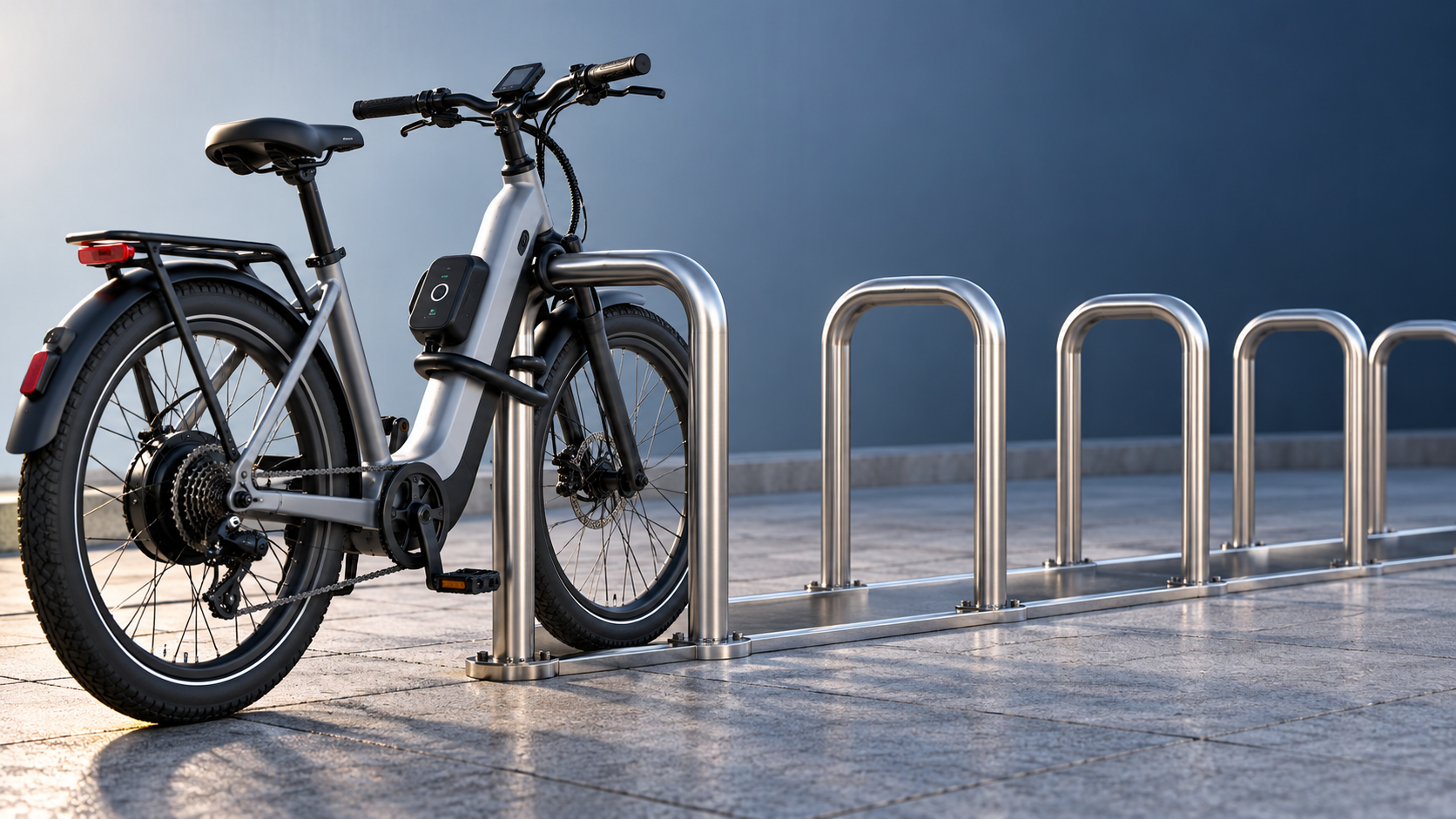
For commuters who rely on an e-bike or electric scooter, theft can mean more than the loss of a vehicle: it can disrupt the entire daily routine. Connected commuting vehicles help address this risk with features such as GPS tracking, movement alerts, digital locks, and geofencing. While no technology can guarantee complete protection, these tools can make suspicious activity easier to detect and a stolen vehicle easier to locate. Understanding how they work can help you choose the right security features and ride with greater peace of mind.
What connectivity adds to a physical lock
A conventional lock makes a vehicle harder to take. A connected security system adds information: whether someone has moved it, where it may have gone, and whether a remote feature has responded. Depending on the vehicle, that information may come from a motion sensor, a satellite positioning receiver, a cellular connection, or a short-range Bluetooth connection to a phone.
These features address different stages of a theft. An alarm may draw attention while someone is tampering with a parked scooter. An immobilizer may make an e-bike less useful to ride away. A location service may assist recovery after the vehicle has been moved. None of them necessarily stops someone from lifting a vehicle into a van, removing a wheel, or taking an unsecured battery.
The practical goal is therefore not to find one feature that does everything. It is to combine physical resistance, timely detection, and a realistic recovery plan for the places where you park.
Movement alerts: knowing something is wrong sooner
A connected e-bike or scooter may use an accelerometer or other sensor to detect movement after its security mode is armed. Depending on the design, it may sound an alarm, send a phone notification, or do both. That can be useful when the vehicle is parked outside an office or shop and is no longer in view.
The distinction between a local alarm and a remote alert matters. A siren can work without your phone being nearby, but you may not hear it from inside a building. A phone notification can reach farther, but it depends on the vehicle having a suitable connection and your phone receiving the message. If the vehicle only communicates over Bluetooth, alerts may be limited by distance and obstacles.
Sensitivity also deserves attention. A sensor that reacts to every knock in a crowded bike rack can produce enough false alarms that you start ignoring them. Look for clear settings, then test them in your usual parking spot. Ask a trusted person to move the locked vehicle slightly and check whether the alarm or notification arrives as expected.
GPS tracking helps with recovery, not physical prevention
A tracker can report a vehicle’s location after it has been taken, but “GPS tracking” is often used loosely. Satellite positioning helps the device estimate where it is; a separate communication method is generally needed to send that location to an app. A tracker may know its position but be unable to report it when cellular service is unavailable.
Location quality varies with the environment. A vehicle in an underground garage, inside a building, or enclosed in a metal vehicle may be difficult to locate accurately. Some systems show an estimated or last known location rather than a current one. The update interval matters too: a map that refreshes infrequently may not reflect where a moving vehicle is now.
Before relying on tracking, check whether it requires a subscription, which countries or networks it supports, and what happens when the main battery is removed or discharged. Some units have a backup battery; others depend on the vehicle’s power. Also check whether the app indicates the age of each location update. A recent timestamp is often more useful than a precise-looking pin on a map.
A Bluetooth item tracker can be an alternative or an additional layer, but it is not the same as a cellular GPS system. Some rely on nearby participating phones to relay their location. Coverage and update speed can therefore vary, and anti-stalking safeguards may alert someone carrying the tracker. Read the provider’s terms and understand those limitations before treating one as your recovery plan.
Digital locks and geofencing: useful, with limits
A digital lock may require an app, electronic key, PIN, or paired device before the vehicle can be used normally. On some e-bikes, locking disables electrical assistance or other electronic functions. On some scooters or electric motorcycles, it may prevent the drive system from engaging. The exact behavior is model-specific.
That distinction is important when comparing systems. Disabling motor assistance does not necessarily lock an e-bike’s wheels or stop it from being pedaled or carried away. Likewise, an electronically disabled scooter can still be lifted. A digital lock is a useful obstacle, not a substitute for securing the frame to a fixed object.
Geofencing creates a virtual boundary around an area, such as a workplace parking location. If the vehicle leaves that area while the feature is active, the system may send an alert. It can be helpful when a small movement alert would be too sensitive, but it is not an invisible barrier. Location uncertainty can trigger an alert late or place the vehicle outside the boundary when it has not moved. Features and available settings vary by provider.
Be cautious about claims of remote immobilization. Confirm whether the function exists on the specific model, when it can be activated, and whether it operates only when the vehicle is stopped. Safety and local requirements can affect how such functions are designed. Do not assume an app can safely stop a moving vehicle.
Build a parking setup around the vehicle you own
For an e-bike, use a suitable quality lock to secure the frame to a fixed, sturdy object. If the lock does not also secure a wheel, consider a second lock or another appropriate way to protect removable components. A rack is only as secure as its anchoring: a lock attached to a loose or easily lifted object offers little resistance.
A scooter can be more awkward. Some folding stems and small wheels do not provide a reliable locking point, so check the manufacturer’s guidance before choosing a lock. Avoid attaching it only to a removable part. For heavier electric motorcycles, an appropriate chain or other physical lock can complement the built-in alarm and immobilizer; make sure the anchor and the way the lock is fitted are suitable for the vehicle.
Remove portable displays, bags, and other accessories when practical. If you take a removable battery indoors, use and store it according to the manufacturer’s safety guidance. Removing it may make the vehicle less attractive to ride away, but it may also disable tracking on systems without independent power. Check that trade-off before making it part of your routine.
Frame material matters as well. ACMD’s work across lightweight materials and two-wheeled mobility highlights a practical detail: a carbon fiber frame should not be treated exactly like a metal locking post. Follow the frame maker’s instructions, avoid clamping or loading a delicate tube in a way it was not designed to withstand, and use protective contact points where appropriate. Security should not come at the cost of hidden frame damage.
What to check before choosing a connected vehicle
Start with your actual journey. Someone who parks outside a train station all day has different needs from a rider who takes a folding scooter into the office. For long periods out of sight, remote alerts and location reporting may be more valuable than a local alarm alone. If connectivity is unreliable in your usual parking area, a robust physical setup becomes even more important.
Ask the seller or manufacturer the following questions, and look for answers in the documentation rather than assuming all connected models work alike:
- Does the alert work remotely, or only when the phone is within Bluetooth range?
- Is location reporting included, and are there subscription, activation, or data charges?
- Does tracking continue when the main battery is removed, and for how long under the stated conditions?
- Can you adjust alarm sensitivity, view the last update time, and test the system before relying on it?
- What happens if your phone is lost, its battery dies, or the app service is unavailable?
- Can ownership and the connected account be transferred when the vehicle is sold?
Also look at how the company handles location history and account security. A vehicle that records your commute can reveal sensitive habits. Use a strong, unique password and enable additional account protection if available. Check who can see location data, how long it is retained, and whether you can delete it or remove a former user’s access.
Insurance is a separate question. A tracking feature does not automatically mean a claim will be accepted or a premium reduced. If cover matters to you, check the policy’s requirements for locks, parking, proof of ownership, and reporting theft before relying on it.
If your e-bike or scooter is stolen
Do not confront a suspected thief or enter private property to retrieve a vehicle. Contact local police and provide the serial number, description, photographs, and purchase information. If the app shows a location, share it with the authorities along with the time of the latest update; an old position may no longer be useful.
Save screenshots of alerts and location history if the service allows it, and report the theft to your insurer according to the policy terms. Keep your account active if it is needed to continue tracking, but secure it if you suspect someone else has access. Record any police report reference for your insurer and for follow-up.
The best time to prepare is before anything goes missing. Record the serial number, photograph the vehicle and distinguishing marks, test the alert, and confirm that your chosen lock fits both the frame and your regular parking anchor. A connected feature is most useful when you know what it can report, when it cannot report, and what you will do with the information.
Related News