
IoT Mobility Risks in Shared Fleet Scooter Operations

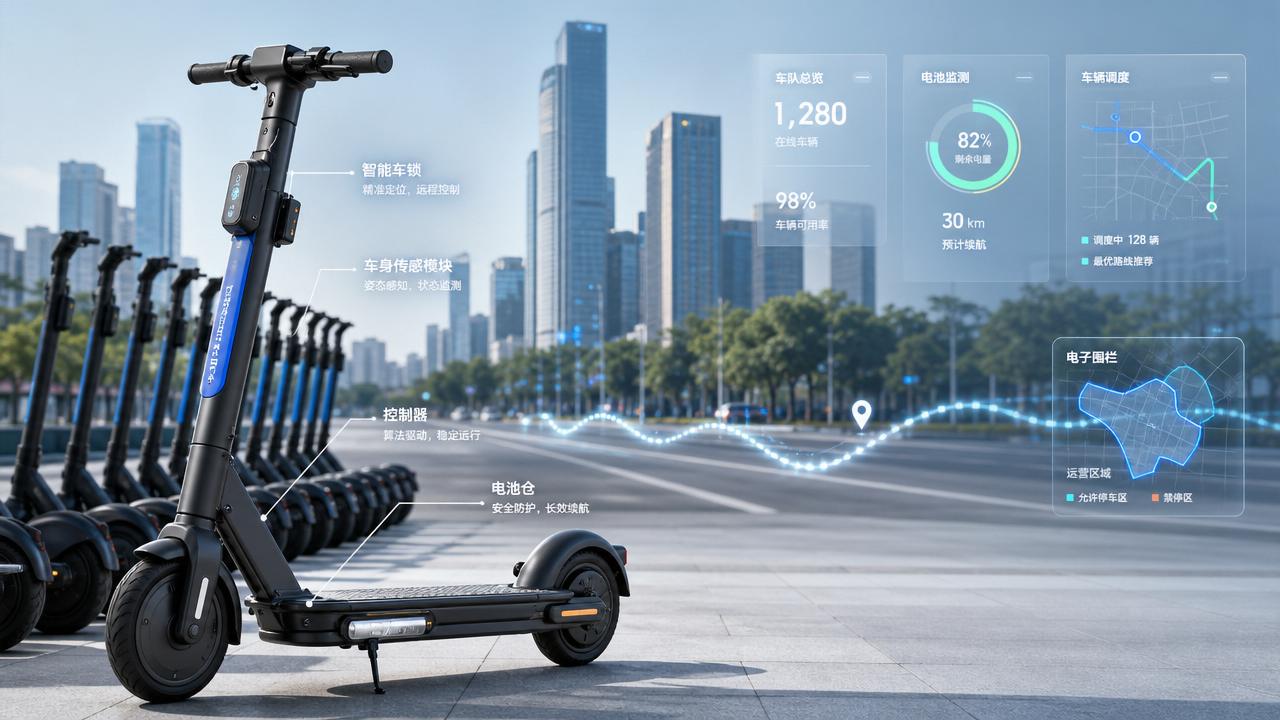
As shared scooter fleets expand across complex city grids, IoT mobility has moved from convenience infrastructure to operational backbone. Every connected lock, battery sensor, controller, and cloud dashboard now shapes vehicle availability, rider safety, and regulatory exposure.
In shared fleet scooter operations, weak device identity, unstable connectivity, inaccurate telemetry, and poor update governance can trigger cascading failures. A single error may affect dispatch logic, charging cycles, geofencing compliance, and incident response at the same time.
For an intelligence-led mobility sector, these risks matter beyond IT. They influence uptime, city permits, insurance discussions, maintenance cost, brand trust, and public acceptance of connected micro-mobility systems.
Understanding IoT Mobility Risk in Shared Scooter Networks
IoT mobility refers to the connected digital framework linking scooters, mobile apps, embedded sensors, wireless modules, fleet software, and external urban systems. In fleet operations, this framework enables location tracking, remote locking, battery monitoring, ride billing, and compliance controls.
Risk emerges when these components exchange trusted data without sufficient validation. A scooter may report false location, an app may accept a spoofed device, or a backend may push incomplete firmware into an active fleet.
Unlike consumer gadgets, shared scooters operate in open streets, changing weather, crowded curb space, and frequent vandalism exposure. That physical reality makes IoT mobility more vulnerable than many indoor or fixed industrial deployments.
Core risk domains
- Device identity and authentication failures
- Battery telemetry inaccuracy or interruption
- Geofencing and location integrity problems
- Firmware update and configuration drift
- Data privacy, API exposure, and cloud misconfiguration
- Physical tampering with connected hardware
Current Industry Signals Shaping IoT Mobility Controls
The broader mobility industry now treats connected fleet risk as a quality and governance issue, not only a cybersecurity matter. Cities, insurers, operators, and hardware suppliers increasingly expect measurable controls across the full vehicle lifecycle.
For ACMD’s observed micro-mobility ecosystem, this trend aligns with a wider shift toward higher technical credibility. Lightweight materials, smart powertrains, and connected controls now rise or fall together in real operating conditions.
Why IoT Mobility Failures Create Business Impact
In shared scooter fleets, IoT mobility risk directly affects service continuity. If location data is unreliable, vehicles may be stranded in low-demand zones while high-demand corridors remain empty.
Battery monitoring failures create deeper consequences. False state-of-charge data distorts swap schedules, misguides charging crews, and increases the likelihood of vehicles shutting down mid-ride.
Geofencing errors are equally costly. A scooter that fails to recognize a slow zone or restricted area can trigger fines, complaints, contract disputes, and local pushback against future fleet expansion.
Insecure firmware updates introduce systemic exposure. If rollout validation is weak, one faulty package may disable brakes logic alerts, degrade communications, or create mass unlock failures across hundreds of vehicles.
Operational consequences often include
- Lower fleet availability and weaker ride conversion
- Higher field maintenance and battery handling cost
- More safety incidents and slower root-cause analysis
- Compliance gaps with municipal operating rules
- Reduced trust in connected micro-mobility services
Typical IoT Mobility Risk Scenarios in Shared Fleets
The most important risks are rarely isolated. They emerge at the intersection of hardware, software, battery systems, and urban operating rules. The table below shows common fleet scenarios and practical implications.
Practical Controls for Safer IoT Mobility Operations
Effective control begins with a clear trust model. Every scooter, battery pack, gateway, app session, and backend service should have a defined identity, limited permissions, and monitored behavior.
Priority actions
- Use strong device authentication and unique cryptographic credentials.
- Segment vehicle commands from analytics and customer-facing services.
- Validate battery data with thresholds, redundancy, and anomaly detection.
- Test geofencing against dense urban canyons and weak-signal environments.
- Require signed firmware, staged rollout, and reliable rollback paths.
- Log maintenance access, battery swaps, and field hardware replacements.
- Review supplier software bills of materials and update commitments.
These controls should connect engineering and operations. IoT mobility security is stronger when telemetry review, fleet maintenance, incident analysis, and city reporting use the same verified event record.
What deserves special attention
- Shared batteries moving across vehicles and depots
- Third-party maps and geolocation dependencies
- Diagnostic ports exposed during field servicing
- Connectivity failover between cellular, Bluetooth, and local interfaces
Implementation Path for Resilient Fleet Governance
A practical roadmap starts with asset visibility. Build a current inventory of scooter controllers, batteries, communications modules, firmware versions, APIs, and vendor dependencies.
Next, rank risk by consequence rather than by technical novelty. In many fleets, battery telemetry integrity and geofence reliability deserve higher priority than less frequent edge-case exploits.
Then define measurable indicators. Useful metrics include spoofing attempts blocked, battery anomaly response time, firmware success rate, false geofence events, and percent of assets with current credentials.
Finally, rehearse failure response. A fleet should know how to isolate affected scooters, suspend risky commands, notify city stakeholders, and restore trusted service without prolonged street disruption.
For advanced micro-mobility ecosystems, IoT mobility maturity becomes a strategic differentiator. It supports safer riding, more reliable uptime, better battery economics, and stronger confidence in connected urban transport.
Next-Step Focus for Shared Scooter Programs
A useful next step is a cross-functional review of the highest-impact IoT mobility risks in the current fleet. Start with identity controls, battery data integrity, geofence performance, and firmware governance.
From there, align hardware standards, software validation, and field procedures into one operating baseline. Shared scooter operations become more resilient when connected systems are treated as safety-critical mobility infrastructure.
In a market shaped by smart e-scooters, lightweight engineering, and urban decarbonization, disciplined IoT mobility control is no longer optional. It is foundational to scalable, compliant, and trustworthy fleet performance.