
Geofencing Technology Risks in Shared Scooter Operations

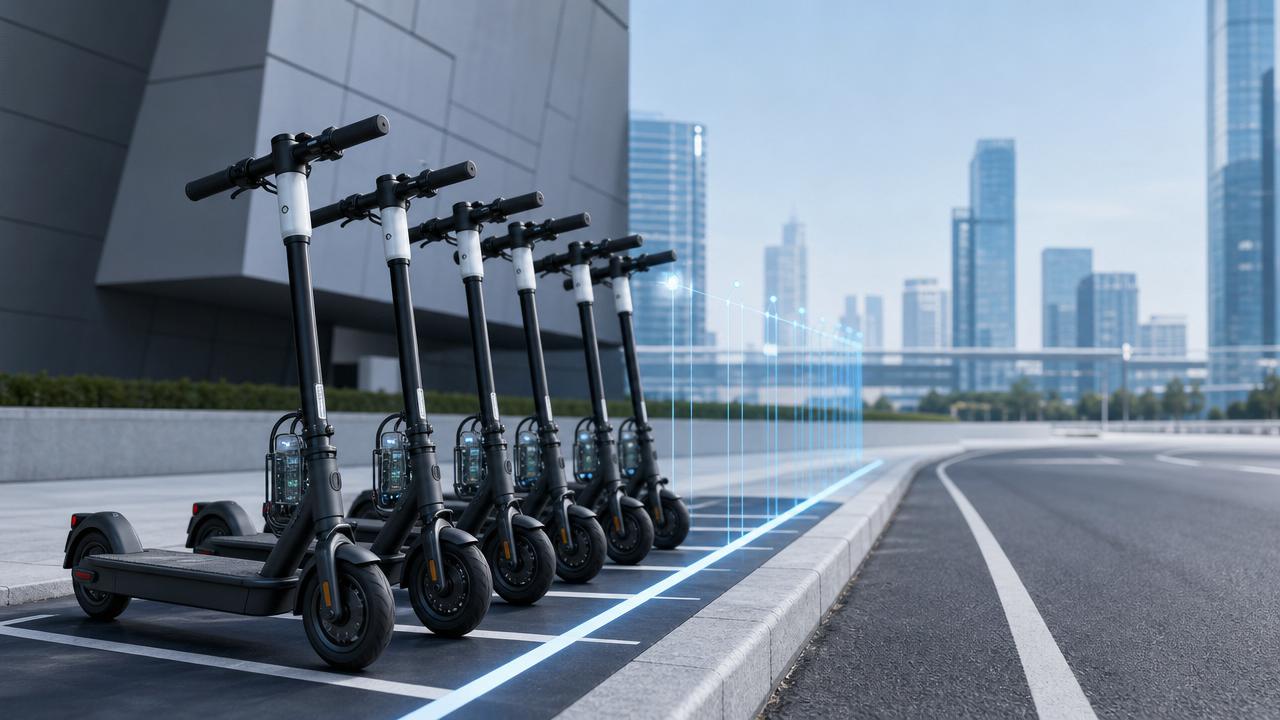
As shared scooter fleets expand across dense urban networks, geofencing technology has become a critical tool for speed control, parking compliance, and rider safety. Yet for quality control and safety management teams, its hidden risks—from GPS drift and signal interference to inconsistent enforcement and liability exposure—can directly affect operations, user trust, and regulatory compliance. Understanding these vulnerabilities is essential to building safer, smarter, and more resilient micro-mobility systems.
For operators, regulators, and fleet safety leaders, geofencing technology is no longer a simple software feature. It is a control layer that influences braking behavior, parking verification, rider expectations, and incident response. In high-density micro-mobility environments, even a positioning error of 3-10 meters can trigger false slow zones, missed no-ride boundaries, or disputes over whether a scooter was parked legally.
This matters especially to quality control personnel and safety management teams working across shared scooters, connected vehicles, and urban mobility systems. Their job is not only to keep vehicles compliant, but also to validate whether geofencing technology performs consistently under real-world conditions such as signal reflection, urban canyons, underground parking edges, weather changes, and high rider density during peak commuting windows.
Within the wider ACMD perspective on smart e-scooters and intelligent low-carbon transport, geofencing risk should be treated as an operational quality issue, a product validation issue, and a liability issue at the same time. A fleet can have strong battery uptime and robust hardware, yet still fail safety goals if virtual boundaries are inaccurate, delayed, or unevenly enforced.
Why Geofencing Technology Is Operationally Critical in Shared Scooter Fleets
In shared scooter operations, geofencing technology usually supports 4 core controls: speed reduction, no-ride restriction, approved parking validation, and service-area limitation. These controls often update within 1-5 second intervals, depending on device connectivity, app logic, and cloud processing speed. If any one layer lags, the vehicle may physically behave outside the intended rule set.
Key functions tied to safety and compliance
For safety managers, the issue is not whether geofencing technology exists, but whether it can be trusted at decision points. A scooter entering a school zone may need to drop from 20 km/h to 10 km/h. A scooter ending a trip near a hospital entrance may need to reject parking within a 2-3 meter curbside exclusion line. These are high-consequence transitions, not minor software details.
- Speed control in pedestrian-heavy zones, often between 8 km/h and 15 km/h
- No-ride enforcement around transit gates, plazas, and restricted roads
- Parking approval inside marked bays, usually requiring tighter location confidence
- Fleet containment within licensed districts or municipal operating boundaries
Because these controls directly affect rider motion, trip completion, and municipal reporting, geofencing technology should be managed like a safety subsystem. That means validation before deployment, periodic recalibration, exception logging, and post-incident traceability.
Where quality control teams see failures first
Quality teams typically identify geofencing issues through repeat complaints, inconsistent trip logs, and unexplained enforcement anomalies. A rider may report sudden speed drops in open streets, while another reports no speed reduction in the same zone 20 minutes later. These inconsistencies often point to multi-factor failure rather than a single bug.
The table below outlines common operational dependencies that make geofencing technology sensitive to quality variation.
The main takeaway is that geofencing technology is only as reliable as its weakest layer. Safety managers should therefore audit location accuracy, firmware response, mapping governance, and network resilience together rather than treating them as separate departments.
Core Risks Hidden Behind Virtual Boundaries
The most serious geofencing technology risks are usually invisible until a complaint, crash, or regulatory dispute occurs. For shared scooter programs operating across 10,000 to 100,000 daily trips, small edge-case failures can scale quickly into safety incidents or enforcement disputes.
GPS drift and urban canyon distortion
In dense downtown corridors, reflected satellite signals can push location estimates several meters off the scooter’s actual path. A 5-meter shift may seem minor, but it can move a scooter from a cycle lane into a pedestrian plaza on the map. When geofencing technology uses these inputs to trigger speed caps, riders may experience sudden deceleration in the wrong place.
Why this matters for incident review
After an event, operators often rely on digital trip logs to determine whether the scooter crossed into a restricted area. If the location confidence was weak, the log may not support a defensible conclusion. For safety teams, that means trip replay data should include timestamps, confidence indicators, and rule activation latency rather than just raw route lines.
Signal interference and connectivity loss
Not all failures come from GPS. Shared scooter fleets also depend on mobile data coverage for rule updates, vehicle status uploads, and trip-end verification. In tunnels, underpasses, covered stations, or narrow building corridors, a scooter may operate with stale geofencing data for 10-30 seconds. That is long enough to miss a low-speed transition or record the wrong parking outcome.
Overly sharp enforcement logic
A second category of risk comes from software design choices. If geofencing technology is configured with abrupt speed-step changes rather than gradual ramps, riders may feel an unexpected torque drop at zone boundaries. On wet pavement or uneven surfaces, that can create balance issues, especially for new riders moving at 15-20 km/h.
Quality control teams should therefore test not only whether a speed rule activates, but how it activates. A compliant system that feels unstable can still raise safety exposure.
Inconsistent map governance across cities
Many fleet operators work across multiple municipalities, each with different parking bays, no-ride streets, school safety buffers, and special-event restrictions. If map updates are not version-controlled, two scooters in the same city can run different geofencing technology rule sets for hours or even days. That inconsistency creates user confusion and weakens regulatory trust.
The table below shows how common risk sources translate into practical quality and safety concerns.
For safety leaders, the most important lesson is that geofencing technology risk is rarely just a mapping issue. It is a system interaction problem involving hardware, software, connectivity, and urban design constraints.
How to Audit Geofencing Technology for Quality and Safety Performance
A strong audit framework should combine bench validation, controlled field testing, and live operational monitoring. In practice, most operators benefit from a 3-stage review cycle: pre-launch validation, post-update sampling, and incident-driven forensic review. Each stage should use measurable thresholds rather than general impressions.
Stage 1: Pre-launch validation
Before a new city launch or major map update, teams should test at least 20-30 route points across critical zones such as schools, stations, plazas, steep gradients, and parking hubs. The purpose is to confirm that geofencing technology activates within an acceptable distance buffer and time lag under normal daytime conditions.
- Check location accuracy at zone edge transitions
- Measure speed reduction delay in seconds
- Verify trip-end parking approval logic
- Test recovery when the vehicle exits a restricted zone
Stage 2: Post-update regression testing
Every map or firmware update can introduce new faults. A practical rule is to re-test high-risk zones within 24-72 hours after deployment. This is especially important in cities with event-based street changes, construction detours, or seasonally adjusted pedestrian areas.
Stage 3: Live anomaly monitoring
Safety teams should create alert logic for repeated anomalies, such as more than 5 false parking rejections at one location in a day, or a sudden spike in speed-zone complaints from one district over a 7-day window. These patterns often reveal a map geometry problem, a radio environment problem, or a device batch issue.
The following table provides a practical audit checklist for shared scooter geofencing technology.
These thresholds are not universal, but they give quality and safety teams a repeatable operating baseline. Without a documented audit cycle, geofencing technology can drift from a compliance asset into an unmanaged liability.
Risk Reduction Strategies for Safer Shared Scooter Deployment
Reducing geofencing technology risk requires both technical and managerial controls. The strongest operators do not rely on a single fix. Instead, they combine map design discipline, device quality control, rider communication, and structured escalation workflows.
Improve zone design, not just zone count
Adding more virtual zones is not always better. Over-fragmented geofencing technology can create excessive transitions and rider confusion. In many urban environments, fewer but better-shaped zones perform more safely than dozens of micro-boundaries. Buffer distances should reflect road geometry, stopping behavior, and confidence error, not just administrative preference.
Pair digital rules with physical context
A parking geofence works better when supported by visible bay markings, curb paint, or signposts. A speed-limited zone performs better when riders receive in-app warnings 10-20 meters before entry rather than only at the line itself. Physical cues reduce reliance on perfect positioning and make compliance more intuitive.
Standardize incident handling
When a rider claims the scooter slowed unexpectedly or refused legal parking, teams should follow a fixed 5-step review: capture trip data, verify map version, review firmware state, assess signal environment, and classify root cause. This shortens dispute resolution time and improves learning across cities.
Include procurement and supplier review
For B2B buyers evaluating telematics providers, scooter OEMs, or fleet software vendors, geofencing technology should be a procurement checkpoint. Ask how often maps are updated, how latency is measured, what fallback logic is used during signal loss, and whether firmware behavior is consistent across hardware revisions. A lower unit price can become expensive if virtual control performance is unstable.
- Review GNSS performance expectations in dense urban streets
- Require update traceability across app, cloud, and vehicle firmware
- Define acceptable rule activation delay ranges before acceptance
- Confirm evidence export capability for complaints and incidents
In the shared scooter sector, geofencing technology is most effective when treated as a lifecycle capability rather than a one-time feature. It must be tested, measured, maintained, and improved as streets, regulations, and rider behavior evolve.
Practical Questions Safety Managers Should Ask Before Scaling
Before expanding a fleet into new districts or renewing a city contract, safety and quality teams should challenge the reliability of current virtual controls. Expansion multiplies edge cases. A system that performs adequately at 1,000 rides per day may struggle at 10,000 if complaint review, map governance, and exception handling are still manual.
Key pre-scaling questions
- Do we know our average and worst-case zone activation delay?
- Can we separate GPS error from firmware response error in incident analysis?
- How many map changes can be validated in a 1-week operating cycle?
- Do city partners understand the limits of geofencing technology near dense infrastructure?
- Are riders informed clearly when virtual controls affect speed or parking outcomes?
These questions help teams shift from reactive complaint handling to preventive risk management. That shift is essential for shared scooter operations aiming to balance safety, compliance, rider trust, and urban integration.
For micro-mobility operators, OEM partners, and platform teams, geofencing technology is central to safe and scalable fleet control, but it is never risk-free. GPS drift, poor connectivity, inconsistent firmware behavior, and weak map governance can all undermine performance at the exact moment when precision matters most.
ACMD’s industry perspective is clear: quality control and safety management teams should evaluate geofencing technology as a cross-functional system that links vehicle behavior, urban infrastructure, and compliance execution. With structured testing, measurable thresholds, and disciplined update control, operators can reduce liability exposure while improving rider confidence and city-level trust.
If you are reviewing shared scooter risk controls, planning a fleet upgrade, or comparing connected mobility solutions, now is the right time to assess your geofencing strategy in depth. Contact us to discuss practical evaluation criteria, request a tailored mobility intelligence framework, or learn more about safer smart scooter deployment solutions.
Related News