
Micro-Mobility Trends That May Shift Urban ROI

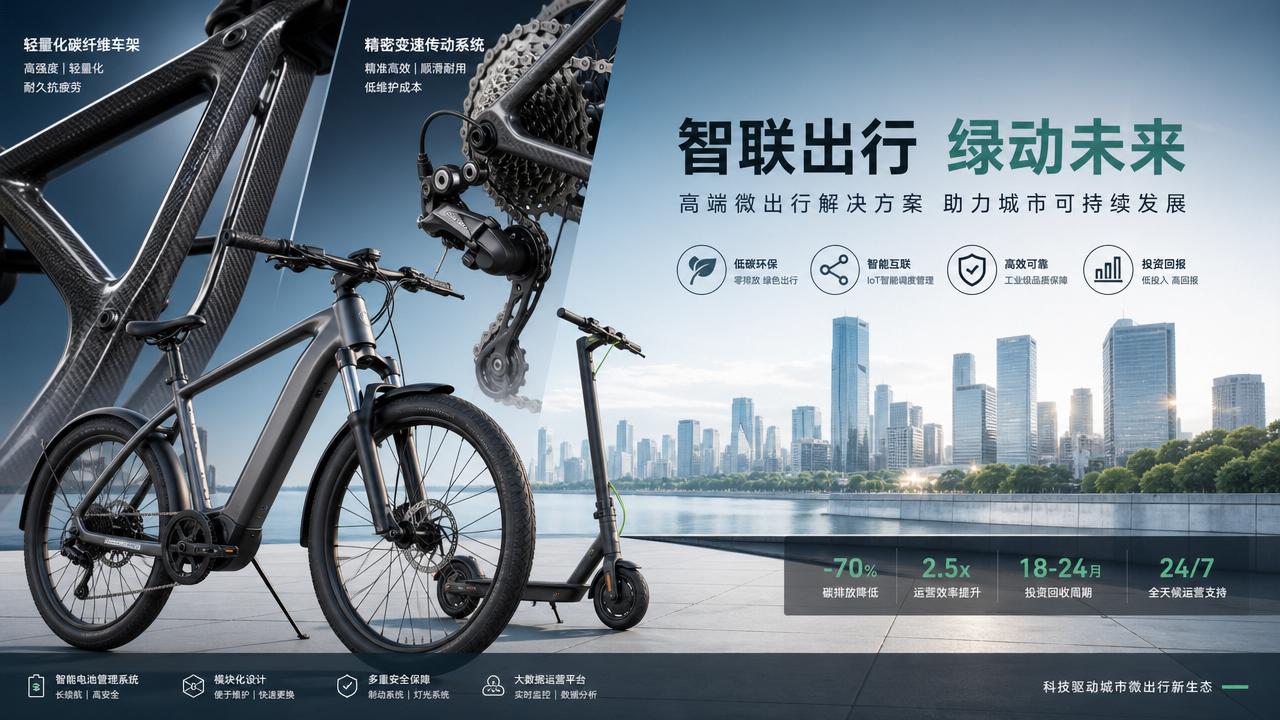
For financial decision-makers, micro-mobility trends have moved from experimental urban concepts to measurable ROI variables. E-bikes, smart e-scooters, lightweight frames, and precision drivetrain systems now influence utilization, compliance, maintenance cost, and long-term asset value.
In dense cities, transport investment is no longer judged only by speed or ridership. It is judged by turnover, energy efficiency, infrastructure fit, policy alignment, and lifecycle economics. That shift makes micro-mobility trends a strategic lens for capital allocation.
ACMD tracks this transition through technology intelligence, market signals, and regulatory patterns. The result is a clearer view of how urban mobility assets create value across short-distance commuting, fleet operations, advanced materials, and connected transport ecosystems.
Why micro-mobility trends are becoming an urban ROI signal
Cities are under pressure to reduce congestion, emissions, and infrastructure strain. Large transport systems remain essential, yet they cannot solve every short-distance movement problem efficiently.
That gap has created fertile ground for micro-mobility trends. Compact electric vehicles and lightweight cycling platforms improve first-mile and last-mile connectivity while requiring less space and lower operating energy.
At the same time, urban ROI models are evolving. Investors increasingly compare not just purchase cost, but revenue per trip, charging efficiency, maintenance intervals, software control, and residual value.
This explains why advanced two-wheel technologies now matter beyond niche enthusiasts. Carbon fiber structures, electronic shifting logic, telemetry systems, and battery management are becoming economic variables.
The strongest trend signals shaping the next phase
Several signals show where micro-mobility trends are heading. These signals matter because they connect technology maturity with financial predictability.
Electrification is moving from novelty to baseline
E-bikes and high-performance electric two-wheelers are gaining acceptance in commuting, delivery, recreation, and premium mobility segments. Electric assist increases practical range and daily usage frequency.
Smart control systems are improving asset productivity
IoT connectivity, geofencing, and remote diagnostics help operators reduce misuse, improve fleet positioning, and optimize servicing. Better control usually means higher uptime and better unit economics.
Lightweight materials are shifting performance economics
Aerospace-grade carbon fiber and advanced composites reduce mass while increasing stiffness. In urban use, lighter platforms can improve efficiency, handling, transportability, and battery performance.
Precision mechanical systems are becoming premium differentiators
Bicycle derailleur components and wireless electronic shifting are no longer only performance features. They contribute to energy transfer, user satisfaction, reduced adjustment time, and higher brand value.
What is driving micro-mobility trends now
The current wave of micro-mobility trends is powered by overlapping forces. Their combined effect makes the market more durable than earlier hype cycles.
How micro-mobility trends affect different business layers
The impact of micro-mobility trends is not limited to vehicle sales. It extends across infrastructure, materials, software, servicing, and strategic market positioning.
Urban operations and fleet economics
Connected e-scooters and e-bikes can improve route density and reduce idle time. Operators with stronger telemetry usually gain better asset visibility and more consistent fleet performance.
Battery swapping and predictive maintenance also influence cash flow quality. Faster service cycles can raise daily utilization without requiring proportional growth in fleet size.
Product engineering and premium positioning
In advanced mobility, engineering decisions increasingly shape market value. Carbon fiber frames, efficient motors, and electronic shifting systems improve user experience and support premium pricing.
For brands and OEM ecosystems, this means technical differentiation can translate into stronger margin protection. It also reduces exposure to pure price competition.
Compliance and urban access
Cities are tightening rules around speed, parking, geofencing, and battery safety. The winners in future micro-mobility trends will be systems designed for compliance from the start.
That includes data logging, software-based speed control, durable frame construction, and thermal management. Regulatory readiness often shortens market entry time and protects operating continuity.
Where close attention matters most
To interpret micro-mobility trends correctly, attention should stay on the variables that affect both adoption and profitability.
- Policy quality, not just policy headlines, including local enforcement patterns.
- Battery safety standards, charging logic, and thermal performance in daily operation.
- Material durability, especially in lightweight composite structures under real urban stress.
- Software reliability, including geofencing precision and anti-interference control systems.
- Maintenance complexity and spare-parts availability for high-precision drivetrain components.
- Consumer willingness to pay for premium performance, design, and low-carbon value.
These variables separate scalable opportunities from fragile growth stories. They also explain why intelligence depth matters more than broad market optimism.
A practical framework for judging the next move
A disciplined response to micro-mobility trends should combine short-term market reading with medium-term capability planning.
What the next urban cycle may reward
The next phase of micro-mobility trends will likely reward integrated systems over isolated products. Vehicles, materials, software, and service models will need to work together.
In that environment, intelligence-led evaluation becomes essential. High-quality mobility returns will come from platforms that balance low-carbon alignment, mechanical precision, digital control, and durable economics.
ACMD’s sector view suggests that the most resilient value will sit where advanced composite engineering, smart electrification, and urban policy fit intersect. That is where market momentum becomes strategic advantage.
A smart next step for clearer decisions
Use micro-mobility trends as a structured decision framework, not as a headline theme. Compare city regulation, platform efficiency, material innovation, and digital service capability before committing resources.
When technical detail is connected to commercial intelligence, urban mobility ROI becomes easier to read. That is the practical advantage of watching this market with precision rather than assumption.
Related News