
Urban Mobility Solutions Shaping City Transport in 2026

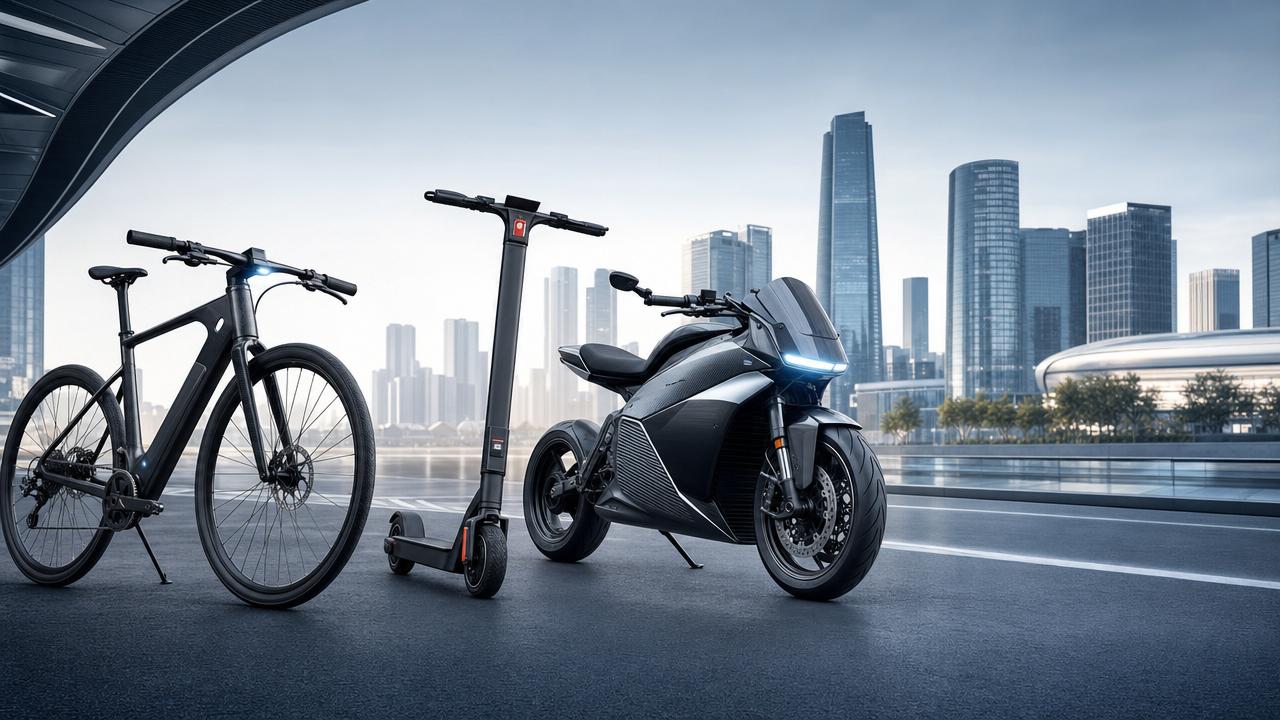
Urban mobility solutions are redefining how cities move in 2026, creating new opportunities for brands, manufacturers, and investors across e-bikes, e-scooters, high-speed e-motorcycles, and lightweight drivetrain technologies. For business decision-makers, understanding the convergence of smart connectivity, carbon-light materials, regulatory shifts, and consumer demand is essential to capturing growth in the fast-evolving urban transport landscape.
For executives evaluating market entry, sourcing strategy, or product portfolio expansion, the challenge is no longer whether urban transport will electrify. The real question is which urban mobility solutions can scale across regulation, infrastructure, rider expectations, and operating economics in the next 12 to 36 months.
This matters across the full ACMD focus area: e-bikes for daily commuting, smart e-scooters for dense urban circulation, high-speed e-motorcycles for premium electrified performance, precision derailleur systems for drivetrain efficiency, and carbon fiber frames for lightweight strength. In 2026, city transport decisions are being shaped by both hardware innovation and intelligence-led deployment.
Why Urban Mobility Solutions Are a Strategic Priority in 2026
Urban mobility solutions have moved from pilot-stage experimentation to board-level strategy. In many cities, procurement and partnership decisions now depend on four measurable factors: energy efficiency, right-of-way compliance, lifecycle cost, and digital fleet visibility.
For B2B stakeholders, this shift creates a broader value chain than vehicle assembly alone. Competitive advantage increasingly comes from battery integration, wireless control systems, composite material engineering, predictive maintenance logic, and regional compliance management across 3 to 5 target markets.
The five technology pillars changing city transport
The most investable urban mobility solutions in 2026 sit at the intersection of performance, portability, and policy fit. E-bikes dominate short-distance utility. E-scooters solve the last 1 to 5 kilometers. High-speed e-motorcycles address urban-premium and commercial speed demands. Precision derailleurs optimize power transfer. Carbon fiber frames reduce system weight without sacrificing stiffness.
- E-bikes: practical range bands commonly fall between 40 and 120 km per charge depending on assist mode and terrain.
- Smart e-scooters: ideal for compact urban trips, usually under 8 km, where portability and parking efficiency matter most.
- High-speed e-motorcycles: typically positioned for commuters and premium riders needing stronger torque and highway-capable acceleration.
- Electronic derailleurs: shifting response measured in milliseconds can directly improve cadence stability and rider control.
- Carbon fiber structures: weight reduction of even 10% to 20% can reshape handling, battery efficiency, and logistics cost.
Why city authorities and private operators are aligning
Public authorities want lower congestion, lower emissions, and safer multimodal streets. Private operators want better asset utilization, stronger rider retention, and lower service overhead. Urban mobility solutions create alignment when vehicles, software, and infrastructure reduce friction for both sides.
That alignment is strongest when operators can document service uptime, battery health cycles, geofenced riding behavior, and maintenance intervals. A fleet that can be audited over 6-month or 12-month operating periods is easier to finance, insure, and expand.
The table below compares the core commercial logic behind the main categories shaping urban mobility solutions in 2026.
The pattern is clear: different vehicle classes serve different trip architectures, but all winning urban mobility solutions must prove operational efficiency, compliance readiness, and strong user experience. Product quality alone is no longer enough.
How Smart Materials and Precision Systems Improve Urban Mobility Performance
In 2026, performance gains are increasingly achieved through lightweight structures and smarter control systems rather than brute-force battery size alone. For decision-makers, this changes sourcing priorities, bill-of-material risk, and margin planning.
Carbon fiber frames and lightweight construction
Carbon fiber is no longer limited to elite cycling. In premium urban mobility solutions, aerospace-grade carbon yarn and monocoque design can improve stiffness-to-weight ratio, support cleaner aerodynamics, and reduce energy demand over repeated stop-start cycles.
For urban applications, the practical value is measurable. A lighter frame can improve portability for apartment users, reduce strain on motors, and support better acceleration response. In delivery or commuter settings, even a 1.5 to 3.0 kg system reduction may influence ride feel, carrying convenience, and battery efficiency.
Material evaluation checkpoints
- Check layup consistency and structural repeatability across batch production.
- Review impact resistance against real urban conditions such as curbs, potholes, and parking collisions.
- Assess repair feasibility and replacement lead time, often ranging from 2 to 8 weeks depending on part complexity.
- Confirm compatibility with integrated battery housings, cable routing, and torque-bearing drivetrain mounts.
Electronic shifting and precision drivetrain control
Precision drivetrain systems are often underestimated in urban transport planning. Yet for premium e-bikes and performance-oriented mobility platforms, millisecond-level electronic shifting can improve cadence continuity, reduce drivetrain wear, and strengthen rider confidence on variable gradients.
From a business perspective, the value lies in controllable efficiency. Better power transfer means reduced mechanical loss, more stable ride data, and clearer differentiation in the premium segment. For OEMs and brands, drivetrain quality often becomes a visible signal of technical credibility.
The table below shows how lightweight materials and precision transmission components influence procurement and product strategy within urban mobility solutions.
For decision-makers, the takeaway is practical: investing in advanced materials and precision systems can create value across performance, serviceability, and brand positioning at the same time. The best urban mobility solutions are engineered as systems, not as isolated parts.
Regulation, Infrastructure, and Deployment Risk in Urban Mobility Solutions
No city transport strategy succeeds on product quality alone. Urban mobility solutions must fit lane policy, parking rules, speed thresholds, charging access, and data governance expectations. These variables often determine whether a launch scales in 90 days or stalls for 9 months.
The regulatory variables businesses must map first
City-by-city regulation can differ on speed caps, helmet obligations, sidewalk restrictions, insurance treatment, and fleet permit rules. For example, the difference between a 25 km/h e-bike classification and a higher-speed category may completely change route access, registration needs, and consumer positioning.
- Vehicle class definition and maximum assist speed
- Battery safety and charging location restrictions
- Geofencing requirements for shared or semi-shared fleets
- Right-of-way rules for bike lanes, mixed traffic lanes, and parking areas
- Data storage and rider privacy obligations for connected devices
Infrastructure readiness checklist
Even strong products fail when infrastructure assumptions are wrong. Before expanding urban mobility solutions into a new region, operators should audit five basics: secure parking density, charging points, service depots, battery swap routes where relevant, and road surface quality across the main 3 to 7 commuting corridors.
This is where intelligence-led planning becomes essential. ACMD-style market observation is valuable because it connects regulations, rider behavior, drivetrain performance, and material choices into one commercial picture rather than treating each issue in isolation.
Common deployment mistakes that reduce ROI
- Over-specifying battery capacity while underestimating service network cost.
- Ignoring local climate effects on thermal performance and charging efficiency.
- Choosing low-cost frames or drivetrains that increase warranty events after 6 to 12 months.
- Launching connected fleets without reliable firmware update workflows and usage analytics.
When these mistakes happen, the result is usually slower rider adoption, rising maintenance intervention, and weaker procurement confidence from investors or municipal partners. In urban mobility solutions, deployment discipline is as important as engineering quality.
How Business Leaders Should Evaluate Urban Mobility Solutions for Investment or Procurement
For enterprise buyers and strategic planners, selection criteria should go beyond headline range or top speed. A resilient decision framework usually combines technical viability, market fit, after-sales support, and regulatory adaptability.
A practical 4-part evaluation model
- Product architecture: evaluate motor, battery, frame, drivetrain, and software integration as one platform.
- Operating economics: estimate maintenance intervals, consumable replacement cycles, and service labor intensity.
- Market readiness: verify target-user profile, acceptable price band, and competitive differentiation.
- Compliance scalability: confirm how easily the solution can adapt across at least 2 to 3 jurisdictions.
Questions procurement teams should ask suppliers
Ask for battery lifecycle assumptions, drivetrain maintenance intervals, spare-part lead times, software update process, and frame material consistency. Request service guidance for high-use urban environments, especially where vehicles may operate daily with limited downtime windows.
Procurement teams should also ask how suppliers handle modular upgrades. In urban mobility solutions, the ability to improve connectivity modules, shift systems, or battery interfaces without redesigning the entire vehicle can preserve margin over a 24- to 36-month product cycle.
Where ACMD intelligence supports better decisions
Decision quality improves when technical and market intelligence are connected. ACMD’s strength lies in observing not just headline sector news, but also the mechanics underneath market change: wind-tunnel implications for frame design, anti-interference logic in electronic derailleurs, battery thermal management, and the premium willingness-to-pay signals that shape product positioning.
For brands, OEM factories, and investors, that means better timing on platform upgrades, clearer understanding of demand by segment, and more disciplined product-roadmap choices. In a crowded field, urban mobility solutions win when intelligence is converted into engineering and commercial action.
In 2026, city transport is being reshaped by connected vehicles, lightweight materials, smarter drivetrains, and more demanding regulation. The most competitive urban mobility solutions are those that balance rider experience, compliance, durability, and scalable economics across real-world urban conditions.
For business decision-makers, the opportunity is significant, but so is the need for precise evaluation. Whether you are assessing e-bikes, smart e-scooters, high-speed e-motorcycles, precision derailleur systems, or carbon fiber frame strategies, the right intelligence can shorten decision cycles and reduce deployment risk. To explore tailored market insight, sourcing guidance, or technology-focused mobility analysis, contact ACMD to get a customized solution and learn more about the next generation of urban mobility solutions.
Related News