
Last Mile Transportation Market Trends Shaping 2026 Planning

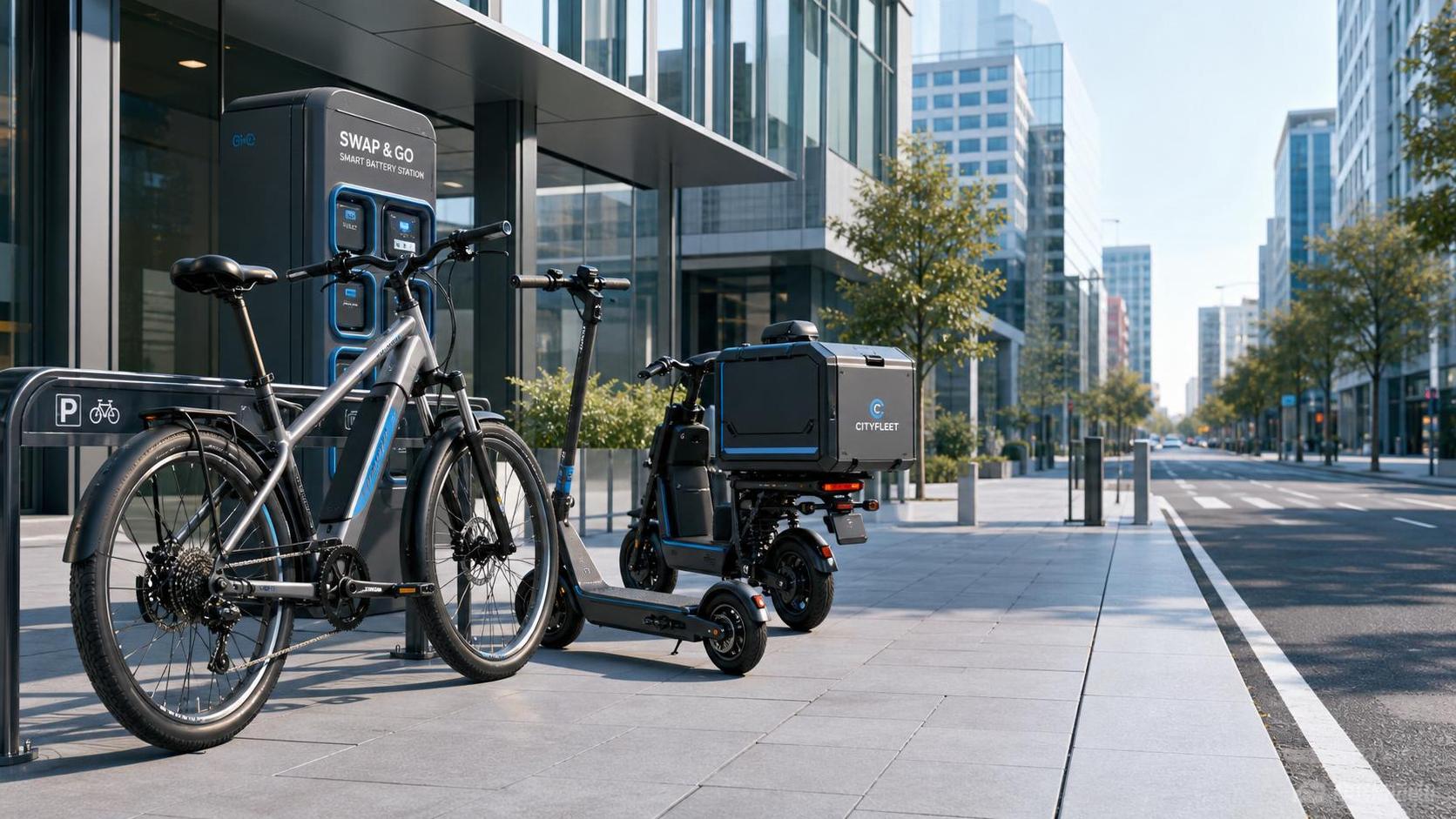
Why 2026 planning starts with the last mile
The last mile transportation market is moving from a niche mobility topic to a strategic planning issue for 2026.
Cities want lower congestion and cleaner streets.
Operators want higher utilization and better margins.
Manufacturers want products that fit tighter rules, tougher unit economics, and more connected user expectations.
That is why the last mile transportation market now sits at the intersection of urban policy, lightweight engineering, digital fleet control, and consumer behavior.
For ACMD, this shift is especially relevant.
The most important growth signals are no longer limited to vehicle demand alone.
They increasingly come from e-bike adoption, smart e-scooter regulation, battery network design, precision drivetrain advances, and carbon-based lightweighting.
In practical terms, 2026 planning depends on understanding how these pieces work together in real operating environments.
What the market really includes
The last mile transportation market covers more than the final trip between a transit stop and a destination.
It includes vehicles, software, charging or swapping access, routing logic, safety standards, maintenance models, and public right-of-way management.
The most active categories include electric bicycles, shared and private e-scooters, compact cargo platforms, and selected high-speed two-wheel formats.
Each category serves a slightly different trip pattern.
E-bikes fit commuting, light cargo, and premium personal mobility.
E-scooters fit dense short-distance circulation where portability matters.
High-speed electric motorcycles enter where delivery range, fast acceleration, and battery-swapping speed matter more than compact storage.
This is also why market analysis cannot stop at shipment volume.
A strong last mile transportation market depends on product fit, local regulation, infrastructure readiness, and lifecycle cost discipline.
The trends shaping 2026 decisions
Policy is becoming more specific
General support for low-carbon travel is no longer enough.
Local authorities are moving toward specific vehicle classes, speed caps, parking rules, geofencing zones, and battery safety requirements.
That means the last mile transportation market will reward compliance-ready platforms more than flexible but loosely regulated ones.
Connected control is turning into a core asset
Telematics, IoT modules, and software-based fleet visibility are changing operational performance.
A connected scooter or e-bike is easier to track, rebalance, diagnose, and secure.
For the last mile transportation market, that translates into lower downtime and better asset productivity.
Lightweighting is now a business lever
Weight reduction is not only a performance story.
It affects range, handling, maintenance stress, battery efficiency, and user comfort.
ACMD’s focus on aerospace-grade carbon fiber frames and precision mechanical systems matters here.
In the last mile transportation market, advanced materials can improve economics when durability and system design justify the premium.
Drivetrain precision supports better user experience
Electronic shifting, precise transmission design, and refined torque delivery influence ride quality more than many planners assume.
For premium e-bikes and performance-oriented urban mobility products, these details shape retention, safety, and brand positioning.
Where value is created in real operations
The last mile transportation market creates value when it solves a specific mobility gap better than available alternatives.
That gap may be time, access, cost, emissions, or user convenience.
In each case, the last mile transportation market is judged less by concept appeal and more by operational proof.
That makes data quality and product engineering equally important.
Why two-wheel technology matters more than before
Two-wheel platforms remain central because they balance footprint, energy use, and urban maneuverability better than larger alternatives.
But not all platforms are equal.
The next phase of the last mile transportation market will be shaped by product architecture, not only by demand growth.
E-bikes benefit from broader demographic appeal and lower policy resistance.
Smart e-scooters remain powerful in dense urban corridors where convenience and portability dominate.
High-speed e-motorcycles gain relevance where professional delivery and battery-swapping networks can support higher utilization.
Meanwhile, drivetrain refinement and carbon frame development push premium mobility toward stronger performance and lower energy loss.
ACMD’s intelligence model is useful here because it links regulatory signals with mechanical and material innovation.
That broader view helps explain why some products scale while others stall.
How to read the market without chasing noise
A common mistake is to treat the last mile transportation market as a single growth curve.
In reality, it is a collection of local markets with different rules and economic logic.
A useful evaluation framework should include at least five filters.
- Regulatory clarity: vehicle classification, licensing, parking, and battery rules.
- Infrastructure fit: charging, swapping, repair access, and secure storage.
- Lifecycle economics: acquisition cost, maintenance frequency, and residual value.
- User acceptance: ride comfort, safety perception, and digital convenience.
- Technical resilience: software reliability, materials durability, and drivetrain performance.
This framework is especially important when premium components are involved.
A carbon frame or electronic shifting system should be judged by measurable operating value, not by specification prestige alone.
Planning priorities for 2026
The strongest 2026 strategies will likely avoid one-size-fits-all assumptions.
Instead, they will match vehicle class, technology stack, and policy conditions to specific use cases.
Focus on system fit
Growth in the last mile transportation market comes from integrated systems, not isolated devices.
Vehicles, software, servicing, and compliance need to work as one operating model.
Treat materials and components as strategic choices
Lightweight structures, precision transmissions, and battery thermal management should be evaluated as levers of uptime and user trust.
That is particularly relevant in premium urban mobility and export-focused categories.
Build around measurable local demand
The last mile transportation market rewards operators and suppliers that understand trip distance, terrain, climate, and public-space constraints.
A model that works in one European city may fail in another with different infrastructure and enforcement intensity.
A practical next step
The last mile transportation market will remain attractive through 2026, but it is becoming less forgiving.
Successful planning now depends on connecting commercial signals with engineering realities.
That means reviewing market entry assumptions, comparing vehicle-platform economics, and tracking policy shifts with more precision.
It also means watching where ACMD’s core themes converge: micro-mobility adoption, advanced drivetrains, carbon lightweighting, and connected performance systems.
A disciplined next step is to map target scenarios, define critical operating metrics, and test which product and infrastructure combinations still hold up under 2026 conditions.
Related News