
Bicycle Derailleur Setup Mistakes That Hurt Shift Accuracy

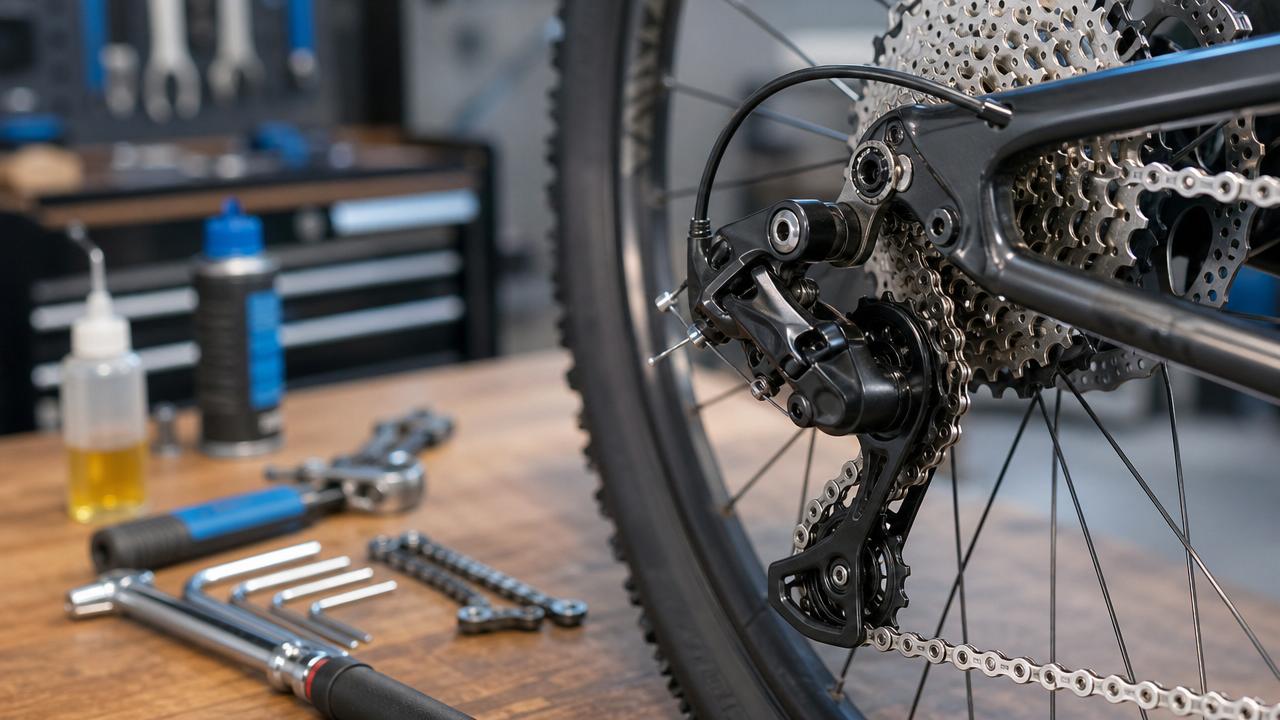
Even a premium bicycle derailleur can feel slow, noisy, or inconsistent if setup basics are overlooked. In real service environments, shift complaints rarely come from one dramatic failure. More often, they are caused by small setup mistakes that stack together: a slightly bent hanger, cable tension set by feel instead of indexing response, an over-tight B-screw, or limit screws adjusted to compensate for another hidden issue. For maintenance workflows, understanding where these errors appear in different riding and product scenarios is the fastest way to improve shift accuracy, reduce rework, and deliver more reliable bicycle derailleur performance.
Why bicycle derailleur setup errors look different across service scenarios
A bicycle derailleur does not operate in isolation. Shift quality depends on frame alignment, cable routing, cassette wear, chain condition, wheel seating, clutch tension, and even the rider’s load pattern. That is why the same adjustment method may work on a lightly used road bike but fail on an e-bike, a commuter, or a trail bike exposed to dirt and repeated impacts.
From a broader mobility and drivetrain intelligence perspective, setup quality also affects efficiency, noise perception, warranty cost, and user trust in precision mechanical systems. In urban micro-mobility and performance cycling alike, the value of a bicycle derailleur is measured not only by design specification, but by how consistently it delivers accurate shifts under real operating conditions.
Scenario 1: New bike assembly often hides the most basic bicycle derailleur mistakes
On a new build, the most common error is assuming factory condition means perfect alignment. A rear derailleur hanger may be slightly off from shipping, wheel installation may not be fully seated, and housing ends may not be cut square. When indexing starts from this unstable foundation, technicians often use barrel adjuster changes to chase symptoms instead of fixing the root cause.
Another frequent mistake is setting limit screws before confirming hanger alignment and cable path friction. If the high-limit or low-limit screw is used to “improve” poor tracking caused by misalignment, the bicycle derailleur may shift acceptably on the stand yet skip gears under load. In this scenario, the correct judgment point is sequence: wheel seated, hanger checked, drivetrain wear verified, then limit screws, B-gap, and cable tension.
Key checks for assembly-stage accuracy
- Confirm the derailleur hanger is straight before any indexing.
- Make sure the rear wheel is fully seated and axle tension is correct.
- Inspect cable ends, housing length, and routing smoothness.
- Set limit screws to actual travel limits, not to mask hesitation.
- Adjust B-screw according to cassette size and derailleur specification.
Scenario 2: After-sales maintenance on used bikes is where misdiagnosis becomes expensive
Used bikes create a different challenge. Here, a bicycle derailleur problem may be blamed on adjustment when the actual cause is drivetrain wear or contamination. A stretched chain, hooked cassette teeth, sticky housing liners, or a worn derailleur pulley can all imitate poor indexing. Adjusting tension alone may briefly improve one gear while making the rest of the cassette worse.
A common workshop mistake is skipping comparative wear inspection. If a chain is replaced without checking cassette compatibility, the bicycle derailleur may chatter under torque. If housing is reused after internal corrosion, downshifts may lag even when stand testing looks acceptable. In this scenario, the core judgment point is whether the shifting issue is adjustment-based, wear-based, or structure-based.
Typical signs of wrong diagnosis
- Good shifts to larger cogs but slow return to smaller cogs: often friction, not pure cable tension.
- Noise only in middle cassette gears: often hanger alignment or chainline variation.
- Skipping under pedal load but fine on repair stand: often wear, flex, or wheel seating issues.
- Inconsistent performance ride to ride: often contamination or housing compression.
Scenario 3: E-bikes and high-torque riding expose bicycle derailleur setup weaknesses faster
On e-bikes and other high-load platforms, small setup errors become obvious much sooner. Extra torque magnifies chain hesitation, pulley noise, and poor cassette engagement. A bicycle derailleur that feels acceptable on a standard bike may produce harsh transitions on an assisted drivetrain, especially when riders shift under motor load.
In this use case, underestimating B-gap is especially common. If the guide pulley sits too close to a large cassette cog, shifts may feel abrupt and noisy. If it sits too far away, the derailleur may lose crispness across the range. Technicians also need to watch chain length carefully. Too short can overload the derailleur in the largest combination; too long can weaken chain control and hurt shift response on rough roads.
Scenario 4: Off-road and impact-heavy riding make hanger alignment the first suspect
Trail bikes, gravel bikes, and urban delivery bikes often return with “sudden” shifting issues after minor impacts. In many cases, the bicycle derailleur itself is not damaged; the hanger is simply bent a few millimeters. Because modern drivetrains use tight cassette spacing, even small misalignment can disturb shift accuracy across multiple gears.
A frequent mistake here is replacing cables or resetting indexing before checking alignment. That adds labor without solving the issue. Another overlooked point is clutch condition on clutch-equipped rear derailleurs. Excessive clutch drag can alter shift feel, while too little chain control can increase chain slap and unstable movement over rough ground.
How setup priorities change by bicycle derailleur application
The most common bicycle derailleur setup mistakes and the right corrections
- Using cable tension to fix every problem: Tension only fine-tunes indexing. It cannot solve a bent hanger, worn cassette, or poor housing routing.
- Ignoring derailleur hanger alignment: This is one of the highest-impact checks for shift accuracy, especially on 10-, 11-, and 12-speed systems.
- Misadjusting the B-screw: Incorrect pulley-to-cog distance can make a bicycle derailleur feel vague, noisy, or slow on large cogs.
- Setting limits too conservatively: Over-restrictive limits may stop full gear access; overly loose limits risk overshift into spokes or dropout.
- Skipping chain length verification: Chain length directly affects derailleur position, chain wrap, and shift control.
- Testing only on a stand: Many bicycle derailleur issues appear only under rider load or motor assistance.
Practical setup suggestions for better real-world shift accuracy
A reliable service routine should follow a repeatable order. First confirm structural alignment, then inspect wear items, then set hard limits, then adjust B-gap, and finally fine-tune indexing. This sequence prevents technicians from making compensating adjustments that later create more severe shifting errors.
It is also useful to separate “bench accuracy” from “road accuracy.” A bicycle derailleur can appear perfect in a repair stand yet fail during acceleration, climbing, or rough-surface riding. Short road tests, especially through the middle gears and under moderate load, reveal whether the setup is truly stable.
- Use alignment tools regularly rather than visually estimating hanger straightness.
- Replace contaminated cables and housing as a system when friction is suspected.
- Document cassette size, chain condition, and derailleur model before adjustment.
- Recheck indexing after wheel removal and installation.
- For e-bikes, test shifting with realistic load transitions whenever possible.
Common judgment errors that reduce service consistency
One of the biggest workflow mistakes is treating every bicycle derailleur complaint as a simple adjustment task. In reality, shift accuracy is a system outcome. If maintenance teams ignore chain wear measurement, wheel positioning, dropout alignment, clutch resistance, or cassette compatibility, the same bike may return repeatedly with the same complaint.
Another error is assuming higher-end drivetrains are easier to set up. Precision systems can be less tolerant of small deviations, not more tolerant. As cassette spacing narrows and performance expectations rise, setup discipline becomes more important. That is especially true in modern mobility segments where mechanical efficiency, low noise, and user confidence are closely linked.
Next-step actions to improve bicycle derailleur setup results
To improve shift quality and reduce repeat repairs, build every bicycle derailleur service around scenario-based checks rather than isolated adjustments. Separate new assembly, used-bike maintenance, e-bike load tuning, and impact-related diagnosis into clear workflows. Track which problems come from alignment, wear, friction, and incorrect setup sequence. Over time, this creates faster diagnosis, more consistent outcomes, and stronger confidence in every bicycle derailleur system delivered back to the road or trail.
For organizations following the wider evolution of precision drivetrain technology, the lesson is simple: shift accuracy is not only a component feature, but a service capability. Better setup discipline turns a bicycle derailleur from a source of complaints into a visible proof of mechanical quality, efficiency, and intelligent mobility performance.