
Carbon Fiber Manufacturing Bottlenecks to Watch in 2026

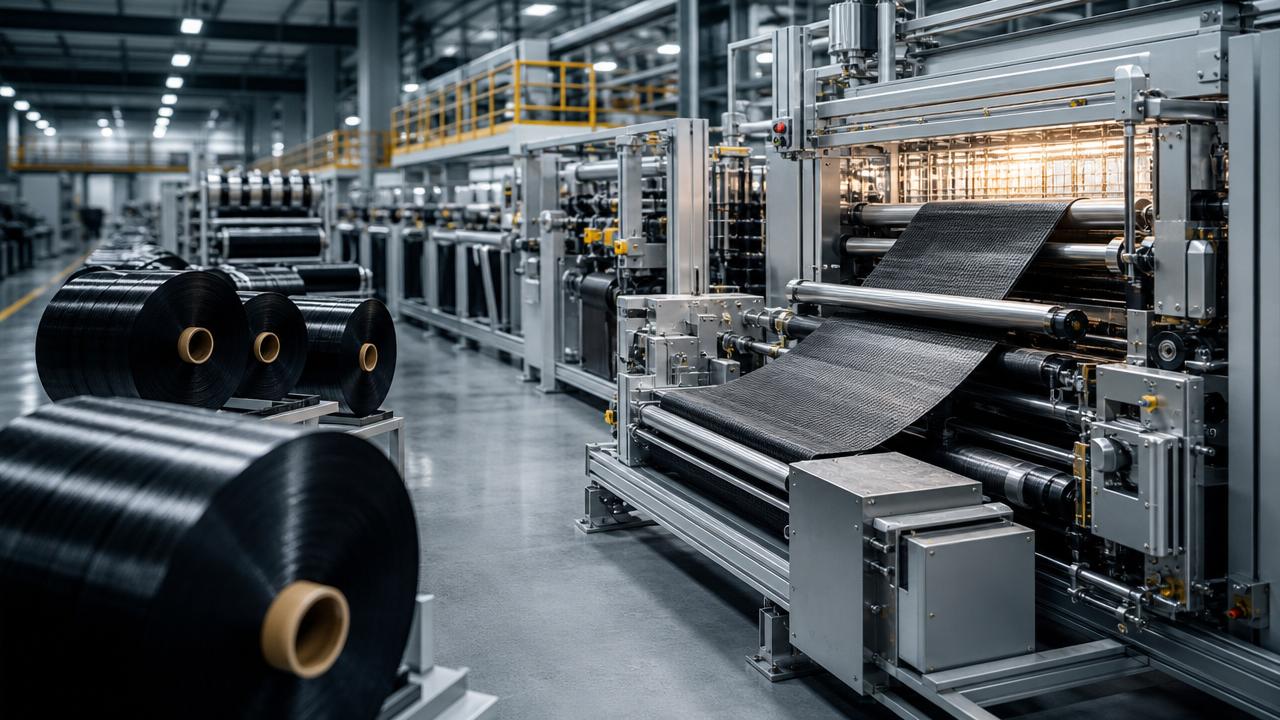
As demand rises across aerospace, cycling, and electric mobility, carbon fiber manufacturing is entering a critical phase where capacity, energy costs, precursor supply, and quality consistency may define market winners in 2026. For business decision-makers, understanding these bottlenecks is essential to managing sourcing risk, protecting margins, and aligning investment with the next wave of lightweight performance innovation.
For companies that rely on advanced composites, the central question is no longer whether carbon fiber demand will grow. It is whether supply chains, processing infrastructure, and cost structures can scale fast enough without damaging quality or profitability. In 2026, the winners are likely to be organizations that treat carbon fiber manufacturing as a strategic constraint, not just a materials procurement issue.
What business leaders really need to know about carbon fiber manufacturing in 2026
The core search intent behind this topic is practical and forward-looking. Decision-makers want to identify which bottlenecks in carbon fiber manufacturing could disrupt supply, raise costs, delay product launches, or weaken competitive positioning. They are not looking for a basic materials science overview. They want a market intelligence view that connects manufacturing constraints to sourcing, pricing, product strategy, and capital planning.
For executives in mobility, cycling, aerospace, and precision manufacturing, the key concern is straightforward: where will the next supply shock, margin squeeze, or qualification delay come from? In many cases, the issue is not a complete shortage of carbon fiber, but a shortage of the right grade, the right format, the right consistency, and the right lead time at a commercially acceptable price.
That is why the most useful way to analyze carbon fiber manufacturing in 2026 is through the lens of bottlenecks that affect business decisions directly: precursor availability, energy intensity, conversion capacity, quality assurance, labor and process know-how, and downstream integration into finished components such as frames, structural parts, or lightweight vehicle systems.
Why carbon fiber demand growth is creating a more fragile supply environment
Carbon fiber demand is being pushed by several industries at once. Aerospace continues to require high-performance, tightly certified material systems. Electric mobility is expanding the use of lightweight structures to extend range and improve handling. Premium bicycle and micro-mobility segments still depend on carbon frames and composite components as a marker of performance and brand value. At the same time, industrial applications such as pressure vessels, robotics, wind energy, and infrastructure are absorbing growing volumes.
This demand mix creates a structural challenge. Not all carbon fiber is interchangeable, and not all production lines are flexible. A supplier that is optimized for aerospace-grade material may not be able to pivot quickly toward sporting goods or mobility platforms without qualification, tooling, process validation, and customer approval. Likewise, lower-cost industrial fiber may not meet the stiffness, fatigue, or cosmetic expectations of premium vehicle applications.
As a result, overall market growth can coexist with highly localized shortages. A company may read headlines about expanded global capacity and still face long lead times for specific tow sizes, resin-compatible formats, or prepreg systems. For procurement teams and strategy leaders, this means broad market optimism should not be confused with supply security.
The precursor bottleneck may remain the most important upstream risk
One of the biggest constraints in carbon fiber manufacturing is the precursor stage, particularly polyacrylonitrile, or PAN-based precursor supply. Since PAN precursor determines a large part of the final material cost and performance profile, any imbalance here can ripple through the entire value chain. Capacity expansion at the carbonization stage means little if precursor output, purity, or quality consistency cannot keep up.
For decision-makers, this matters because precursor capacity is not something that can be added overnight. It requires chemical feedstock integration, process expertise, environmental controls, and major capital expenditure. In addition, producers may prioritize long-term strategic customers, leaving spot buyers more exposed to volatility.
There is also a concentration risk. If too much supply depends on a relatively narrow set of precursor producers or geographies, disruptions can spread quickly. Trade restrictions, energy price spikes, environmental compliance changes, or production incidents may all tighten availability. Businesses that source carbon fiber for high-value products should therefore watch precursor investment announcements as closely as they track fiber output expansions.
Energy costs will continue to shape pricing power and regional competitiveness
Carbon fiber manufacturing is energy intensive. Stabilization and carbonization require tightly controlled thermal processes, and electricity and gas costs can materially influence the economics of production. In 2026, energy pricing will remain one of the most decisive variables separating competitive suppliers from vulnerable ones.
This has major strategic implications. A supplier with technically strong output may still struggle to offer stable pricing if its operations are located in regions with volatile industrial power costs. Conversely, a producer with access to lower-cost energy, long-term supply contracts, or cleaner power integration may gain both margin resilience and sustainability credibility.
For buyers, this means price negotiations should not focus only on current quotations. It is increasingly important to understand the supplier’s energy exposure, hedging structure, production footprint, and decarbonization pathway. These factors will affect not just cost, but reliability. A producer under energy stress may reduce utilization, delay capacity ramp-ups, or shift production priorities.
For investors and manufacturing leaders, the lesson is clear: in carbon fiber manufacturing, energy strategy is manufacturing strategy. Cost competitiveness, output stability, and ESG positioning are now closely linked.
Conversion capacity is not the same as usable commercial capacity
Another common mistake in market analysis is assuming that nameplate capacity equals available supply. In practice, the gap between announced capacity and commercially usable output can be large. New lines often require long ramp-up periods, technical troubleshooting, customer qualification, and yield improvement before they contribute meaningful volume at acceptable quality levels.
That distinction matters even more in sectors such as aerospace, high-performance cycling, and advanced mobility, where the tolerance for inconsistency is low. A line may be running, but if it cannot deliver repeatable mechanical properties, surface quality, or resin compatibility, it does not solve the buyer’s problem.
Executives should therefore ask a better question: how much qualified, on-spec, contract-available capacity is likely to reach the market by 2026? That number is often far lower than headline announcements suggest. This is especially relevant when planning product launches that rely on lightweight composite platforms or premium carbon-intensive branding.
Quality consistency may become a bigger bottleneck than headline volume
For many end-use sectors, especially premium bicycles, e-mobility structures, drivetrain-adjacent components, and aerospace-linked applications, quality consistency is more valuable than nominal supply volume. Variability in fiber modulus, tensile strength, sizing chemistry, filament spread, or prepreg behavior can create major downstream problems in layup, curing, finishing, and field performance.
This is where carbon fiber manufacturing becomes a business risk, not just a material specification issue. Inconsistent input material can increase scrap rates, slow production cycles, trigger warranty concerns, and complicate product certification. A mobility brand that is trying to scale a carbon frame program cannot afford hidden variation that affects ride feel, stiffness distribution, fatigue life, or cosmetic yield.
Business leaders should be especially cautious when switching suppliers solely for price reasons. A lower-cost source may look attractive in procurement models, but if process windows narrow and defect rates rise, the total cost can increase sharply. In 2026, the companies that protect margins best may be those that place greater value on validated manufacturing consistency and technical collaboration.
Skilled process knowledge remains a hidden constraint across the value chain
Even where raw material supply improves, carbon fiber manufacturing still depends heavily on process expertise. Producing high-quality fiber at scale requires disciplined control of precursor chemistry, oxidation, carbonization, surface treatment, winding, and inspection. Further downstream, converting that fiber into reliable composite structures demands equally strong know-how in layup design, resin systems, cure cycles, tooling, and non-destructive testing.
This creates a labor and capability bottleneck that is easy to underestimate. Equipment can be purchased faster than experience can be built. As more sectors compete for composites talent, companies may find that their real limitation is not access to fiber, but access to people who can optimize yields, troubleshoot defects, and industrialize production without sacrificing performance.
For enterprise leaders, this means supplier audits should go beyond factory scale. Evaluate engineering depth, training systems, retention of technical staff, and track record in ramping complex programs. In composite manufacturing, process discipline is often the difference between promising prototypes and commercially dependable output.
Geopolitics and regionalization are changing sourcing logic
In 2026, carbon fiber manufacturing decisions will be increasingly influenced by geopolitical strategy. Governments are paying closer attention to advanced materials as part of industrial resilience, defense readiness, transport electrification, and strategic manufacturing independence. This could lead to more regional capacity building, selective subsidies, export controls, and local-content expectations.
For buyers, this trend cuts both ways. On one hand, regionalization can improve resilience and shorten supply chains. On the other, it can fragment the market, reduce sourcing flexibility, and create parallel qualification burdens across regions. A company with global operations may need multiple approved supply pathways rather than one optimized international source.
This is particularly important for sectors linked to premium mobility and technical performance. If a brand depends on carbon fiber frames, structural e-bike components, or lightweight parts with strict consistency requirements, geographic concentration becomes a strategic exposure. Dual sourcing, regional inventory buffering, and closer supplier partnerships may become standard risk-management tools rather than optional measures.
How these bottlenecks will affect pricing, lead times, and product strategy
The practical outcome of these bottlenecks is likely to be a more segmented market. Commodity assumptions will weaken, while supplier differentiation will matter more. Some buyers may still secure stable contracts, but others will face higher lead-time variability, qualification delays, or premium pricing for reliable material access.
Companies launching new products in 2026 should plan for three scenarios. First, they may encounter stable availability but at structurally higher prices due to energy and operating costs. Second, they may find volume available but not in the exact grade or form needed for critical applications. Third, they may face quality inconsistency that disrupts downstream production even when nominal supply is secured.
Each scenario affects product strategy differently. A premium bicycle brand may need earlier sourcing lock-ins for flagship carbon platforms. An e-mobility company may decide to diversify materials across product tiers, reserving advanced carbon-intensive designs for the highest-margin models. An aerospace-adjacent manufacturer may increase investment in long-term supplier qualification to reduce transition risk.
What smart companies should do now to reduce exposure
For business decision-makers, the most effective response is not panic buying. It is structured preparedness. Start by mapping where carbon fiber manufacturing bottlenecks intersect with revenue-critical products. Identify which programs are truly dependent on specific fiber grades, prepreg systems, or certified sources, and which can tolerate greater flexibility.
Next, strengthen supplier visibility. Go beyond the tier-one vendor and understand precursor dependence, energy exposure, regional concentration, and expansion realism. Ask whether announced capacity is already committed, whether qualification is complete, and whether process stability has been proven at commercial scale.
Third, build scenario-based sourcing strategies. These can include dual qualification, selective inventory positioning, collaborative forecasting, and design-for-substitution where technically feasible. In some cases, it may also be wise to review whether certain applications genuinely require top-tier aerospace-derived carbon specifications, or whether optimized mid-range material systems can deliver better business outcomes.
Finally, connect materials strategy with brand and product strategy. In premium mobility markets, carbon fiber is not just an engineering input. It shapes positioning, ride quality, weight targets, and consumer willingness to pay. A resilient sourcing strategy can therefore protect both supply continuity and brand value.
The strategic takeaway for 2026
Carbon fiber manufacturing in 2026 will not be defined by a single dramatic shortage. It will be defined by a series of interconnected bottlenecks that separate superficial capacity from dependable supply. Precursor constraints, energy cost pressure, qualification delays, process know-how gaps, and quality inconsistency will all influence who can deliver at scale and who cannot.
For enterprise leaders, the correct response is to treat carbon fiber as a strategic system rather than a simple raw material category. The right questions are no longer only about price per kilogram. They are about supply assurance, grade-specific availability, process reliability, downstream yield, and long-term competitiveness.
Companies that understand these pressure points early will be better positioned to defend margins, de-risk product roadmaps, and invest with confidence. In fast-moving markets such as aerospace, high-performance cycling, and electric mobility, that advantage could be decisive.
Related News