
Composite Materials Trends Reshaping Lightweight Mobility

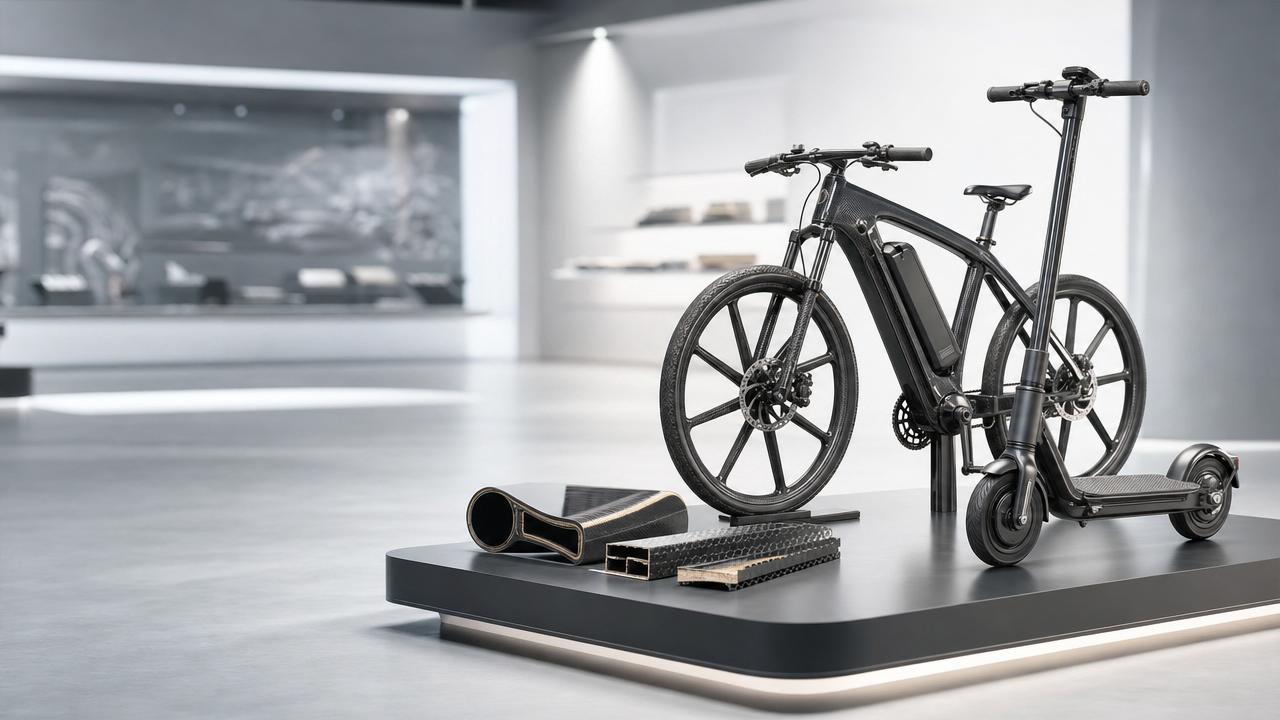
Composite materials are no longer a niche engineering topic in lightweight mobility. They have become a strategic lever for companies deciding how to improve performance, protect margins, meet sustainability expectations, and defend premium positioning. For business decision-makers in two-wheel and micro-mobility markets, the key question is no longer whether composite materials matter, but where they create the strongest commercial advantage and how to adopt them without introducing unnecessary cost, supply risk, or manufacturing complexity.
That is the real search intent behind Composite Materials Trends Reshaping Lightweight Mobility. Readers are looking for a practical view of which composite materials trends are commercially relevant, which applications are mature enough to scale, and how these innovations affect product strategy across e-bikes, e-scooters, high-performance e-motorcycles, drivetrain systems, and carbon fiber frame programs. They also want clarity on trade-offs: weight reduction versus repairability, performance versus cost, and sustainability claims versus operational reality.
For enterprise leaders, the most useful approach is not a generic overview of materials science. It is a decision framework. Which composite materials trends are reshaping market demand? Where do they improve rider experience enough to justify premium pricing? Which components deliver the best return on lightweighting investment? And what should executives ask suppliers, engineers, and procurement teams before committing capital?
Why composite materials have become a board-level issue in lightweight mobility
In the past, lightweight materials were often treated as an engineering upgrade. Today they influence much broader business outcomes. In micro-mobility and high-performance two-wheel categories, weight affects battery efficiency, handling, acceleration, rider comfort, logistics cost, and perceived quality. That makes composite materials relevant not only to R&D teams, but also to executives responsible for product portfolio, supply chain resilience, and long-term brand value.
For example, in e-bikes and high-speed e-motorcycles, lowering structural mass can improve range or allow manufacturers to maintain range while using smaller battery packs. In premium bicycles, advanced composites help deliver stiffness, vibration damping, and aerodynamic shaping that metal alternatives often struggle to match simultaneously. In shared or fleet micro-mobility, the equation is different: lifecycle durability, vandal resistance, and serviceability may matter more than absolute weight savings. The strategic importance of composite materials therefore depends on use case, price tier, and business model.
This is why executive teams should treat composite adoption as a portfolio decision rather than a simple technology trend. The winners will not be companies that use the most advanced material everywhere. They will be the ones that apply the right composite solution to the right product category with a clear commercial logic.
Which composite materials trends matter most right now
The most important trend is the move from “carbon fiber as a luxury signal” to “composite materials as a system-level optimization tool.” In practical terms, manufacturers are no longer using composites only to reduce frame weight. They are using them to redesign load paths, integrate functions, improve aerodynamic surfaces, manage vibration, and simplify part counts.
Several developments stand out. First, carbon fiber composites continue to dominate high-end bicycle frames and are increasingly relevant in selected structural and semi-structural parts for e-mobility platforms. Their value lies in high stiffness-to-weight ratios and design freedom, especially for monocoque structures. Second, hybrid composites are gaining attention because they can balance performance with toughness and cost. These may combine carbon fiber with glass fiber, thermoplastics, or localized reinforcements in impact-prone areas.
Third, thermoplastic composites are becoming more commercially interesting. Compared with traditional thermoset systems, they offer potential advantages in cycle time, welding, recyclability, and high-volume processing. For decision-makers, this trend is particularly important in products that need larger production runs or more circularity credibility. Fourth, natural fiber and bio-based composite solutions are attracting R&D and brand interest, especially where sustainability storytelling matters. However, their near-term role is more likely in non-critical components, covers, and secondary structures than in elite performance frames.
Another major trend is digital manufacturing and simulation-led composite design. Better modeling tools allow engineers to tailor layups more precisely for stiffness, impact resistance, and fatigue loads. This reduces overengineering, shortens development cycles, and improves confidence before expensive tooling commitments. For executives, that means composite materials are becoming less of an artisanal black box and more of a measurable, optimizable industrial capability.
Where composite materials create the strongest business value
Not every component deserves a composite upgrade. The strongest business case appears where lightweighting influences multiple value drivers at once. Frames, forks, wheels, battery enclosures, fairings, and selected drivetrain-related housings are common examples because improvements in mass, stiffness, and form can change rider experience and energy efficiency at the same time.
In high-end bicycles, carbon fiber frames remain the clearest example of premium value creation. They support aerodynamic shaping, lateral stiffness under power, and ride tuning, all of which riders can feel and brands can market. This combination enables high margins, technical storytelling, and differentiation in crowded premium segments. It also reinforces brand prestige, which is especially important for companies competing globally.
In e-bikes, the opportunity extends beyond frame performance. Composite materials can help offset the weight penalty introduced by batteries and motors. That matters commercially because consumers want electric assistance without sacrificing handling or portability. A lighter e-bike feels more agile, is easier to carry or store, and often commands a premium. The result is a stronger value proposition in urban commuting, fitness-oriented riding, and performance mountain categories.
For e-scooters and fleet mobility devices, the business case should be more selective. If a composite component reduces maintenance, corrosion, or total weight enough to lower operational cost, it may be justified. But if it increases replacement complexity or repair expense in harsh fleet conditions, the economics can quickly weaken. In this segment, the best composite applications tend to be those that improve durability and manufacturability, not just those that make the product lighter.
High-speed e-motorcycles offer another compelling use case. As battery systems remain heavy and thermal management requirements become stricter, composite materials can support mass reduction in bodywork, substructures, and aerodynamic elements. This can improve acceleration, energy consumption, and vehicle dynamics. However, the investment case usually depends on whether the brand competes on performance and innovation leadership rather than price alone.
How executives should evaluate ROI instead of chasing lightweighting headlines
The central mistake many companies make is evaluating composite materials through cost per kilogram saved alone. That metric is too narrow. A better approach is to assess return on lightweighting investment across five dimensions: performance gain, willingness to pay, manufacturing impact, warranty risk, and strategic brand value.
Performance gain should be measured in commercial terms. Does lower weight increase range, reduce battery size, improve acceleration, enhance handling, or create a noticeably better ride feel? If the rider cannot perceive the difference, the business case may be weak unless the change delivers other operational benefits.
Willingness to pay is equally important. Premium customers often pay for more than measurable speed or range. They pay for design sophistication, exclusivity, and trust in advanced engineering. Composite materials can strengthen this value perception, but only when supported by credible product communication and visible quality. A hidden composite part may improve engineering, yet create limited pricing power if customers do not understand its benefit.
Manufacturing impact is where many promising projects fail. Composite components may require new tooling, new quality controls, different assembly methods, and more specialized supplier relationships. If these changes increase lead time volatility or reduce yield, margin improvements from premium pricing can disappear. Decision-makers should therefore model total landed economics, not only part-level material costs.
Warranty and service risk must also be built into ROI analysis. Composite materials can perform exceptionally well when designed and manufactured correctly, but damage modes differ from metals. Inspection protocols, repair networks, and customer education all influence lifecycle cost. Products aimed at enthusiast users may tolerate more specialized servicing than mass-market urban mobility devices.
Finally, executives should include strategic brand value. In many mobility categories, advanced composite materials signal technical leadership. That can influence channel relationships, media coverage, investor perception, and long-term positioning. While harder to quantify than direct material cost, it is highly relevant in premium growth strategies.
What risks companies need to manage before scaling composite adoption
Composite materials offer major upside, but they also introduce strategic risks that should be managed early. Supply concentration is one of the most significant. Aerospace-grade carbon fiber, specialized prepregs, and high-quality molding capabilities are not universally available. Companies that rely on narrow supplier networks may face cost volatility, lead-time disruptions, or capacity constraints during demand spikes.
Another risk is misalignment between material choice and use environment. A composite frame optimized for elite road cycling may not translate directly to shared urban mobility, where impact events, improper handling, and rough maintenance conditions are more common. Executives should resist the assumption that a high-performance material automatically creates a better mass-market product.
Manufacturing maturity is another concern. Composite quality depends heavily on process control, from layup consistency and resin distribution to curing and bonding integrity. If an organization lacks robust validation systems, introducing composite materials can increase defect rates and quality escapes. For that reason, supplier qualification and process auditing should be as rigorous as design review.
Sustainability claims also require caution. Composite materials can contribute to lower operational emissions through lightweighting, but end-of-life recovery remains challenging for many systems, especially thermoset carbon fiber structures. Companies that market sustainability benefits should be precise about what is being improved: energy efficiency in use, recycled content, reduced part count, or emerging recyclability pathways. Overclaiming creates reputational risk.
How composite materials are changing competitive positioning in premium mobility
One of the most important market effects of advanced composites is segmentation. Composite materials are helping brands create clearer distinction between entry, mid-tier, and flagship products. In the premium tier, they enable a combination of low mass, tuned ride quality, integrated design, and advanced aesthetics that is difficult to replicate with conventional materials alone.
This matters because premium mobility markets increasingly reward total experience rather than isolated specifications. Buyers of performance e-bikes, elite road bikes, or advanced urban commuters are comparing handling, comfort, digital integration, design language, and brand credibility all at once. Composite materials support that system-level differentiation. A frame can be lighter, cleaner in form, better integrated with cables or batteries, and more distinctive on the showroom floor.
For B2B leaders, the implication is clear: composite materials are not only an engineering choice, but a market positioning tool. They help justify premium pricing, protect margin against commoditization, and create barriers to imitation when combined with proprietary design and manufacturing know-how. This is especially valuable in categories where many competitors can source similar motors, batteries, or electronics, but fewer can execute truly high-performance composite structures at scale.
A practical decision framework for business leaders
Executives considering investment in composite materials should ask a focused set of questions. First, where does weight most strongly influence customer value in our portfolio? Second, which components combine performance upside with realistic manufacturing readiness? Third, do we have the supplier ecosystem and quality systems to support composite scaling? Fourth, can the market see and reward the value we are creating? And fifth, are we building a durable capability or just following a trend?
In many cases, the best path is phased adoption. Start with components where composites offer clear upside and manageable risk. Build internal knowledge through close collaboration between engineering, sourcing, and product strategy teams. Validate not only lab performance, but also field durability, service requirements, and customer response. Then expand into more ambitious applications when process capability and business confidence are stronger.
Companies should also segment by market logic. High-end enthusiast products can justify higher material cost in exchange for performance and brand halo. Urban commuter products may require a more disciplined cost-benefit threshold. Fleet platforms need proof of durability and service efficiency. A one-size-fits-all composite strategy rarely works.
Conclusion: composite materials are becoming a strategic filter, not just a material choice
Composite materials are reshaping lightweight mobility because they affect far more than grams on a specification sheet. They influence energy efficiency, ride quality, industrial design, premium pricing, supply chain structure, and sustainability narratives. For business decision-makers, the opportunity is significant, but so is the need for discipline.
The most effective companies will not simply adopt composite materials because the market associates them with innovation. They will use them where they solve the right business problem: improving range without oversized batteries, creating premium differentiation in competitive segments, reducing structural mass without sacrificing stiffness, or strengthening technical brand authority in global markets.
In that sense, the real trend is not just the rise of carbon fiber or new hybrid structures. It is the growing role of composite materials in strategic decision-making across the mobility value chain. Companies that understand both the engineering promise and the commercial realities will be best positioned to lead the next phase of lightweight, smart, and low-carbon mobility.
Related News