
Low-carbon Mobility Trends Creating New Product Priorities

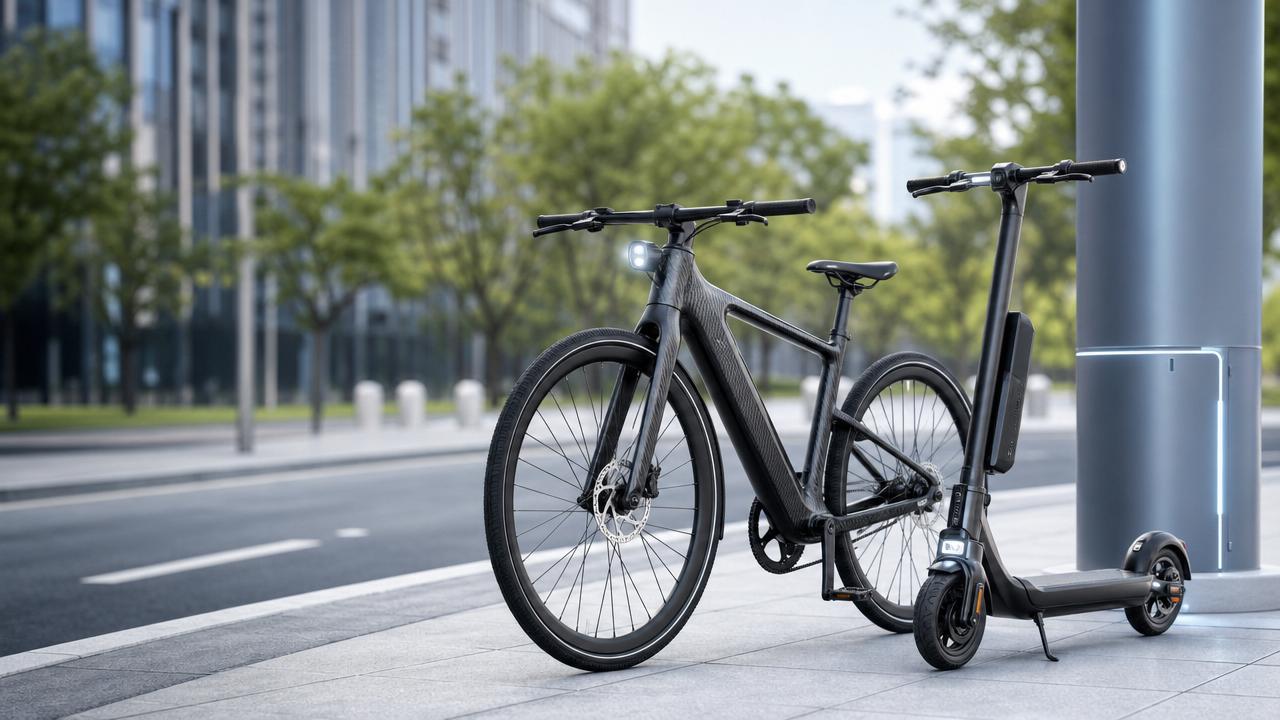
Low-carbon mobility is rapidly reshaping how manufacturers, suppliers, and investors set product priorities across the two-wheel ecosystem. From e-bikes and smart e-scooters to carbon fiber frames and electronic drivetrains, market demand is shifting toward lighter, smarter, and more efficient solutions. For business decision-makers, understanding these trends is essential to aligning innovation, supply chains, and brand positioning with the next wave of global mobility growth.
Why low-carbon mobility now requires scenario-based product decisions
The rise of low-carbon mobility is not a single-market story. It plays out differently in commuter transport, shared urban fleets, performance riding, premium consumer upgrades, and industrial sourcing. That is why product planning can no longer rely on broad assumptions such as “electrification is growing” or “lightweighting matters.” In practice, each use case applies different pressure on battery range, frame stiffness, motor tuning, connectivity, durability, and cost control.
For the broader mobility industry, this shift creates a new rule: products must be designed around real operating environments rather than generic technical ambition. ACMD’s industry focus makes this especially clear across e-bikes, smart e-scooters, high-speed e-motorcycles, derailleur systems, and carbon fiber frames. Low-carbon mobility succeeds where technical performance, regulation, and user behavior intersect. The real advantage comes from judging which scenario will reward premium engineering and which will reward scalable, serviceable, and regulation-ready design.
Urban commuting scenarios are pushing low-carbon mobility toward reliability and efficiency
In dense cities, low-carbon mobility products win when they reduce friction in everyday travel. For e-bikes, that means practical range, smooth pedal assist, theft protection, and low maintenance. For smart e-scooters, it means compact packaging, app-based access, stable braking, and dependable connectivity. In this scenario, consumers and operators rarely reward extreme specifications unless they improve daily usability. A lighter frame matters, but only when it also improves handling, portability, or battery efficiency.
The key judgment point is whether a product can survive repetitive, short-distance, high-frequency use without adding service complexity. In low-carbon mobility commuting scenarios, priorities shift from raw speed to uptime, charging convenience, weather resistance, and safe software integration. Products that combine mid-level power with intelligent energy management often perform better commercially than products built around headline performance.
Core signals in this scenario
- Battery efficiency matters more than maximum motor output.
- Integrated lights, anti-theft systems, and connected dashboards add strong value.
- Frame materials should balance lightweighting with repair practicality.
- Electronic shifting is attractive when it improves seamless stop-start riding.
Shared fleet and last-mile scenarios favor standardized low-carbon mobility platforms
In shared mobility environments, product priorities change again. Fleet economics dominate. A smart e-scooter or urban e-bike used in a shared network must tolerate misuse, rough parking behavior, frequent charging, and software-driven control. Here, low-carbon mobility is less about emotional product appeal and more about platform durability, component interchangeability, and operational intelligence. Geofencing, ride logging, remote diagnostics, and battery management become central product features rather than optional upgrades.
The most important judgment point in this scenario is total lifecycle efficiency. Premium materials only make sense if they reduce replacement rates or improve fleet availability. Carbon fiber may be excellent in performance terms, but not always ideal for harsh shared usage unless reinforced with clear service logic. Likewise, drivetrain sophistication must be measured against maintenance cycles. Low-carbon mobility platforms for fleets need fewer failure points, stronger modularity, and easier field replacement.
What defines success in shared applications
- Swappable or quickly serviceable battery systems
- Rugged controllers and weather-protected electronics
- Parts commonality across product generations
- Data visibility for maintenance, route behavior, and misuse detection
Performance and premium riding scenarios are redefining low-carbon mobility value
Not all low-carbon mobility demand is driven by utility. In premium cycling, competitive riding, and high-performance e-motorcycles, buyers reward engineering sophistication. This is where carbon fiber frames, precision derailleur systems, wireless electronic shifting, aerodynamic shaping, and thermal management create real differentiation. In these scenarios, lightweighting is not just about lower mass. It supports acceleration, stiffness-to-weight optimization, range extension, and high-speed handling confidence.
The judgment point here is whether premium technology translates into measurable ride outcomes. A carbon layup strategy should improve compliance and lateral stiffness, not simply add marketing appeal. Electronic drivetrains must deliver millisecond-level response and anti-interference reliability under stress. For high-speed e-motorcycles, battery cooling and torque delivery shape product credibility more than cosmetic innovation. Low-carbon mobility in this segment becomes a test of performance integration, not isolated feature leadership.
How low-carbon mobility priorities differ by scenario
A practical comparison helps clarify why product roadmaps should not treat all demand as equal.
Scenario-fit recommendations for product planning and sourcing
To respond well to low-carbon mobility trends, product strategy should be built around scenario fit instead of category labels alone. An e-bike for urban subscription services should not be judged by the same criteria as a premium gravel platform or an export-focused cargo commuter. The following actions help align engineering and business priorities.
- Map feature value to use intensity: prioritize high-impact functions such as battery management, frame durability, and software reliability where usage frequency is high.
- Separate prestige technology from scalable technology: some low-carbon mobility innovations are ideal for flagship branding, while others are better for mass deployment.
- Use lightweight materials selectively: carbon fiber and advanced composites deliver the best return when performance, efficiency, or premium positioning is central.
- Design around regulation early: speed thresholds, battery certifications, and right-of-way rules can redefine product viability across markets.
- Build service logic into hardware decisions: electronic systems, battery packs, and drivetrain parts should support realistic maintenance pathways.
Common misjudgments that weaken low-carbon mobility product decisions
Several recurring mistakes slow down otherwise promising mobility programs. One is assuming that decarbonization automatically rewards the lightest or most advanced product. In reality, low-carbon mobility often favors the best balance of efficiency, cost, durability, and compliance. Another mistake is treating digital features as universal value creators. Connectivity matters greatly in shared fleets and security-sensitive commuting, but not every scenario needs complex app dependence.
A further oversight is underestimating supply chain coherence. Premium carbon structures, electronic derailleurs, high-density battery systems, and advanced controllers all require synchronized sourcing and testing standards. When one element of the product system lags behind, the low-carbon mobility proposition weakens. Performance claims become harder to defend, service costs rise, and market entry timing suffers.
The next practical step in capturing low-carbon mobility growth
The strongest response to low-carbon mobility trends is a structured scenario review. Start by identifying where demand is truly forming: urban commuting, shared last-mile networks, premium sport riding, or high-speed electrified two-wheel transport. Then evaluate which product attributes directly improve success in that scenario, and which features simply add complexity. This approach produces clearer investment logic, stronger product positioning, and more resilient sourcing decisions.
ACMD’s intelligence perspective is especially relevant in this environment because the market is no longer defined by one product category alone. It is defined by how e-bikes, smart e-scooters, drivetrain systems, lightweight materials, and electrified performance platforms connect to real low-carbon mobility needs. The brands and supply networks that align technology with scenario-based demand will be better positioned to capture long-term growth, defend premium value, and adapt faster as global mobility standards continue to evolve.
Related News