
Bike Transmission Choices for Low-maintenance Commuting

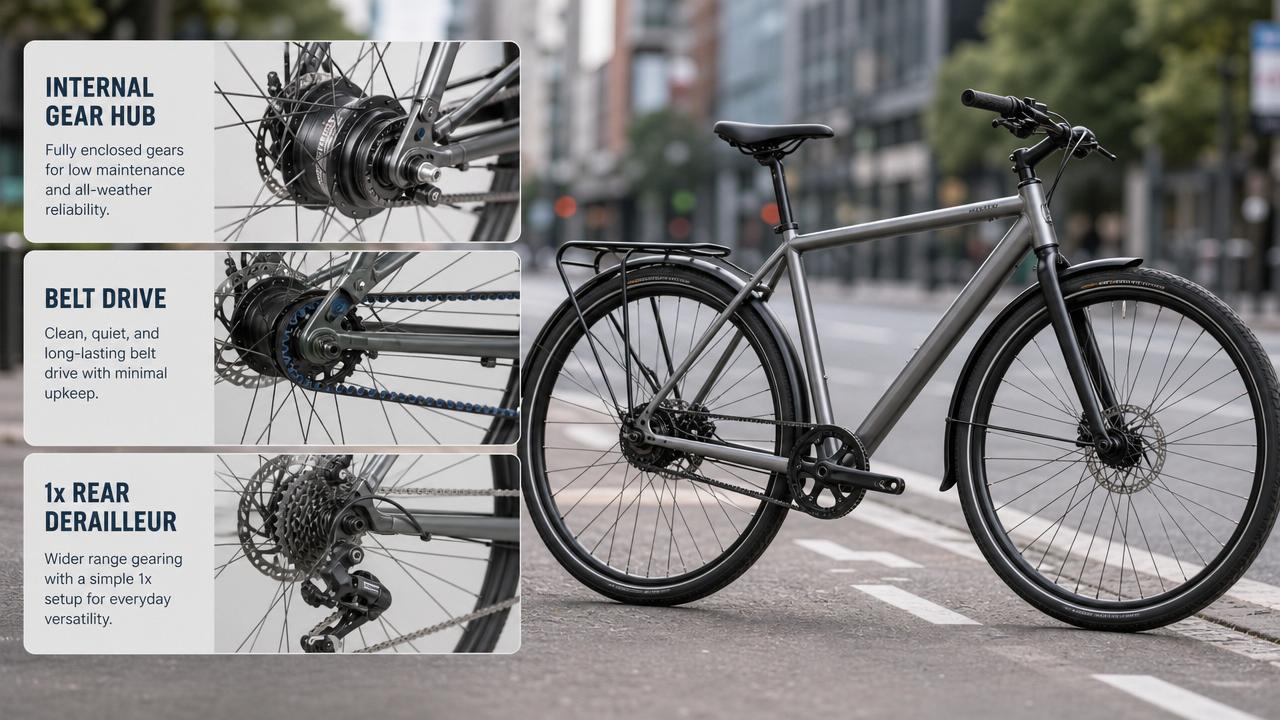
Choosing the right bike transmission for commuting is not just a technical decision. It affects daily reliability, repair frequency, noise, clothing cleanliness, and how confidently a bike handles rain, hills, stop-start traffic, and year-round storage outdoors. For low-maintenance commuting, the best setup is rarely the lightest or the sportiest. It is the one that keeps shifting smoothly with minimal adjustment, resists dirt and corrosion, and matches the route rather than chasing performance numbers. This guide explains how to judge bike transmission options by real commuting scenarios, with a practical focus on hub gears, belt drives, single-speed systems, and traditional derailleur drivetrains.
When the commuting scene changes, the best bike transmission also changes
A low-maintenance urban bike used for five flat kilometers each day needs a different bike transmission from a commuter climbing bridges, carrying cargo, or riding through winter road salt. The wrong choice can lead to frequent chain wear, poor gear spacing, hard starts at traffic lights, or expensive servicing that cancels out the convenience of cycling.
From an industry-wide mobility perspective, transmission selection also reflects broader trends in urban micro-mobility: cleaner drivetrains, sealed systems, reduced service intervals, and better compatibility with smart city commuting. As ACMD closely tracks precision transmissions and lightweight mobility platforms, one clear pattern continues to emerge: commuters increasingly value durability and uptime over racing-derived complexity. In practical terms, that means choosing a bike transmission that works with your terrain, storage conditions, and maintenance habits.
For short, flat city rides, a simple bike transmission often wins
Scenario: predictable streets, low speed, frequent stops
If the commute is mostly flat, under 30 minutes, and full of traffic lights, a single-speed or internal gear hub can be the most efficient bike transmission choice. These setups reduce exposed moving parts and eliminate much of the tuning associated with rear derailleurs. A single-speed is especially attractive for riders who want the fewest possible failure points. It is quiet, light, inexpensive, and easy to clean.
However, the key judgment point is restart effort. If starting from a stop feels too heavy, a single-speed becomes tiring fast. In that case, a 3-speed or 5-speed hub gear usually offers a better low-maintenance balance. Because hub gears shift inside a sealed shell, they are far less exposed to grit and water than an external derailleur bike transmission. Many commuters also appreciate being able to shift while stationary, which is useful at red lights.
Core judgment points
- Flat route with limited elevation change
- High stop frequency and low average speed
- Preference for easy cleaning and fewer adjustments
- No need for wide gear range or high-speed fitness riding
For wet weather and all-season use, sealed bike transmission systems stand out
Scenario: rain, winter grime, outdoor parking
When a bike lives outside, gets used in rain, or faces winter road contamination, durability becomes the leading factor. In this scene, a hub-gear bike transmission paired with a belt drive is often the premium low-maintenance answer. A carbon belt does not need lubrication, does not rust, and stays cleaner than a chain. Combined with an internal gear hub, it creates one of the most commuter-friendly drivetrain systems available.
The trade-off is cost. Belt-compatible frames need a split rear triangle or other specific design feature, and premium internal hubs raise the initial investment. Still, for riders focused on reduced workshop visits and consistent operation, this bike transmission format can justify itself over time. It is especially effective for urban mobility where reliability matters more than quick component swaps or race-style gear changes.
What to check before choosing belt plus hub gears
- Frame must support a belt drive
- Route should justify the higher initial cost
- Local servicing access for internal hubs should be confirmed
- Gear range should match local inclines and cargo load
For mixed hills and longer distances, the best bike transmission may still be a derailleur
Scenario: varied terrain, bridges, fitness pace, weekend crossover use
A derailleur-based bike transmission still makes sense when commuting includes steep hills, speed changes, or longer mileage. Modern 1x systems are simpler than older multi-chainring setups and can reduce maintenance while still delivering useful gear range. Compared with internal hubs, derailleurs are usually lighter, cheaper to replace, and easier to service in many markets.
The limitation is exposure. Chains, cassettes, jockey wheels, and derailleur mechanisms collect road dirt and need more regular cleaning and adjustment. For commuters who ride daily in dry conditions and do not mind basic upkeep, a derailleur bike transmission can remain a smart choice. For commuters seeking the absolute lowest attention requirement, it is usually not the first recommendation unless terrain demands it.
When a derailleur setup is still the right answer
- Daily route includes real climbing
- Bike doubles as a fitness or weekend ride
- Budget is limited but gear range is important
- Basic drivetrain cleaning is acceptable
Different commuting scenes create different bike transmission priorities
How to match a bike transmission to your real commuting needs
A practical selection process starts with route mapping rather than drivetrain marketing. Count the number of full stops, estimate the steepest climb, note whether the bike will be stored indoors or outdoors, and decide how often you are genuinely willing to clean or lubricate parts. Those answers will usually identify the right bike transmission category faster than comparing brand names.
- If convenience is everything: choose a hub-gear bike transmission, especially for daily city use.
- If cleanliness and weather resistance matter most: prioritize a belt-drive system with internal gearing.
- If hills define the commute: use a simple 1x derailleur setup with durable components.
- If budget is tight: a basic chain-driven hub gear or single-speed often gives the best value.
- If the bike carries heavy loads: confirm that the chosen gears allow low-speed starts without excessive pedal force.
Common mistakes people make when choosing a low-maintenance bike transmission
One common mistake is assuming that more gears automatically mean better commuting. In reality, many urban riders use only a small portion of the available range. A complicated bike transmission may add wear points without adding real utility. Another mistake is buying a racing-style derailleur bike for an all-weather city route, then becoming frustrated by chain noise, grime buildup, and frequent indexing adjustments.
A second overlooked issue is service ecosystem fit. An advanced internal hub is excellent only if replacement parts and skilled maintenance are locally available when needed. A third mistake is underestimating clothing and cleanliness concerns. For work commuting, chain guards, enclosed drivetrains, and belt systems can be just as valuable as gear range. The most suitable bike transmission is not the most impressive on paper; it is the one that consistently works with minimal interruption.
Make the next step practical: choose the bike transmission by route, weather, and upkeep tolerance
Before selecting your next commuter bike, write down three things: route profile, annual weather exposure, and acceptable maintenance time per month. If the route is flat and urban, start with single-speed or hub gears. If the bike faces rain and outdoor parking, move toward a belt-drive internal gear bike transmission. If hills or dual-use riding matter, consider a durable 1x derailleur setup. This route-first method reduces buying mistakes and leads to a system that supports everyday mobility instead of demanding constant attention.
As urban micro-mobility continues to evolve, dependable drivetrain choices are becoming a central part of smarter, lower-carbon commuting. A well-matched bike transmission keeps the ride efficient, quiet, and dependable over thousands of real-world kilometers. Choose for the scene you ride in most often, and low-maintenance commuting becomes far easier to achieve.