
Urban Mobility Solutions That Cut Delivery Costs in 2026

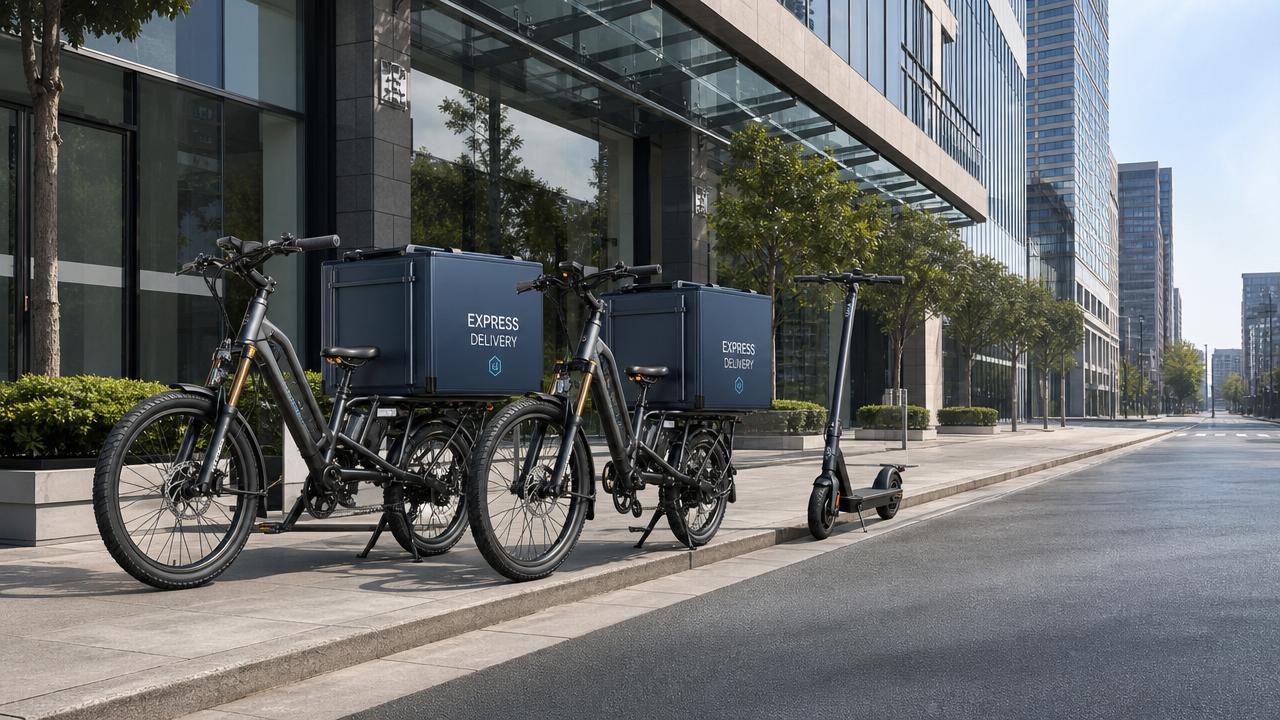
In 2026, urban mobility solutions are no longer just a sustainability play—they are a direct lever for cutting delivery costs, improving fleet efficiency, and strengthening last-mile competitiveness.
For business evaluation, the shift matters because dense cities now reward lighter vehicles, smarter routing, and lower operating energy per stop.
The strongest cost reductions are appearing where e-bikes, smart e-scooters, connected fleet systems, and lightweight engineering work together as one logistics layer.
Why urban delivery economics changed faster than expected in 2026
Cities are tightening emissions rules, curb access, and congestion pricing at the same time that delivery volumes remain structurally high.
That combination is making van-based last-mile models more expensive on a per-drop basis, especially in crowded commercial districts.
As a result, urban mobility solutions are moving from pilot programs into cost-critical operating infrastructure.
ACMD’s mobility intelligence perspective shows that micro-mobility now intersects materials science, drivetrain efficiency, battery strategy, and local regulation.
This matters because delivery cost is no longer decided by fuel alone. It is shaped by access speed, parking friction, payload fit, uptime, and software visibility.
The clearest trend signals behind urban mobility solutions adoption
Several market signals explain why urban mobility solutions are gaining strategic weight in urban logistics and neighborhood commerce.
- Battery-assisted delivery bikes are replacing vans for short-radius, high-frequency routes.
- Shared and managed e-scooter networks are becoming support layers for service calls and ultra-light deliveries.
- Geofencing and telematics are improving route discipline, parking compliance, and rider accountability.
- Lightweight carbon and advanced composite structures are improving efficiency without increasing fleet size.
- Local governments are favoring low-noise, low-emission vehicles in restricted access zones.
These signals point to one conclusion: delivery savings now come from system design, not from vehicle replacement alone.
What is driving lower costs across modern urban mobility solutions
The cost advantage of urban mobility solutions is created by multiple operational drivers working together.
ACMD’s focus on precision drivetrains and lightweight materials supports this trend. Efficiency gains often come from marginal improvements repeated across thousands of daily stops.
For example, a lighter frame, better transmission response, and stable electronic controls can reduce wasted motion and improve schedule reliability.
How e-bikes and smart scooters are reshaping last-mile delivery patterns
Among all urban mobility solutions, cargo e-bikes are delivering the most visible economic impact in compact urban territories.
They fit bike lanes, access narrower streets, and shorten stop-to-door time. That often translates into more deliveries per hour with lower energy consumption.
Smart e-scooters serve a different but growing role. They support hyper-local dispatch, technician movement, spare-parts circulation, and rapid service response.
Where packages are light and time windows are narrow, scooters can outperform larger vehicles on pure movement efficiency.
Operational advantages appearing most often
- Lower cost per urban kilometer
- More flexible curbside behavior
- Faster navigation in congested zones
- Reduced exposure to fuel volatility
- Better fit for low-emission access requirements
Still, the best results come from route matching. Not every delivery profile fits every vehicle type.
Where advanced materials and precision systems create hidden savings
Many discussions of urban mobility solutions focus on batteries and apps, but hidden savings often come from engineering quality.
Aerospace-grade lightweight materials can improve range efficiency and payload balance. This becomes valuable when a fleet runs repeated urban cycles all day.
Precision drivetrain systems also matter. Better shifting response and lower mechanical loss help maintain speed consistency on mixed terrain and frequent starts.
For ACMD, this is where mobility hardware and commercial performance truly connect. Component-level improvements can influence fleet economics at scale.
Hidden savings areas often overlooked
- Reduced maintenance from durable transmission design
- Improved rider control from balanced frame geometry
- Less downtime from stronger thermal and battery management
- Longer fleet life from higher material fatigue resistance
What these changes mean across logistics, retail, and service networks
The impact of urban mobility solutions extends beyond parcel delivery. Retail replenishment, food distribution, maintenance service, and medical errands are all affected.
Across business networks, the main shift is from centralized heavy movement toward distributed, adaptive, neighborhood-scale circulation.
This wider relevance explains why urban mobility solutions now belong in broader operating strategy, not only transportation planning.
The priority questions worth tracking before expanding urban mobility solutions
Before scaling, several evaluation points deserve close attention.
- Which routes have short distances, frequent stops, and high parking friction?
- What payload categories fit bikes, scooters, or hybrid fleet models?
- How do local access laws, helmet rules, and lane permissions vary by city?
- Can telematics, maintenance data, and dispatch software be integrated cleanly?
- Does vehicle quality support long daily utilization without excessive repair cycles?
These questions help separate headline trends from economically durable deployment.
A practical decision path for 2026 and beyond
A useful response is to treat urban mobility solutions as a phased capability build rather than a single procurement decision.
- Map delivery zones by density, payload, and failed-stop frequency.
- Assign suitable vehicle classes to each route cluster.
- Measure cost per stop, uptime, charging rhythm, and maintenance intervals.
- Compare hardware quality, not only acquisition price.
- Scale the model where access speed clearly beats van-based economics.
The strongest long-term advantage comes from combining connected software, efficient two-wheel platforms, and durable lightweight engineering.
That is exactly where ACMD’s intelligence lens is relevant: linking mobility technology performance with commercially meaningful delivery outcomes.
In 2026, urban mobility solutions are no longer optional experimentation. They are becoming a measurable route to lower delivery costs and stronger urban service resilience.
The next step is simple: identify one dense delivery zone, test the right two-wheel mix, and evaluate results using cost-per-drop and uptime data.
Related News