
Connected Mobility Technology Trends Reshaping Urban Fleet Planning

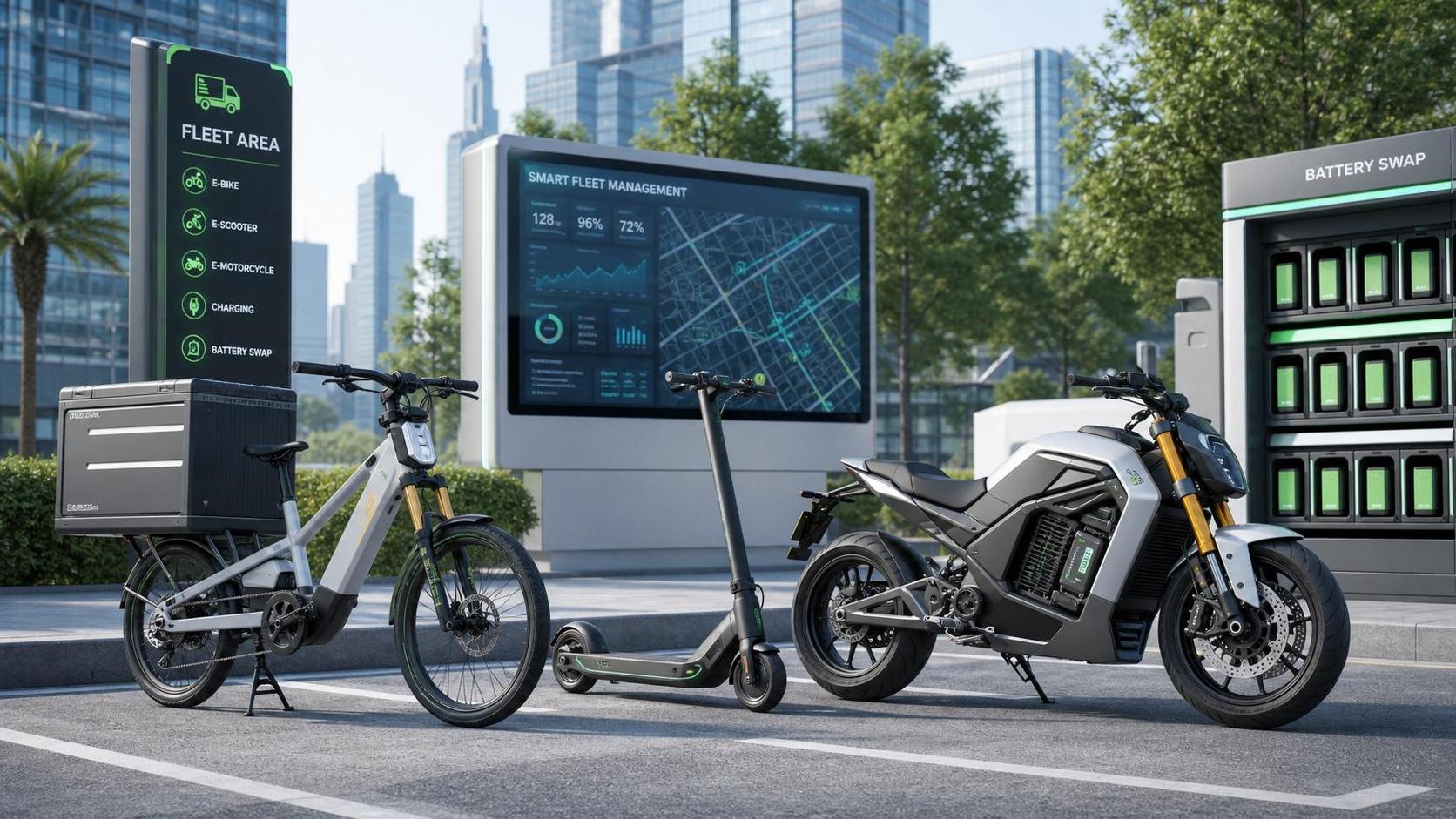
Connected mobility technology is changing urban fleet planning from a vehicle allocation exercise into a live operating system for movement, energy, and compliance. In dense cities, where delivery pressure, emissions policy, and curb congestion now collide, fleet decisions increasingly depend on connected data rather than static procurement logic.
That shift matters well beyond passenger cars. E-bikes, smart e-scooters, high-speed e-motorcycles, and other light electric vehicles are becoming practical fleet assets. Their performance now depends on sensors, telematics, battery intelligence, lightweight materials, and software rules that connect machines to infrastructure and operations.
For platforms such as ACMD, which tracks advanced two-wheel systems, precision drivetrains, and lightweight mobility engineering, this is not just a product story. It is a planning story, where connected mobility technology links route efficiency, asset utilization, vehicle design, and low-carbon strategy in one decision framework.
What connected fleet planning really means
At its core, connected mobility technology refers to vehicles, components, and software exchanging useful operational data in real time or near real time.
That data can include location, battery health, riding behavior, maintenance status, geofencing events, traffic conditions, and charging or swapping availability.
In urban fleet planning, the value is not the data itself. The value comes from better timing, better matching, and better control across the fleet lifecycle.
A connected e-bike fleet, for example, can be assigned according to route grade, battery state, rider demand, and service window. A smart e-scooter network can be limited by zone rules and repositioned according to actual usage patterns.
This is why connected mobility technology increasingly shapes planning before vehicles even hit the street. It affects specification, financing assumptions, charging design, staffing models, and city partnership strategy.
Why the market is paying closer attention
Several pressures are converging at once. Cities want cleaner transport, operators want lower cost per kilometer, and customers expect faster service with fewer disruptions.
At the same time, urban fleets are becoming more diverse. A single operation may combine vans, cargo e-bikes, shared scooters, service motorcycles, and swappable battery systems.
That complexity makes disconnected planning expensive. It creates idle assets, underused charging stations, fragmented maintenance schedules, and poor visibility into route profitability.
Connected mobility technology helps close those gaps. It allows planners to see not only where assets are, but how they perform, when they degrade, and which urban conditions influence service outcomes.
Another reason for growing interest is regulation. Right-of-way rules, subsidy structures, low-emission zones, and data requirements are becoming more detailed. Fleets that can translate these external signals into operating rules gain an immediate advantage.
The trends reshaping urban fleet decisions
Light electric fleets are moving into mainstream operations
Urban delivery, patrol, service response, campus circulation, and intermodal commuting now use more compact vehicles than before.
E-bikes and e-scooters are no longer side categories. In many cities, they solve access, parking, and stop-density problems better than larger vehicles.
Connected mobility technology makes these smaller assets fleet-manageable. Operators can monitor uptime, detect misuse, optimize deployment, and compare route economics across vehicle classes.
Battery intelligence is becoming a planning variable
Battery range used to be treated as a basic specification. Now it is an active operational input.
State of charge, thermal behavior, swap readiness, and degradation patterns all influence dispatch accuracy and total fleet capacity.
This matters especially for high-speed e-motorcycles and heavy-use cargo fleets, where heat management and charging availability directly affect service continuity.
Geofencing is evolving from control tool to business logic
Geofencing once focused on restricting where a vehicle could go. Today it supports pricing, safety policy, parking compliance, speed limits, and service prioritization.
For shared micro-mobility, that creates cleaner operations. For enterprise fleets, it supports contract compliance and service-level design across different city zones.
Vehicle engineering now affects digital performance
ACMD’s focus on carbon fiber frames, drivetrain precision, and electronic shifting reflects an important reality. Connected mobility technology is only as reliable as the physical platform beneath it.
A lighter frame changes energy use. A more stable drivetrain improves power transfer and maintenance timing. Better thermal design improves battery predictability.
In short, digital visibility and mechanical performance are no longer separate decisions.
Where the business value shows up first
The strongest returns usually appear in a few measurable areas rather than in a broad promise of transformation.
The point is not that every fleet becomes cheaper overnight. The point is that connected systems expose where value leaks out and where redesign is justified.
Important urban fleet scenarios
Different vehicle categories create different planning priorities. Treating them as one uniform fleet usually leads to weak decisions.
Short-range delivery and service loops
Cargo e-bikes and compact e-motorcycles often outperform larger vehicles in stop-heavy areas. Their advantage increases when routing software, battery visibility, and curb data are connected.
Shared mobility in dense districts
Smart e-scooters depend on geofencing, anti-theft telemetry, and demand mapping. Without those layers, availability becomes uneven and city relationships become fragile.
Premium performance fleets and technical branding
Some operations care about performance consistency as much as operating cost. This is where electronic shifting, lightweight composite frames, and precision drivetrain data become commercially relevant.
That perspective is increasingly important for brands and OEM partners looking to build technical credibility, not just fleet scale.
How to evaluate connected mobility technology in practice
A useful assessment starts with operational questions, not with dashboards or device counts.
- Which routes suffer from poor asset fit, repeated delays, or unstable energy use?
- Which city rules could affect access, parking, speed, or subsidy eligibility?
- Which vehicle classes need live visibility, and which only need periodic reporting?
- How much value depends on battery data, drivetrain status, or lightweight design efficiency?
- Can the data be turned into decisions across procurement, maintenance, and dispatch?
It also helps to separate essential signals from attractive noise. Many platforms collect data. Far fewer produce clear operational triggers.
That is where domain-specific intelligence matters. ACMD’s lens on micro-mobility, thermal systems, electronic drivetrains, and composite materials reflects the fact that urban fleets are becoming technically specialized.
What deserves closer monitoring next
The next phase of connected mobility technology will likely center on tighter integration between vehicle engineering, city infrastructure, and commercial analytics.
Battery-swapping networks, connected charging, traffic-priority data, and digital compliance layers will become more influential in fleet economics.
There is also a deeper materials story. As lightweight structures improve range and handling, composite design will affect not only vehicle performance but also fleet utilization models.
The same applies to transmission precision and electronic control systems. Small mechanical gains can create large operational gains when deployed across a city-scale network.
A practical way forward
Urban fleet planning now sits at the intersection of software, hardware, regulation, and energy strategy. Connected mobility technology is valuable because it makes those links visible and actionable.
A sensible next step is to map fleet decisions against three layers: operating data, vehicle architecture, and city constraints. That usually reveals where connected investment can improve resilience rather than simply add complexity.
From there, compare asset classes, battery models, telematics depth, and lightweight engineering assumptions against actual urban use cases. That approach creates a stronger basis for planning than trend watching alone.
Related News