
IoT Mobility Trends Reshaping Shared Fleet Planning in 2026

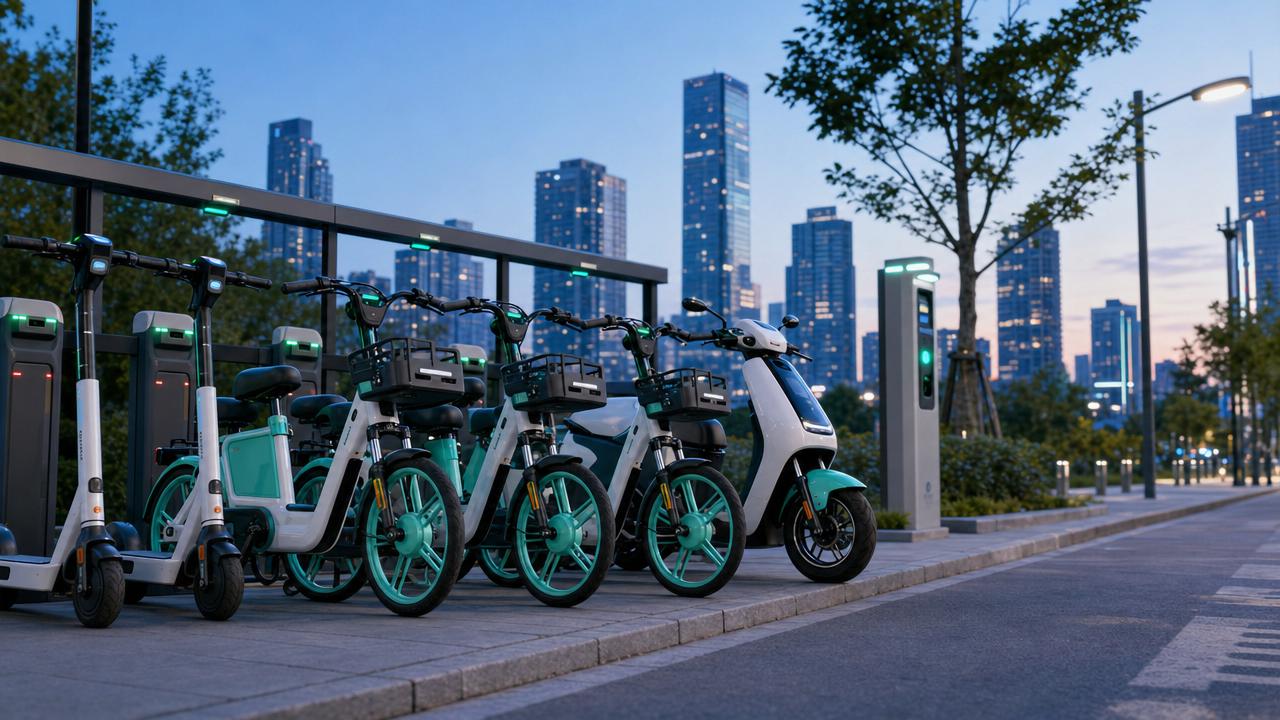
As shared fleets move from reactive operations to predictive strategy, IoT mobility is becoming the core engine behind smarter planning in 2026. The strongest advantage now comes from turning connected vehicle data, rider behavior, and urban demand signals into scalable models. That shift improves utilization, lowers operating waste, strengthens compliance, and supports long-term competitiveness across urban mobility networks.
What does IoT mobility mean for shared fleet planning in 2026?
IoT mobility refers to connected vehicles, sensors, software platforms, and analytics working together across the full mobility lifecycle. In shared fleets, that means every ride, charge event, lock status, route, and maintenance signal becomes measurable.
In 2026, fleet planning is no longer based mainly on historical averages. It is shaped by live demand patterns, weather inputs, battery health, curb rules, and rider behavior. Planning becomes dynamic instead of static.
For e-bikes, smart e-scooters, and high-speed e-motorcycles, IoT mobility links asset performance with urban realities. That matters because shared fleets operate inside crowded, regulated, and fast-changing environments.
ACMD closely tracks this transition because connected micro-mobility sits at the intersection of lightweight engineering, electronic control, and low-carbon city movement. Data quality now influences hardware value more directly than before.
- Vehicle telematics reveal location, speed, idle time, and route density.
- Battery monitoring supports better charging windows and asset rotation.
- Geofencing tools reduce parking disorder and local policy violations.
- Usage data improves deployment, repair cycles, and expansion timing.
Why is IoT mobility replacing reactive fleet management?
Reactive operations depend on visible problems. A vehicle breaks down, parking complaints rise, or battery range drops unexpectedly. That model creates delays, raises service costs, and weakens user trust.
IoT mobility changes the timeline. Operators can identify underperforming zones, likely component failures, and demand spikes before they become expensive disruptions. This predictive layer is the biggest planning change in 2026.
For example, predictive maintenance can flag repeated motor temperature anomalies or abnormal brake wear. Instead of waiting for failure, fleets can schedule intervention during low-demand periods.
Demand forecasting also becomes more precise. Connected fleet platforms can combine event calendars, commute peaks, rainfall, and charging readiness to reposition vehicles where revenue potential is highest.
This matters especially in cities where right-of-way regulation, parking caps, and sustainability targets directly influence operating permits. IoT mobility supports proof-based planning rather than assumption-based expansion.
Key benefits of predictive planning
- Higher fleet utilization during peak windows.
- Lower maintenance cost through earlier diagnosis.
- Better compliance with geofencing and parking policies.
- Improved rider satisfaction through stronger availability.
- More accurate expansion planning by neighborhood or corridor.
Which urban mobility segments benefit most from IoT mobility?
The benefits of IoT mobility are broad, but the impact differs by vehicle type, infrastructure needs, and usage patterns. Shared e-bikes and e-scooters often gain first from route intelligence and rebalancing efficiency.
High-speed e-motorcycles benefit more from battery health tracking, anti-theft monitoring, and swap or charge network coordination. Their higher asset value makes connected oversight even more important.
Mixed fleets gain the most strategic value. When one platform manages multiple vehicle classes, planners can compare demand density, trip length, idle rates, and maintenance intensity across use cases.
This supports smarter capital allocation. Instead of adding vehicles evenly, operators can invest where connected data shows stronger returns, lower service friction, and better policy alignment.
How should organizations judge IoT mobility platforms and data quality?
Not every connected platform delivers strategic value. Some systems collect large volumes of data but fail to produce useful planning outputs. In 2026, selection should focus on decision quality, not dashboard complexity.
A strong IoT mobility platform should connect hardware, rider behavior, maintenance workflows, and city rule layers. It must also support integrations with charging systems, mapping tools, and compliance reporting.
Data quality matters as much as platform features. Inaccurate battery readings, weak GPS consistency, or poor event labeling can distort planning models. Bad data makes predictive strategy look reliable when it is not.
Evaluation checklist for IoT mobility systems
- Sensor reliability across weather, vibration, and intensive daily use.
- Battery analytics depth, including degradation and charging behavior.
- Geofencing accuracy for local parking and speed-control rules.
- Maintenance alert relevance, not just alert volume.
- API readiness for fleet software, ERP, and city reporting tools.
- Cybersecurity controls for vehicles, apps, and backend systems.
ACMD’s intelligence perspective adds another dimension. Lightweight materials, drivetrain precision, and power electronics all affect telemetry behavior. Hardware architecture and data architecture should be assessed together.
What risks and common mistakes appear when adopting IoT mobility?
A common mistake is assuming connectivity alone creates efficiency. Without clear operational rules, connected fleets simply generate more signals. Data must be translated into dispatch actions, maintenance triggers, and investment priorities.
Another risk is overexpansion based on short-term peaks. IoT mobility can reveal temporary demand surges, but not every spike justifies permanent fleet growth. Seasonality and event volatility still require careful interpretation.
Privacy and cybersecurity are also central. Shared fleets collect route histories, device identifiers, and user behavior patterns. Weak governance can create compliance issues, brand damage, and operational exposure.
There is also a physical risk. If connected systems ignore real mechanical constraints, maintenance predictions may miss critical wear points. Brakes, frames, drivetrains, and battery casings still require engineering-grounded evaluation.
How can shared fleets prepare for IoT mobility success in 2026?
Preparation begins with a planning baseline. Map current utilization, downtime, battery failure rates, relocation costs, complaint hotspots, and permit obligations. This creates a clear benchmark for connected improvement.
Next, prioritize the highest-value data uses first. Many fleets benefit more from battery health forecasting and parking compliance than from advanced personalization features. Sequence matters for return on investment.
Hardware choices should support digital durability. Frames, sensors, power systems, and communication modules must survive vibration, weather, theft attempts, and heavy usage cycles. Connected strategy depends on physical resilience.
Organizations should also align analytics with local policy intelligence. Urban micro-mobility growth is heavily shaped by curb access, speed restrictions, charging infrastructure, and sustainability incentives.
Recommended next-step framework
- Audit fleet performance and identify the biggest operational losses.
- Select IoT mobility metrics tied to measurable planning outcomes.
- Test predictive workflows in one zone before full expansion.
- Integrate compliance, maintenance, and battery reporting.
- Review data quality monthly and refine thresholds continuously.
FAQ summary: what should be remembered most about IoT mobility?
IoT mobility is not just a technology layer. It is becoming the planning logic behind shared fleets in 2026. The real winners will be those that combine connected insight, strong hardware understanding, and disciplined operational execution.
For mobility ecosystems shaped by electrification, lightweight engineering, and urban regulation, the next step is practical: build a data-to-decision framework, test it in live conditions, and scale only what consistently improves fleet performance.
Related News