
Low-Carbon Mobility Trends to Watch in 2026

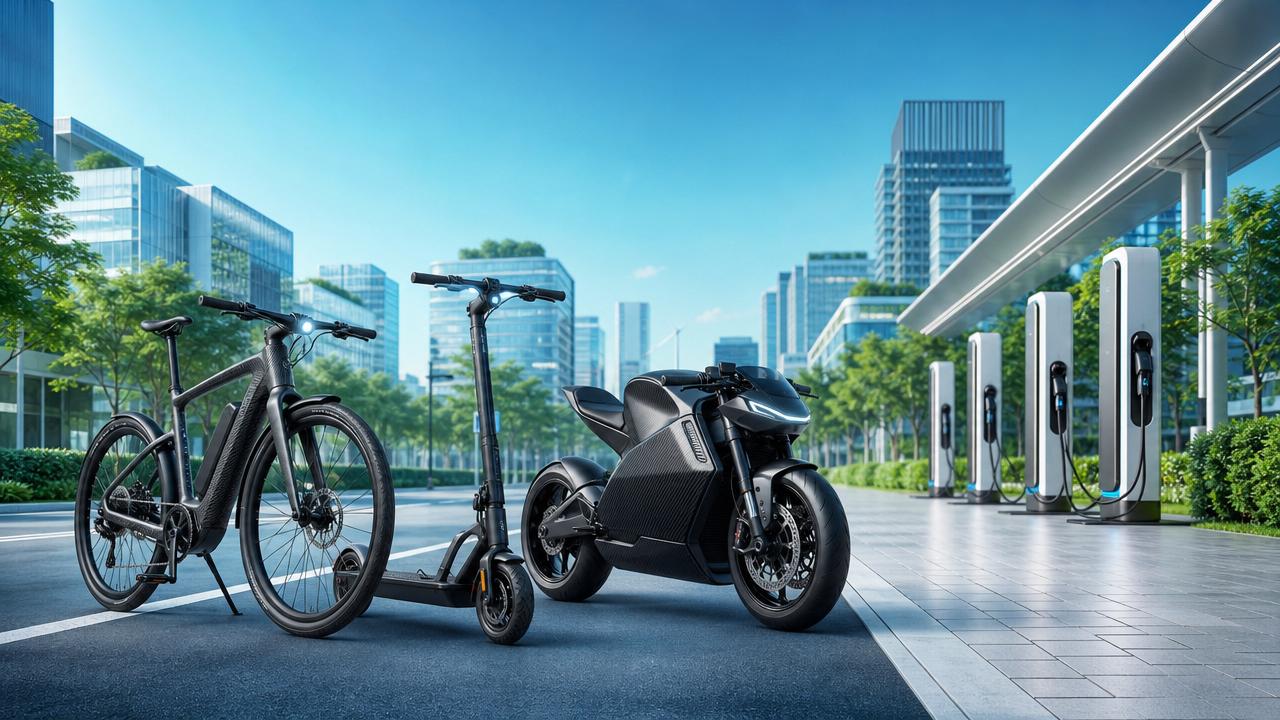
Low-Carbon Mobility Trends to Watch in 2026
As cities tighten emissions rules and investors reprice transport risk, 2026 will mark a decisive shift in low-carbon mobility from niche innovation to boardroom strategy.
For enterprise decision-making, the next wave will be shaped by electric two-wheel platforms, smarter micro-mobility infrastructure, lightweight carbon materials, and data-driven drivetrain intelligence.
Understanding these trends is no longer just about sustainability. It is about resilience, premium positioning, regulatory readiness, and demand capture in fast-evolving urban transport markets.
Why 2026 Becomes a Scenario Test for Low-Carbon Mobility
The low-carbon mobility market is entering a more selective phase. Growth will not come from simply electrifying every vehicle category.
It will come from matching energy use, vehicle weight, riding distance, infrastructure limits, and regulatory exposure to specific movement scenarios.
Dense city centers demand quiet, compact, connected transport. Suburban corridors need higher range, stronger braking, and safer battery management.
Sports and premium commuting require carbon fiber frames, precision drivetrains, and electronic shifting that preserves rider efficiency under pressure.
This is where low-carbon mobility becomes a strategic design question, not just a carbon accounting exercise.
Scenario 1: Urban Commuting Moves Toward Electric Bicycles
Electric bicycles will remain one of the strongest low-carbon mobility categories in 2026, especially across cities limiting private car access.
The core judgment point is not maximum motor power. It is whether the e-bike reduces friction in repeated daily trips.
A strong commuting platform needs predictable range, stable assist behavior, secure battery locking, and components that tolerate rain, vibration, and curb impacts.
In premium segments, low-carbon mobility will be influenced by frame stiffness, torque sensor accuracy, and drivetrain durability under stop-start traffic.
Carbon fiber frames can reduce fatigue and improve acceleration, but they must be matched with repairability and certified impact performance.
Scenario 2: Last-Mile Networks Favor Smart E-Scooters
Smart e-scooters are becoming infrastructure-aware vehicles. In 2026, low-carbon mobility success will depend on fleet intelligence as much as hardware.
The most important scenario is short-distance movement from transit stations to offices, campuses, residential blocks, and mixed-use districts.
IoT modules, geofencing, swappable batteries, and real-time diagnostics will separate scalable platforms from fragile pilot programs.
For shared systems, low-carbon mobility performance depends on uptime, vandalism resistance, parking compliance, and battery logistics.
For personal ownership, the judgment shifts toward portability, braking stability, waterproofing, and safe charging inside small apartments.
Scenario 3: High-Speed E-Motorcycles Replace Urban ICE Trips
High-speed e-motorcycles will expand the low-carbon mobility boundary beyond bicycles and scooters. They target longer urban and peri-urban travel.
The primary need is instant torque without sacrificing thermal stability, battery life, or rider confidence at higher speeds.
Battery-swapping networks could become decisive where home charging is difficult or commercial utilization is high.
However, low-carbon mobility adoption will depend on licensing rules, insurance pricing, right-of-way policies, and battery safety certification.
Thermal management, regenerative braking, and modular battery architecture should be evaluated before speed claims or visual styling.
Scenario 4: Competitive Riding Pushes Drivetrain Intelligence
The performance side of low-carbon mobility is increasingly shaped by electronic derailleurs and wireless shifting systems.
For road racing, gravel riding, and high-end commuting, shifting speed can influence cadence stability, energy use, and riding confidence.
The judgment point is millisecond responsiveness under vibration, mud, electromagnetic interference, and rapid gear transitions.
Low-carbon mobility here is not only about electric assist. It is also about minimizing wasted human energy.
Reliable electronic drivetrains support premium positioning when paired with long battery standby, simple calibration, and strong after-sales diagnostics.
Scenario 5: Lightweight Carbon Frames Redefine Efficiency
Carbon fiber frames will remain central to premium low-carbon mobility because weight reduction directly affects acceleration, climbing, handling, and battery efficiency.
The 2026 shift is from simple lightweight claims toward verified stiffness, fatigue resistance, aerodynamic integration, and sustainable material sourcing.
Aerospace-grade high-modulus carbon yarn can deliver strong performance, but layup design determines real-world reliability.
Monocoque manufacturing can improve structural continuity, while poor resin control may create hidden quality risks.
Low-carbon mobility brands should compare total lifecycle benefits, including durability, repair channels, logistics weight, and recycling pathways.
How Scenario Demands Differ Across Low-Carbon Mobility Markets
This comparison shows why low-carbon mobility planning needs scenario segmentation before product definition, market entry, or technology investment.
Adaptation Recommendations for 2026 Deployment
1. Match Vehicle Class to Trip Length
For trips under three kilometers, smart e-scooters and shared micro-mobility stations may deliver the strongest operational efficiency.
For three to fifteen kilometers, e-bikes usually provide the best balance of comfort, speed, cost, and emissions reduction.
For longer high-speed routes, e-motorcycles can extend low-carbon mobility without forcing users back into cars.
2. Treat Weight as an Energy System Variable
Lightweighting should not be reduced to marketing language. Every kilogram affects acceleration, braking, range, handling, and logistics emissions.
Carbon fiber frames, hollow components, and optimized battery housings should be assessed through fatigue testing and lifecycle value.
3. Build Around Data, Not Only Motors
Low-carbon mobility platforms increasingly depend on software. Diagnostics, anti-theft tools, battery analytics, and over-the-air updates improve utilization.
Data also supports predictive maintenance, fleet balancing, warranty control, and compliance reporting in regulated cities.
4. Prioritize Regulatory Readiness Early
Speed limits, helmet rules, battery transport standards, and right-of-way policies can reshape low-carbon mobility economics quickly.
Scenario planning should include city-specific rules, subsidy windows, import duties, safety certification, and recycling obligations.
Common Misjudgments in Low-Carbon Mobility Scenarios
- Assuming higher battery capacity always improves value, while ignoring weight, charge time, and replacement cost.
- Overlooking drivetrain quality, although shifting accuracy directly affects rider confidence and perceived product grade.
- Treating carbon fiber as automatically superior, without checking layup design, impact resistance, and repair access.
- Launching shared systems without parking discipline, geofencing precision, and local enforcement alignment.
- Ignoring thermal management in high-speed e-motorcycles, especially under hot weather and repeated acceleration.
- Using one global specification, despite major differences in road quality, rider behavior, and safety rules.
These mistakes often make low-carbon mobility projects appear technically advanced but commercially fragile.
What ACMD Will Watch Most Closely
ACMD will track how electric bicycles, smart e-scooters, e-motorcycles, derailleurs, and carbon frames converge into integrated mobility ecosystems.
The strongest low-carbon mobility signals will come from regulations, component reliability, material science, and user willingness to pay for premium efficiency.
Wind tunnel results, electronic shifting latency, battery safety data, and fleet maintenance metrics will become more important than launch slogans.
The market will reward platforms that connect mechanical precision, digital intelligence, lightweight design, and real urban usability.
Action Path: Turn 2026 Trends into Deployment Decisions
The practical next step is to map each mobility scenario against trip distance, infrastructure maturity, regulation, service capacity, and component risk.
Then define which technology creates defensible value: e-bike assist systems, scooter IoT, battery swapping, electronic drivetrains, or carbon lightweighting.
Low-carbon mobility in 2026 will not be won by the widest product catalog. It will be won by the sharpest scenario fit.
ACMD supports that fit through intelligence stitching across policy, materials, drivetrain architecture, fleet logic, and global two-wheel demand signals.
For teams preparing the next mobility cycle, the priority is clear: test assumptions early, quantify performance honestly, and align technology with real movement patterns.
Related News