
Composite Materials in Foldable Commuters: What Lasts?

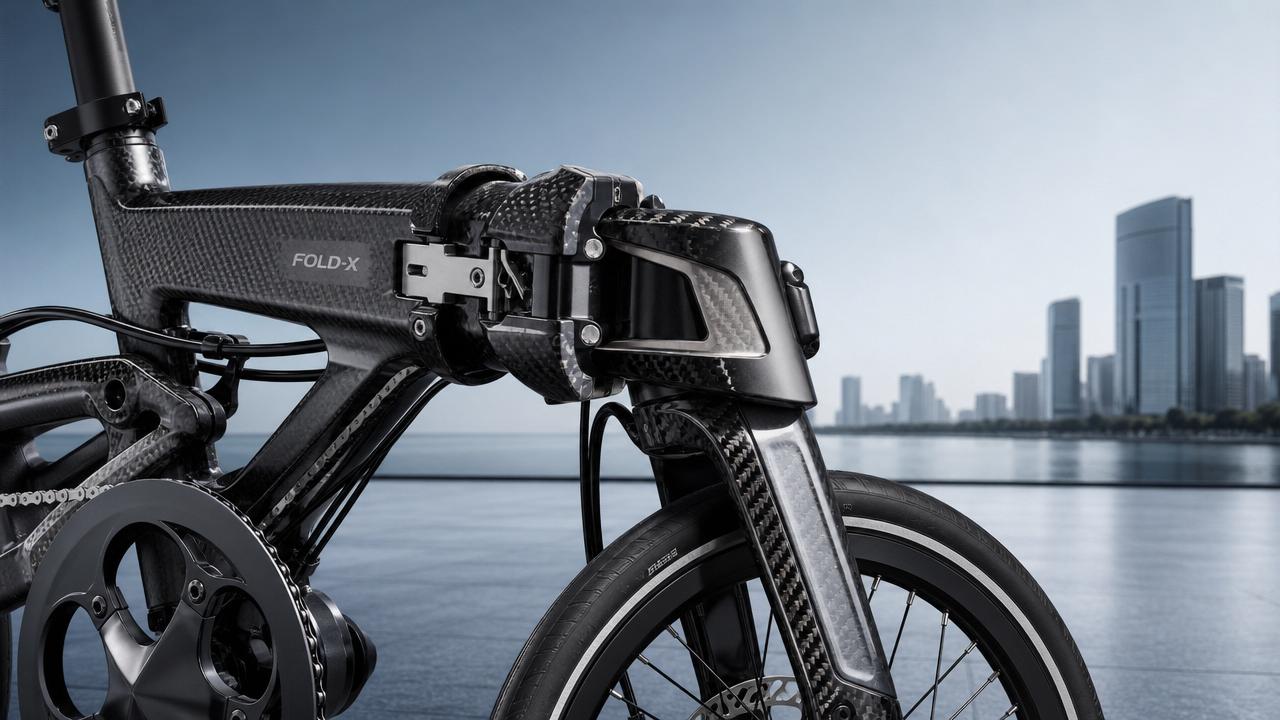
For foldable commuters, low weight feels attractive at first lift. Yet real ownership value comes from what survives years of folding cycles, rough pavement, rain, storage pressure, and daily transport.
That is why composite materials now deserve closer attention. In compact urban mobility, material choice affects hinge fatigue, vibration control, corrosion resistance, repairability, and total lifecycle cost.
At ACMD, long-term performance is never judged by marketing weight alone. The smarter question is simple: which composite materials truly last in real commuting scenes, and where do they fail earlier?
Why commuting scenes change how composite materials should be judged
A foldable bike or scooter does not experience stress like a race machine. It sees repeated unlocking, clamping, curb impacts, train station handling, office storage, and inconsistent maintenance.
Because of that, the best composite materials are not always the lightest. They must balance fatigue resistance, impact tolerance, joint stability, and protection from moisture, salt, and ultraviolet exposure.
Urban micro-mobility also creates mixed loading. Riders hit potholes seated, carry bags on one side, fold frames unevenly, and leave vehicles in hot cars or wet hallways.
In these scenes, the durability question shifts from pure strength to damage accumulation. Good composite materials delay hidden cracks, preserve stiffness, and maintain safe tolerances at hinges and latches.
Scene one: daily train-and-office commuting demands repeated folding endurance
This is the harshest scene for moving joints. A commuter may fold and unfold several times every weekday, adding thousands of cycles each year.
Here, composite materials in the main frame help reduce carry weight. But the folding interface often depends on metal inserts, bonded sleeves, or hybrid hinge assemblies.
What lasts better in this scene
Carbon fiber reinforced polymer can last well when load paths avoid sharp stress concentration near hinges. Continuous fiber orientation and strong insert bonding matter more than headline modulus.
Glass fiber composites usually weigh more, but they often tolerate repeated micro-abuse better. They can offer improved toughness around clamp zones and resist brittle edge damage.
Thermoplastic composite materials are gaining attention because they handle local impacts and manufacturing variation better. They also support faster production and, in some cases, easier recycling.
Main risk signals
- Creaking sounds near the hinge after locking
- Visible whitening, chips, or crushed laminate edges
- Latch force changing noticeably over time
- Misalignment after repeated folded storage
Scene two: wet streets and all-weather parking test surface durability
Many urban riders leave compact vehicles near doors, balconies, bike rooms, or transit areas. This scene rewards composite materials with strong environmental resistance rather than minimum frame weight.
Unlike bare steel, many composite materials do not rust. However, their resin systems, protective coatings, adhesives, and metal interfaces can still degrade over time.
What usually lasts longer outdoors
Well-finished carbon fiber with quality UV-stable clearcoat performs strongly against weathering. The real weak points are often drilled holes, exposed cut edges, and bonded metal hardware.
Glass fiber composite materials often handle moisture exposure reliably when sealing is consistent. They are less prestige-driven, but can be practical for everyday weather-heavy commuting.
Basalt fiber appears in selected mobility products. It offers an interesting middle ground in vibration damping and corrosion resistance, though market validation remains more limited.
What to inspect in rainy climates
- Paint bubbles or edge lifting around inserts
- Brown staining at bolts or folding hardware
- Softening of bonded accessories or covers
- Surface chalking from long UV exposure
Scene three: rough pavement and curb hits favor tougher composite materials
Compact wheels and short wheelbases make foldable commuters more sensitive to impact. Potholes, curb transitions, expansion joints, and drainage channels create concentrated shock loads.
In this scene, ultra-stiff composite materials are not always ideal. A frame that feels sharp and efficient may accumulate impact damage faster if the laminate is optimized only for low mass.
Better durability choices for rough surfaces
Composite materials using tougher resin systems generally perform better. Impact-resistant layups, localized reinforcement, and protective outer plies can significantly extend service life.
Glass fiber hybrids often outperform pure high-modulus carbon in abuse tolerance. They may sacrifice some weight advantage, but they reduce sudden damage from side knocks and parking accidents.
Hybrid composite materials that mix carbon with aramid can improve damage tolerance. Aramid layers help absorb energy, especially in zones exposed to scraping or transport impacts.
How different commuting scenes change material priorities
Practical selection advice when comparing foldable commuters
A durable choice starts with design details, not material labels alone. Premium composite materials can still underperform if the frame architecture ignores real folding stresses.
Use this decision checklist
- Check whether the hinge area uses visible reinforcement or well-integrated inserts.
- Ask how many folding-cycle tests were performed and under what load conditions.
- Look for impact protection near edges, drop zones, and transport contact points.
- Inspect finish quality around bolts, cutouts, and cable exits.
- Consider repair support, replacement hardware availability, and inspection guidance.
When evaluating composite materials, ask what happens after damage. Some carbon parts are repairable, but fold-critical structures may require full replacement for safety.
That makes service policy important. Long-lasting ownership depends on spare hinges, latch adjustment procedures, and inspection intervals just as much as advanced materials science.
Common mistakes when judging what lasts
The first mistake is assuming lighter always means better. In foldable commuters, a few extra grams in localized reinforcement can create far better durability.
The second mistake is judging composite materials only by fiber type. Resin chemistry, layup direction, insert design, and manufacturing consistency often matter more.
Another frequent oversight is ignoring mixed-material interfaces. A durable carbon frame can still fail early if aluminum hinge hardware frets, loosens, or traps moisture.
Many riders also underestimate transport damage. Folding a vehicle into elevators, trunks, and hallway corners introduces repeated side impacts that laboratory stiffness numbers never show.
What truly lasts in the real world
For everyday urban use, the longest-lasting composite materials are usually not the most exotic. They are the ones matched carefully to commuting scenes, hinge architecture, and maintenance reality.
Carbon fiber excels where low carry weight and frame stiffness matter, especially with disciplined engineering around joints. Glass fiber and hybrid composite materials often win on toughness and abuse tolerance.
The best decision is scene-based. If a vehicle will be folded constantly, prioritize fatigue-tested interfaces. If it lives outdoors, prioritize sealing and coatings. If roads are rough, prioritize toughened hybrid structures.
Before choosing your next compact ride, compare not only weight and style, but also test evidence, hinge design, repair policy, and environmental protection. That is how composite materials deliver lasting value.
ACMD continues tracking how composite materials, drivetrain engineering, and lightweight mobility design perform under real urban pressure. Better decisions start when material claims are tested against actual commuting scenes.
Related News