
Bicycle Derailleur Components That Most Affect Durability

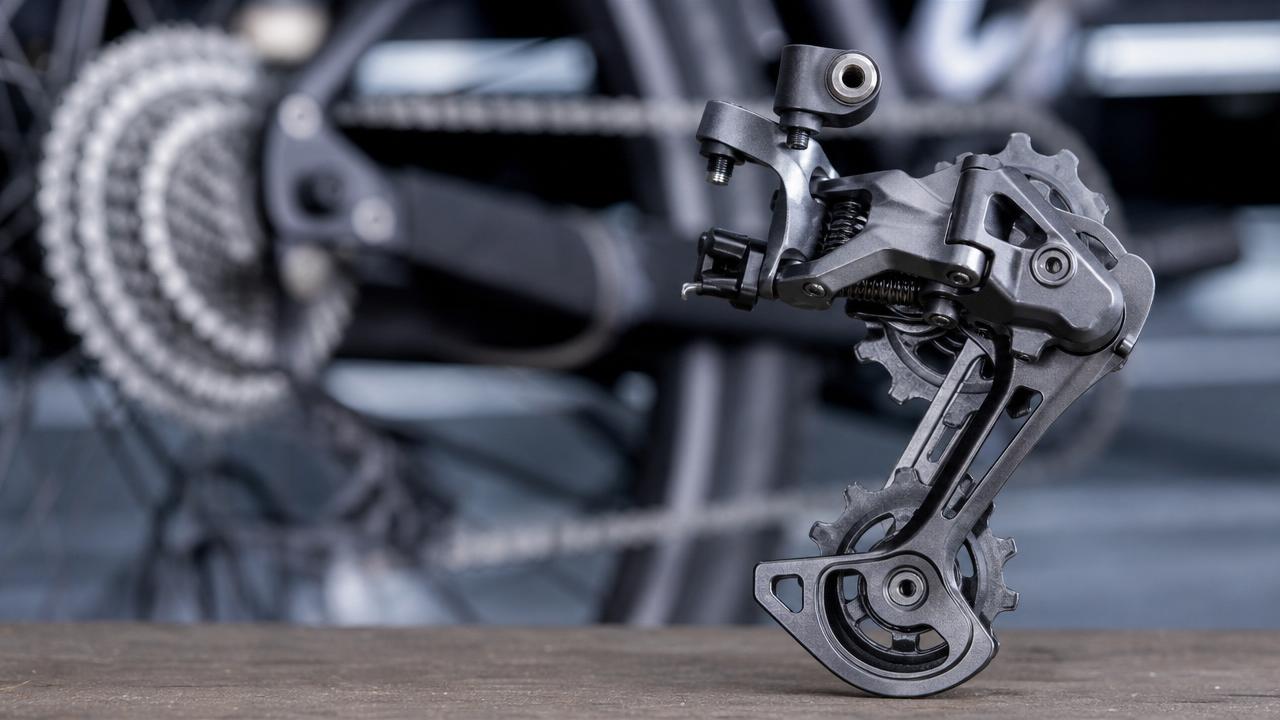
For technical evaluators, Bicycle Derailleur Components are not just small drivetrain parts—they are decisive factors in long-term reliability, shift precision, and maintenance cost. From jockey wheels and cages to springs, pivots, and material tolerances, each element directly influences durability under real riding loads. This article highlights the components that matter most and explains how to assess them for performance-focused purchasing and engineering decisions.
In high-end bicycles, e-bikes, and performance urban mobility platforms, derailleur durability is rarely determined by one visible part alone. It is the result of load paths, material fatigue resistance, contamination control, and tolerance stability across the full rear shifting assembly. For procurement teams, drivetrain engineers, and quality evaluators, the key question is not simply whether a derailleur shifts well on day 1, but whether it can still hold alignment and indexing after 2,000 km, 5,000 shifts, or repeated exposure to mud, wash cycles, and transport vibration.
For ACMD’s audience, this topic sits at the intersection of precision mechanical transmission and real-world lifecycle economics. A derailleur that saves 30 grams but wears pivots early, loses spring tension, or accelerates pulley friction may increase service frequency by 20%–40% over a standard duty cycle. That makes Bicycle Derailleur Components a core evaluation area for OEM sourcing, product validation, and aftermarket specification decisions.
Why Durability in Bicycle Derailleur Components Matters More Than Weight Alone
In technical reviews, weight reduction often receives disproportionate attention. Yet in practical use, durability failures usually begin with stiffness loss, bearing contamination, bushing wear, spring fatigue, or deformation after impact. A rear derailleur operates under chain tension, lateral displacement, vibration, and environmental contamination all at once. On gravel, mountain, and cargo-assisted e-bike applications, those conditions can become 1.5 to 3 times harsher than controlled road use.
The durability cost of small tolerance errors
A derailleur can appear functional even when wear has already begun to degrade long-term performance. For example, pivot play of only 0.3 mm to 0.5 mm at one joint may translate into noticeably inconsistent indexing across 11-speed or 12-speed cassettes. In electronic systems, the actuator may still move precisely, but the guide path can drift because the mechanical structure no longer holds its geometry under load.
Typical failure progression
- Stage 1: contamination enters pulley bearings or bushings
- Stage 2: friction rises and chain guidance becomes less stable
- Stage 3: pivot wear increases lateral play and indexing drift
- Stage 4: spring recovery weakens and shifting speed drops
- Stage 5: cage or body alignment changes after impact or fatigue cycling
This sequence is particularly important in fleet use, premium consumer products, and export-oriented e-bike assemblies, where service windows may be expected every 1,000 to 2,500 km rather than after every aggressive ride. In these contexts, the most durable Bicycle Derailleur Components reduce warranty exposure and stabilize user perception of drivetrain quality.
Durability priorities by application segment
Not every riding platform stresses the derailleur in the same way. Road racing emphasizes low mass and high indexing precision, while e-bikes apply higher average torque and more frequent shifts under partial load. Technical evaluators should therefore judge components by duty cycle, not by category label alone.
The table below compares how durability priorities shift across major use cases relevant to ACMD’s mobility and performance transmission focus.
The practical takeaway is clear: the best derailleur is not the lightest or most expensive by default. The best specification is the one whose Bicycle Derailleur Components match the actual contamination level, shift frequency, and impact risk of the intended platform.
The Components That Most Affect Derailleur Durability
When evaluating Bicycle Derailleur Components, four subsystems deserve the most attention: pulley wheels, cage structure, pivots, and springs. A fifth factor, often underestimated, is material pairing across contact zones. Together, these determine whether the derailleur preserves geometry, minimizes friction, and survives repeated shift cycles without progressive looseness.
Jockey wheels and pulley bearing systems
Jockey wheels operate continuously and often become the first wear point. Technical evaluators should look beyond tooth profile and check bearing or bushing architecture, sealing quality, lateral stiffness, and wear material. In low-maintenance environments, a well-sealed cartridge bearing may outperform an open low-friction design, even if lab drag appears slightly higher. In dusty or wet riding, seal integrity can matter more than a marginal 0.2 to 0.5 watt efficiency difference.
Pulley body materials also influence lifespan. Engineering polymers can reduce noise and save weight, but glass-filled or fiber-reinforced grades usually hold tooth shape longer under high mileage. For loaded e-bikes or heavier riders, accelerated tooth wear may appear earlier if the pulley body lacks sufficient hardness or thermal stability.
Cage construction and impact behavior
The derailleur cage manages chain path, pulley spacing, and impact energy. A cage that flexes excessively under chain tension can reduce shift precision, while a cage that is too brittle may deform permanently after a side strike. Aluminum cages often provide a balanced combination of stiffness and repairability. Carbon or composite cages can reduce weight, but evaluators should verify laminate robustness, hardware reinforcement, and impact recovery behavior rather than assuming premium material equals higher durability.
What to inspect in the cage area
- Parallelism between upper and lower pulley axes
- Fastener retention after repeated vibration cycles
- Resistance to twist under hand-applied side load
- Deformation signs after minor impact simulation
- Surface wear around hardware interfaces and inserts
Pivot joints and body knuckle stiffness
Pivot wear is one of the strongest predictors of long-term derailleur degradation. Even if pulleys and chain are replaced regularly, worn pivots undermine the system because the cage no longer returns to the same path after each shift. The key issue is cumulative play. A derailleur may contain 4 to 6 active pivot interfaces, and slight wear at each can stack into visible indexing inconsistency.
For this reason, technical evaluators should assess pin hardness, bushing material, lubrication retention, and the quality of hole finishing. A hardened steel pin in a soft untreated housing may perform well early but ovalize the receiving structure over time. Better designs manage both sides of the wear pair and maintain fit after thousands of articulation cycles.
Spring retention and clutch durability
The return spring defines how quickly and consistently the derailleur moves across the cassette. If spring force drops significantly after repeated extension, shifting can become sluggish, especially on larger cassettes with wider chain movement. In clutched derailleurs, the friction mechanism adds another durability variable: if clutch drag falls too fast, chain slap control declines; if it rises too much, shift effort and wear increase.
A useful benchmark in validation is to compare shift response and chain control at the beginning of testing and after a fixed cycle count, such as 10,000 to 20,000 shift events. The goal is not zero change, which is unrealistic, but controlled degradation that stays within the intended performance envelope.
How to Evaluate Bicycle Derailleur Components in a Technical Review Process
A reliable evaluation process should combine dimensional checks, material review, functional cycling, and contamination testing. Looking only at catalog claims or short bench demonstrations creates blind spots, especially for OEM or premium aftermarket programs. The goal is to identify not just initial shift quality, but the failure modes that emerge after repeated use.
A 5-step durability assessment framework
- Measure baseline play at key pivots and pulley interfaces
- Verify material combinations and surface treatment quality
- Run loaded shift cycling across full cassette range
- Introduce water, dust, or mud contamination exposure
- Re-measure indexing accuracy, noise, and structural play
In many B2B review workflows, this can be completed over 7 to 14 days for comparative screening, followed by a deeper 3 to 6 week endurance program for shortlisted suppliers. Even simple comparative testing often reveals meaningful differences in pulley seal quality, pivot growth, or spring consistency before field deployment begins.
Key measurements and decision thresholds
The table below provides a practical reference for evaluating Bicycle Derailleur Components during incoming inspection, lab validation, or supplier comparison. These are not universal pass/fail rules, but realistic checkpoints for technical decision-making.
These checkpoints help evaluators turn subjective impressions into repeatable decisions. They also support supplier dialogue by linking complaints such as “poor shift feel” or “short service life” to observable mechanical causes.
Common evaluation mistakes
Mistake 1: overvaluing finish quality
Anodizing, carbon texture, and polished hardware can create a premium appearance, but they do not guarantee durable internals. The wear-critical areas are usually hidden inside pivots, pulley interfaces, and spring seats.
Mistake 2: testing only in clean conditions
A derailleur that shifts cleanly in a workshop may behave very differently after 30 minutes of dust spray or repeated wet contamination. For micro-mobility and all-weather commuting, dirty-condition performance should be part of first-round screening, not an optional later step.
Mistake 3: ignoring serviceability
In B2B purchasing, total cost includes inspection time, replacement ease, and spare parts access. A design that saves initial cost but requires complete replacement after one failed pulley or worn clutch can be less economical over a 12 to 24 month ownership cycle.
Procurement and Engineering Recommendations for Long-Life Derailleur Systems
For buyers, OEM engineers, and technical evaluators, the most effective strategy is to specify Bicycle Derailleur Components according to actual use intensity and service expectations. This means aligning component durability with product tier, riding environment, and support model rather than selecting purely on unit cost or marketing position.
What to request from suppliers
- Exploded component details for pulleys, pivots, springs, and cage hardware
- Material declarations for high-wear interfaces
- Cycle-test methodology and contamination test conditions
- Replacement part availability and recommended service intervals
- Tolerance control approach for key joints and assemblies
If a supplier cannot explain how pivot wear is managed, how pulley sealing is validated, or how spring degradation is tracked, that is already meaningful evaluation data. In premium mobility products, technical transparency often correlates with more stable manufacturing control.
Best-fit specification logic
For road performance platforms, prioritize low play, cage stiffness, and stable indexing over long mileage. For gravel and mountain use, prioritize contamination resistance, impact resilience, and chain retention. For urban and electric-assisted bicycles, focus on spring durability, pulley sealing, and maintenance intervals that support lower service frequency. In many cases, a mid-weight derailleur with stronger internals delivers better field results than an ultralight option optimized mainly for catalog appeal.
For organizations evaluating complete drivetrain packages, Bicycle Derailleur Components should be reviewed together with cassette wear behavior, chain quality, hanger alignment tolerance, and electronic or mechanical actuation stability. Durable performance is system-level, but derailleur construction is often the most sensitive mechanical indicator of how that system will age.
Technical evaluation becomes more effective when each component is judged by measurable wear behavior, not by assumptions based on price tier or finish. The pulley system, cage structure, pivots, spring assembly, and material pairing are the areas that most strongly determine whether a derailleur keeps its precision after thousands of shifts and repeated environmental exposure. For ACMD readers navigating high-end cycling, e-bike development, and precision drivetrain sourcing, a disciplined review of Bicycle Derailleur Components can reduce field failures, improve lifecycle value, and support stronger product decisions. To discuss specification priorities, validation criteria, or drivetrain intelligence for your project, contact us today to get a tailored solution or learn more about advanced mobility transmission insights.
Related News