
Micro-Mobility Trends Shaping 2026 Fleet Models

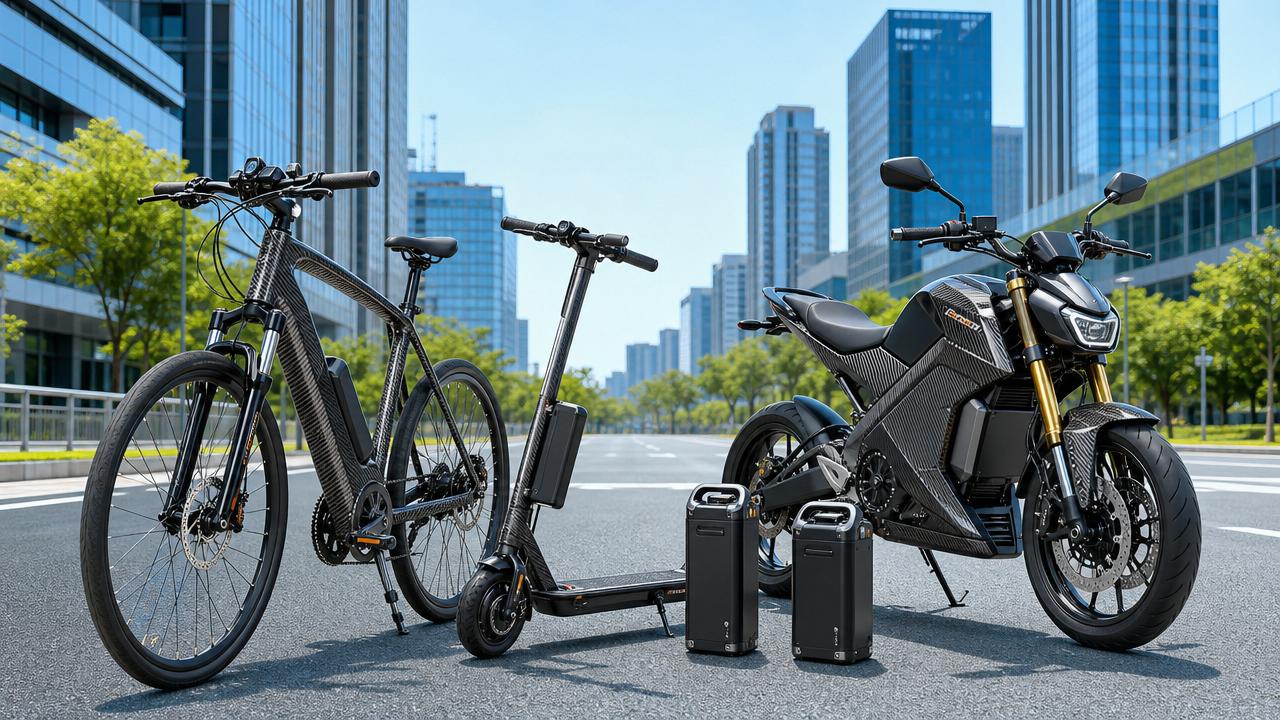
As cities tighten emissions rules and riders demand faster, lighter, smarter transport, micro-mobility trends are redefining fleet design for 2026.
The next advantage will come from combining e-bikes, smart e-scooters, e-motorcycles, advanced drivetrains, and carbon fiber platforms.
For data-led operators, micro-mobility trends now shape financing, maintenance, battery strategy, compliance, and user experience across dense urban corridors.
Micro-Mobility Trends Are Moving Fleet Models From Volume Growth To Precision Control
The first wave of shared mobility prioritized deployment speed, curb visibility, and app acquisition.
By 2026, micro-mobility trends point toward smaller, smarter, and more profitable fleets.
Urban authorities increasingly judge operators by safety, parking discipline, battery handling, and carbon accountability.
Riders judge them by vehicle availability, braking feel, hill performance, navigation accuracy, and total trip reliability.
This creates a sharper operating equation: every vehicle must deliver higher utilization with lower lifecycle waste.
ACMD’s intelligence perspective sees micro-mobility trends converging around three measurable priorities.
- Energy efficiency per kilometer, including battery health and charging logistics.
- Mechanical durability, especially transmissions, frames, tires, brakes, and folding joints.
- Digital governance, including geofencing, rider scoring, diagnostics, and insurance data.
The strongest fleets will not simply be larger.
They will be more instrumented, more modular, and better matched to local mobility behavior.
Signals Behind The 2026 Shift In Micro-Mobility Trends
Several market signals show why fleet strategy is changing quickly.
Low-emission zones are expanding across Europe, Asia, and North America.
At the same time, commuters are more willing to replace short car trips with assisted two-wheel travel.
These micro-mobility trends are reinforced by rising parking costs and stronger corporate sustainability reporting.
Technology maturity also matters.
IoT modules, electronic locks, torque sensors, and battery management systems are becoming cheaper and more dependable.
Meanwhile, carbon fiber frames and refined aluminum platforms are no longer limited to premium sport segments.
They now influence commercial vehicle weight, repair economics, corrosion resistance, and fleet transport costs.
Why Micro-Mobility Trends Now Favor Mixed Fleet Architectures
One vehicle category cannot serve every urban trip efficiently.
This is why micro-mobility trends increasingly favor mixed fleet architecture.
E-bikes support longer commutes, cargo errands, and hill-heavy districts.
Smart e-scooters serve short, spontaneous trips where portability and docking flexibility matter.
High-speed e-motorcycles support delivery routes, suburban links, and heavy-duty commercial mileage.
Advanced derailleur systems also become important as assisted bicycles move beyond basic commuter geometry.
Electronic shifting improves cadence stability, drivetrain efficiency, and rider confidence under variable traffic conditions.
Carbon fiber platforms add another layer to micro-mobility trends by improving stiffness-to-weight performance.
For premium fleet segments, lighter vehicles can improve handling, reduce energy draw, and simplify repositioning.
The Fleet Mix Is Becoming More Purpose-Built
- Campus fleets need tight geofencing, simple braking, and low-speed safety controls.
- Tourism fleets need comfort geometry, long battery range, and intuitive multilingual apps.
- Delivery fleets need reinforced frames, battery swapping, and predictive maintenance analytics.
- Commuter fleets need dependable drivetrains, theft resistance, and rapid service turnaround.
These micro-mobility trends reward vehicle segmentation rather than generic procurement.
Technology Drivers Turning Vehicles Into Data Assets
The most important fleet asset in 2026 may not be the vehicle itself.
It may be the operational data generated by every ride, charge, fault, and repair.
Micro-mobility trends are pushing fleets toward embedded intelligence at component level.
Motor controllers can report abnormal torque demand before mechanical failure appears.
Battery systems can forecast degradation based on temperature, charge depth, and route intensity.
Electronic derailleurs can reveal shifting stress patterns, chain wear, and rider misuse.
Frame sensors may eventually detect impacts, fatigue events, or unsafe loading patterns.
These signals make micro-mobility trends more than a market story.
They become a blueprint for predictive fleet management and more disciplined capital planning.
Business Impacts Across Operations, Finance, And User Experience
The impact of micro-mobility trends reaches beyond vehicle choice.
Operations teams must redesign maintenance around live diagnostics instead of fixed repair cycles.
Finance teams must evaluate assets through lifetime utilization, residual value, and battery replacement risk.
Customer experience teams must reduce friction between reservation, unlock, navigation, parking, and support.
Regulatory teams must maintain traceable records for speed limits, restricted zones, and accident investigations.
In this environment, micro-mobility trends change how success is measured.
Trips per vehicle still matter, but downtime, complaint rate, battery health, and compliance score matter more.
The fleet model becomes a living system, not a static vehicle inventory.
Key Metrics That Deserve Greater Attention
- Average energy consumption per ride category.
- Mean time between drivetrain service events.
- Battery temperature exposure during charging and storage.
- Vehicle availability during peak commuting windows.
- Parking compliance and geofencing violation frequency.
- Component-level cost per kilometer.
What Enterprises Should Watch As Micro-Mobility Trends Mature
The next phase of micro-mobility trends will not be defined by one breakthrough.
It will emerge from the integration of materials, software, energy systems, and service design.
Carbon fiber adoption should be judged by repairability and impact tolerance, not only weight savings.
Electronic shifting should be assessed by durability, wireless stability, and maintenance value.
E-bike motors should be evaluated by torque smoothness, thermal behavior, and firmware flexibility.
Smart e-scooter platforms should prove waterproofing, brake redundancy, and vandal resistance.
E-motorcycles should demonstrate battery swapping economics, safety certification, and route suitability.
- Map city policy direction before committing to vehicle speed and power classes.
- Separate fleet specifications by commuter, delivery, campus, and tourism use cases.
- Build maintenance models around predictive signals, not only scheduled inspection.
- Treat batteries as strategic assets with traceable health histories.
- Test lightweight materials under real abuse, weather, and service conditions.
These priorities keep micro-mobility trends connected to measurable operational value.
A Practical Response Framework For 2026 Fleet Planning
A strong 2026 response should combine scenario planning with component-level intelligence.
Micro-mobility trends can shift quickly when subsidy rules, battery prices, or street regulations change.
Fleet strategies therefore need flexible procurement, modular hardware, and interoperable software foundations.
This framework converts micro-mobility trends into practical decisions.
It also reduces the risk of buying vehicles that cannot survive local operating pressure.
From Trend Awareness To Competitive Fleet Execution
The winners in 2026 will understand micro-mobility trends as a systems challenge.
Vehicles, batteries, drivetrains, materials, software, and policy must be planned together.
ACMD’s focus on advanced cycles, smart mobility, precision transmissions, and lightweight materials supports that integrated view.
The most resilient fleet models will combine technical evidence with market timing and regulatory foresight.
As micro-mobility trends accelerate, the next step is clear.
Audit current assets, identify weak components, model future city rules, and test vehicles under realistic operating loads.
Then build a roadmap that links lightweight design, digital control, and low-carbon mobility economics.
That is how micro-mobility trends become durable fleet advantage rather than short-lived market noise.
Related News