
Urban Mobility Solutions: 2026 Cost and Risk Trends

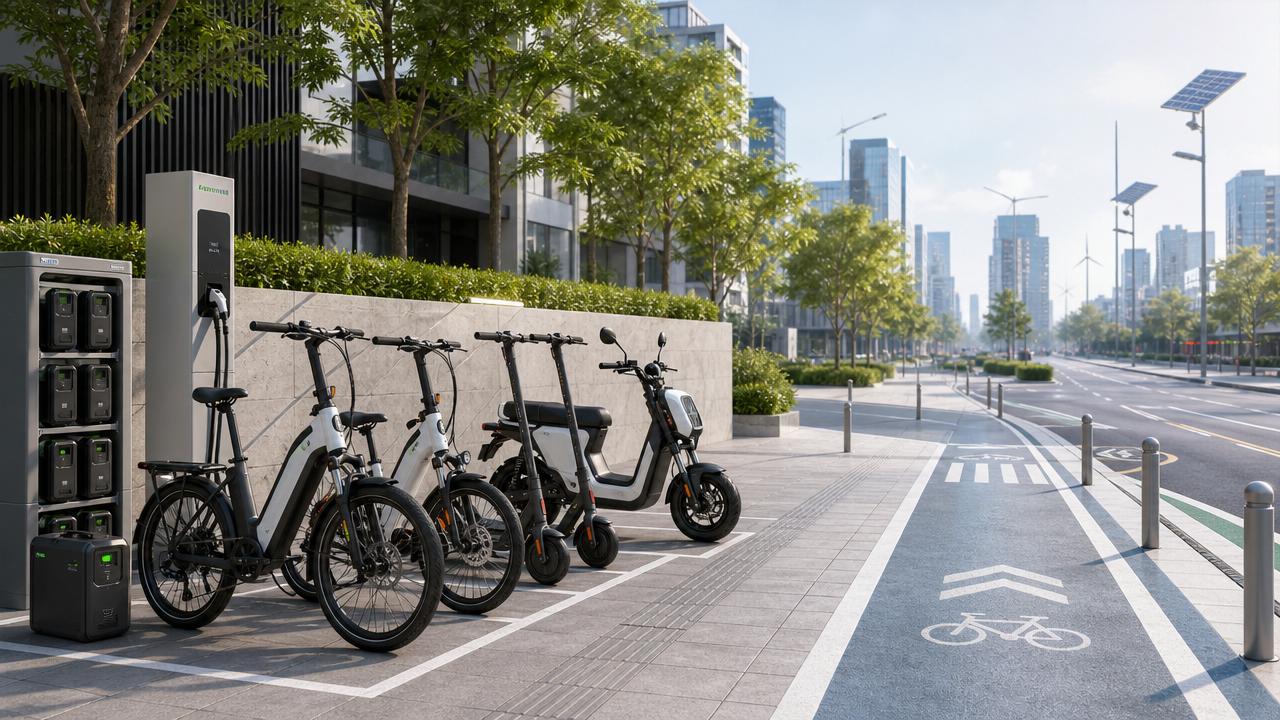
Urban Mobility Solutions: 2026 Cost and Risk Trends
As cities accelerate toward electrified, low-carbon transport, urban mobility solutions are entering a decisive 2026 cost-and-risk cycle.
The challenge is no longer simply choosing between e-bikes, smart e-scooters, e-motorcycles, or lightweight performance platforms.
It is understanding how battery pricing, regulation, supply exposure, insurance pressure, and infrastructure readiness reshape margins and adoption.
For ACMD, urban mobility solutions sit at the intersection of micro-mobility, precision drivetrains, and aerospace-grade lightweight materials.
What will define urban mobility solutions in 2026?
In 2026, urban mobility solutions will be judged by total system reliability, not only by vehicle specifications.
A strong platform must combine safe batteries, durable frames, software governance, and predictable service economics.
E-bikes remain the broadest category because they blend physical effort, electric assist, and flexible commuting distance.
Smart e-scooters remain valuable where last-mile demand is dense, repetitive, and supported by parking controls.
High-speed e-motorcycles are gaining attention as battery-swapping networks improve uptime and reduce charging anxiety.
Carbon fiber frames and electronic derailleurs also matter because premium riding performance influences willingness to pay.
The most resilient urban mobility solutions will connect hardware, software, energy, and service into one measurable operating model.
Key 2026 interpretation
- Product value will shift from novelty to lifecycle stability.
- Regulatory approval will become a commercial advantage.
- Lightweight design will support range, handling, and brand differentiation.
- Connected diagnostics will reduce operational blind spots.
Which cost pressures are rising fastest?
Battery cost remains the central variable for urban mobility solutions, even when cell prices soften.
Pack certification, thermal protection, waterproofing, and transport compliance often offset cheaper cells.
For e-bikes and e-motorcycles, battery management systems will carry greater safety and data responsibilities.
Insurance is another fast-moving cost layer, especially for shared fleets and higher-speed electric platforms.
Claims history, theft rates, fire incidents, and street clutter can quickly influence premiums.
Maintenance costs are also changing as vehicles become more digitally integrated and mechanically refined.
Electronic shifting, IoT modules, torque sensors, and connected locks improve control but require skilled service capacity.
High-quality urban mobility solutions should therefore be assessed through total cost of ownership, not purchase price alone.
Cost areas to model before deployment
- Battery pack replacement, storage, and safe logistics.
- Brake, tire, drivetrain, and suspension wear.
- Software hosting, connectivity, and cybersecurity monitoring.
- Insurance, compliance audits, and incident response.
- Workshop tools, training, and spare-part availability.
How will regulation change risk exposure?
Regulation is becoming a defining filter for urban mobility solutions in major cities.
Speed limits, helmet rules, battery standards, parking zones, and right-of-way permissions are increasingly specific.
Smart e-scooters face tighter geofencing requirements where pedestrian safety and pavement obstruction remain political concerns.
E-bikes face classification scrutiny when throttle behavior, motor output, or assisted speed exceed local definitions.
High-speed e-motorcycles face licensing, registration, and road-use obligations closer to conventional motor vehicles.
Urban mobility solutions that ignore regulatory variation may face delayed launches, fines, recalls, or restricted access.
The practical answer is modular compliance planning across regions, not one fixed configuration for every city.
Regulatory readiness questions
- Can motor output be adapted by market?
- Are battery certifications accepted in target jurisdictions?
- Can geofencing rules update without hardware replacement?
- Are spare parts compliant with local safety standards?
Which technologies lower operational risk?
The strongest urban mobility solutions reduce risk before failures become visible in the field.
Battery analytics can detect abnormal heat, charging imbalance, voltage drift, and early cell degradation.
Predictive maintenance can identify brake wear, tire fatigue, drivetrain misalignment, and electronic faults.
Geofencing can prevent unsafe parking, excessive speed zones, and access to restricted pedestrian areas.
For premium bicycles, wireless electronic derailleurs help maintain accurate shifting under demanding riding conditions.
For carbon fiber frames, controlled layup quality reduces hidden structural weakness and warranty exposure.
These technologies make urban mobility solutions more measurable, auditable, and defensible during insurance or compliance reviews.
Technology comparison for 2026 planning
How should e-bikes, e-scooters, and e-motorcycles be compared?
Different urban mobility solutions solve different trip patterns, so direct comparison requires clear operating assumptions.
E-bikes work well for mixed-distance commuting, fitness-oriented travel, and routes with moderate infrastructure support.
They also support premium components, including carbon frames, refined drivetrains, and efficient mid-drive motors.
Smart e-scooters fit short trips, transit connections, campus networks, and high-frequency shared use.
Their economics depend heavily on vandalism control, charging strategy, and street-level redistribution efficiency.
High-speed e-motorcycles address longer urban corridors, delivery intensity, and users replacing internal combustion motorcycles.
They need stronger battery safety, charging access, rider licensing alignment, and robust thermal management.
No single category dominates all urban mobility solutions, because speed, weight, range, and regulation create trade-offs.
Simple selection logic
- Choose e-bikes when range, comfort, and health value matter.
- Choose e-scooters when short-trip density is the priority.
- Choose e-motorcycles when speed and payload dominate.
- Choose carbon platforms when performance positioning supports premium pricing.
What risks are often underestimated?
The biggest mistake is treating urban mobility solutions as standalone vehicles instead of connected operating systems.
Battery incidents receive public attention, but many failures begin with poor storage, charging, or after-sales discipline.
Another underestimated risk is component fragmentation across suppliers, firmware versions, and regional variants.
Fragmentation increases repair complexity, inventory pressure, and data inconsistency across urban mobility solutions.
Cybersecurity also deserves more attention as vehicles exchange location, payment, diagnostics, and access-control data.
A software weakness can become a safety, privacy, insurance, and brand risk at the same time.
Finally, infrastructure assumptions can fail when charging, parking, repair, and curb access remain underdeveloped.
Risk checklist
- Validate battery storage and transport procedures.
- Standardize firmware updates and version records.
- Map legal rules city by city.
- Test carbon frame inspection protocols.
- Review data protection and remote access controls.
FAQ table: practical questions on urban mobility solutions
How should planning begin now?
Planning for 2026 urban mobility solutions should begin with scenario-based cost modeling.
Model best, base, and stressed cases for batteries, repairs, insurance, utilization, and regulatory delays.
Next, define technical standards for batteries, drivetrains, frames, firmware, sensors, and service procedures.
Then compare vehicle categories against real trip patterns, not broad market excitement.
ACMD’s intelligence perspective highlights one central lesson: micro-mobility success depends on disciplined integration.
Urban mobility solutions must be light, connected, compliant, repairable, and economically transparent.
The next step is to audit current assumptions against 2026 cost and risk signals.
Use that audit to refine platform choice, supplier strategy, maintenance design, and market entry timing.
Organizations that treat urban mobility solutions as strategic systems will move faster, safer, and with stronger investment confidence.
Related News