
Urban Mobility Solutions Shaping Shared Scooter Expansion

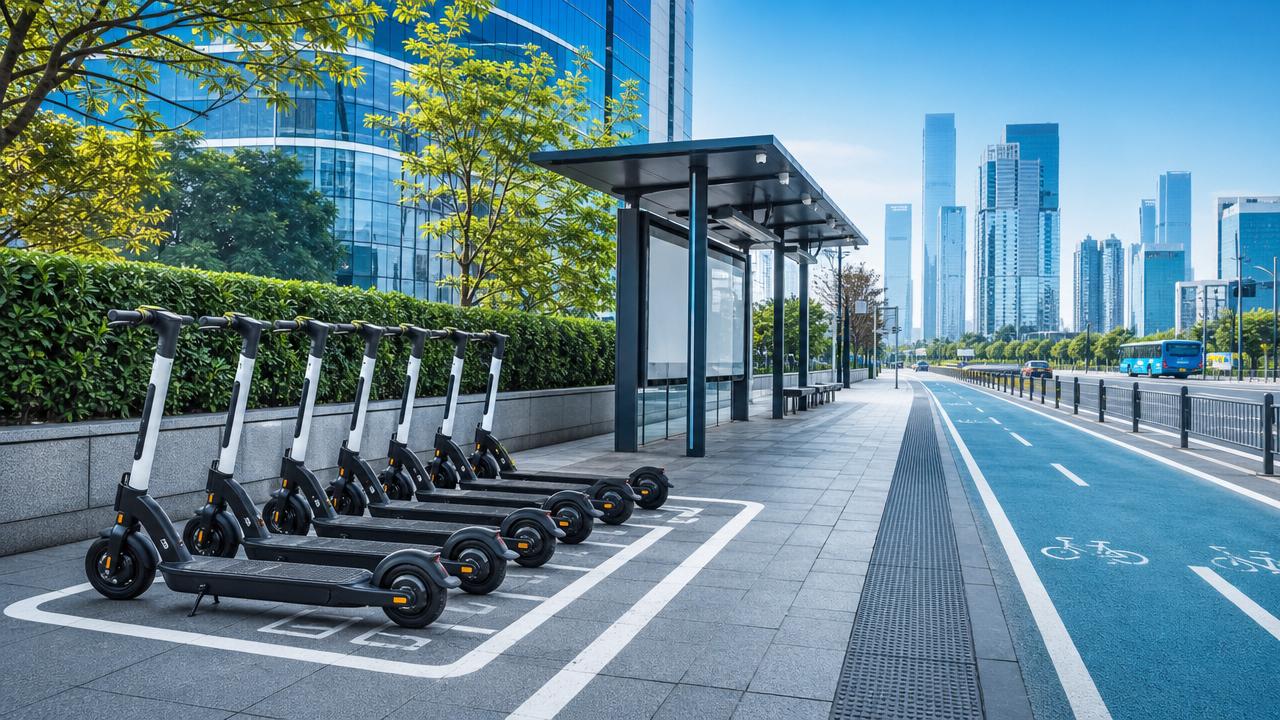
Urban mobility solutions are rapidly redefining how shared scooter networks scale, operate, and earn public confidence in crowded cities. Expansion now depends on far more than adding vehicles to the street.
Successful growth requires balanced decisions across infrastructure, regulation, fleet engineering, rider behavior, and operational data. When these elements move together, shared scooter services become more reliable, safer, and easier to integrate into daily transport systems.
This article answers the most practical questions behind urban mobility solutions and explains what truly shapes shared scooter expansion in modern urban environments.
What do urban mobility solutions mean for shared scooter expansion?
Urban mobility solutions are coordinated systems that improve movement within cities. They include vehicles, software, charging plans, parking design, safety rules, and connections to public transit.
For shared scooters, urban mobility solutions are not a marketing phrase. They are the operating framework that determines whether expansion creates value or causes disorder.
A city may welcome scooters, yet still limit growth if sidewalks are blocked, trip data is incomplete, or maintenance cycles are weak. In this context, expansion means system maturity, not simple fleet enlargement.
The strongest urban mobility solutions usually combine five elements:
- Demand forecasting by district and time window
- Geofencing and parking compliance tools
- Durable vehicle design for intensive daily use
- Clear data-sharing models with local authorities
- Integration with buses, trains, and cycling corridors
When these parts are aligned, urban mobility solutions support sustainable shared scooter growth instead of short-lived market entry.
Why are data-driven deployment models central to urban mobility solutions?
Shared scooter networks perform best when every deployment decision reflects real movement patterns. Static fleet placement often leads to empty vehicles in low-demand zones and shortages near transit hubs.
Urban mobility solutions increasingly rely on trip heatmaps, weather impact models, event calendars, and commuting rhythms. These inputs help operators place scooters where usage will be highest and conflict will be lowest.
The goal is not only utilization. It is also service quality. If riders consistently find available scooters near stations, campuses, business districts, and residential clusters, repeat usage rises naturally.
Good deployment models also reduce operational waste. Fewer manual relocations mean lower labor intensity, lower charging transport, and better asset life per vehicle.
Useful data layers often include:
- Peak demand by hour and neighborhood
- Trip start and trip end clustering
- Low-speed and no-ride zone incidents
- Parking compliance failure rates
- Maintenance frequency by route condition
In practice, advanced urban mobility solutions turn raw trip information into deployment logic. That logic becomes the foundation for profitable and city-friendly shared scooter expansion.
How do regulation and public infrastructure affect shared scooter growth?
No matter how efficient the platform may be, shared scooters expand only where regulation and street design allow safe and orderly operation.
Urban mobility solutions work best when they match the local policy environment. This includes permit caps, insurance rules, speed restrictions, sidewalk parking standards, and data transparency requirements.
Cities with dedicated micromobility lanes usually see better rider confidence and fewer conflicts with pedestrians. Parking corrals, marked drop zones, and transit-linked parking areas also improve system acceptance.
Geofencing has become a practical bridge between technology and policy. It can slow vehicles in sensitive zones, prevent parking in prohibited areas, and support compliance reporting.
Still, regulation alone is not enough. Expansion slows when infrastructure readiness remains weak. Common barriers include:
- Broken pavement that increases safety risk
- Lack of visible parking zones
- Poor links to train and bus interchanges
- Conflicting local rules across districts
The most effective urban mobility solutions treat regulation and infrastructure as part of product design. Compliance is built into operations from the start, not added later.
What vehicle design features matter most in urban mobility solutions?
Shared scooters face harsher duty cycles than privately owned devices. They endure repeated trips, rough surfaces, weather exposure, curb impact, and frequent handling during collection and charging.
That is why durable engineering is essential to urban mobility solutions. A fleet with weak stems, fragile decks, poor sealing, or unstable batteries will struggle to scale regardless of demand.
Important design priorities include structural strength, battery safety, braking consistency, wheel durability, and easy service access. Modular components also reduce downtime and spare-parts complexity.
Advanced mobility intelligence platforms, including ACMD-style sector analysis, often show that vehicle lifetime economics matter more than entry price. Lower-cost scooters may create higher replacement and repair burdens.
High-value design features often include:
- Water-resistant electrical architecture
- Tamper-resistant IoT modules
- Swappable or efficiently serviceable batteries
- Reinforced frame joints and stem assemblies
- Predictive diagnostics for brake and motor wear
Urban mobility solutions become more scalable when vehicle architecture supports uptime, safety, and low total cost of ownership across thousands of ride cycles.
How should cities and operators judge whether expansion is actually working?
Expansion should be measured by mobility outcomes, not by fleet count alone. More scooters do not automatically mean better urban mobility solutions.
A practical evaluation framework compares accessibility, safety, compliance, utilization, and public benefit. This creates a clearer picture of whether the network is improving circulation or adding friction.
Key success signals include reduced first-and-last-mile gaps, consistent parking behavior, high ride completion rates, manageable maintenance backlogs, and lower dependence on private car trips for short journeys.
These measures help urban mobility solutions stay outcome-based. They also support stronger dialogue between service platforms, planners, and the broader urban transport ecosystem.
What common mistakes weaken urban mobility solutions during expansion?
One major mistake is assuming demand automatically equals readiness. High interest in shared scooters does not guarantee that streets, laws, and maintenance capacity can support fast growth.
Another mistake is treating all districts the same. Downtown business zones, campuses, tourist corridors, and residential neighborhoods often require different parking logic and fleet density.
Some networks underinvest in hardware resilience. That often leads to battery failures, brake issues, vandalism losses, and shorter useful life. Poor durability quickly damages user trust.
A further risk is weak public communication. Even good urban mobility solutions can face resistance if local communities see only clutter, speed concerns, or inconsistent enforcement.
Avoid these expansion errors:
- Expanding before compliance systems are stable
- Ignoring maintenance data and asset degradation
- Using fleet growth as the only success metric
- Failing to adapt to local travel behavior
- Overlooking transit integration opportunities
Strong urban mobility solutions reduce these risks by combining operational discipline with technical readiness and policy alignment.
What are the next practical steps for building stronger urban mobility solutions?
The next phase of shared scooter expansion will favor networks that operate like mobility infrastructure rather than short-term consumer apps. That means more precision, more accountability, and more durable engineering.
A practical roadmap begins with a realistic assessment of demand density, route safety, parking control, fleet durability, and battery servicing strategy. Each element should be reviewed before large-scale rollout.
It is also smart to compare vehicle platforms using lifecycle performance, not only purchase cost. The best urban mobility solutions usually come from data-backed choices made early.
For teams tracking the broader mobility landscape, intelligence sources like ACMD provide useful context on micro-mobility engineering, lightweight structures, drivetrain trends, and system-level urban transport change.
In summary, urban mobility solutions shape shared scooter expansion through integrated planning, resilient hardware, responsive regulation, and measurable public value. The most successful networks grow by solving city movement problems, not by adding devices alone.
The clearest next step is simple: evaluate whether current shared scooter operations are optimized for compliance, uptime, and real urban demand. That answer will define the quality of future expansion.
Related News