
Bike Transmission Choices for Lower Service Downtime

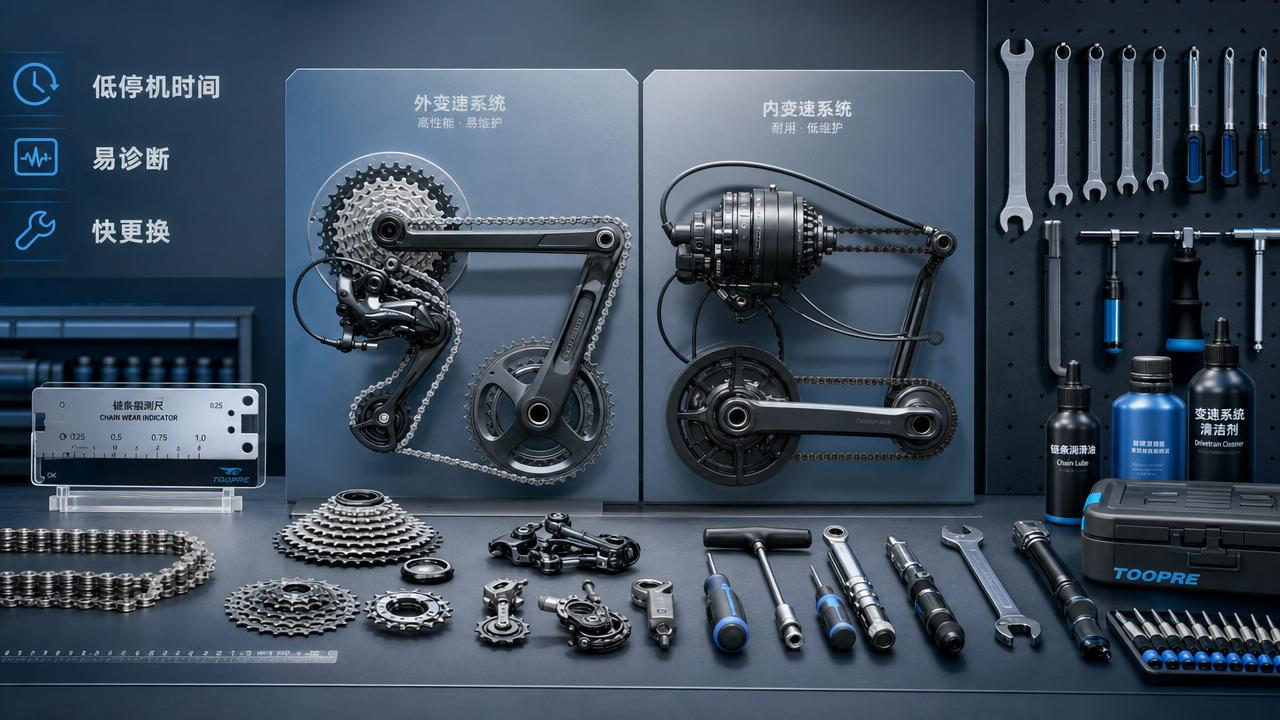
For after-sales maintenance teams, the right bike transmission can mean the difference between quick turnaround and costly workshop delays. From durable mechanical setups to low-adjustment electronic systems, transmission choices directly affect service intervals, parts wear, and fault diagnosis efficiency. This guide explores how selecting the right bike transmission helps reduce downtime, improve maintenance planning, and keep riders on the road longer.
In service workshops handling commuter bikes, e-bikes, performance road models, and fleet units, transmission architecture is not just a riding-performance topic. It is a maintenance cost variable, a spare-parts planning issue, and a workshop throughput decision. For teams supporting urban micro-mobility and premium two-wheel systems, the wrong drivetrain specification can add 20 to 40 minutes per service job, increase repeat visits, and complicate diagnosis under time pressure.
ACMD closely tracks how drivetrain design affects reliability, adjustment stability, and service economics across modern two-wheeled mobility. For after-sales personnel, the practical question is clear: which bike transmission setup delivers predictable wear, easier inspection, faster parts replacement, and fewer rider complaints over a 6 to 24 month usage cycle?
Why bike transmission selection directly affects workshop downtime
A bike transmission includes the chain, cassette or freewheel, chainrings, derailleur system, shifters, cables or wires, and interface adjustment points. In maintenance terms, every extra point of wear or calibration becomes a possible service delay. When a workshop processes 8 to 20 bikes per day, even a 15-minute increase in average drivetrain service time can disrupt the full schedule.
The main downtime drivers in transmission service
Most drivetrain-related delays come from four sources: accelerated wear, difficult adjustment, inconsistent parts compatibility, and slow fault isolation. Mechanical systems may drift because of cable stretch, contamination, or bent hangers. Electronic systems reduce some adjustment work, but they introduce battery checks, firmware matching, and impact-related diagnostics.
- Chain wear reaching replacement threshold before the planned service window
- Cassette and chainring wear causing noise, skipping, or poor load transfer
- Rear derailleur misalignment after transport, minor crashes, or storage damage
- Cable friction, housing contamination, or connector issues delaying fault finding
Why the service environment matters
A city commuter fleet riding 80 to 150 km per week creates a different maintenance profile than a high-end road bike ridden only on weekends. E-bikes add another layer because motor torque increases chain load, often shortening wear intervals by 15% to 30% if riders shift under load and maintenance is delayed.
For after-sales teams supporting dealers, rental fleets, or OEM warranty networks, the best bike transmission is often not the lightest or most complex option. It is the one that balances shift performance with stable service intervals, broad parts availability, and low technician dependency.
The table below compares common transmission formats from a service-downtime perspective rather than a pure performance perspective.
For routine workshop efficiency, simpler external drivetrains usually shorten service time. However, internal gear hubs can outperform derailleur systems in wet urban use where contamination drives repeated service visits. The best choice depends on rider profile, service network capability, and spare-parts discipline.
Choosing the right bike transmission for different maintenance scenarios
After-sales teams should evaluate a bike transmission by service scenario, not by catalog specification alone. A premium high-speed system may impress at sale, yet become inefficient if local technicians lack compatible tools, firmware access, or stock depth. Practical selection begins with use case mapping.
Urban commuter and shared mobility fleets
For city bikes and fleet units, the ideal setup is usually durability-first. A 1x mechanical transmission or internal gear hub can reduce adjustment points by 25% to 40% compared with a multi-chainring setup. This matters when operators need fast turnaround within 24 to 48 hours.
Recommended priorities
- Sealed or low-exposure components for wet and dusty environments
- Chainline stability and low cable contamination sensitivity
- Common wear parts with replenishment lead times under 7 to 10 days
- Simple inspection routines that junior technicians can complete in under 12 minutes
E-bike service operations
E-bike transmissions must tolerate higher torque peaks and more frequent stop-start shifts. Chains, cassettes, and jockey wheels often experience faster wear than on acoustic bikes. In many service programs, chain inspection every 500 to 1,000 km is more realistic than waiting for broad annual intervals.
For mid-drive e-bikes in particular, a bike transmission with reinforced chains, e-bike-rated cassettes, and clear replacement compatibility can reduce unplanned service calls. Wireless or electronic shifting can improve shift consistency, but workshops must also track charging routines and update procedures.
Performance road and mountain applications
High-end riders expect precision, low noise, and immediate shift response. In this segment, electronic systems often cut setup time after wheel changes or transport incidents because indexing remains stable. Yet crash damage can turn into higher-cost service events, especially when hangers, derailleurs, and control units are all affected together.
Maintenance teams should weigh whether shorter routine adjustment time offsets higher parts cost and training needs. In premium workshops processing 3 to 5 advanced bikes per day, that trade-off may be justified. In general-purpose service centers, simpler mechanical platforms may still deliver better turnaround.
The following matrix helps after-sales personnel match bike transmission choices to actual service conditions.
This comparison shows that the lowest-downtime option is rarely universal. It depends on rider behavior, climate exposure, torque load, and the workshop’s ability to stock parts and diagnose faults quickly.
Key maintenance criteria when specifying a bike transmission
When supporting procurement, warranty planning, or dealer recommendations, after-sales teams should use a defined checklist. A transmission that performs well in test rides may still create operational friction if consumables are expensive, delivery is slow, or compatibility is fragmented across model years.
1. Wear life and replacement rhythm
Chain elongation, cassette tooth wear, and pulley degradation should be tracked as a system. In many workshop routines, chain inspection at every 500 km for e-bikes and 800 to 1,200 km for standard commuter bikes helps prevent cassette damage. Replacing a chain early is typically faster and less expensive than replacing chain, cassette, and chainring together.
2. Adjustment stability
A bike transmission that holds indexing for 3 to 6 months under normal use can significantly reduce repeat labor. Cable-driven systems should be assessed for housing quality, bend radius sensitivity, and contamination risk. Electronic systems should be assessed for battery retention, connection stability, and update simplicity.
3. Parts availability and cross-compatibility
Parts planning is often overlooked until the bike is in service. A good specification should rely on parts categories that can be replenished inside 7 to 14 days in the target market. If a derailleur, cassette, or battery interface depends on low-volume components, downtime can extend from 2 days to several weeks.
4. Diagnostic simplicity
Technicians should be able to isolate the source of poor shifting within a short workflow: hanger alignment, cable friction, chain wear, cassette wear, electronic power, or firmware mismatch. Systems requiring 8 to 10 verification steps before basic diagnosis may not suit high-throughput service centers.
5. Training burden
A sophisticated bike transmission is only efficient when staff competency matches system complexity. If staff turnover is high, standard mechanical platforms may outperform advanced systems in real after-sales conditions. If the workshop has trained senior technicians and a digital service interface, electronic drivetrains can reduce recurring adjustment work.
Implementation steps to reduce transmission-related service delays
Even the right bike transmission will not lower downtime without a disciplined service process. Workshops need a repeatable method covering intake, inspection, wear measurement, parts allocation, and rider communication. Standardization often delivers more value than choosing the most advanced hardware.
A five-step service workflow
- Record mileage, use type, and rider complaint in the first 3 minutes of intake.
- Measure chain wear and check derailleur hanger alignment before any adjustment.
- Inspect cassette, chainring, pulley, cable or battery condition in one sequence.
- Decide whether adjustment, partial replacement, or full drivetrain renewal is needed.
- Document the next check interval, usually 500 km, 1,000 km, or 3 months depending on use.
Common mistakes that increase downtime
- Adjusting indexing before checking chain wear and hanger alignment
- Replacing only one worn part in a heavily worn drivetrain system
- Using mixed compatibility parts without confirming speed and interface standards
- Ignoring e-bike torque effects when setting replacement intervals
- Skipping battery status checks on electronic shifting platforms
Service planning tip for B2B operations
Dealer groups, mobility operators, and OEM after-sales networks benefit from keeping 3 levels of stock: fast-moving wear parts, medium-frequency adjustment parts, and low-frequency high-value parts. This simple structure can shorten average repair waiting time by several days when supply chains are unstable.
For ACMD-focused segments such as e-bikes, performance drivetrains, and precision derailleur components, the service strategy should also account for global logistics, local regulation, and technician capability. Specifying a bike transmission for long-term support is not only a product decision; it is an operational design choice across the mobility value chain.
What after-sales teams should ask before approving a transmission specification
Before a model goes to market or enters a service contract, maintenance teams should challenge the transmission choice with practical questions. These questions reduce future disputes between product, procurement, dealers, and service technicians.
Core approval questions
- Can routine inspection be completed in under 15 minutes with standard workshop tools?
- Are chain, cassette, and derailleur replacements available locally within 7 to 14 days?
- Does the system maintain shift quality after 1,000 km of normal urban or e-bike use?
- Can junior technicians resolve the most common faults after 1 to 2 training sessions?
- Is the warranty risk acceptable if riders shift under high load or in wet conditions?
When to favor simplicity over complexity
If the market depends on broad dealer coverage, limited digital tools, or price-sensitive maintenance, a simpler bike transmission often produces better customer satisfaction. Faster repairs, lower parts confusion, and shorter vehicle downtime usually matter more than marginal gains in shift speed.
If the product targets premium riders, high-mileage enthusiasts, or advanced e-bike users, a more sophisticated transmission can be justified. The key is aligning the drivetrain with the actual support ecosystem, not just the sales specification sheet.
Reducing service downtime starts with choosing a bike transmission that matches real riding loads, workshop skills, and replacement-part logistics. Mechanical 1x systems, internal gear options, and well-supported electronic drivetrains each have a place, but the most efficient choice is the one that combines stable wear behavior, clear diagnostics, and dependable service intervals. For brands, dealers, and mobility operators evaluating drivetrain strategies across commuter bikes, e-bikes, and premium two-wheel platforms, ACMD provides the technical perspective needed to turn transmission selection into a measurable after-sales advantage. Contact us to discuss your service scenario, get a tailored specification framework, or explore more drivetrain solutions for lower downtime.